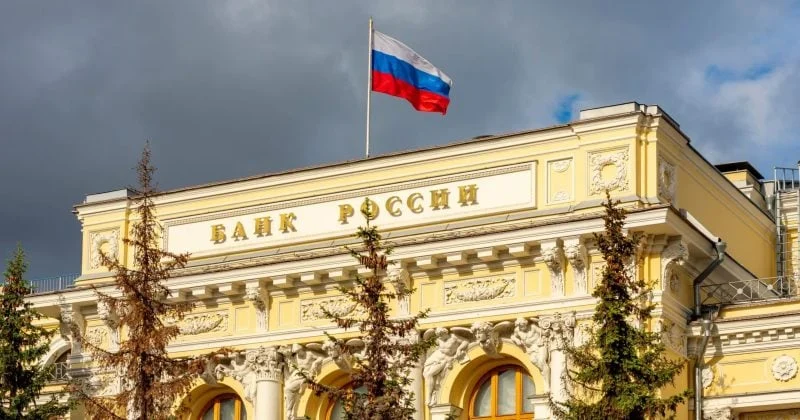
The Russian Federation is poised to transition its financial architecture into the digital age as the Bank of Russia accelerates the deployment of its sovereign digital currency. Bank of Russia Governor Elvira Nabiullina recently confirmed that the nation’s largest financial institutions and major retailers are on a mandatory trajectory to begin accepting the digital ruble by September 1, 2026. This announcement signals the conclusion of a rigorous development and testing phase that began in late 2020, positioning Russia as a frontrunner in the global race to implement Central Bank Digital Currencies (CBDCs). While many Western nations remain locked in legislative debates regarding the privacy and necessity of digital currencies, Moscow is moving forward with a centralized, programmable monetary system designed to fortify its economy against external pressures.
The Institutional Mandate and the September 2026 Deadline
The September 1, 2026, deadline serves as a hard pivot for Russia’s financial sector. This mandate is not a suggestion but a regulatory requirement for the nation’s twelve "systemically important" banks. These institutions, which include giants such as Sberbank, VTB, and Gazprombank, form the backbone of the Russian economy, handling the vast majority of consumer and corporate transactions. By requiring these entities to support digital ruble transactions, the Bank of Russia ensures that the infrastructure for "widespread use" is fully operational before the end of the decade.
The digital ruble is defined as a non-cash monetary medium, representing the third form of the national currency alongside physical banknotes and traditional electronic deposits held in commercial bank accounts. Unlike traditional electronic payments, where money is a liability of a private commercial bank, the digital ruble exists as a direct liability of the central bank. This means that funds are held on a unified ledger managed by the Bank of Russia, providing the state with unprecedented visibility and control over the flow of capital within its borders.
A Chronology of Development: From Concept to Pilot
The journey toward the digital ruble has been methodical, spanning over four years of technical preparation and legislative groundwork. The project was officially unveiled in October 2020 with the publication of a consultation paper by the Bank of Russia. This document outlined the potential benefits of a CBDC, focusing on reducing transaction costs for households and businesses while enhancing the efficiency of the national payment system.
Following the initial proposal, the development timeline followed a structured path:
- January 19, 2022: The Bank of Russia initiated the first stage of pilot testing with a group of 12 banks. This phase focused on the technical feasibility of the platform and the basic operations of opening digital wallets and conducting peer-to-peer (P2P) transfers.
- July 24, 2023: President Vladimir Putin signed the landmark legislation establishing the legal framework for the digital ruble. This law defined the status of the digital ruble as a legal tender and outlined the central bank’s role as the operator of the platform.
- August 15, 2023: Testing expanded to include real clients and real transactions. This pilot involved a limited number of banks and retail outlets, allowing the central bank to monitor the system under real-world conditions.
- May 2024: Regulatory updates clarified the timeline for retailers. Large-scale merchants are expected to integrate digital ruble payments simultaneously with the banking sector to ensure consumer-facing utility from day one.
This timeline demonstrates that the 2026 launch is the result of a deliberate, long-term strategy rather than a reactive measure to immediate crises, although the geopolitical environment has undoubtedly influenced the project’s urgency.
Technical Architecture and the Shift in Monetary Control
The digital ruble operates on a hybrid model. While the central bank manages the core infrastructure and the ledger, commercial banks act as intermediaries, providing the user interface and customer service. This allows the Bank of Russia to leverage existing banking apps and infrastructure while maintaining ultimate control over the currency’s issuance and movement.
From a consumer perspective, the digital ruble is intended to function with the ease of a mobile payment app. Users will be able to store digital rubles in a wallet accessible through any participating bank’s mobile application. However, the fundamental difference lies in the backend: the government can track every transaction in real-time. This programmability allows for features such as "smart contracts," where payments are only released upon the fulfillment of certain conditions—a feature the Russian government intends to use to ensure that state budget allocations are spent specifically for their intended purposes.
Addressing the Enthusiasm Gap: Incentives and Adoption
Despite the technical readiness, the Russian public has exhibited a notable lack of enthusiasm for the new currency. Public opinion polls have consistently shown that many Russians are either indifferent to or suspicious of the digital ruble, citing concerns over government surveillance and a lack of clear benefits over existing, highly efficient private digital payment systems.
To combat this apathy, the Bank of Russia has introduced a series of financial incentives aimed at "buying" adoption. The central bank has implemented a reward system where banks are paid 0.67 rubles (approximately $0.01) for each salary payment processed in digital rubles. Furthermore, a minimum payment of 10 rubles ($0.13) has been set for payroll distributions made through the system.
These incentives reveal a top-down approach to adoption. When a central bank feels the need to subsidize the use of its own currency, it highlights that the demand is driven by strategic policy rather than market desire. For Moscow, the success of the digital ruble is a matter of national security, making "organic" demand a secondary concern to institutional compliance.
The Sanctions Shield and Financial Sovereignty
The primary driver behind the digital ruble is the reality of modern geopolitical conflict. Since the escalation of the conflict in Ukraine in 2022, Russia has been subjected to unprecedented financial sanctions. The disconnection of major Russian banks from the SWIFT international messaging system, combined with the withdrawal of Visa and Mastercard, severely hampered the country’s ability to conduct cross-border trade and domestic electronic payments.
The digital ruble is explicitly designed to enhance Russia’s "payment sovereignty." By creating an internal, state-controlled payment rail, Russia reduces its reliance on Western-controlled infrastructure. In the event of further escalations or more stringent sanctions, the digital ruble provides a "Plan B" that allows the domestic economy to continue functioning regardless of external pressures.
The Sanctions Wall and the EU Response
The international community is not ignoring Russia’s digital ambitions. The European Union has already taken preemptive steps to neutralize the digital ruble’s potential as a sanctions-evasion tool. As part of its 20th sanctions package, the EU implemented a ban on all transactions related to the digital ruble, effective May 24, 2026. This ban also encompasses ruble-linked tokens, such as RUBx, categorizing them as restricted financial instruments.
This creates a significant obstacle for the digital ruble’s utility in international trade. While Russia hoped the CBDC would provide a way to settle payments with European partners outside of the traditional banking system, the EU’s preemptive strike effectively closes that door. It creates a "closed loop" scenario where the digital ruble may be highly effective domestically but remains largely isolated from the Western financial world.
The Russia-China Axis: A Parallel Financial Ecosystem
While the Western path is blocked, the Eastern path remains open. Russia is actively exploring the integration of its digital ruble with other friendly nations, most notably China. The People’s Bank of China has been conducting its own extensive trials of the digital yuan (e-CNY), and the prospect of a CBDC-to-CBDC corridor is a major point of discussion between Moscow and Beijing.
A bilateral digital currency corridor would allow Russia and China to settle trade in their respective digital currencies without ever touching the US dollar or utilizing the SWIFT network. Such a development would represent a significant shift in global finance, potentially creating a parallel financial ecosystem that is immune to Western sanctions. If this corridor gains traction, it could serve as a blueprint for other BRICS nations (Brazil, India, China, South Africa, and recent additions) looking to de-dollarize their economies.
Implications for the Cryptocurrency Market
The domestic rollout of the digital ruble will likely alter the way Russians interact with private cryptocurrencies like Bitcoin and stablecoins like Tether (USDT). Since 2022, USDT has become a vital tool for Russian businesses and individuals to move money across borders and hedge against ruble volatility.
The digital ruble may displace some of the demand for crypto in everyday domestic transactions. If the government mandates that taxes, utility bills, and salaries be paid in digital rubles, the friction of moving in and out of Bitcoin for daily needs may become too high for the average citizen. However, the digital ruble does not solve the fundamental issues that drive crypto adoption: inflation protection and censorship resistance. As a state-controlled asset, the digital ruble offers neither. Therefore, Bitcoin is likely to retain its role as a "digital gold" or store of value, while USDT will likely remain the preferred vehicle for cross-border capital flight that the digital ruble cannot facilitate due to Western sanctions.
Global Context: The CBDC Race
Russia’s September 2026 launch puts it ahead of most G7 economies. In the United States, the development of a digital dollar has met significant political resistance over privacy concerns, with the current administration effectively pausing the project. The European Central Bank’s digital euro is still in its "preparation phase," with a decision on its actual launch not expected for several years.
Russia, alongside China, is proving that the most rapid innovation in central bank technology is currently occurring in states that feel the most pressure from the existing global financial order. For these nations, a CBDC is not just a technological upgrade; it is a strategic necessity for survival in a fragmented global economy.
Conclusion and Future Outlook
The transition to a digital ruble-centric economy by 2026 marks a watershed moment for Russia. As Governor Nabiullina moves to consolidate the nation’s financial ledger under the direct oversight of the central bank, the world will be watching to see if a state can successfully mandate the adoption of a digital currency that its citizens did not ask for.
Investors and geopolitical analysts should focus on two critical indicators moving forward. First, the technical stability of the 2026 rollout will be a test of Russia’s domestic tech capabilities under the weight of import restrictions. Second, the potential for a digital currency bridge between Moscow and Beijing remains the most significant threat to the long-term dominance of the US dollar in global trade. While the digital ruble may start as a domestic project, its ultimate success or failure will be measured by its ability to transcend the borders that the Western world has attempted to close.