


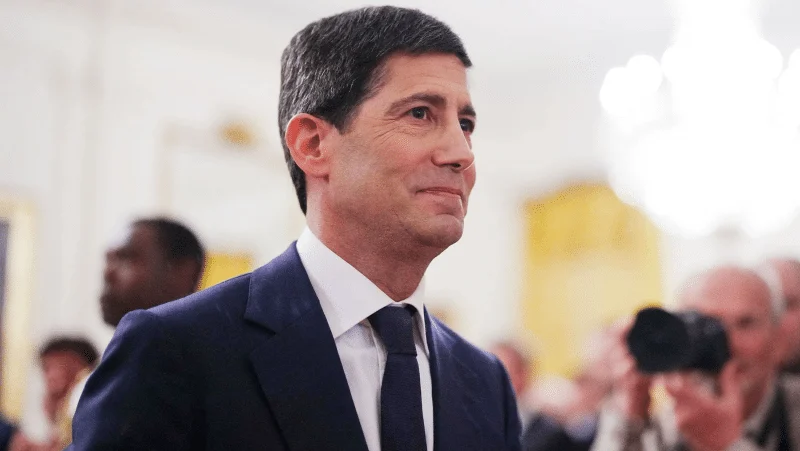
The Federal Reserve Board of Governors, in its first highly anticipated policy meeting under the leadership of newly appointed Chair Kevin Warsh, elected to keep the federal funds rate unchanged on Wednesday, signaling a cautious approach to a complex global economic landscape. The Federal Open Market Committee (FOMC) concluded its two-day session with a unanimous 12-0 vote to maintain the target range for the federal funds rate at 3.50% to 3.75%. This decision, while widely anticipated by institutional investors and market analysts, marks a pivotal moment in U.S. monetary policy as the "Warsh era" begins against a backdrop of persistent inflation, geopolitical instability in the Middle East, and a domestic economy showing surprising resilience.
In addition to the rate hold, the Committee reaffirmed its commitment to maintaining ample reserves within the banking system, a technical but crucial policy stance intended to ensure liquidity and stability in the overnight lending markets. The decision reflects a "wait-and-see" attitude as the central bank navigates the transition of leadership and evaluates the delayed effects of previous monetary tightening cycles.
Market Reactions and Investor Sentiment
The financial markets responded to the announcement with a mixture of caution and mild volatility. Bitcoin, which had already shown signs of weakness earlier in the trading session, saw its losses deepen, falling nearly 1% shortly after the statement’s release. The cryptocurrency market, often viewed as a barometer for global liquidity and risk appetite, remained largely defensive as traders digested the nuances of Warsh’s first official policy communication.
Equities also faced downward pressure. The S&P 500 and the tech-heavy Nasdaq Composite both retreated by approximately 1% as the news broke. While the rate pause was priced into the market—CME FedWatch tools had indicated a near-certainty of a hold—the tone of the Fed’s statement and the looming press conference created a sense of unease. Investors were particularly focused on whether the Fed would provide a clear path for future rate cuts or if the "higher for longer" mantra would be reinforced under the new chairmanship.
In the bond market, Treasury yields saw minor fluctuations as participants calibrated their expectations for the remainder of the year. The primary concern for Wall Street remains the "dot plot"—the Fed’s Summary of Economic Projections—which provides a visual representation of where individual committee members expect interest rates to be in the short and medium term.
The Economic Backdrop: Growth Amid Uncertainty
The Fed’s official statement characterized the U.S. economy as expanding at a "solid pace," a testament to the durability of consumer spending and business investment despite the highest interest rates seen in over a decade. However, this optimism was tempered by the acknowledgment of "elevated uncertainty," much of which stems from the ongoing conflict in the Middle East. The geopolitical situation has introduced significant volatility into energy markets, complicating the Fed’s mission to bring inflation back to its 2% long-term target.
Despite these headwinds, the Committee highlighted several bright spots in the domestic economy:
- Productivity Growth: The statement noted that productivity gains have remained strong, allowing the economy to grow without immediately triggering hyper-inflationary pressures.
- Capital Investment: Business spending on equipment and intellectual property has continued, suggesting that corporations remain confident in long-term demand.
- Labor Market Stability: Job gains have largely kept pace with an expanding workforce, and the national unemployment rate has remained relatively stable, hovering near historic lows.
This combination of steady growth and a firm labor market provides the Fed with the "policy space" to keep rates elevated without the immediate fear of triggering a deep recession.
The Inflation Challenge and the 2% Goal
Inflation remains the central bank’s primary antagonist. While the Consumer Price Index (CPI) has retreated significantly from its 2022 peaks, it remains stubbornly above the Fed’s 2% mandate. The FOMC statement explicitly noted that price pressures are being exacerbated by supply shocks, particularly in the energy sector.
The phrase "will deliver price stability" was a standout addition to the statement, serving as a firm signal to markets that the Fed is not yet ready to declare victory. This rhetoric suggests that Kevin Warsh intends to maintain a hawkish stance on inflation, potentially prioritizing price stability over immediate economic stimulus. Analysts suggest that this language is designed to anchor inflation expectations, preventing a psychological shift among consumers and businesses that could lead to a self-fulfilling inflationary spiral.
A New Era: The Significance of Kevin Warsh’s Chairmanship
Kevin Warsh’s ascension to the role of Chair represents a significant shift in the Federal Reserve’s leadership profile. A former Fed Governor and a figure well-known in both academic and financial circles, Warsh is often perceived as a pragmatist with a deep understanding of market mechanics. His first meeting was scrutinized not just for the rate decision itself, but for the "body language" of the Fed—the specific wording of the statement and the subsequent press conference.
Historically, new Fed Chairs face a "testing period" by the markets. Investors look for consistency, clarity, and a sense of how the Chair might react to unforeseen economic shocks. By delivering a unanimous 12-0 vote, Warsh demonstrated an early ability to build consensus among the Committee members, which includes both regional bank presidents and members of the Board of Governors.
Chronology of Federal Reserve Policy (2023-2024)
To understand the context of Wednesday’s decision, it is essential to review the trajectory of Fed policy over the last eighteen months:
- Early 2023: The Fed continued a series of aggressive 25 and 50-basis point hikes to combat 40-year high inflation.
- Mid 2023: A brief pause occurred as the Committee assessed the impact of the regional banking crisis involving Silicon Valley Bank and Signature Bank.
- Late 2023: The Fed reached the 3.50%-3.75% range, where it has largely remained, shifting from a "hiking" phase to a "restrictive" phase.
- Early 2024: Markets began speculating on a "pivot," expecting rate cuts to begin as inflation cooled. However, persistent service-sector inflation and rising energy costs delayed these plans.
- June 2024: Kevin Warsh takes the helm, inheriting a "goldilocks" economy that is neither too hot nor too cold, but remains vulnerable to external shocks.
Implications for the Crypto and Tech Sectors
The Fed’s decision to hold rates has profound implications for high-growth, "risk-on" assets like Bitcoin and technology stocks. Lower interest rates generally decrease the cost of borrowing and reduce the "discount rate" applied to future earnings, making tech stocks more attractive. Conversely, steady or rising rates tend to favor "value" stocks and fixed-income assets.
For the cryptocurrency sector, the Fed’s stance on liquidity is paramount. Bitcoin’s 1% drop following the announcement suggests that crypto investors were hoping for a more "dovish" (inclined toward lower rates) tone from Warsh. Since Bitcoin is often traded as a hedge against fiat currency debasement or as a high-beta play on global liquidity, the Fed’s commitment to "price stability" and maintaining a restrictive rate range acts as a headwind for digital asset prices in the short term.
The Global Perspective: Middle East Conflict and Supply Chains
The Fed’s mention of the Middle East highlights the interconnectedness of modern monetary policy and global geopolitics. The conflict has the potential to disrupt shipping lanes in the Red Sea and impact oil production in the Persian Gulf. If energy prices spike, the Fed may be forced to keep interest rates high for even longer to counteract the inflationary impact of rising fuel and transport costs.
Furthermore, the strength of the U.S. dollar, bolstered by higher relative interest rates, continues to place pressure on emerging market economies that hold debt denominated in USD. As the Fed maintains its 3.50% to 3.75% range, central banks in Europe, Japan, and the UK must calibrate their own policies to avoid excessive currency devaluation against the greenback.
Analysis: What to Expect Next
The focus now shifts from the rate decision to the "forward guidance" provided by Chair Warsh in his inaugural press conference. Market participants are seeking answers to several critical questions:
- The Threshold for Cuts: What specific data points (e.g., a specific CPI print or a rise in unemployment) would trigger the first rate cut?
- The Neutral Rate: Does the Warsh-led Fed believe the "neutral" interest rate (the rate that neither stimulates nor restricts the economy) is higher than previously thought?
- Quantitative Tightening: Will the Fed continue to shrink its balance sheet at the current pace, or is there a plan to taper the runoff of Treasury and mortgage-backed securities?
Most analysts believe that unless there is a significant cooling of the labor market or a rapid descent of inflation toward the 2% mark, the Fed will remain on hold through the summer. The "dot plot" projections will be essential in determining if the Committee still envisions one or two cuts before the end of the year, or if 2024 will conclude without any easing of monetary policy.
Conclusion
The Federal Reserve’s decision to maintain interest rates at 3.50% to 3.75% serves as a signal of continuity and caution during a period of institutional transition. Under Chair Kevin Warsh, the central bank appears committed to a disciplined approach to inflation, even at the cost of short-term market volatility. As the global economy grapples with the dual challenges of geopolitical strife and post-pandemic structural shifts, the Fed’s role as the "lender of last resort" and the guardian of price stability has never been more critical.
For investors in both traditional and digital asset markets, the message is clear: the era of "easy money" remains in the rearview mirror. The path forward will be dictated by hard data, with a particular emphasis on how energy costs and productivity gains balance out in the coming months. As Kevin Warsh settles into his role, the financial world will be watching every word and every decimal point for clues on the future of the American—and global—economy.














