


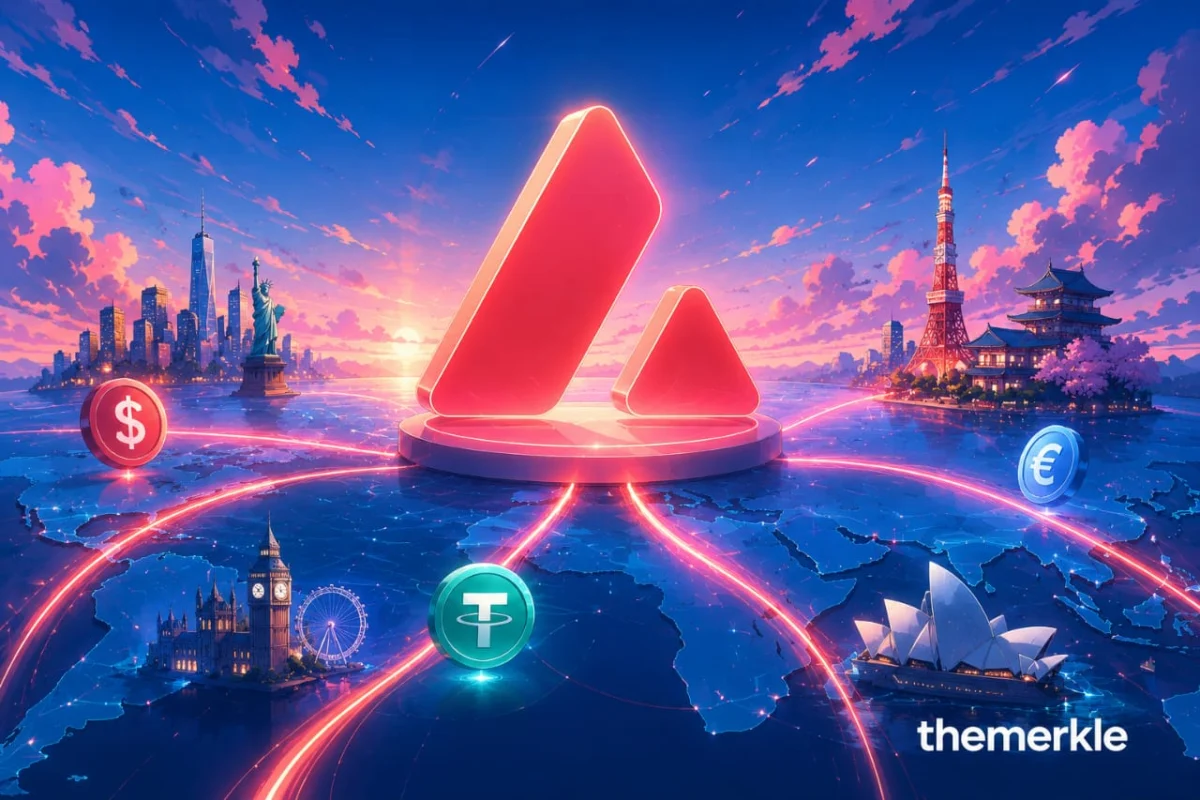
Avalanche, a leading blockchain platform, has announced the formation of the Avalanche Payments Collective, a groundbreaking initiative that brings together 28 diverse organizations spanning nearly every facet of the global payments ecosystem. This collective aims to fundamentally reshape how money moves across borders, addressing long-standing inefficiencies with a unified, blockchain-powered infrastructure.
The roster of founding participants reads like a who’s who of both traditional finance and pioneering crypto-native infrastructure. It includes venerable asset managers such as Franklin Templeton and VanEck, alongside regulated digital asset custodians like Anchorage Digital and stablecoin issuers like Paxos. Other key players include Agora, Ethena, Rain, Axiym, and Tassat, with companies working across critical areas such as stablecoins, settlement, treasury infrastructure, custody, and foreign exchange. This diverse amalgamation of expertise underscores the ambitious scope of the collective.
This is far from a mere cosmetic announcement; the Avalanche Payments Collective is set to tackle payment flows that extend across more than 150 countries and support 96 currencies. Crucially, it targets approximately 22 billion payout endpoints globally. These figures are not speculative projections but reflect the existing operational reach of the founding members, positioning this initiative on a genuinely global scale, transcending the typical regional pilot programs or niche product launches often seen in the blockchain space. For an industry that has long theorized about blockchain’s potential to replace slow, fragmented, and costly payment rails, this collective represents one of the most concrete and institutionally backed efforts to build that very replacement.
The Genesis of the Avalanche Payments Collective
The formal launch of the Avalanche Payments Collective is the culmination of years of quiet development and strategic partnerships within the Avalanche ecosystem. While individual companies across stablecoins, settlement, and treasury infrastructure had been building on the network independently, the Collective now provides a shared identity, coordinated roadmap, and synergistic framework for these previously disparate efforts. The motivation behind this consolidation stems from a critical realization: speed alone is insufficient to solve the multifaceted challenges of global money movement.
For decades, the global financial system has grappled with a complex web of intermediaries, legacy technologies, and fragmented regulatory landscapes that make cross-border payments slow, expensive, and opaque. The Society for Worldwide Interbank Financial Telecommunication (SWIFT) system, while revolutionary in its time, operates as a messaging network rather than a direct settlement layer, often leading to multi-day settlement times and significant reconciliation costs. Blockchain technology, with its promise of near-instant, immutable, and transparent transactions, has long been touted as the solution, yet practical, institutionally viable implementations have been scarce.
Avalanche’s framing of this initiative directly confronts this complexity, asserting that the future of payments demands far more than just faster transactions. Moving money across national borders necessitates a seamless integration of various functions: managing liquidity, ensuring compliance with diverse regulatory regimes, streamlining settlement processes, optimizing treasury management, providing secure custody solutions, facilitating efficient foreign exchange, and navigating myriad local payment networks. The critical challenge lies in ensuring all these disparate pieces work in concert, rather than existing as independent, siloed systems.
A stablecoin might offer near-instantaneous settlement, but if the compliance layer at the sending end cannot communicate effectively with the custody layer at the receiving end, the inherent speed advantage of the blockchain becomes moot. Funds can still become trapped, manual interventions are still required, and the same friction points that have plagued cross-border payments for decades persist. The Avalanche Payments Collective seeks to eliminate these bottlenecks by providing a unified on-chain layer where these critical functions can seamlessly interoperate.
A Cross-Section of Financial Powerhouses
The intentional blend of traditional finance titans and cutting-edge crypto innovators within the collective is a defining characteristic. This deliberate mix signals a maturing landscape where the strengths of both worlds are leveraged to create a superior system.
- Franklin Templeton and VanEck: These established asset managers bring immense institutional capital, decades of trust, and a deep understanding of regulated financial markets. Both firms have been at the forefront of exploring tokenized fund products and digital asset investment vehicles, demonstrating their proactive embrace of blockchain technology within a compliant framework. Their participation lends significant credibility and an immediate pathway to integrate substantial pools of institutional capital into the collective’s infrastructure.
- Anchorage Digital: As one of the few federally chartered digital asset banks in the United States, Anchorage Digital’s involvement is pivotal. Its status as a regulated and audited custodian ensures that the digital assets underpinning the collective’s payment infrastructure meet the stringent security, compliance, and operational standards demanded by large financial institutions. This directly addresses a primary hurdle that has historically impeded mainstream adoption of blockchain payments: trust in custody and regulatory oversight.
- Paxos: A leading regulated blockchain infrastructure platform and stablecoin issuer (responsible for USDP and having previously powered BUSD), Paxos provides crucial on-chain liquidity and settlement capabilities. Their expertise in issuing regulated stablecoins, which act as the digital fiat equivalent on the blockchain, is fundamental to enabling fast, reliable, and compliant value transfer.
- Agora and Ethena: These participants further bolster the collective’s stablecoin and settlement capacity. Ethena, known for its synthetic dollar protocol USDe, brings innovative approaches to stablecoin design and yield generation, potentially adding new dimensions to on-chain liquidity management within the collective.
- Rain, Axiym, and Tassat: These companies round out the group with diverse capabilities essential for a comprehensive payment network. Rain contributes expertise in card issuance, facilitating the connection between on-chain value and traditional consumer spending. Axiym specializes in business payments, addressing the needs of enterprises for efficient global transactions. Tassat provides additional settlement infrastructure, particularly relevant for interbank and wholesale payment scenarios.
Individually, each of these companies operates within a specific niche. The genius of the Avalanche Payments Collective lies in its ability to stitch these narrow lanes together. Custody layers can seamlessly communicate with settlement systems, which in turn connect with treasury infrastructure, and that infrastructure can interact efficiently with foreign exchange mechanisms. All these operations are unified through Avalanche’s blockchain, eliminating the need for each member to develop and integrate with separate, disconnected systems.
Unprecedented Scale and Reach
The sheer scale articulated by the Avalanche Payments Collective’s launch figures demands careful consideration, as they represent a tangible impact rather than aspirational goals. The claim of facilitating payment flows across 150+ countries and 96 currencies is not a statement about future potential; it describes the existing infrastructure that the founding members already operate. What changes with the collective is the attempt to connect and route an increasing share of these established operations through a shared, on-chain layer.
The figure of 22 billion payout endpoints is perhaps the most striking. To understand its magnitude, one must consider the vast array of destinations for global payments: individual bank accounts, mobile wallets, card networks, and other financial instruments across nearly a hundred different currencies and jurisdictions. This number is not tied to the speculative growth projections of crypto adoption curves; it is anchored in the reality of the existing global payment infrastructure that the founding members already touch through their regular business operations. This signifies a direct integration into the current financial plumbing of the world.
By routing these flows through Avalanche, the collective aims to enable settlement, compliance, and liquidity management to move in tandem, rather than being handled by disparate systems that often fail to communicate effectively. This unification promises to unlock efficiencies, reduce costs, and enhance transparency on an unprecedented scale for institutional and enterprise payments.
The Avalanche Advantage: A Unified On-Chain Layer
Avalanche’s underlying technology provides the crucial backbone for this ambitious collective. Known for its high throughput, low latency, and customizable subnet architecture, Avalanche is well-suited for enterprise-grade applications requiring scalability and regulatory compliance.
The subnet architecture allows institutions to launch application-specific blockchains that can be tailored to specific regulatory requirements, privacy needs, and performance demands. This means that while operations benefit from the security and decentralization of the broader Avalanche network, participants can also maintain control over their data and transactions within their dedicated subnets, addressing critical concerns for financial institutions. The ability to create permissioned subnets, where only approved participants can transact, is particularly attractive to regulated entities.
Furthermore, Avalanche’s consensus mechanism (Snowman protocol) ensures rapid finality, which is essential for real-time gross settlement (RTGS) systems and high-volume payment processing. This technical prowess, combined with a developer-friendly environment, has positioned Avalanche as a preferred platform for institutional-grade decentralized finance (DeFi) and enterprise blockchain solutions.
Beyond Hype: Differentiating from Typical Crypto Payment Plays
The blockchain industry has seen numerous projects proclaim themselves as the future of payments, with many failing to move beyond marketing rhetoric. What fundamentally differentiates the Avalanche Payments Collective is the caliber, seniority, and regulatory standing of its participants.
The involvement of firms like Franklin Templeton and VanEck is not merely symbolic. These are institutions with decades of operational history, immense pools of institutional trust, and a deep understanding of the regulatory landscape. Their willingness to directly integrate into Avalanche’s ecosystem carries significant weight, signaling a level of confidence and commitment that smaller, less established participants could not replicate. It demonstrates a strategic pivot by traditional finance towards leveraging blockchain for core business functions, rather than simply exploring it as a peripheral technology.
Anchorage Digital’s role further underscores this distinction. As a federally chartered digital asset bank, its presence guarantees that the custody aspects of this payments infrastructure adhere to the highest regulatory standards. This is a critical detail that separates the Avalanche Payments Collective from many earlier attempts at blockchain-based payment rails, which often struggled to overcome the fundamental hurdles of trust, compliance, and regulatory clarity. For large financial players, operating within a framework that meets existing regulatory expectations is non-negotiable.
This initiative is not attempting to bypass regulation but rather to integrate blockchain technology within a compliant and regulated framework, making it palatable for mainstream financial adoption. This collaborative, institution-first approach stands in stark contrast to many earlier crypto projects that prioritized decentralization and disintermediation above all else, often at the expense of regulatory compatibility.
Broader Implications for Global Finance
The launch of the Avalanche Payments Collective carries profound implications for the future of global finance.
- Cost Reduction and Efficiency: By streamlining processes, reducing intermediaries, and enabling near-instant settlement, the collective has the potential to significantly lower the costs and accelerate the speed of cross-border payments, benefiting businesses, financial institutions, and ultimately, consumers.
- Enhanced Transparency and Auditability: Blockchain’s inherent transparency and immutability will provide an unparalleled audit trail for transactions, enhancing compliance and reducing opportunities for fraud and error.
- Interoperability and Standardization: By bringing together diverse players onto a common platform, the collective fosters greater interoperability within the financial system, potentially leading to the standardization of digital asset payment protocols.
- Bridging TradFi and DeFi: This initiative serves as a powerful example of the convergence between traditional finance (TradFi) and decentralized finance (DeFi). It demonstrates how blockchain technology, initially conceived for peer-to-peer digital cash, can be harnessed by established financial institutions to modernize their operations while adhering to regulatory requirements.
- Innovation in Financial Products: A more efficient and interconnected payment infrastructure can pave the way for new financial products and services, such as tokenized real-world assets, instant liquidity solutions, and more sophisticated treasury management tools.
- Accelerated Digital Asset Adoption: By providing a robust, compliant, and institutional-grade framework for digital asset payments, the collective is likely to accelerate the broader adoption of stablecoins and other tokenized assets in mainstream financial transactions.
While the path to fully replacing legacy systems will be gradual and fraught with challenges—including continued regulatory evolution, technological integration complexities, and the need for sustained collaboration—the Avalanche Payments Collective marks a pivotal moment. It signifies a tangible shift from theoretical discussions about blockchain’s potential in payments to the active construction of a globally integrated, institutionally supported, and compliant digital payment infrastructure. The collective is not just building a new payment rail; it is constructing a foundational layer for a more efficient, transparent, and interconnected global financial future.














