


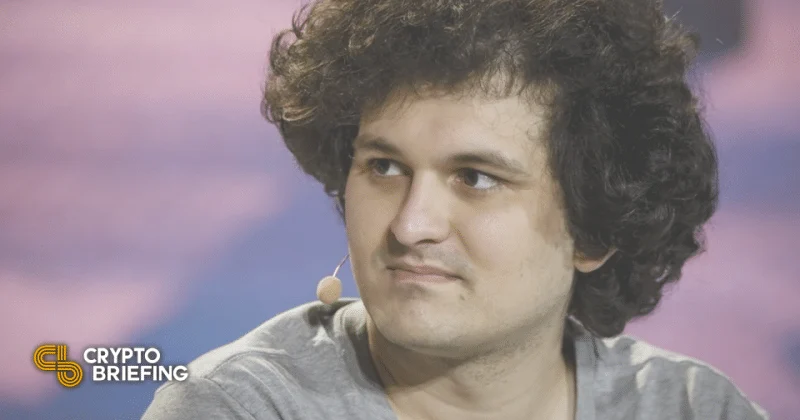
The United States Court of Appeals for the Second Circuit in Manhattan has formally upheld the fraud conviction of Sam Bankman-Fried, the co-founder and former CEO of the collapsed cryptocurrency exchange FTX. This landmark decision, issued on Friday, ensures that Bankman-Fried will remain in federal custody until 2044, effectively ending his primary legal challenge against a 25-year prison sentence. Bankman-Fried, who was once celebrated as a visionary billionaire and the face of a regulated, mainstream future for digital assets, saw his empire crumble in late 2022 amidst revelations of massive financial impropriety. The appeals court’s ruling marks a definitive chapter in one of the most significant white-collar criminal cases in American history, reinforcing the jury’s 2023 verdict which found him guilty on seven counts of wire fraud, securities fraud, and money laundering.
The appellate decision addresses a series of legal arguments raised by Bankman-Fried’s defense team, which sought to overturn the conviction on the grounds of judicial bias and evidentiary restrictions. Despite these claims, the three-judge panel found no merit in the assertion that the trial was fundamentally unfair. The ruling maintains the legal precedent that the misappropriation of customer funds, regardless of the ultimate intent to repay or the perceived solvency of the institution, constitutes a criminal breach of trust and law.
The Grounds of the Appeal and Judicial Reasoning
In September 2024, Bankman-Fried’s legal counsel launched an ambitious appeal, centered largely on the conduct of U.S. District Judge Lewis Kaplan, who presided over the original trial. The defense argued that Judge Kaplan had unfairly restricted the evidence presented to the jury, specifically regarding Bankman-Fried’s belief that FTX possessed sufficient assets to cover customer withdrawals. The defense posited that if Bankman-Fried had been allowed to present a more robust "solvency defense," the jury might have viewed his actions as a series of business miscalculations rather than a premeditated scheme to defraud.
However, the Second Circuit Court of Appeals rejected these arguments. The court noted that the evidence presented during the trial was "overwhelming" and that the restrictions placed by Judge Kaplan were within the bounds of judicial discretion. Prosecutors argued successfully that the core of the crime was not whether the money could eventually be paid back, but the fact that it was taken without authorization in the first place. The appeals court echoed the sentiment expressed by Judge Kaplan during the March 2024 sentencing, where he noted that Bankman-Fried was fully aware that his conduct was wrongful. Kaplan famously stated that the defendant had not shown true remorse, but rather a regret that he had "underestimated the risk of being caught."
A Chronology of the FTX Collapse and Legal Proceedings
The journey from industry leader to federal inmate began in early November 2022, when a report by CoinDesk revealed irregularities in the balance sheet of Alameda Research, a hedge fund also owned by Bankman-Fried. The report suggested that Alameda’s foundation was built on FTT, a utility token created by FTX, rather than independent assets. This revelation sparked a "run on the bank," as panicked investors attempted to withdraw billions of dollars from the exchange.
On November 11, 2022, FTX, Alameda Research, and dozens of affiliated entities filed for Chapter 11 bankruptcy protection. Bankman-Fried resigned as CEO the same day. Following a swift investigation by the Department of Justice (DOJ), the Securities and Exchange Commission (SEC), and the Commodity Futures Trading Commission (CFTC), Bankman-Fried was arrested in the Bahamas in December 2022 and subsequently extradited to the United States.
The trial, which commenced in October 2023, lasted approximately five weeks. During the proceedings, the prosecution built a narrative of systemic deception. They alleged that Bankman-Fried had engineered a "backdoor" in FTX’s software that allowed Alameda Research to maintain a virtually limitless line of credit using customer deposits. This money was then used to fund high-risk investments, political donations, and lavish real estate purchases in the Bahamas.
The Role of Cooperating Witnesses and Internal Testimony
The strength of the prosecution’s case was significantly bolstered by the testimony of Bankman-Fried’s closest associates. Former Alameda Research CEO Caroline Ellison, FTX co-founder Gary Wang, and former FTX engineering chief Nishad Singh all pleaded guilty to related charges and cooperated with the government.
Their testimony was damning. Ellison, who had a complicated personal relationship with Bankman-Fried, told the jury that he had personally directed her to use customer funds to repay Alameda’s creditors. She testified that the "backdoor" was a deliberate design choice intended to hide the fund’s insolvency from auditors and lenders. Wang and Singh provided technical corroboration, explaining how the code was altered to exempt Alameda from the exchange’s standard liquidation protocols.
Bankman-Fried took the stand in his own defense—a move considered risky by legal experts. Over several days of testimony, he struggled to explain the discrepancies in the company’s accounting, often claiming a lack of memory or shifting blame to his subordinates for "operational errors." The jury, however, took less than five hours of deliberation to return a guilty verdict on all counts, signaling a total rejection of his narrative.
Financial Impact and Recovered Assets
The scale of the fraud was staggering, with an estimated $8 billion in customer funds missing at the time of the collapse. The bankruptcy proceedings, led by veteran restructuring expert John J. Ray III—who famously oversaw the liquidation of Enron—revealed a "complete failure of corporate controls." Ray testified that he had never seen such a lack of documentation and oversight in his career.
In the years following the collapse, the FTX bankruptcy estate has made significant strides in recovering assets. Through the sale of venture capital investments, the liquidation of cryptocurrency holdings, and the recovery of real estate, the estate has indicated that most customers may eventually receive the dollar value of their holdings as of the petition date. However, many creditors remain frustrated, as the surge in cryptocurrency prices since late 2022 means that a "dollar-for-dollar" return represents a significant loss in terms of the actual digital assets they held.
The recovery of these funds was a central point in Bankman-Fried’s appeal. He argued that the eventual availability of funds proved he never intended to steal. The legal system, however, has maintained that the crime of fraud is completed at the moment of the deceptive taking, regardless of the eventual financial outcome for the victims.
Broader Implications for the Cryptocurrency Industry
The finality of Bankman-Fried’s conviction serves as a watershed moment for the global cryptocurrency industry. For years, the sector operated in a regulatory "gray area," often characterized by a "move fast and break things" ethos. The FTX scandal forced a reckoning, leading to increased scrutiny from global regulators and a shift toward more stringent compliance standards.
Since the trial, the SEC and CFTC have ramped up enforcement actions against other major exchanges, citing the FTX case as a prime example of the dangers of commingling assets and a lack of transparency. The case has also influenced legislative efforts in the United States and abroad, such as the Markets in Crypto-Assets (MiCA) regulation in the European Union, which seeks to provide a comprehensive framework for digital asset service providers.
Furthermore, the case has altered the public perception of crypto-philanthropy and political influence. Bankman-Fried was one of the largest donors to the Democratic Party and a proponent of "effective altruism." The revelation that these donations were likely funded by stolen customer money has led to the clawback of millions of dollars in political contributions and a general skepticism toward "white knight" figures in the tech space.
The Final Legal Recourse: Clemency and Presidential Pardons
With the appellate court’s rejection of his bid to overturn the conviction, Bankman-Fried’s remaining legal options are extremely limited. While a petition to the United States Supreme Court remains a theoretical possibility, the high court hears only a tiny fraction of the cases presented to it, and legal analysts suggest there are no significant constitutional questions in this case that would warrant their intervention.
Consequently, Bankman-Fried has turned his attention to the executive branch. Recent reports indicate that the former executive has formally requested a presidential pardon or clemency. His supporters argue that the 25-year sentence is excessive compared to other white-collar crimes and that his intentions were not malicious. However, given the scale of the victim impact and the high-profile nature of the fraud, political analysts suggest that a pardon is highly unlikely in the current political climate.
Bankman-Fried continues to maintain his innocence from his prison cell, frequently communicating through his legal team that his case was "mishandled" and that he was denied the opportunity to properly defend himself. Despite these assertions, the ruling from the Second Circuit provides a sense of finality for the thousands of victims who lost their life savings in the FTX collapse.
As the industry moves forward, the shadow of FTX remains a cautionary tale. The 2044 release date for Sam Bankman-Fried serves as a stark reminder of the consequences of financial deception in the digital age. The case has redefined the boundaries of corporate governance in the crypto era, ensuring that the principles of transparency and fiduciary responsibility remain paramount, regardless of the underlying technology.














