


The financial world is poised for a pivotal week, with investors closely monitoring the Federal Reserve’s latest policy insights, a series of significant corporate earnings reports, and the highly anticipated integration of SpaceX into the prestigious Nasdaq 100 index. These events are expected to provide critical clarity on the trajectory of monetary policy, the resilience of consumer spending, and the market’s appetite for high-growth technology companies in the current economic climate. As the second half of 2026 commences, market participants are keenly dissecting every data point and corporate announcement to recalibrate their strategies amidst a backdrop of persistent inflation and evolving economic indicators.
Federal Reserve’s Tightening Stance Under Kevin Warsh Takes Center Stage
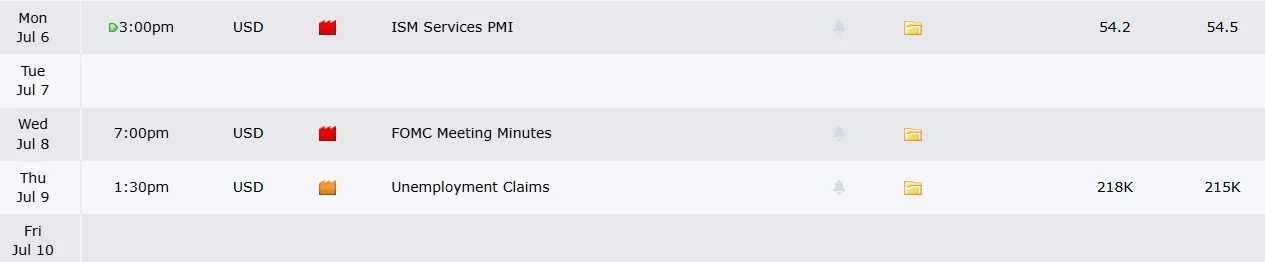
The week’s most closely watched event is undoubtedly the release of the Federal Reserve’s June policy meeting minutes on Wednesday at 2 p.m. ET. These minutes are expected to offer an in-depth look into the deliberations of the Federal Open Market Committee (FOMC), particularly regarding the future path of interest rates. During the June session, a significant revelation emerged: fifty percent of voting members indicated their anticipation of at least one additional rate increase before the calendar year concludes. This consensus, or rather, the stark division it highlights, has intensified market speculation regarding the Fed’s resolve to combat inflation.
Under the leadership of new Federal Reserve Chair Kevin Warsh, the central bank has visibly adopted a more restrictive monetary policy stance. Appointed earlier this year, Warsh, a former Fed Governor with a reputation for hawkish views, has consistently emphasized the need for vigilance against inflationary pressures, even at the risk of tempering economic growth. His public statements have frequently underscored the Fed’s commitment to its dual mandate of maximum employment and price stability, with recent commentary leaning heavily towards the latter. This shift marks a notable departure from the more accommodative policies of his predecessor, prompting market participants to meticulously scrutinize the upcoming minutes for any additional nuances or forward guidance on the committee’s collective outlook for inflation, growth, and the terminal rate.
Analysts at major financial institutions are particularly keen to identify any subtle shifts in language or specific economic projections that could signal a stronger or weaker commitment to further tightening. The "dot plot" summary of individual FOMC members’ rate expectations, which is typically updated quarterly, will be implicitly foreshadowed by the tone of these minutes. Should the minutes reveal a more unified hawkish front than previously assumed, or if specific concerns about persistent core inflation are highlighted, it could prompt a re-pricing of future rate hike probabilities. Conversely, any indications of growing caution among members regarding potential economic slowdowns could temper expectations.
Adding to the week’s economic data deluge, the weekly unemployment claims figures are also scheduled for release. These statistics provide a timely snapshot of the labor market’s health. The previous week’s employment statistics registered below analyst projections, with initial jobless claims coming in at 245,000 against an expected 230,000. This unexpected uptick in claims temporarily reduced speculation about imminent rate increases, as a softening labor market could alleviate wage pressure, a key driver of inflation. However, sustained claims below the 250,000 mark are still generally considered indicative of a robust job market, and a single week’s data is unlikely to sway the Fed’s long-term policy direction significantly.
Furthermore, the New York Federal Reserve’s consumer inflation expectations report will provide valuable insight into the public’s perception of future price trends. This report is crucial because consumer expectations can become self-fulfilling prophecies; if individuals anticipate higher inflation, they may demand higher wages and accept higher prices, perpetuating the cycle. Given the current environment of "elevated inflation," which has seen the Consumer Price Index (CPI) hover around 4.8% year-over-year in recent months, well above the Fed’s 2% target, any upward trend in consumer expectations would be a significant concern for policymakers. A rise in this sentiment could reinforce the Fed’s determination to pursue a more aggressive rate hike strategy.
Consumer Spending Patterns Under the Microscope: Corporate Earnings Reveal Shifting Trends
Beyond the Federal Reserve’s pronouncements, several key corporate reports this week will offer direct insights into the state of consumer spending and corporate resilience in an inflationary environment. These reports serve as crucial barometers for the broader economic landscape, reflecting how businesses and consumers are adapting to evolving market conditions.
PepsiCo, the global food and beverage giant, recently implemented pricing reductions during the winter months. This strategic move came in response to "elevated inflation" causing shoppers to actively seek alternatives to premium-priced products, putting pressure on sales volumes. The decision to lower prices, a rare occurrence for a company of PepsiCo’s stature in a high-inflation period, underscores the competitive pressures and the sensitivity of consumers to price increases. While average food and beverage prices have risen by approximately 6.5% over the past year, some categories saw double-digit increases, pushing consumers towards private-label brands or cheaper alternatives. PepsiCo’s earnings call, while not scheduled for this week, has already set a precedent for how large consumer staples companies are navigating the delicate balance between maintaining profitability and retaining market share in a price-sensitive market. Investors will be keen to see if this strategy has yielded the desired increase in sales volumes, even if it impacts margins in the short term.
In stark contrast, Delta Air Lines painted a more optimistic picture of consumer appetite for travel. The airline described travel demand as "really great" in March, indicating a robust rebound in discretionary spending on experiences. However, this surge in demand was accompanied by Delta implementing fare increases to offset "rising operational expenses," primarily driven by elevated fuel costs and increased labor expenditures. Jet fuel prices, while off their peak, remain significantly higher than pre-pandemic levels, and a tight labor market has pushed up pilot and cabin crew wages. Delta’s strategy highlights a segment of consumers willing to absorb higher prices for premium services, but also underscores the persistent cost pressures facing the service industry. The full quarterly reports from airlines, expected in the coming weeks, will provide a more granular breakdown of profitability and forward guidance, but Delta’s early assessment points to a bifurcation in consumer behavior: value-seeking in essentials versus willingness to spend on desired experiences.
These contrasting approaches from PepsiCo and Delta collectively paint a complex picture of consumer behavior in 2026. While some consumers are actively trading down in grocery aisles, others are showing a strong propensity to spend on travel and leisure, suggesting that the impact of inflation and higher interest rates is uneven across different income brackets and spending categories. The upcoming quarterly reports from a range of companies will provide investors with invaluable, granular insight into these current consumer spending patterns, helping to refine economic models and investment strategies.
Further deepening the insights into consumer trends, Levi Strauss & Co. is set to announce its fiscal second-quarter financial performance on Wednesday. The iconic apparel company has demonstrated remarkable resilience and growth, having exceeded analyst estimates in the previous quarter and subsequently upgrading its full-year guidance. Management attributed these positive results to "enhanced direct-to-consumer (DTC) channel performance" and "expanded product offerings beyond traditional denim." The DTC strategy, encompassing e-commerce and company-owned stores, typically yields higher margins and allows for greater brand control. Furthermore, the successful diversification into categories like activewear, casual shirts, and accessories has broadened Levi’s appeal beyond its traditional denim core, attracting new customer segments. Analysts are expecting another strong quarter, with consensus estimates pointing to revenue growth of approximately 7-9% year-over-year and diluted earnings per share (EPS) of $0.35-$0.38. A continued focus on brand innovation and digital transformation is anticipated to drive future growth, making Levi’s a bellwether for the broader apparel retail sector.
Finally, Costco Wholesale Corporation will publish its highly anticipated monthly sales data during the week. As a leading membership-only warehouse club, Costco’s sales figures are a crucial indicator of consumer confidence and purchasing power, particularly for household staples and discretionary bulk purchases. Given its broad customer base and diverse product offerings, Costco’s performance often provides a reliable snapshot of retail trends across various income demographics. Analysts will be closely watching for any signs of deceleration in sales growth or changes in product mix, which could signal shifting consumer priorities or increased price sensitivity among its members. Strong sales figures from Costco would reinforce the narrative of a resilient consumer, while weaker numbers could amplify concerns about economic slowdowns.
SpaceX Soars into the Elite Nasdaq 100 Index Amidst IPO Volatility
A significant development in the technology sector this week is the inclusion of SpaceX, the pioneering aerospace manufacturer and space transportation services company, into the elite Nasdaq 100 index. This momentous event will occur prior to Tuesday’s market opening, marking a new chapter for the company and potentially impacting its stock performance. The Nasdaq 100 benchmark index comprises the 100 largest non-financial corporations listed on the Nasdaq stock exchange, serving as a performance reference for numerous institutional investment portfolios and a proxy for the broader technology and growth-oriented market.
SpaceX’s entry into such a prestigious index is anticipated to generate increased buying pressure on its equity. This is primarily due to passive index funds, which are mandated to mirror the composition of the indices they track. As SpaceX becomes a constituent of the Nasdaq 100, these passive funds, managing trillions of dollars globally, will be required to establish positions in SpaceX shares to maintain their index weighting. This programmatic buying often provides a solid floor for a newly added stock and can contribute to upward price momentum, at least in the short to medium term. Historically, companies joining major indices often experience a price bump in the days leading up to and immediately following their inclusion.
SpaceX equity has experienced substantial price fluctuations since the company’s highly anticipated June 12 market debut. The shares commenced trading at a reduced valuation of $150 per share, a figure that some analysts considered conservative given the company’s ambitious projects and market leadership. Following its IPO, the stock briefly surged above $225, a meteoric rise that temporarily positioned SpaceX’s market capitalization ahead of e-commerce and cloud computing giant Amazon, highlighting the immense investor enthusiasm and speculative fervor surrounding the company. However, this initial euphoria was short-lived, with the stock retreating significantly to a low of $147 as market volatility and profit-taking set in. The shares concluded last week’s trading session at $162, reflecting a period of consolidation after its initial wild ride. Market observers anticipate continued price volatility in the near term, as investors grapple with valuing a company at the forefront of space exploration and satellite internet.
This week simultaneously marks the conclusion of the mandatory analyst quiet period that followed SpaceX’s initial public offering. During this period, investment research firms involved in the IPO are restricted from publishing research or recommendations to prevent conflicts of interest and ensure a level playing field. With the quiet period now lifted, these professional investment research firms are authorized to distribute their inaugural analysis and recommendations on the company. This influx of detailed financial models, price targets, and "buy," "hold," or "sell" ratings from reputable institutions like Goldman Sachs, Morgan Stanley, and JPMorgan could significantly influence share price movement. Initial reports are expected to focus on SpaceX’s long-term growth prospects, profitability pathways for Starlink, and the capital-intensive nature of its rocket development programs. Analyst consensus is widely expected to initiate coverage with "Outperform" or "Buy" ratings, with price targets ranging from $190 to $250, reflecting optimism about its market position and innovative technologies. However, the market’s reaction to these initial assessments will be crucial in determining the stock’s direction in the coming months.
High-Profile Conferences and Broader Market Context
Beyond specific company news and economic data, two significant industry conferences are set to convene this week, bringing together influential leaders from the technology, media, and artificial intelligence sectors.
The exclusive Allen & Company Sun Valley Conference commences this week in Idaho. Often dubbed the "billionaire’s summer camp," this annual gathering attracts an unparalleled roster of senior executives from the world’s most powerful corporations. This year, attendees are scheduled to include top leadership from Apple, Amazon, Meta, Google, Netflix, Disney, and Warner Bros. Discovery. The conference is renowned for being a fertile ground for informal networking, high-level discussions on industry trends, and often, the genesis of major mergers and acquisitions. While no formal announcements are typically made during the event, the discussions held among these titans of industry can shape the strategic direction of entire sectors, influencing future investment decisions and market sentiment. Topics expected to dominate conversations include the ongoing streaming wars, the future of artificial intelligence integration in consumer products, regulatory challenges facing big tech, and potential consolidation opportunities in a rapidly evolving digital landscape.
Concurrently, the Raise Summit AI conference convenes in Paris, showcasing thought leaders and innovators at the cutting edge of artificial intelligence. This specialized event will feature prominent figures from Google’s AI division, chipmaker Broadcom, leading AI research company Anthropic, and OpenAI, the developer of advanced AI models. The discussions at Raise Summit AI are expected to delve into the latest advancements in machine learning, ethical considerations in AI development, the commercialization of AI technologies, and the significant investment flowing into the sector. The insights shared at this conference could provide a glimpse into the next wave of technological innovation and identify potential beneficiaries of the AI boom, offering valuable intelligence for investors focused on disruptive technologies.
In a broader market context, the three primary U.S. equity indexes concluded the second quarter of 2026 with impressive percentage gains in the double digits, marking a robust performance despite persistent inflationary pressures and rising interest rates. The S&P 500, a broad measure of the U.S. stock market, surged by approximately 11.5%, while the technology-heavy Nasdaq Composite led the charge with a remarkable 15.2% gain, largely driven by the strong performance of mega-cap tech stocks and renewed optimism around AI. The Dow Jones Industrial Average, representing 30 large U.S. companies, also posted a healthy 9.8% increase for the quarter. The previous week featured abbreviated trading due to the Independence Day holiday, but all three major benchmarks registered positive returns, extending their upward momentum. This sustained market resilience, even in the face of a tightening monetary policy and mixed economic signals, underscores investor confidence in corporate earnings growth and the long-term prospects of the U.S. economy, albeit with an underlying current of caution regarding potential future headwinds. The confluence of this week’s events will be crucial in determining whether this positive momentum can be sustained into the latter half of the year.














