


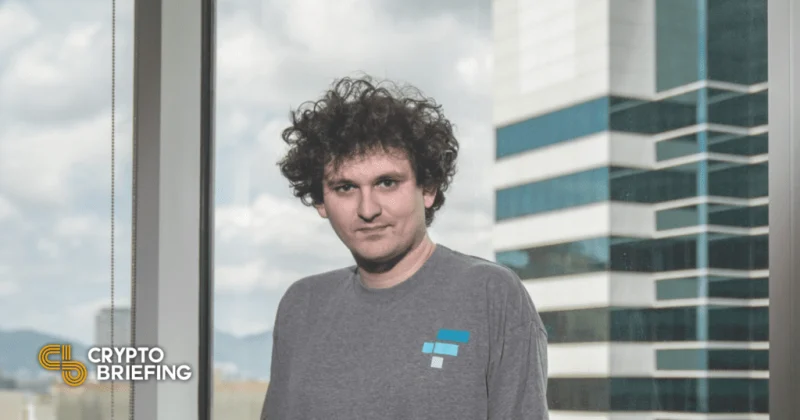
Sam Bankman-Fried, the disgraced co-founder and former chief executive of the defunct cryptocurrency exchange FTX, has officially submitted a petition for a presidential pardon to the United States Department of Justice. The formal request comes slightly more than two years after the catastrophic collapse of his multi-billion-dollar crypto empire and less than a year after he was sentenced to 25 years in federal prison. Records appearing on the Department of Justice’s Office of the Pardon Attorney website, initially identified by Bloomberg Tax, indicate that the 34-year-old former billionaire is seeking "pardon after completion of sentence," a categorization that usually applies to those who have already served their time but seek to have their records cleared. However, in the context of Bankman-Fried’s ongoing incarceration, legal experts suggest this represents a comprehensive effort to secure immediate executive clemency from President Donald Trump.
The application marks a significant escalation in Bankman-Fried’s campaign for freedom, which has shifted from the courtroom to the court of public opinion and the executive branch. Since his conviction in late 2023, Bankman-Fried has increasingly utilized interviews with conservative-leaning media outlets and social media platforms to argue that his prosecution was politically motivated and that the financial harm caused by FTX’s insolvency has been largely mitigated by the recovery of crypto markets. This strategic pivot coincides with President Trump’s broader use of his executive pardon powers, which in his second term has already seen a flurry of relief granted to various high-profile white-collar defendants and political allies.
The Rise and Catastrophic Fall of FTX
To understand the weight of Bankman-Fried’s pardon request, one must look back at the unprecedented trajectory of FTX. Founded in 2019, FTX quickly rose to become one of the world’s largest and most trusted cryptocurrency exchanges. Bankman-Fried, often referred to by his initials "SBF," became the face of the industry, gracing magazine covers and testifying before Congress as a proponent of sensible regulation. He was a primary figure in the "effective altruism" movement, pledging to donate the vast majority of his wealth to global causes.
However, the facade crumbled in November 2022. A report by CoinDesk revealed that Alameda Research, a hedge fund also owned by Bankman-Fried, held a massive position in FTT, the native token of the FTX exchange. This exposure suggested a dangerous lack of separation between the two entities. As panicked investors began withdrawing funds, a multi-billion-dollar liquidity gap was exposed. It was later revealed that Bankman-Fried had diverted billions of dollars in FTX customer deposits to Alameda Research to cover trading losses, fund lavish real estate purchases in the Bahamas, and make massive political donations.
On November 11, 2022, FTX and its affiliated companies filed for Chapter 11 bankruptcy protection. Bankman-Fried resigned as CEO, replaced by John J. Ray III, a restructuring expert famous for overseeing the liquidation of Enron. Ray would later describe the situation at FTX as a "complete failure of corporate controls" and a "total absence of trustworthy financial information."
Chronology of Legal Proceedings
The legal fallout for Bankman-Fried was swift and severe. Following the bankruptcy filing, federal prosecutors in the Southern District of New York (SDNY) launched a massive investigation.
- December 2022: Bankman-Fried was arrested by Bahamian authorities at his luxury apartment in Nassau. Shortly thereafter, he was extradited to the United States.
- January 2023: Bankman-Fried pleaded not guilty to a litany of charges, including wire fraud, securities fraud, and money laundering. He was initially released on a record $250 million bond and confined to his parents’ home in Palo Alto, California.
- August 2023: Judge Lewis Kaplan revoked Bankman-Fried’s bail after finding probable cause that he had attempted to witness-tamper by sharing the private journals of Caroline Ellison—his former girlfriend and the former CEO of Alameda Research—with the New York Times. He was remanded to the Metropolitan Detention Center (MDC) in Brooklyn.
- October 2023: The criminal trial began. Prosecutors presented a mountain of evidence, including testimony from Bankman-Fried’s closest associates—Caroline Ellison, Gary Wang, and Nishad Singh—who had all pleaded guilty and agreed to cooperate. They testified that Bankman-Fried directed the illegal use of customer funds.
- November 2023: After a month-long trial and only a few hours of deliberation, a jury found Bankman-Fried guilty on all seven counts of fraud and conspiracy.
- March 2024: Judge Kaplan sentenced Bankman-Fried to 25 years in federal prison and ordered him to pay $11 billion in forfeiture. During the sentencing, the judge noted that Bankman-Fried had shown a "remarkable" lack of remorse and had committed perjury during his trial testimony.
Arguments for Clemency and the "Creditor Recovery" Narrative
Central to Bankman-Fried’s plea for a pardon is the assertion that the financial damage caused by FTX has been overstated or even nullified. In a recent interview with FOX Business conducted from within the federal prison system, Bankman-Fried reiterated his belief that the prosecution was "unjust." He argued that because the value of cryptocurrency assets held by the FTX estate has surged since the 2022 crash, creditors are in a position to be made whole.
"I absolutely hope for a pardon," Bankman-Fried stated, though he remained cautious about discussing the specific lobbying efforts potentially being undertaken by his family, including his parents, Joseph Bankman and Barbara Fried, both of whom are Stanford Law professors.
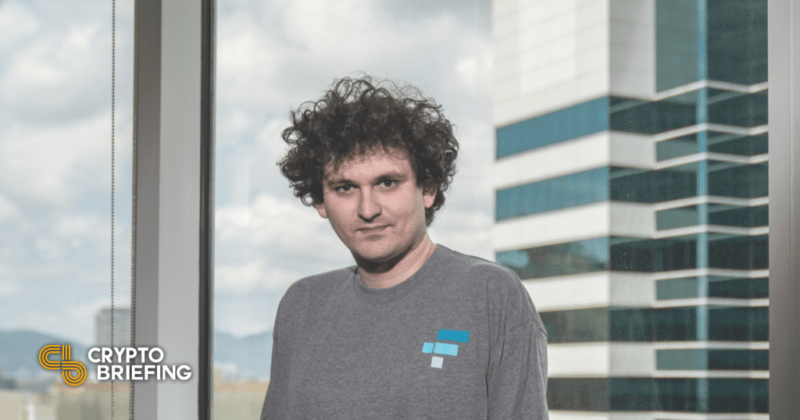
The argument that "customers are being paid back" is a cornerstone of his defense. Indeed, the FTX bankruptcy estate has indicated that most creditors will receive 100% of their allowed claims plus interest. However, this "recovery" is based on the dollar value of the assets at the time of the bankruptcy filing in November 2022, when Bitcoin was trading around $16,000. Many creditors argue that they are not being made whole because they are receiving the 2022 cash value rather than the actual cryptocurrency they held, which has since skyrocketed in price (with Bitcoin reaching all-time highs above $90,000 in late 2024).
John J. Ray III has been vocal in debunking Bankman-Fried’s narrative. Ray has stated in court filings that the "recovery" is the result of painstaking work by the bankruptcy team and favorable market conditions, not because the money was ever there to begin with. He famously stated that Bankman-Fried’s claims of solvency were "categorically, quaternary, and demonstrably false."
Regrets and Observations from Behind Bars
In his communications from prison, Bankman-Fried has adopted a tone of intellectual regret rather than moral contrition. He has expressed deep frustration at being sidelined during what he views as a transformative era for technology. Specifically, he lamented missing the explosion of Artificial Intelligence (AI) and the "AI boom" that began shortly after his incarceration.
He has also spent time analyzing the current corporate landscape, offering praise for Elon Musk and his ventures, such as SpaceX and Tesla. Bankman-Fried highlighted SpaceX’s execution and long-term vision as examples of the kind of "high-upside" impact he once hoped to achieve. This alignment with Musk—who has become a close advisor to the Trump administration—is seen by many political analysts as a deliberate attempt to curry favor with the current White House.
Analysis of Implications and the Political Climate
The request for a pardon places President Trump in a complex position. On one hand, the Trump administration has shown a willingness to intervene in cases involving white-collar crime and what it perceives as overreach by the Department of Justice. Trump has previously criticized the "weaponization" of the legal system, a sentiment that Bankman-Fried has echoed in his own defense.
On the other hand, the FTX collapse affected millions of retail investors, many of whom are part of the very "working class" constituency that Trump champions. Granting a pardon to a figure synonymous with a multi-billion-dollar fraud could carry significant political risk. Furthermore, the crypto industry itself remains divided on Bankman-Fried. While some view him as a scapegoat for broader market failures, many industry leaders want to distance themselves from the FTX scandal to build institutional legitimacy.
Legal experts note that a presidential pardon would not vacate the $11 billion forfeiture order, though a commutation of the sentence could see Bankman-Fried released much earlier than his projected 2045 release date.
The Broader Impact on Crypto Regulation
Regardless of the outcome of the pardon request, the Bankman-Fried saga has fundamentally altered the landscape of digital asset regulation. The FTX collapse served as a catalyst for a global crackdown on crypto exchanges, leading to increased scrutiny from the SEC and the CFTC. It highlighted the dangers of offshore entities operating with minimal oversight and the necessity for clear "proof of reserves" and segregation of customer assets.
As the Department of Justice’s Pardon Attorney Office begins its review of the application, the financial world remains watchful. A pardon for Sam Bankman-Fried would not only be one of the most controversial uses of executive power in modern history but would also reopen the wounds of a financial disaster that reshaped the future of decentralized finance. For now, the man who once aimed to save the world through "effective altruism" remains in a federal cell, waiting to see if his final gamble—a plea to the President—will pay off.














