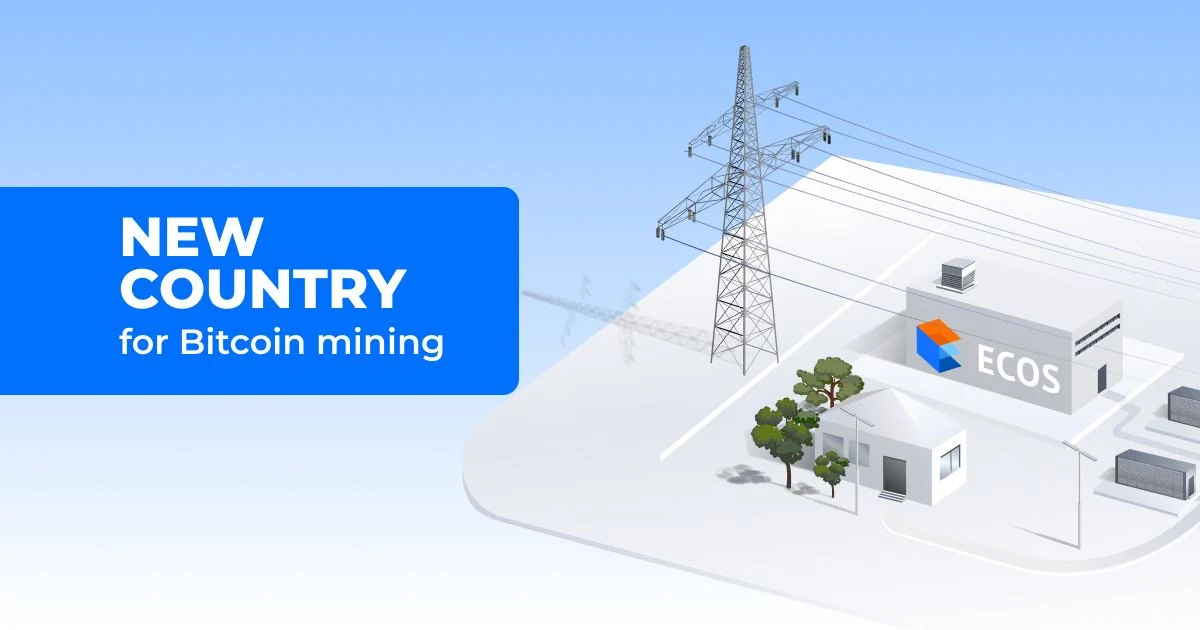
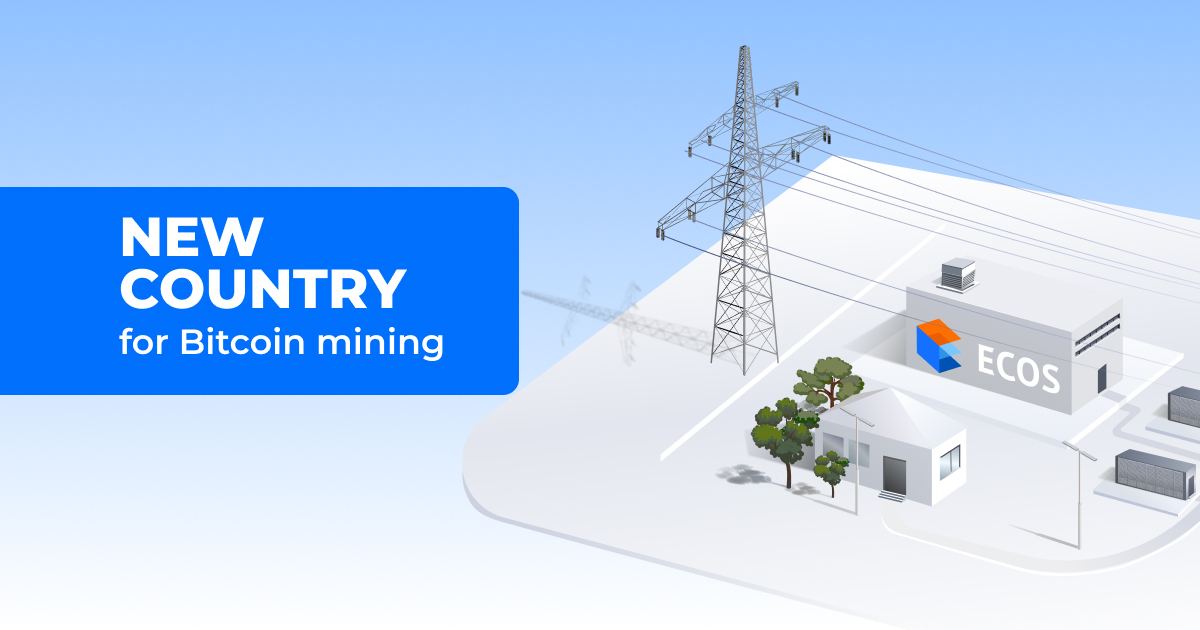
ECOS, a prominent international provider of cryptocurrency mining services and blockchain infrastructure, has officially announced the launch of its newest data center in Armenia, a facility boasting a 60-megawatt (MW) capacity designed to bolster the nation’s standing in the global digital asset ecosystem. This development represents a significant scaling of the company’s operations within the Armenian Free Economic Zone (FEZ), a specialized jurisdiction established to foster high-tech industries through unprecedented state-level support and fiscal incentives. The new facility is strategically positioned to leverage Armenia’s unique regulatory climate and its surplus of stable, affordable energy, providing a robust platform for both institutional and retail cryptocurrency miners.
The inauguration of this 60 MW site is the culmination of a long-term strategic partnership between ECOS and the Armenian government. The foundations for this project were laid in 2018 when the Armenian Cabinet of Ministers issued a decree entrusting ECOS with the creation and management of a Free Economic Zone dedicated specifically to the development of blockchain technologies and high-performance computing. Since that mandate, ECOS has transitioned from a specialized infrastructure provider to a global ecosystem serving over 250,000 users worldwide through its cloud mining and hosting platforms. The launch of the new data center signifies the next phase of this evolution, offering an end-to-end infrastructure that integrates hardware procurement, 24/7 technical maintenance, and advanced digital monitoring tools.
A Chronology of Strategic Growth and Government Cooperation
The trajectory of ECOS in Armenia is closely tied to the country’s legislative efforts to modernize its economy. In late 2017 and early 2018, Armenia began exploring blockchain technology as a means to attract foreign direct investment and create high-value jobs. Following the 2018 decree, the government provided ECOS with a 25-year mandate to operate the FEZ, ensuring a stable regulatory horizon for investors.
Throughout 2019 and 2020, ECOS focused on building the primary infrastructure required to sustain high-density computing. This included securing direct connections to high-voltage power grids to ensure the reliability required for 24/7 mining operations. By 2021, as the global cryptocurrency market experienced a surge in valuation, the demand for transparent and legally compliant hosting services spiked. ECOS responded by expanding its service offerings, eventually leading to the massive 60 MW expansion finalized this year. This timeline reflects a methodical approach to infrastructure development, moving from legal groundwork to physical construction and finally to large-scale operational capacity.
Technical Specifications and Environmental Advantages
The new data center is located in Hrazdan, a region chosen specifically for its industrial heritage and climatic suitability. Spanning an area of 2.2 hectares, the current plot can accommodate more than 20,000 specialized mining devices, such as Application-Specific Integrated Circuits (ASICs). While the current capacity is set at 60 MW, the site has been engineered with scalability in mind, possessing the potential to expand to a staggering 200 MW as global demand increases.
One of the most critical factors in cryptocurrency mining is Power Usage Effectiveness (PUE). In high-performance computing, heat is the primary enemy of hardware longevity and efficiency. The Hrazdan region provides a natural solution to this challenge. With an average annual temperature of approximately 4.8°C (40.6°F), the facility utilizes "free cooling" for a significant portion of the year. This geographical advantage eliminates the need for expensive, energy-intensive industrial refrigeration systems, thereby reducing the carbon footprint of the operation and lowering the overhead costs for the end-users.
Furthermore, the data center is linked directly to high-voltage networks. This direct connection minimizes energy loss during transmission and provides a level of stability that is often unavailable in other mining jurisdictions. ECOS claims an uptime of nearly 100%, a critical metric for miners who lose revenue for every second their machines are offline during network difficulty adjustments.
The Free Economic Zone Framework: A 25-Year Tax Haven
The primary driver of international interest in the ECOS data center is the comprehensive suite of tax exemptions provided by the Armenian Free Economic Zone. Under the current legal framework, companies operating within the FEZ are entitled to a zero-percent rate on several key taxes for a period of 25 years. These incentives include:
- 0% Corporate Income Tax: Allowing businesses to reinvest profits directly into hardware upgrades.
- 0% Value Added Tax (VAT): Significantly reducing the cost of electricity and local services.
- 0% Import and Export Duties: Vital for the constant rotation of mining hardware, which is often imported from manufacturers like Bitmain in China.
- 0% Property and Real Estate Taxes: Lowering the long-term cost of maintaining the physical facility.
These fiscal benefits are designed to maximize the return on capital for partners. In an industry where profit margins are often dictated by the "halving" cycles of Bitcoin and the volatility of electricity prices, a 25-year guarantee of tax-free operations provides a level of predictability that is rare in the crypto-asset sector.
Operational Excellence and the End-to-End Service Model
Beyond the physical infrastructure and tax benefits, ECOS has developed a comprehensive service model designed to lower the barrier to entry for cryptocurrency mining. The company manages the entire lifecycle of the mining process. This includes the direct purchase of equipment from leading manufacturers on behalf of clients, logistics and customs clearance, installation, and around-the-clock maintenance.
The facility is guarded by armed security and monitored 24/7 by a staff of professional technicians and engineers. To provide transparency, ECOS has integrated its physical operations with a mobile application. This allows users—whether they are institutional investors with thousands of machines or retail hobbyists with a single unit—to monitor their hash rate, energy consumption, and daily earnings in real-time.
Ilya Goldberg, Managing Partner of ECOS, emphasized the importance of this simplicity in his recent statement: “We have come a long way from legalizing mining in Armenia to launching our own energy infrastructure that is ready for scaling. We want to offer our partners simplicity in everything: from launching your mining business on our data-center to daily monitoring of the result in the application without leaving your home. Our bundled product is made to serve both institutional and retail clients from any part of the world.”
Broader Impact and Global Market Implications
The launch of the 60 MW facility comes at a pivotal moment for the global mining industry. Following the 2021 crackdown on mining in China, the global hash rate redistributed to regions like the United States, Kazakhstan, and Russia. However, many of these regions have since faced challenges, including rising energy costs, political instability, or new restrictive tax laws.
Armenia’s proactive stance offers a compelling alternative. By providing "clean, affordable, and stable" electricity, the country is positioning itself as a "safe haven" for digital assets. The emphasis on "clean" energy is particularly relevant as the industry faces increasing pressure from environmental, social, and governance (ESG) investors. Armenia’s energy mix, which includes significant contributions from nuclear and hydroelectric power, allows ECOS to offer a more sustainable mining solution compared to regions reliant on coal.
Industry analysts suggest that the transition from the "crypto winter" to a more bullish market cycle makes this an opportune time for infrastructure expansion. As Bitcoin’s price stabilizes and trends upward, the demand for hosting space typically outstrips supply. By securing 60 MW of capacity now, ECOS is effectively front-running the next wave of institutional adoption.
Conclusion: The Future of Blockchain in the Caucasus
The expansion of the ECOS data center is more than just a business milestone; it is a testament to the viability of state-supported blockchain initiatives. For Armenia, the project represents a successful diversification of its industrial base and a step toward becoming a regional leader in high-tech infrastructure. For the global crypto community, it provides a transparent, legally protected, and highly efficient environment for securing blockchain networks.
As the facility moves toward its full 200 MW potential, the impact on the local economy is expected to grow, providing jobs for engineers, security personnel, and administrative staff. Simultaneously, the continued evolution of the ECOS mobile ecosystem ensures that the benefits of this massive physical infrastructure are accessible to a global audience, democratizing the process of cryptocurrency mining through professionalized hosting and cloud services. In a landscape often characterized by regulatory uncertainty, the ECOS-Armenia partnership stands as a model of how government patronage and private innovation can create a sustainable foundation for the future of finance.