


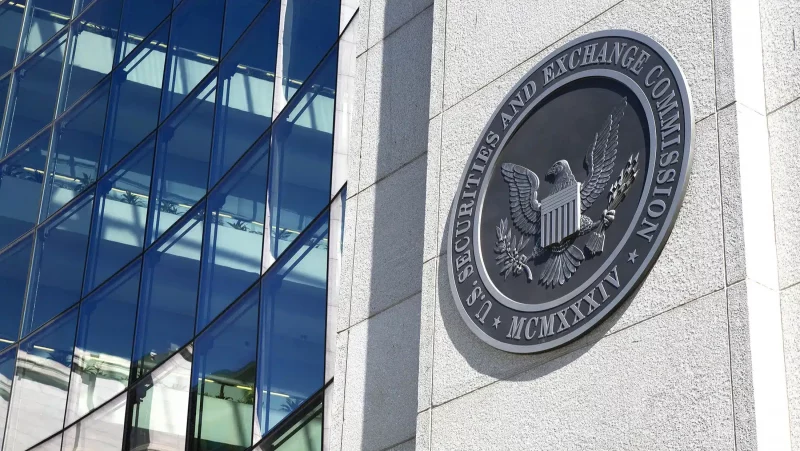
The United States Securities and Exchange Commission (SEC) has formally released its 2026 regulatory agenda, signaling a pivotal shift in the federal oversight of digital assets. This comprehensive roadmap introduces proposed amendments designed to integrate cryptocurrency exchanges, alternative trading systems (ATS), and digital asset custodians into the established framework of federal securities law. At the heart of this initiative is a drive to provide the clarity that market participants have long demanded, moving away from a period characterized by "regulation by enforcement" toward a structured, rule-based environment. The agenda specifically targets the operational mechanics of broker-dealers, seeking to modernize financial responsibility, recordkeeping, and reporting requirements to accommodate the unique technological nature of blockchain-based assets.
The Core of the 2026 Agenda: Proposed Amendments under RIN 3235-AN48
The centerpiece of the SEC’s strategic plan is a series of proposed amendments filed under Regulatory Information Number (RIN) 3235-AN48. These proposals represent a significant overhaul of the rules governing how broker-dealers interact with digital assets. Traditionally, broker-dealer regulations were crafted for a world of T+2 settlement cycles and centralized clearinghouses. The 2026 agenda acknowledges that digital assets, which often settle near-instantaneously on decentralized ledgers, require a different approach to ensure financial integrity and investor protection.
The proposed amendments focus heavily on the financial responsibility rules, including the Net Capital Rule and the Customer Protection Rule. Under these updates, the SEC aims to clarify how broker-dealers must calculate their capital requirements when holding volatile crypto assets and what constitutes "satisfactory control" in a digital environment. Furthermore, the agenda addresses the stringent recordkeeping and reporting obligations that have historically been a point of friction for crypto-native firms. By tailoring these rules to the digital age, the Commission seeks to ensure that every transaction is auditable and that firms maintain sufficient liquidity to withstand market shocks.
Beyond basic brokerage, the agenda contemplates sweeping changes for Alternative Trading Systems (ATS) and national securities exchanges. This move is intended to bring platforms that facilitate the trading of crypto securities into the same regulatory perimeter as traditional stock exchanges. By doing so, the SEC intends to enforce transparency in order-matching algorithms and ensure that all market participants have equal access to price discovery.
The Five-Category Token Taxonomy: A New Legal Standard
A critical milestone in this regulatory evolution occurred on March 17, 2026, when the SEC issued a landmark interpretive release. This document introduced a five-category token taxonomy, providing the most detailed guidance to date on how the agency classifies digital assets. This taxonomy is designed to move the industry beyond the binary "security or commodity" debate that dominated the early 2020s.
The five categories established by the SEC are:
- Digital Commodities: Assets that serve as a store of value or a medium of exchange without a centralized issuer promising future profits. This category is largely seen as a safe harbor for established decentralized protocols.
- Collectibles: Digital assets that are unique and non-fungible, primarily used for artistic, historical, or entertainment purposes rather than as investment vehicles.
- Tools: Often referred to as utility tokens, these assets provide access to a specific functional service or application within a decentralized network.
- Stablecoins: Digital assets pegged to a fiat currency or a basket of assets, intended to maintain a stable value for use in payments and decentralized finance (DeFi).
- Securities: Assets that meet the criteria of the Howey Test, involving an investment of money in a common enterprise with a reasonable expectation of profits derived from the efforts of others.
By creating these distinct "lanes," the SEC is providing a roadmap for developers and issuers. Projects that clearly fall into the "Tools" or "Collectibles" categories may find themselves subject to significantly less oversight than those classified as "Securities," thereby reducing the legal uncertainty that has historically stifled innovation in the United States.
The April 13 No-Action Position for Covered User Interface Providers
Following the taxonomy release, the SEC staff took another significant step on April 13, 2026, by declaring a conditional no-action position for "Covered User Interface Providers." This decision addresses a long-standing concern within the decentralized finance ecosystem: whether entities that merely provide a front-end website to interact with a blockchain protocol must register as broker-dealers.
The no-action letter clarifies that as long as these providers do not execute trades, hold customer funds, or provide personalized investment advice, they can operate without the full burden of broker-dealer registration. However, this relief is "conditional," meaning providers must adhere to strict guidelines regarding transparency and must not engage in "routing" or "matching" orders behind the scenes. This move suggests an "activity-based" approach to regulation, where the SEC focuses on the specific functions a firm performs rather than applying a blanket label to any business that touches the crypto ecosystem.
Historical Context: Moving Beyond the Gensler Era
The 2026 agenda marks a departure from the strategy employed under former SEC Chair Gary Gensler. During the early 2020s, the SEC was frequently criticized for its "enforcement-first" posture. Under that administration, the agency filed dozens of high-profile lawsuits against major industry players, including Coinbase, Binance, and Ripple, alleging that they operated as unregistered exchanges or sold unregistered securities.
While the SEC argued these actions were necessary to protect investors from a "Wild West" market, industry participants countered that the agency had failed to provide a workable registration framework. Many firms argued it was "impossible to come in and register" because the existing rules were incompatible with decentralized technology. The 2026 agenda appears to be a direct response to these criticisms, attempting to build the "on-ramp" for compliance that was missing in previous years.
Chronology of Regulatory Milestones Leading to the 2026 Agenda
The path to the current regulatory environment has been marked by several key events:
- 2023–2024: A period of intense litigation where the SEC secured several victories but also faced setbacks in courts regarding the definition of secondary market sales of digital assets.
- Late 2025: The SEC began a series of "Town Hall" meetings with industry leaders and technical experts to draft more nuanced rules for digital asset custody.
- March 17, 2026: The release of the Five-Category Token Taxonomy, providing the legal foundation for the new agenda.
- April 13, 2026: The issuance of the no-action letter for UI providers, offering immediate relief to DeFi front-end developers.
- Current Stage: The formal entry of RIN 3235-AN48 into the federal register, marking the beginning of the formal rulemaking process.
Industry Reactions and Stakeholder Feedback
Early feedback from the financial and technology sectors has been cautiously optimistic. Groups such as the Blockchain Association and the Crypto Council for Innovation have noted that while the proposed rules are stringent, they provide the "rules of the road" that institutional investors require before committing significant capital to the space.
Legal experts have highlighted that the taxonomy is particularly helpful for venture capital firms, which can now better assess the regulatory risk of their portfolios. However, some consumer advocacy groups have expressed concern that the no-action position for UI providers might create loopholes that bad actors could exploit. These groups argue that without direct oversight of the interfaces, investors might still be vulnerable to "front-end" manipulations or misleading information.
A spokesperson for a major digital asset exchange commented, "For years, we asked for a path to registration. While the 2026 agenda presents a high bar for compliance, it is a bar we can finally see and measure. The distinction between stablecoins and securities is a massive win for the industry’s stability."
Implications for Investors and the Market
The broader implications of the SEC’s 2026 agenda are profound. For institutional investors, the formalization of custody standards and broker-dealer rules removes one of the final barriers to entry. With clear rules on how assets must be stored and reported, traditional banks and asset managers are expected to increase their offerings in the digital asset space.
For the retail investor, these changes promise a higher level of protection. The focus on recordkeeping and financial responsibility means that in the event of a firm’s failure, customer assets are more likely to be segregated and protected from the firm’s creditors—a lesson learned from the high-profile collapses of the 2022–2023 period.
Furthermore, the taxonomy could spark a new wave of innovation. By exempting "Tools" and "Collectibles" from the most burdensome securities regulations, the SEC is effectively encouraging developers to build functional decentralized applications that do not rely on speculative investment as their primary use case.
Conclusion and Future Outlook
The SEC’s 2026 regulatory agenda represents a maturation of the digital asset market. By shifting from litigation to legislation (via rulemaking), the Commission is attempting to balance its mandate of investor protection with the need to foster a competitive and innovative financial system.
However, the process is far from over. The rules under RIN 3235-AN48 are currently in the proposal stage, and the gap between a proposal and a final, enforceable rule can be significant. The public comment periods will likely see a flurry of activity as firms lobby for specific tweaks to the technical requirements. As the SEC moves toward finalizing these rules, the industry will be watching closely to see if the final language maintains the "cautiously positive" balance struck in the initial announcement. For now, the 2026 agenda stands as a definitive signal that the era of regulatory ambiguity in the U.S. crypto market is drawing to a close.














