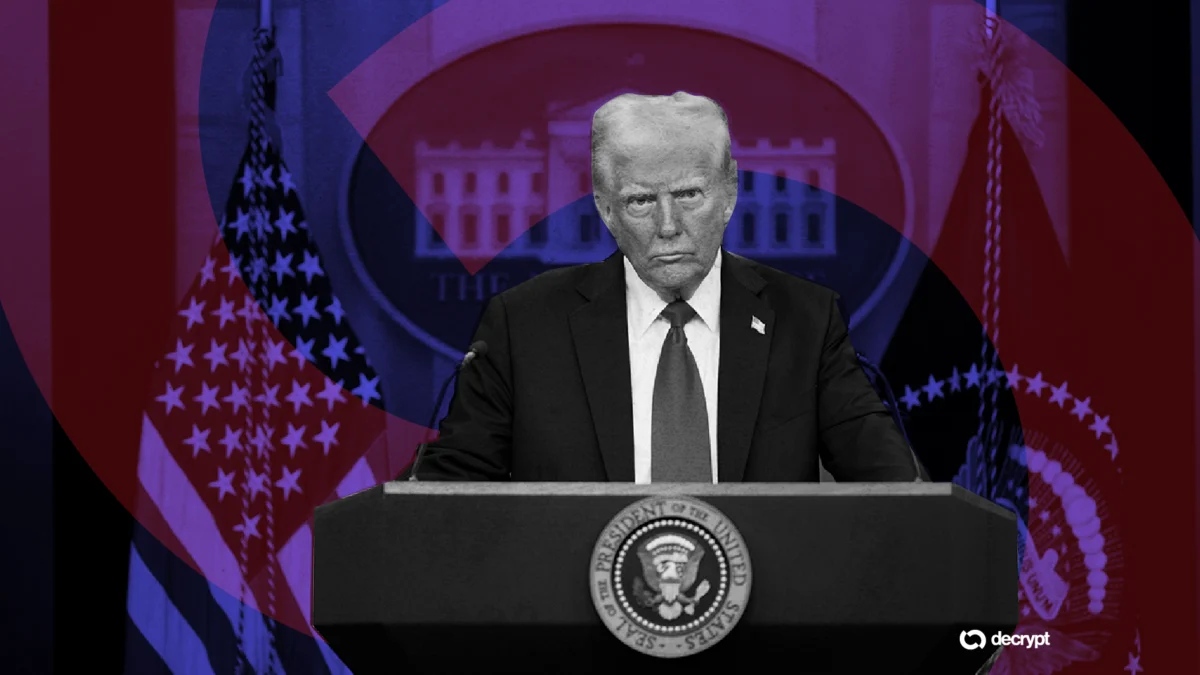
A coalition of senior Democratic senators has formally called for comprehensive congressional hearings into the crypto holdings of President Donald Trump, following new financial disclosures that revealed he generated over $1.2 billion in income from digital assets last year. The unprecedented request underscores escalating concerns within Washington regarding potential conflicts of interest, the specter of foreign influence, and the appropriate ethical boundaries for public officials engaging with rapidly evolving financial technologies while simultaneously shaping policy.
The demand for hearings, articulated in a statement issued Friday, comes from five prominent Senate Democrats: Elizabeth Warren (D-MA), Richard Blumenthal (D-CT), Gary Peters (D-MI), Dick Durbin (D-IL), and Ron Wyden (D-OR). These lawmakers hold crucial leadership positions as the top Democrats on the Senate Banking, Investigations, Homeland Security, Judiciary, and Finance committees, respectively. Their unified appeal seeks to compel these powerful oversight bodies to initiate thorough inquiries into the president’s extensive crypto dealings, scrutinizing both the source of his substantial earnings and the potential ramifications for public trust and national security.
Escalating Concerns Over Financial Disclosures and Policy Influence
The senators’ statement explicitly highlights a series of profound concerns stemming from Trump’s latest financial disclosures. Central among these is the apprehension that the president may be "pushing Congress to pass crypto legislation in favor of the very industry he’s cashing in on." This concern is magnified by the administration’s perceived efforts to "exempt cryptocurrencies and service providers from existing financial services regulations" and to "weaken enforcement, including by disbanding the Department of Justice’s National Cryptocurrency Enforcement Team." Such actions, if proven, would represent a significant ethical breach, blurring the lines between personal financial gain and public duty.
The National Cryptocurrency Enforcement Team (NCET), established within the DOJ, was tasked with investigating and prosecuting criminal misuses of cryptocurrency, including illicit transactions, money laundering, and fraud. Its dissolution or significant weakening would undoubtedly be seen by critics as a move to reduce oversight precisely when a prominent public figure is heavily invested in the sector, potentially creating an environment conducive to less scrutiny for his own ventures.
The Clarity Act: A Legislative Battleground
At the heart of the legislative concerns is the "Clarity Act," a landmark bill currently being championed by the Trump administration. This legislation aims to formally legalize most crypto activity in the United States, providing a clearer regulatory framework for digital assets. While proponents argue the act is essential for fostering innovation and ensuring American competitiveness in the global digital economy, its progress has been significantly hampered by "numerous issues," chief among them disagreements over "ethics provisions targeting the president’s ability to issue and endorse digital assets while in office."
The proposed ethics provisions within the Clarity Act are designed to prevent a sitting president or high-ranking officials from directly benefiting financially from specific crypto projects or tokens they might endorse or influence through policy decisions. This is particularly salient given Trump’s direct involvement with projects like the "Trump meme coin" and World Liberty Financial. The fact that the Clarity Act advanced out of the Senate Banking Committee in May, albeit with two Democrats breaking ranks to support its movement, underscores the bipartisan complexity of crypto regulation. However, these same Democrats warned that a robust deal on ethics language would be "necessary to earn their votes on the Senate floor," signaling the deep reservations that persist. Supporters of the legislation are reportedly pressing for its passage by August, citing the looming November midterm elections as a critical deadline to enact the bill this year.
Detailed Financial Revelations and Their Context
Trump’s financial disclosure report, which became public last month, provided an unprecedented look into his deep immersion in the crypto market. The report detailed earnings exceeding $1.2 billion from various crypto-related ventures. A significant portion of this income, over $635 million, was directly tied to his highly publicized "Trump meme coin." Meme coins are a class of cryptocurrencies often created as a joke or satire, typically gaining value through social media hype and community speculation rather than inherent utility. Their extreme volatility and speculative nature make such a substantial income figure particularly noteworthy, highlighting the high-risk, high-reward environment of this sector.
Additionally, the disclosures revealed over $588 million generated from token sales connected to World Liberty Financial, a decentralized finance (DeFi) project associated with the Trump family. DeFi platforms aim to recreate traditional financial services like lending, borrowing, and trading using blockchain technology, often operating with minimal central authority. The report also indicated that Trump holds tens of millions of dollars worth of established cryptocurrencies like Bitcoin and Ethereum, further solidifying his substantial stake in the digital asset ecosystem. These holdings, while perhaps less controversial than meme coins or family-branded DeFi projects, still represent a significant financial interest that could be influenced by regulatory shifts.
The World Liberty Financial Controversy and Foreign Influence
A particularly potent point of contention raised by the senators revolves around World Liberty Financial. The group specifically "underscored how Trump’s disclosures showed that unknown ‘third-parties’ own a stake in his family’s crypto company." This ambiguity itself raises red flags for transparency and accountability. However, the concerns deepened significantly with the revelation that "UAE royals purchased a 49% stake in the firm last year."
The involvement of foreign governmental or royal entities in a former (and potentially future) president’s private financial ventures immediately triggers alarms regarding foreign influence and potential violations of the Emoluments Clause of the U.S. Constitution. The Emoluments Clause generally prohibits federal officeholders from accepting gifts or payments from foreign governments without congressional approval. While Trump is not currently in office, the substantial foreign investment in a company tied to his family, especially one that could benefit from policy changes he advocates, creates a perception of potential leverage or undue influence. Ethics watchdogs and national security experts are expected to weigh in heavily on whether such a significant foreign stake could compromise the integrity of U.S. policy-making or create avenues for foreign actors to gain access or influence. This concern is amplified by the sheer scale of the investment and the highly speculative nature of the crypto assets involved, which could be prone to market manipulation or geopolitical pressures.
A Call for Comprehensive Oversight: The Role of Key Senate Committees
The request for hearings across five distinct Senate committees underscores the multi-faceted nature of the concerns. Each committee brings a unique jurisdictional lens to the potential issues:
- Senate Banking, Housing, and Urban Affairs Committee: This committee has primary oversight over financial markets, banking, and securities. Its role would be to examine the financial disclosures, the nature of the crypto assets, market integrity, and the implications of the Clarity Act on financial regulation.
- Senate Permanent Subcommittee on Investigations (part of Homeland Security and Governmental Affairs Committee): This subcommittee is known for its deep dives into government waste, fraud, and abuse, as well as broader issues of governmental operations. It would likely focus on the mechanisms of the financial dealings, potential illicit activities, and the integrity of governmental processes related to crypto policy.
- Senate Homeland Security and Governmental Affairs Committee: Beyond investigations, this committee would explore national security implications, particularly concerning the foreign ownership stake in World Liberty Financial and any potential vulnerabilities to foreign influence or cyber threats.
- Senate Judiciary Committee: This committee’s purview includes legal frameworks, enforcement of laws, and ethical conduct within the legal system. It would scrutinize any potential violations of ethics laws, conflicts of interest, and the broader legal implications of the president’s crypto activities, including the disbanding of the DOJ’s NCET.
- Senate Finance Committee: With jurisdiction over taxation, trade, and economic policy, this committee would examine the tax implications of Trump’s crypto earnings, the economic impact of the Clarity Act, and any broader fiscal policy concerns related to digital assets.
The collective demand from the ranking Democrats on these powerful committees signals a serious intent to pursue a thorough and broad investigation, indicating that this is not merely a political maneuver but a deeply rooted concern about governance and ethics.
Timeline of Events and Broader Implications
The timeline leading to this demand for hearings paints a picture of rapidly escalating involvement and scrutiny:
- Late 2022/Early 2023: Donald Trump begins his foray into the digital asset space with the launch of NFT collections (digital trading cards), signaling a shift from his previously skeptical stance on cryptocurrencies.
- Throughout 2023: Development and launch of World Liberty Financial, a DeFi project associated with the Trump family, along with the issuance of related tokens.
- Late 2023: UAE royals acquire a 49% stake in World Liberty Financial, a detail that would later draw significant scrutiny.
- Early 2024: The "Trump meme coin" gains traction, contributing significantly to his reported crypto income.
- Last Month (Specific Date Noted): President Trump’s financial disclosure report is publicly released, revealing over $1.2 billion in crypto-related earnings, including specific figures for the meme coin and World Liberty Financial tokens, as well as holdings in Bitcoin and Ethereum.
- May: The Clarity Act advances out of the Senate Banking Committee, highlighting bipartisan divisions and the critical role of ethics provisions.
- Friday (Specific Date Noted): The five Democratic senators issue their formal request for congressional hearings.
- August (Projected): Deadline for the Clarity Act to pass Congress if supporters aim for it to become law this year, ahead of the midterm elections.
The implications of these hearings, should they proceed, are far-reaching. For Donald Trump, such investigations could significantly impact his political standing, particularly if he pursues another presidential campaign. Allegations of conflicts of interest and foreign influence could erode voter trust and provide potent ammunition for political opponents. For the nascent crypto industry, these hearings could usher in an era of heightened scrutiny, potentially leading to stricter regulations, increased enforcement, and a more cautious approach from traditional financial institutions. The ongoing debate surrounding the Clarity Act exemplifies the tension between fostering innovation and ensuring robust consumer protection and ethical governance.
More broadly, these developments underscore the challenges public officials face in navigating emerging asset classes like cryptocurrencies. The lack of clear regulatory frameworks, the global and often opaque nature of digital asset markets, and the potential for rapid wealth generation create fertile ground for ethical dilemmas. Congressional hearings would not only investigate the specifics of Trump’s holdings but also contribute to a broader conversation about establishing robust ethical guidelines and regulatory clarity for all public servants engaging with digital assets, aiming to safeguard public trust in government and financial markets alike.