


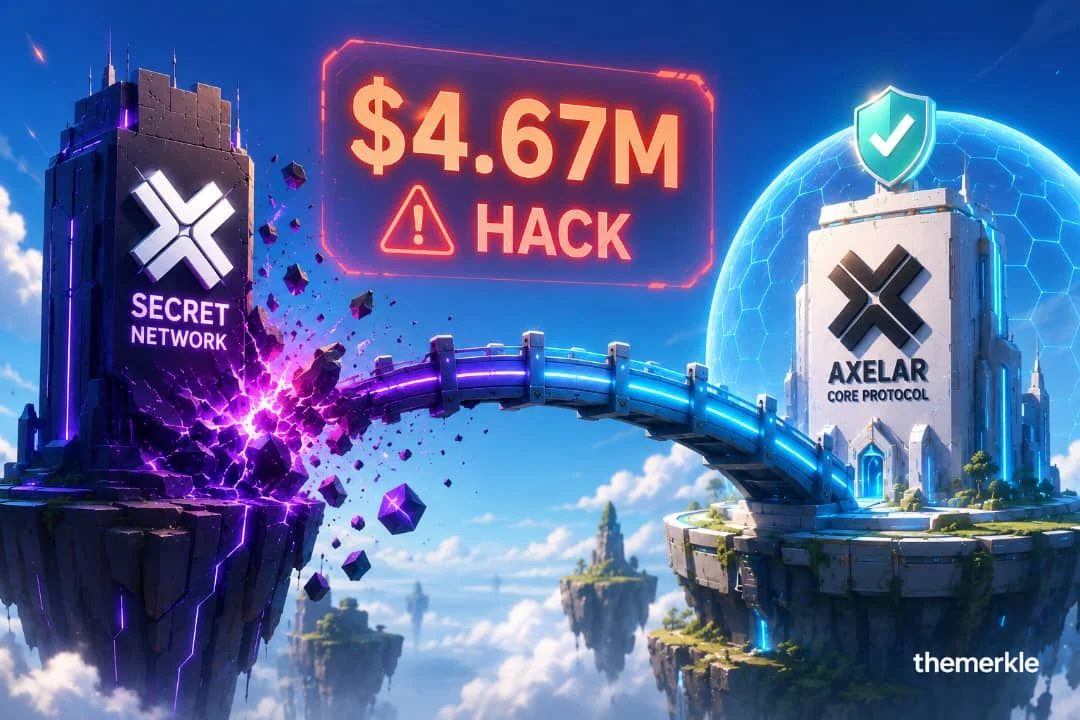
Cross-chain infrastructure provider Axelar has acted with urgency to mitigate a significant security incident resulting in the loss of approximately $4.67 million worth of tokens. The breach, which was identified and addressed swiftly, targeted assets bridged via the Inter-Blockchain Communication (IBC) protocol from the Axelar chain to Secret Network. In response, Axelar’s emergency committee immediately disabled the affected connection, initiating a comprehensive containment and recovery process. This incident underscores the persistent vulnerabilities inherent in cross-chain bridge technology, a critical yet frequently exploited component of the broader blockchain ecosystem.
Immediate Crisis Response: Axelar’s Swift Action Following $4.67 Million Token Loss
The incident came to light with Axelar’s official statement confirming the identification of a security breach affecting assets transferred from the Axelar chain to Secret Network via the IBC protocol. The announcement, direct and transparent, detailed the scale of the loss at roughly $4.67 million in tokens and outlined the immediate steps taken. Axelar’s rapid response included the immediate shutdown of the compromised pathway, a critical first step in preventing further financial losses and containing the damage. Such decisive action is paramount in the fast-moving world of decentralized finance (DeFi), where every minute counts in limiting an attacker’s window of opportunity. The prompt communication from Axelar also aimed to inform the community and stakeholders, maintaining transparency amidst a crisis.
Unpacking the Technical Vulnerability: The ICS-20 Smart Contract Exploit
At the heart of the exploit lies a vulnerability within a specific component of the bridge infrastructure: the Secret-side ICS-20 smart contract. To understand the gravity of this, it’s essential to contextualize the technologies involved. Axelar serves as a crucial cross-chain communication layer, enabling secure interoperability between various blockchain networks. Secret Network, on the other hand, is a privacy-preserving blockchain built on Cosmos, known for its encrypted smart contracts. The bridge connecting these two distinct environments utilizes the Cosmos IBC protocol, a standard designed for reliable and secure inter-module communication across sovereign blockchains in the Cosmos ecosystem.
ICS-20 is a particular standard within IBC, specifically crafted for the transfer of fungible tokens across connected chains. When assets are "bridged," they are typically locked on the source chain and a corresponding representation is minted on the destination chain. The ICS-20 contract is responsible for managing these token transfers, ensuring the integrity and proper accounting of assets as they move between networks. In this instance, the vulnerability was isolated to the specific ICS-20 smart contract instance responsible for handling assets moving from Axelar to Secret Network. This means the exploit did not compromise the core validator sets or consensus mechanisms of either Axelar or Secret Network, nor did it affect the broader IBC protocol itself. Instead, it was a targeted flaw in the application-layer logic governing this particular cross-chain pathway. This distinction is crucial, as it limits the scope of the incident to a specific bridge implementation rather than indicating a systemic failure of the underlying blockchain technologies.
A Detailed Chronology of the Incident and Response
The sequence of events following the detection of the exploit highlights Axelar’s preparedness and agility in crisis management. While the exact moment of initial detection by Axelar’s internal monitoring systems is not publicly detailed, the rapid succession of actions suggests a robust incident response framework.
- Identification: Axelar’s security protocols or internal monitoring systems likely flagged anomalous activity related to token transfers between Axelar and Secret Network. Given the sophistication of modern blockchain infrastructure, real-time analytics and alerts are typically employed to detect unusual transaction patterns or unauthorized token minting/release events.
- Emergency Committee Activation: Immediately upon confirming the incident, Axelar’s dedicated emergency committee was activated. This committee is designed to make swift, critical decisions under pressure, bypassing standard operational procedures to prioritize containment and security.
- Connection Severance: The most critical immediate action was the disabling of the Secret and Secret-SNIP connections. This technical maneuver effectively severed the compromised pathway, creating a hard stop to any ongoing exploitation and preventing further token losses through the identified vulnerability. This decision, while disrupting legitimate user activity, was a necessary and responsible measure to secure the remaining assets.
- Public Disclosure: Axelar promptly issued an official statement, informing the community and stakeholders about the breach, the amount lost, and the steps taken. Transparency in such situations is vital for maintaining trust and allowing affected users to take appropriate action.
- Ongoing Investigation: Concurrent with containment, Axelar initiated a full-scale forensic investigation. This process involves meticulously analyzing transaction logs, smart contract interactions, and network data to pinpoint the precise mechanism of the attack, identify the root cause of the vulnerability, and understand the attacker’s methods.
- External Outreach: Recognizing the multi-jurisdictional nature of crypto exploits, Axelar began reaching out to relevant centralized exchanges and law enforcement agencies. The goal of this outreach is twofold: to flag the stolen funds, making it harder for the attacker to cash out through regulated platforms, and to cooperate with authorities in tracking the stolen assets and potentially identifying the perpetrators. Such collaboration increases the chances of asset recovery and brings accountability to malicious actors.
Assessing the Damage and Containing Further Risk
The confirmed loss of $4.67 million represents a significant financial blow, though it is important to note the specific nature of the assets. These were tokens that had been bridged from the Axelar ecosystem to Secret Network. The immediate shutdown of the affected bridge connection, while inconvenient for users relying on that pathway, was absolutely crucial. Without this rapid intervention, the attacker could have continued to drain funds, potentially escalating the total loss exponentially. This action exemplifies a core principle of cybersecurity: isolate and contain before attempting to fully diagnose or recover. The temporary disruption for legitimate users, who depend on these cross-chain bridges for liquidity and functionality, is an unfortunate but unavoidable consequence of an active security incident. It underscores the delicate balance between maintaining operational functionality and ensuring the security of user funds in the decentralized space.
The Unaffected Landscape: What Remains Secure
Axelar has been meticulous in delineating the precise scope of the breach, a critical aspect of crisis communication to prevent undue panic and misinterpretation. The core message is one of isolation:
- Axelar’s Core Protocol: Critically, Axelar’s underlying cross-chain messaging protocol, which facilitates communication across dozens of other blockchain networks, remains untouched. This means the fundamental security and operational integrity of Axelar’s primary infrastructure are intact.
- Other Axelar Integrations: The incident is strictly confined to the specific bridge pathway between Axelar and Secret Network. All other integrations, bridges, and connections that Axelar maintains with other blockchain ecosystems are unaffected and continue to operate securely. This is a significant reassurance for the broader ecosystem of applications and users relying on Axelar for interoperability with chains other than Secret Network.
- Secret Network’s Broader Security: Secret Network itself has also echoed Axelar’s assessment. Its core blockchain security, its native tokens (like SCRT), and other IBC connections it maintains with different chains are not compromised. The vulnerability was specifically in the smart contract handling the Axelar-to-Secret bridge, not a flaw in Secret Network’s fundamental architecture or its other inter-chain connections.
- Implications for Users: For users and protocols built on Axelar who have no exposure to the Secret Network bridge, the practical impact of this incident should be minimal, based on the information disclosed so far. This clear delineation helps prevent a "run on the bank" scenario for other Axelar-connected assets and maintains confidence in the wider network.
The Broader Context: A Recurrent Challenge for Cross-Chain Bridges
This incident serves as a stark reminder of the inherent vulnerabilities plaguing cross-chain bridges, which have consistently been among the most exploited categories of infrastructure in the crypto space. The past few years have seen billions of dollars lost to bridge hacks, with high-profile incidents such as Ronin Network ($625 million), Wormhole ($325 million), Harmony’s Horizon Bridge ($100 million), and Nomad ($190 million) demonstrating the immense financial risks involved.
The fundamental reason for this vulnerability lies in the very nature of bridges. They are designed to "translate" trust and asset representation between two fundamentally separate and often disparate blockchain environments. This translation process inherently introduces additional layers of smart contract complexity compared to applications operating on a single chain. Each layer, each line of code, represents a potential attack surface. A vulnerability in even a single smart contract, like the ICS-20 contract in this case, can expose the entire bridge to exploitation, even when the underlying security of the connected blockchains themselves remains robust.
Bridges often face a difficult "trilemma" where it’s challenging to achieve high levels of security, decentralization, and efficiency simultaneously. Centralized or semi-centralized bridge designs, while potentially more efficient, often present a single point of failure. More decentralized approaches, while theoretically more secure, can introduce their own complexities and potential for new attack vectors if not meticulously designed and audited. For an ecosystem that increasingly relies on seamless interoperability to move assets, data, and liquidity across a multitude of chains, these incidents underscore the ongoing, formidable challenge of securing the connective tissue that binds the blockchain world together.
Implications for Axelar, Secret Network, and the Interoperability Ecosystem
The fallout from such an incident extends beyond the immediate financial loss:
- Reputational Impact: While Axelar’s swift response and transparency may mitigate some of the damage, any security breach can affect user trust and partner confidence. Maintaining a strong security posture and transparent communication post-incident will be crucial for rebuilding and reinforcing its reputation as a reliable interoperability provider.
- Operational Impact: The temporary shutdown of a bridge connection, while necessary, disrupts legitimate cross-chain activity. This can impact decentralized applications (dApps) and users who rely on that specific pathway for liquidity and functionality, potentially leading to a temporary shift in user behavior or liquidity flows.
- Financial Impact: Beyond the direct $4.67 million loss, Axelar will incur costs related to the ongoing investigation, potential recovery efforts, and bolstering security measures. There may also be legal implications depending on the outcome of investigations.
- Lessons Learned: The incident will undoubtedly prompt a deeper review of security practices, smart contract auditing processes, and real-time monitoring capabilities across Axelar and potentially Secret Network. It reinforces the need for continuous security enhancements, including more rigorous code audits, bug bounty programs, and sophisticated threat intelligence.
- Future of Interoperability: While not expected to halt the drive towards greater interoperability, this incident will likely contribute to an intensified focus on bridge security design. Developers and protocols may increasingly favor more robust, provably secure, or novel bridge architectures, such as zero-knowledge (ZK) bridges, which aim to minimize trust assumptions.
- Regulatory Scrutiny: As the crypto industry matures, security breaches attract increasing attention from regulators worldwide. Incidents like this provide further impetus for policymakers to consider stricter guidelines and oversight for DeFi protocols, particularly those handling significant amounts of bridged assets, to protect consumers and maintain financial stability.
Moving Forward: Recovery Efforts and Enhanced Security Measures
Axelar’s commitment to a thorough recovery and investigation process is paramount. This will likely involve not only forensic analysis to fully understand the exploit but also collaboration with white-hat hackers and security researchers to identify any remaining vulnerabilities. The company will need to implement enhanced security protocols, potentially including multi-party computation (MPC) solutions, more frequent and comprehensive third-party security audits, and real-time anomaly detection systems with automated response mechanisms.
The incident serves as a stark reminder that in the ever-evolving landscape of blockchain technology, security is not a static state but an ongoing process of vigilance, adaptation, and continuous improvement. For the interoperability ecosystem, this breach, while damaging, will undoubtedly contribute to the collective knowledge base, fostering the development of more resilient and secure cross-chain solutions. The long-term success of decentralized finance hinges on the industry’s ability to learn from these challenges and build infrastructure that can withstand the relentless pressure of malicious actors, ultimately paving the way for a more secure and seamlessly interconnected blockchain future.














