


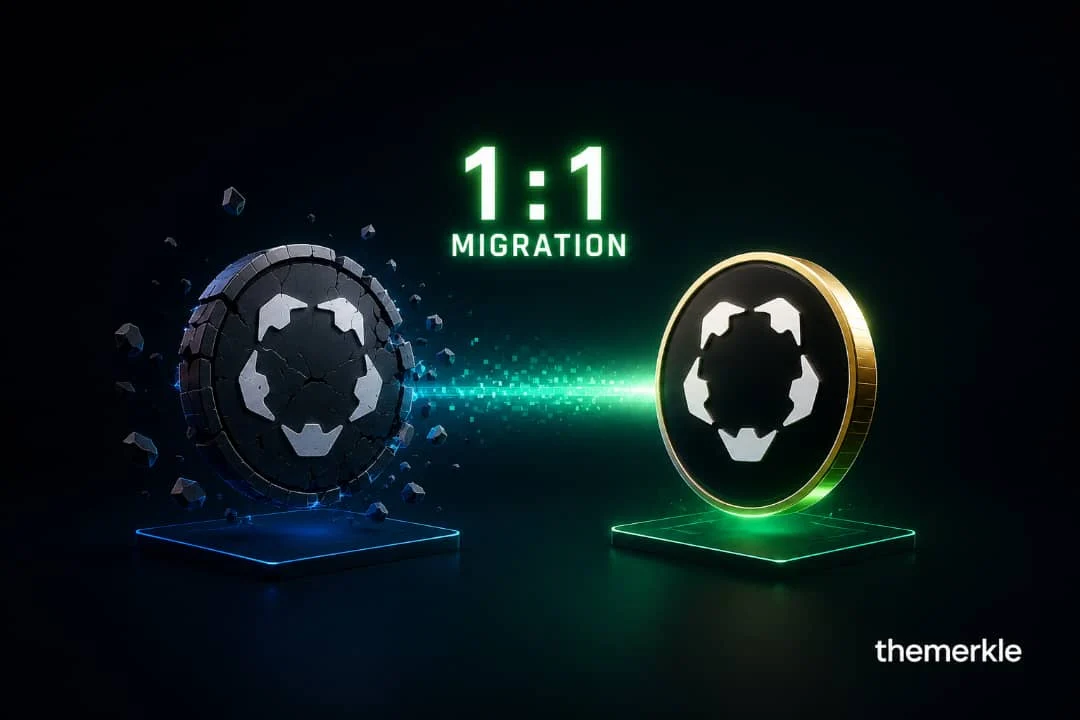
Humanity Protocol, a project focused on decentralized identity and Web3 infrastructure, has announced a complete overhaul of its native H token, replacing the existing asset with an entirely new Ethereum-based version. This drastic measure comes in the wake of a significant security breach that severely compromised the project’s ecosystem and necessitated a comprehensive recovery strategy. The decision, confirmed by the team in a Tuesday statement, outlines a meticulous migration plan encompassing a snapshot-based airdrop, a mainnet relaunch, and the establishment of a compensation fund for specific edge cases. Crucially, the protocol has made it unequivocally clear that any individuals who purchased the distressed token after the attack will not be eligible for replacement tokens, a policy that underscores a firm stance against speculative trading post-exploit.
This move by Humanity Protocol represents one of the more significant and intricate post-exploit recovery operations witnessed in the blockchain space in recent memory. The granular details of the migration plan are of paramount importance for all H token holders seeking clarity on their standing and the path forward for their digital assets. Such incidents highlight the persistent vulnerabilities within the nascent decentralized finance (DeFi) and broader Web3 sectors, underscoring the critical need for robust security frameworks and resilient incident response protocols.
The Genesis of the Crisis: Detailing the Security Breach
The catalyst for this extensive token replacement was a security breach of sufficient severity to compel the Humanity Protocol team to abandon its existing token infrastructure. Rather than attempting a piecemeal patch-and-continue approach, which might leave lingering vulnerabilities or erode user trust, the project has opted for a "clean break." This strategy involves deploying a newly audited ERC-20 contract on the Ethereum blockchain, effectively drawing a hard line in the sand to delineate eligible token holders based on a pre-attack snapshot.
While the exact nature of the exploit was not fully detailed in the initial announcement, such breaches in the cryptocurrency sector commonly stem from a range of vulnerabilities. These can include flaws in smart contract code, compromised private keys of administrative wallets, oracle manipulation, or sophisticated phishing attacks targeting core team members. Data from various blockchain analytics firms consistently shows that security incidents, particularly in the DeFi space, result in billions of dollars in losses annually. In 2023 alone, blockchain exploits, hacks, and scams led to over $1.7 billion in stolen assets, with smart contract vulnerabilities and private key compromises being leading vectors. For a project like Humanity Protocol, which aims to build foundational identity layers for Web3, a security breach directly impacts the very trust and integrity it seeks to establish. The decision to completely replace the token suggests that the breach may have been fundamental enough to compromise the integrity of the original token contract or its associated infrastructure.
Chronology of Events and the Response
The critical timestamp for this recovery operation is June 8, 2026, at 17:25:35 UTC. This precise moment marks the capture of snapshots across three distinct blockchain networks: Ethereum at block 25,274,179, BNB Chain at block 103,071,069, and Humanity Mainnet at block 24,247,803. The balances recorded at this exact second are the sole determinant for eligibility to receive the new $H tokens.
The sequence of events unfolded rapidly after the breach. Following the exploit, the Humanity Protocol team initiated an internal investigation, likely involving blockchain forensics experts and smart contract auditors. Once the scope and nature of the compromise were understood, the decision to migrate to a new token was made. The subsequent public announcement on Tuesday detailed this migration plan, aiming to provide clarity and a structured path forward for its community. This rapid response, including the swift identification of a snapshot time and the formulation of a comprehensive recovery plan, is crucial in mitigating further panic and restoring confidence within the affected community. In previous large-scale crypto exploits, delays in communication or vague recovery plans have often exacerbated market downturns and user dissatisfaction.
The Strategic Pivot: Announcing the New Token and Migration
The core of Humanity Protocol’s recovery strategy is the deployment of a new token that will also carry the $H ticker. This new asset will be launched on the Ethereum blockchain as an ERC-20 token, a widely recognized and secure token standard. The official smart contract address for this new token has been publicly disclosed as 0xE76c5b78f93909d34404E9eb4C1f19e7582a5dE1.
A critical aspect for existing holders is the swap ratio, which has been set at 1:1. This means that every old $H token held by an eligible user before the snapshot will directly translate into one new $H token, without any reduction or "haircut" applied to their balances. This 1:1 ratio is a positive signal, indicating the project’s commitment to fully restoring the holdings of its legitimate, pre-exploit community members. It contrasts with some past recovery efforts where affected users received a reduced amount of new tokens as part of a broader recapitalization or loss-sharing mechanism.
Navigating the Snapshot: Eligibility and Exclusions
Eligibility for the new $H tokens extends to holders across three networks: Ethereum, BNB Chain, and Humanity Mainnet. For users holding their $H tokens in standard self-custody wallets (e.g., MetaMask, Ledger), the new tokens will be directly distributed via an airdrop mechanism. This direct distribution simplifies the process for a significant portion of the community, requiring no active steps from them beyond ensuring their wallets are secure.
However, the complexities of decentralized finance mean that not all balances are held in simple self-custody. Tokens held within DeFi protocols, such as liquidity pools (LPs), lending platforms, or staking contracts, are being handled through a dedicated, separate distribution process managed directly by the Humanity Protocol team. This distinction is necessary due to the varied on-chain structures of these balances, which often involve wrapped tokens, LP tokens, or staked positions that do not directly reflect the underlying asset in a standard wallet. The team’s commitment to managing these complex scenarios outside the standard airdrop indicates a thorough understanding of the DeFi landscape and a proactive approach to ensuring all legitimate holders are covered.
A critical, albeit harsh, exclusion policy has been implemented: anyone who purchased $H tokens after the specified snapshot time, including those who "bought the dip" in the immediate aftermath of the attack, will not receive replacement tokens. This deliberate cut is designed to prevent rewarding speculative activity that occurred during the exploit window, particularly from traders attempting to profit from a distressed asset. The project is essentially refusing to validate or compensate transactions that took place when the market was reacting to the compromised state of the token. This stance, while potentially controversial among some traders, is often adopted by projects to protect the integrity of the recovery and prevent secondary exploitation by opportunistic buyers.
Furthermore, addresses directly identified as being connected to the exploit – likely those involved in siphoning funds or initiating the attack – have been explicitly excluded from the airdrop. This measure is standard practice in post-exploit recovery, ensuring that the perpetrators do not benefit from the very breach they instigated. The team is also actively collaborating with centralized exchanges and other infrastructure partners to coordinate the migration process for users holding $H on these platforms. Exchange-based $H holders are advised to monitor official announcements from their respective exchanges for specific guidance on how their tokens will be transitioned.
Technical Specifications of the New $H Token
The decision to migrate to an ERC-20 token on Ethereum is a strategic one, leveraging the security, liquidity, and widespread adoption of the Ethereum network. ERC-20 is the most prevalent token standard, benefiting from extensive auditing, developer tools, and broad wallet and exchange support. This move inherently provides a higher degree of confidence in the new token’s foundational security, especially when coupled with a fresh audit.
The choice of a 1:1 swap ratio ensures that the tokenomics and distribution model of Humanity Protocol remain consistent, avoiding dilution or changes to individual holdings. This consistency is vital for maintaining the economic stability of the ecosystem and reassuring long-term investors. The new smart contract address, 0xE76c5b78f93909d34404E9eb4C1f19e7582a5dE1, serves as the definitive identifier for the legitimate asset, crucial for preventing scams and directing users to the correct token.
The process of snapshotting across multiple chains (Ethereum, BNB Chain, and Humanity Mainnet) underscores the multi-chain nature of Humanity Protocol’s original ecosystem. This complexity requires sophisticated technical coordination to ensure accurate balance capture across disparate network architectures, a testament to the team’s commitment to a comprehensive recovery.
Addressing Edge Cases: The Compensation Fund and Claims Portal
Recognizing that not all situations can be neatly categorized by a simple snapshot, the Humanity Protocol team has demonstrated foresight by establishing both a compensation fund and a dedicated claims portal. This infrastructure is designed to handle unresolved "edge cases" – situations where eligible holders might fall outside the standard airdrop parameters due to specific circumstances at the time of the snapshot.
The importance of this claims portal cannot be overstated. Snapshot-based recoveries, while efficient for the majority, almost invariably produce a category of holders whose balances were in transit, locked in pending transactions, or held in unusual custody arrangements (e.g., specific vaults, specialized smart contracts) precisely at the moment the snapshot was taken. Without a formal claims process, these legitimate holders could find themselves without recourse, leading to significant dissatisfaction and potential loss. The portal provides a structured avenue for these individuals to submit their cases, provide evidence of their holdings, and potentially receive their rightful replacement tokens from the compensation fund.
Accompanying these migration details, the team has also issued a crucial security warning. They emphasize that all official announcements will originate exclusively from verified channels, and users should exercise extreme caution regarding any unsolicited "claim" links. This proactive warning is vital, as post-exploit environments are frequently targeted by malicious actors attempting to exploit the confusion and urgency to launch phishing attacks. Scammers often impersonate project teams, creating fake websites or social media accounts to trick users into divulging private keys or sending funds to fraudulent addresses. Humanity Protocol’s early and clear communication on this front is a critical step in protecting its community from further harm.
Market Reaction and Investor Sentiment
Markets have reacted to the breach and the subsequent migration news with predictable volatility and downward pressure. According to CoinMarketCap data, the $H token experienced an approximate 17% decline on the day of the announcement. This drop reflects a confluence of factors: the direct impact of the security exploit itself, which inherently damages trust and perceived value, and the inherent uncertainty that always accompanies a forced token migration. Even with a well-structured recovery plan, such events introduce a period of disruption and doubt for investors.
The 17% decline also significantly reflects the market’s pricing-in of the confirmation that post-snapshot buyers are excluded from the replacement. Those purchases, made in the hours or days after the attack when the token was trading at distressed, often heavily discounted, levels, now have no path to replacement tokens. This means that the sellers on the other side of those "dip-buying" trades effectively exited their positions at the expense of buyers who were speculating on an inclusive recovery. This policy, while aiming for fairness to pre-exploit holders, can create a segment of the market that feels unfairly penalized, adding to overall negative sentiment.
In a broader context, security incidents and subsequent recovery operations often test the resilience of a project’s community and its long-term viability. While initial market reactions are often negative, the effectiveness and fairness of the recovery plan can significantly influence how quickly a project regains its footing and investor confidence. Projects that demonstrate transparency, decisive action, and a commitment to user protection tend to recover more effectively in the long run.
Broader Implications for the Crypto Ecosystem
Humanity Protocol’s experience offers several broader implications for the rapidly evolving cryptocurrency and Web3 landscape. Firstly, it underscores the persistent and evolving threat of security exploits. As the value locked in DeFi and other decentralized applications continues to grow, so too does the incentive for malicious actors. This incident serves as another stark reminder that "code is law" also means "code is vulnerable," and continuous auditing, bug bounties, and robust security practices are not optional but existential for blockchain projects.
Secondly, the detailed and multi-faceted recovery plan by Humanity Protocol could serve as a case study for future projects facing similar crises. The combination of a clean token replacement, a fair 1:1 swap ratio, multi-chain snapshotting, specialized handling for DeFi balances, a dedicated claims portal for edge cases, and proactive phishing warnings showcases a relatively comprehensive approach to incident response. The "no dip-buyers" policy, while strict, also sets a precedent for how projects might manage speculative trading around exploits, aiming to protect legitimate holders from being diluted by opportunistic market movements.
Finally, the incident highlights the ongoing maturation of the crypto industry’s response to crises. While early exploits often led to complete project abandonment or chaotic, uncoordinated responses, there is a growing trend towards more professional, structured, and user-centric recovery operations. This evolution is crucial for the long-term credibility and adoption of decentralized technologies.
Lessons Learned and the Path Forward
The Humanity Protocol breach and subsequent token migration represent a challenging but potentially transformative period for the project. The immediate task for the team is the flawless execution of the migration plan, ensuring that all eligible users receive their new tokens without issue and that the claims portal effectively resolves edge cases. Clear, consistent, and transparent communication will be paramount throughout this process to maintain community trust.
Looking ahead, Humanity Protocol must not only restore its technical infrastructure but also rebuild confidence in its security posture. This will likely involve enhanced security audits, ongoing monitoring, and potentially even public reports detailing the post-mortem analysis of the exploit to demonstrate a commitment to learning from the incident. For the broader Web3 space, this event is another reminder of the critical importance of due diligence for users and investors, and the ongoing need for innovation in security solutions, decentralized insurance, and robust incident response frameworks to protect the ecosystem from the inherent risks of pioneering new technologies. The path forward for Humanity Protocol will undoubtedly be challenging, but a successful migration and a renewed focus on security could ultimately strengthen its foundation and reaffirm its commitment to its vision of decentralized identity.














