


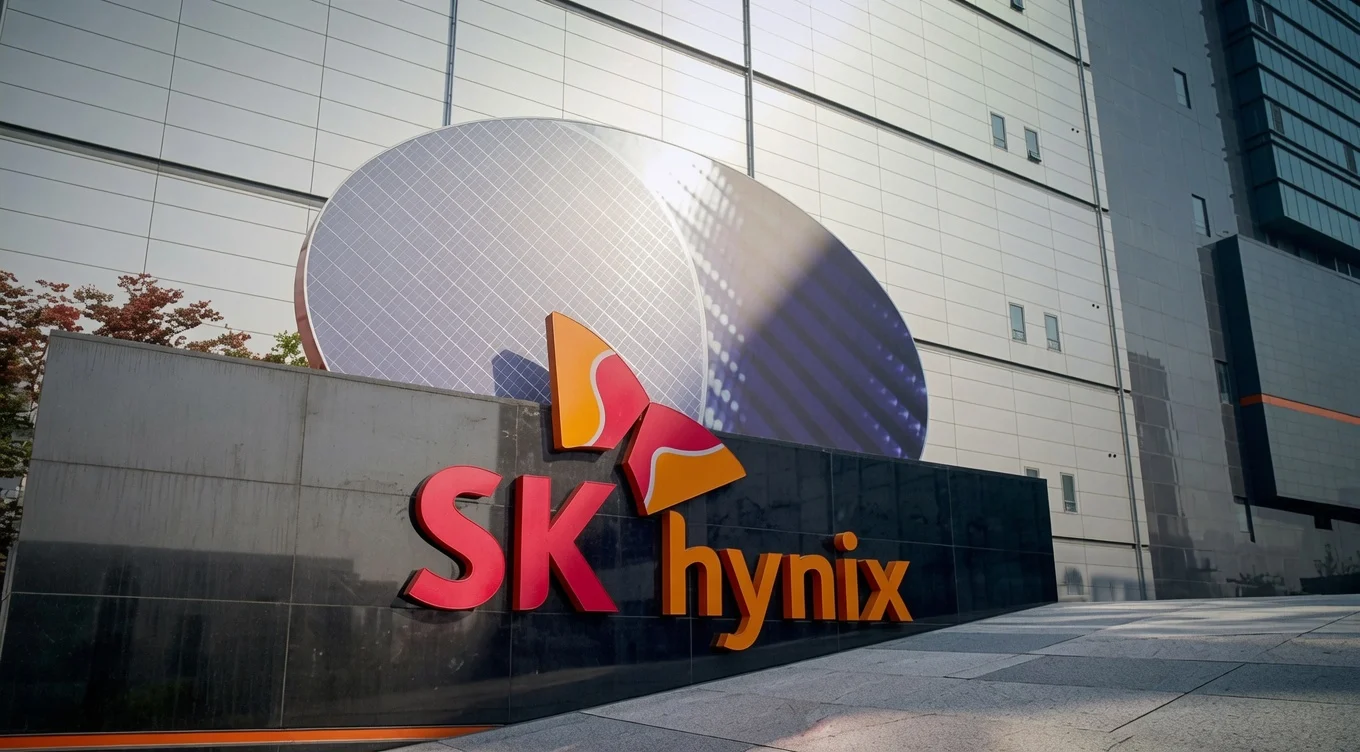
SK Hynix (SKHY) American Depositary Receipts (ADRs) commenced trading on Wall Street last week, immediately capturing significant investor attention and signaling robust confidence in the future of the memory semiconductor sector, particularly its critical role in the burgeoning artificial intelligence (AI) landscape. The ADRs, initially priced at $149 each, quickly ascended to trade near $186, reflecting a substantial premium and strong post-listing momentum. This impressive debut comes against a backdrop of a broader memory market that had recently faced headwinds, underscoring the unique positioning and perceived value of SK Hynix in the eyes of global investors.
Overwhelming Investor Appetite Signals AI-Driven Optimism
The bookbuilding phase preceding the American listing was characterized by unprecedented demand, with the order book swelling to an approximate $171.5 billion. Against 177.9 million ADRs made available, this translates to demand exceeding supply by more than sevenfold. Such an overwhelming subscription rate is remarkable, especially given prevailing market conditions, and indicates a profound belief in SK Hynix’s strategic relevance. The vast majority of interested institutional parties ultimately received allocations substantially below their requested amounts, a common occurrence in highly sought-after IPOs that further attests to the intense competition for shares.
Key institutional heavyweights were prominent among those expressing interest. Coatue Management, Baillie Gifford, and Situational Awareness collectively signaled interest totaling up to $7 billion. This roster of sophisticated investors also included sovereign wealth funds, specialized technology-focused investment vehicles, and prominent global long-only asset managers, highlighting the broad-based and strategic nature of the demand. The collective participation of such influential players underscores a consensus view regarding SK Hynix’s long-term potential, particularly its leadership in advanced memory solutions vital for AI.
The success of the ADR listing is particularly striking when juxtaposed with the broader sentiment in the memory semiconductor sector in the weeks leading up to the American debut. Memory equities, including SK Hynix’s Korea-listed shares and its peer Micron Technology, had recently plunged into bear territory. Market participants were offloading shares amid concerns about a potential cyclical peak in the memory market, despite several competitors reporting strong quarterly results. This divergence – institutional capital flooding towards SK Hynix with unprecedented intensity even as the broader sector faced selling pressure – highlights a specific investment narrative centered on the company’s unique advantages, primarily its dominant position in high-bandwidth memory (HBM). The American listing generated approximately $26.5 billion in proceeds, positioning it among the most substantial capital raises in recent years and providing SK Hynix with significant financial flexibility for future investments and strategic initiatives.
Barclays Leads with a Bullish $330 Price Objective
In a significant vote of confidence, Barclays initiated coverage of SK Hynix this Tuesday with an Overweight designation and a highly bullish $330 price objective. This target represents a potential appreciation of roughly 117% above Monday’s closing price of $152.35 for the ADRs, making it the inaugural formal Wall Street assessment since trading commenced. The analyst report provides a detailed rationale underpinning this optimistic outlook, focusing on fundamental supply-demand dynamics and SK Hynix’s technological leadership.
Senior analyst Simon Coles, who authored the Barclays report, contends that DRAM (Dynamic Random-Access Memory) supply constraints are poised to intensify significantly through 2027. His analysis projects a bit supply expansion of approximately 20% year-over-year, which is expected to dramatically lag demand acceleration toward 35%. This widening gap between supply and demand, driven primarily by the escalating requirements of AI and high-performance computing, suggests that a favorable pricing environment for memory chips could extend for multiple years. This multi-year imbalance forms a cornerstone of Barclays’ bullish thesis, differentiating the current market cycle from previous, often volatile, periods.
SK Hynix’s HBM Dominance and Strategic Financial Outlook
Regarding SK Hynix in particular, Coles anticipates that the manufacturer will not only maintain but solidify its dominance in high-bandwidth memory (HBM), a critical component for AI accelerators. SK Hynix has been at the forefront of HBM development, being the first to mass-produce HBM3 and subsequently HBM3E, which are crucial for advanced AI chips. Coles noted that any perceived technological gaps relative to its primary competitor, Samsung Electronics, are expected to be "neutralized by HBM4E," the next generation of HBM technology. This suggests that SK Hynix is well-positioned to preserve greater than 50% HBM market share over the coming years, reinforcing its status as a key enabler of the AI revolution.
Beyond technological leadership, Coles additionally highlighted an evolving investment narrative centered on shareholder capital allocation. His projections indicate that SK Hynix could accumulate cash reserves exceeding 40% of its current market capitalization by the conclusion of 2027. This substantial cash generation creates significant flexibility for the company, potentially enabling robust share repurchase programs. Under a scenario modeling $50 billion in buybacks, Barclays forecasts double-digit earnings per share (EPS) expansion in 2028, even under the conservative assumption of flat to modestly declining average selling prices (ASPs). This financial foresight adds another layer to the bullish case, suggesting that SK Hynix is not only poised for operational success but also for enhanced shareholder returns.
The Rationale Behind the American Listing and Broader Market Context
SK Hynix’s decision to pursue an American Depositary Receipt listing is a strategic move with multiple benefits. ADRs allow non-U.S. companies to list their shares on U.S. exchanges, providing access to a broader and deeper pool of capital from American and international investors. This increases the company’s visibility, enhances its global brand recognition, and diversifies its investor base beyond its home market in South Korea. For a company like SK Hynix, which is a global leader in a technologically critical sector, tapping into the sophisticated U.S. capital markets is a logical step to fund ambitious expansion plans, particularly in the highly capital-intensive memory chip industry. The proceeds from the listing can be deployed for research and development, capacity expansion, and strategic acquisitions, all vital for maintaining its competitive edge in the rapidly evolving semiconductor landscape.
The timing of the listing, despite recent sector volatility, reflects a confidence in the long-term structural demand for memory, driven by megatrends like AI, 5G, and cloud computing. The memory market is inherently cyclical, characterized by periods of oversupply and undersupply, leading to price fluctuations. However, the current cycle is widely perceived to be different, primarily due to the unprecedented demand for HBM driven by AI. HBM, unlike traditional DRAM, stacks multiple memory dies vertically, connecting them with through-silicon vias (TSVs) to achieve significantly higher bandwidth and lower power consumption – features indispensable for AI accelerators like NVIDIA’s H100 and upcoming B100 GPUs. SK Hynix’s early and sustained leadership in HBM has positioned it as a preferred supplier to major AI chip developers, insulating it somewhat from the broader commodity DRAM market fluctuations.
Navigating the Competitive Landscape: Chinese Advancement and Global Implications
The competitive landscape in the memory sector is dynamic, with players constantly vying for technological leadership and market share. Coles acknowledged in his report that Chinese memory manufacturers are making rapid technical progress. China’s leading DRAM producer, for instance, is projected to elevate its DDR5 manufacturing yield above 75% by late 2025, with bit shipment volumes estimated to have climbed 55% year-over-year in 2025 and projected to rise an additional 48% in 2026. These figures indicate a significant ramp-up in domestic Chinese production capabilities.
However, Coles characterizes the immediate global competitive impact of this advancement as contained. He argues that any market share captured by Chinese producers outside their domestic market would liberate merely 1-4% of the combined production capacity across major players like Samsung, SK Hynix, and Micron. This suggests that while China’s growing capabilities are notable, they are unlikely to fundamentally disrupt the global supply-demand balance in the short to medium term. Furthermore, China’s HBM3 technology development continues to lag, with volume manufacturing now expected to slip into 2027. This delay is critical, as HBM technology is currently the most strategic and high-value segment of the memory market, and China’s inability to produce it at scale significantly limits its immediate competitive threat to leaders like SK Hynix.
The broader geopolitical context also plays a crucial role in shaping the competitive environment. Efforts by the U.S. and its allies to restrict China’s access to advanced semiconductor manufacturing equipment and technology have slowed Beijing’s progress in cutting-edge chip production. While China continues to invest heavily in its domestic semiconductor industry, these restrictions create a technological gap that benefits established players like SK Hynix, Samsung, and Micron, particularly in advanced nodes and specialized memory like HBM.
The Future of Memory: AI as the Unifying Catalyst
The successful debut of SK Hynix’s ADRs and the enthusiastic analyst coverage underscore a fundamental shift in the memory market, driven by the insatiable demands of artificial intelligence. AI models, particularly large language models and generative AI, require unprecedented amounts of data processing and memory bandwidth. Traditional DRAM architectures often create bottlenecks, limiting the performance of AI accelerators. HBM effectively solves this problem by integrating memory directly onto the same package as the processor, drastically reducing data transfer distances and increasing bandwidth.
The global AI chip market is projected to grow exponentially in the coming years, with some estimates suggesting it could reach hundreds of billions of dollars by the end of the decade. As AI adoption permeates various industries, from cloud computing to autonomous vehicles and edge devices, the demand for specialized memory solutions like HBM will only intensify. SK Hynix’s strategic investments in HBM research, development, and manufacturing capacity have positioned it as a pivotal player in this transformative technological era. Its ability to innovate and deliver successive generations of HBM has made it an indispensable partner for leading AI chip developers.
In conclusion, SK Hynix’s American Depositary Receipt listing represents more than just a successful capital raise; it is a powerful affirmation of the company’s strategic vision and technological prowess in a market undergoing profound transformation. The overwhelming investor demand and Barclays’ highly bullish price objective reflect a strong belief in SK Hynix’s enduring leadership in high-bandwidth memory, its robust financial outlook, and its critical role in powering the global AI revolution. While the memory market retains its inherent cyclicality and faces geopolitical complexities, SK Hynix appears well-equipped to navigate these challenges and capitalize on the immense opportunities presented by the AI-driven future. The debut marks a significant milestone, solidifying its position as a global semiconductor powerhouse with a bright outlook on the world stage.














