Grayscale Research, a leading institutional voice in the digital asset space, has issued a comprehensive report warning that the rapid advancement of artificial intelligence (AI) is ushering in a new era of financial surveillance. According to the research, AI significantly enhances the ability of third parties to de-anonymize blockchain transactions by linking on-chain activity with vast troves of off-chain data. This technological shift, Grayscale argues, creates an urgent need for privacy-preserving digital assets, positioning Zcash (ZEC) as a potential "must-have" solution for users seeking to maintain financial confidentiality in an increasingly transparent digital world.
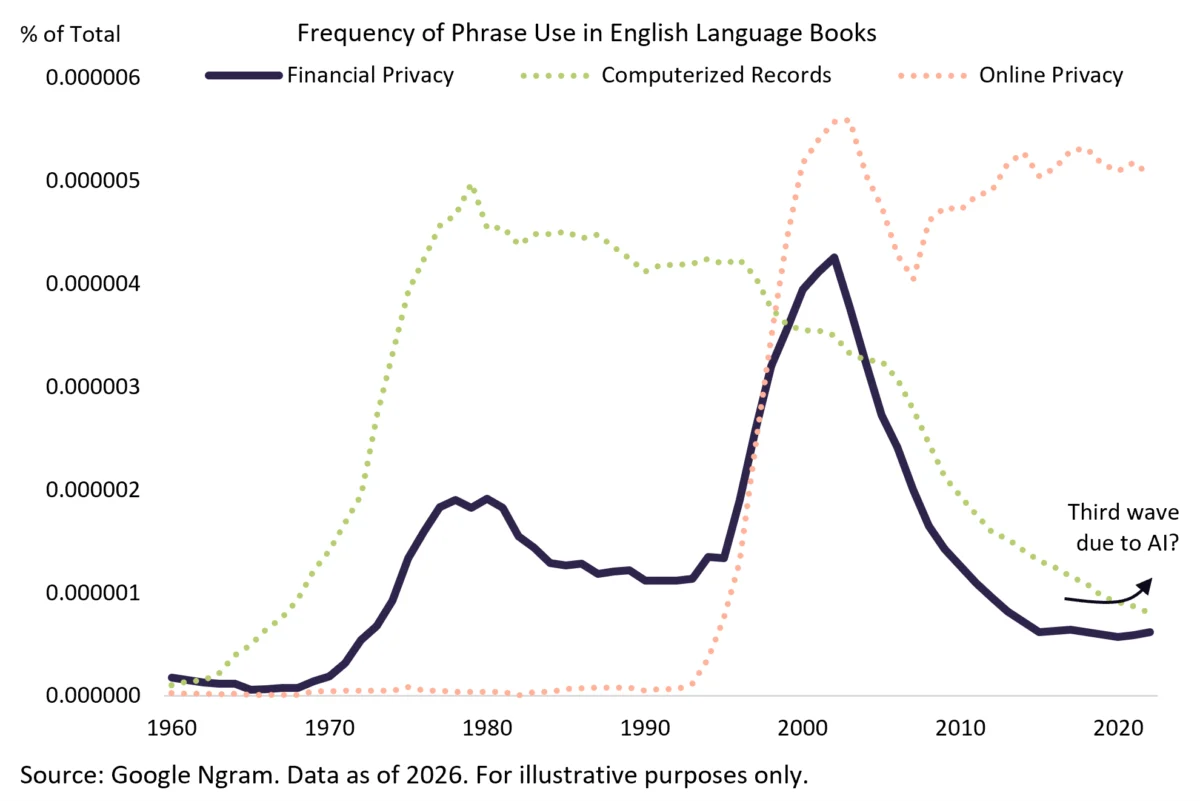
The report identifies a "third wave" of privacy concerns that mirrors previous historical shifts in financial technology. While blockchains like Bitcoin were designed with a degree of pseudonymity, their transparent nature makes them vulnerable to sophisticated AI-driven analysis. As AI tools become more adept at labeling addresses and tracking the flow of funds, the distinction between "public" and "private" financial life is becoming increasingly blurred.
The Historical Context of Financial Privacy
To understand the current threat posed by AI, Grayscale Research places the modern digital asset landscape within a broader historical framework. The evolution of financial privacy has been marked by three distinct technological waves, each characterized by a tension between efficiency and anonymity.
The first wave occurred in the 1970s, during the initial digitization of financial records. Before this period, banking was largely paper-based, and local knowledge played a significant role in transaction verification. The transition to centralized digital databases allowed for faster processing but also enabled the systematic tracking of consumer behavior. This era saw the introduction of the Bank Secrecy Act of 1970 in the United States, which mandated that financial institutions assist government agencies in detecting and preventing money laundering.
The second wave arrived in the 1990s with the commercialization of the internet. This period introduced e-commerce and digital payments, which generated unprecedented amounts of metadata. While the internet empowered consumers, it also gave rise to the "surveillance capitalism" model, where personal data—including financial habits—became a valuable commodity for advertisers and service providers. During this time, the "Cypherpunk" movement emerged, advocating for the use of strong cryptography to protect individual liberty in the digital age.
The third wave, which is currently unfolding, is driven by the convergence of blockchain technology and artificial intelligence. While blockchains provide a decentralized alternative to traditional banking, their inherent transparency is now being leveraged by AI to create a more pervasive form of surveillance than was possible in previous decades.
The AI Threat to Transparent Blockchains
The core of Grayscale’s warning lies in the capability of AI to process and synthesize data at a scale impossible for human analysts. Most popular blockchains, including Bitcoin and Ethereum, utilize a public ledger system where every transaction is recorded and visible to anyone with an internet connection. While these transactions do not explicitly list the names of the participants, they use alphanumeric addresses as pseudonyms.
AI changes the calculus of blockchain privacy through several mechanisms:
- Heuristic Analysis and Pattern Recognition: AI algorithms can analyze millions of transactions to identify patterns consistent with specific types of behavior, such as regular transfers to a known exchange or specific spending habits.
- Off-Chain Data Integration: By scraping social media, public records, and leaked databases, AI can link a "pseudonymous" blockchain address to a real-world identity. For example, if a user posts a donation address on a social media profile, an AI can trace every subsequent transaction made by that wallet and all linked wallets.
- Automated Address Labeling: Large-scale AI models are increasingly effective at "labeling" addresses belonging to specific entities, such as businesses, exchanges, or even individuals, based on their interaction with known service providers.
Grayscale Research notes that while Bitcoin’s white paper acknowledged the risks of a public ledger, the founders likely did not anticipate the sheer processing power that modern AI would bring to bear on de-anonymization efforts.
Zcash as a Technological Countermeasure
In response to these escalating risks, Grayscale highlights Zcash (ZEC) as a primary contender for users prioritizing financial sovereignty. Unlike Bitcoin, which is transparent by default, Zcash was built with privacy as its foundational feature.
Zcash utilizes a sophisticated form of cryptography known as Zero-Knowledge Proofs (ZKPs), specifically zk-SNARKs (Zero-Knowledge Succinct Non-Interactive Arguments of Knowledge). This technology allows one party to prove to another that a statement is true without revealing any information beyond the validity of the statement itself.
In the context of a financial transaction, Zcash’s "shielded" transactions allow users to send funds without revealing the sender’s address, the receiver’s address, or the amount being transferred. This functions much like physical cash, where the transaction is private between the two parties involved, and no public record of the specific details exists on the ledger.

Zach Pandl, Grayscale’s Head of Research, emphasized the growing importance of these features. "We expect AI to create new threats to financial privacy, and to motivate a search for new solutions," Pandl stated. "Zcash, a Bitcoin-like digital currency with additional privacy features, may be one of those solutions. Shielded Zcash transactions, using the power of zero-knowledge cryptography, hide both transacting addresses and the amount being transferred. For users that prioritize privacy, this could become a ‘must-have’ feature."
At the time of the report’s release, Zcash (ZEC) was trading at $826.25, reflecting a market that is beginning to re-evaluate the utility of privacy-centric assets in a post-AI landscape.
Supporting Data and Market Dynamics
The demand for privacy in the digital asset space is evidenced by the continued development of Zero-Knowledge technology across the broader ecosystem. While Zcash remains a leader in native privacy, other networks are integrating ZK-proofs to improve scalability and confidentiality. Ethereum, for instance, has seen a surge in Layer-2 scaling solutions (such as zkSync and Starknet) that utilize ZK-rollups.
However, Zcash remains unique in its commitment to "shielded pools." According to data from on-chain analytics providers, the percentage of Zcash transactions utilizing shielded addresses has seen steady growth over the last several years, particularly following the "Sapling" and "Halo" network upgrades, which significantly reduced the computational resources required to send private transactions.
Furthermore, the "Privacy Paradox"—a phenomenon where users claim to value privacy but often sacrifice it for convenience—is being tested. As AI-driven surveillance becomes more visible (e.g., through more accurate tax reporting or targeted financial "de-banking"), the "convenience" of transparent blockchains may no longer outweigh the risks for high-net-worth individuals and institutional players.
Regulatory Responses and the Privacy Debate
The rise of privacy-preserving assets like Zcash has not been without controversy. Regulators globally have expressed concerns that shielded transactions could be exploited for illicit activities, such as money laundering or terrorism financing. This has led to a complex regulatory environment where some exchanges have delisted privacy coins to comply with local "Travel Rule" requirements.
In response, the Zcash community and the Electric Coin Company (the primary developers of Zcash) have integrated features that allow for "selective disclosure." This enables users to share transaction details with specific third parties (such as auditors or tax authorities) using "view keys" without exposing their data to the general public. This middle-ground approach aims to satisfy regulatory compliance while maintaining the user’s right to individual privacy.
Market analysts suggest that the narrative around privacy coins is shifting from "tools for illicit finance" to "essential infrastructure for digital freedom." As AI makes data harvesting more efficient, the ethical and legal arguments for financial confidentiality are gaining traction among civil liberties advocates and institutional investors alike.
Broader Impact and Future Implications
The implications of Grayscale’s research extend beyond the price of ZEC. It signals a broader shift in the digital asset investment thesis. If AI continues to erode the pseudonymity of traditional blockchains, the "Privacy Sector" of the crypto market may move from a niche category to a core component of a diversified digital portfolio.
The integration of AI into financial surveillance also raises questions about the future of central bank digital currencies (CBDCs). Many critics argue that CBDCs could provide governments with an unprecedented level of oversight into citizen spending. In such a scenario, decentralized and private alternatives like Zcash could serve as a critical "escape valve" for those seeking to maintain financial autonomy.
Grayscale’s analysis suggests that the "AI Era" will be defined by a cat-and-mouse game between surveillance technology and privacy-enhancing cryptography. As AI becomes more adept at connecting the dots, the value of technologies that can break those connections—like zk-SNARKs—is likely to appreciate.
In summary, the convergence of AI and blockchain technology has created a paradox: the ledger that was meant to provide freedom from centralized intermediaries has become a goldmine for data-driven surveillance. Grayscale Research’s focus on Zcash underscores a growing belief that in the age of artificial intelligence, privacy is no longer a luxury, but a fundamental requirement for the functioning of a free digital economy. As the "third wave" of privacy concerns intensifies, the role of Zcash and similar protocols will likely be a central theme in the next decade of financial evolution.