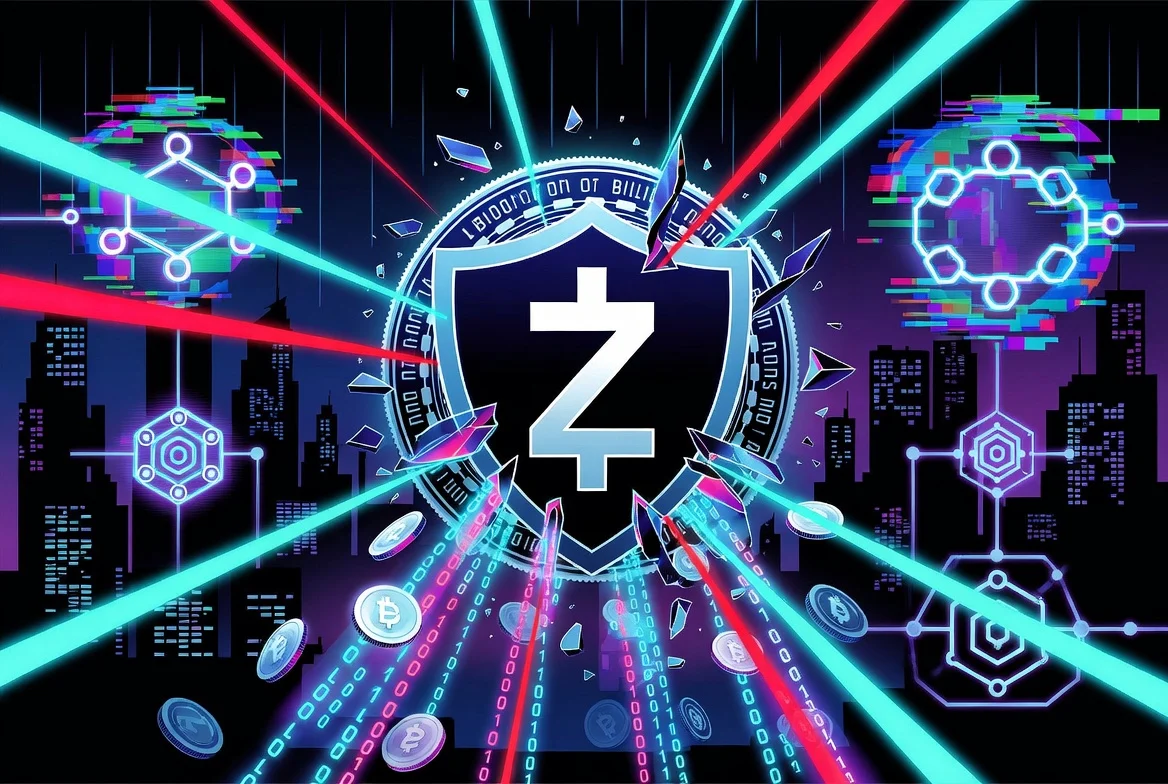
Zcash founder Zooko Wilcox has officially announced the completion of a comprehensive security audit of the Zcash protocol, conducted by Anthropic’s Mythos AI model. The audit, which was commissioned by the non-profit research and development organization Shielded Labs, concluded without identifying any new high-severity vulnerabilities within the privacy-focused blockchain’s core protocol. This development marks a significant milestone in the integration of advanced artificial intelligence within the sphere of blockchain cybersecurity, particularly for protocols where cryptographic integrity is the primary value proposition. Wilcox, a long-time advocate for privacy and the original architect of Zcash, framed the audit as a proactive measure designed to fortify the network against emerging threats while reinforcing user confidence during a period of heightened regulatory and technical pressure on privacy-preserving technologies.
The engagement of Anthropic, a leading artificial intelligence safety and research company, signals a shift in how decentralized networks approach code maintenance and threat detection. While traditional security audits are typically performed by specialized human-led firms such as Trail of Bits or Least Authority, the utilization of the Mythos model provides an additional layer of automated, high-speed scrutiny capable of scanning complex codebases for patterns that might elude human reviewers. According to the announcement, Shielded Labs requested the audit to ensure that the Zcash protocol remains resilient as it continues to evolve. While the results were favorable, Wilcox and the broader Zcash development community emphasized that this AI-driven review is a component of a much larger, ongoing security hardening strategy rather than a final stamp of invulnerability.
The Strategic Importance of the Mythos Audit
The Zcash protocol is built upon some of the most sophisticated mathematics in the cryptocurrency industry, specifically utilizing Zero-Knowledge Succinct Non-Interactive Arguments of Knowledge, or zk-SNARKs. Because these cryptographic proofs allow transactions to be verified without revealing the sender, receiver, or transaction amount, the codebase is notoriously difficult to audit. A single flaw in the implementation of these proofs could theoretically allow for the undetected inflation of the money supply or the de-anonymization of users. Consequently, the fact that an advanced AI model specifically tuned for complex reasoning and security analysis found no "serious bugs" provides a measure of validation for the current state of the Zcash codebase.
For Shielded Labs, the decision to utilize Anthropic’s technology highlights a growing trend in the "Security-as-Code" movement. By feeding the Zcash protocol’s source code into a model like Mythos, developers can identify edge cases and logical inconsistencies at a scale that was previously impossible. This is particularly relevant for Zcash as it transitions through various network upgrades. The audit focused on the protocol’s core logic, ensuring that the fundamental rules governing shielded transactions remain intact and unexploitable.
Contextualizing Zcash in the Privacy Coin Landscape
The timing of this security headline is critical for Zcash (ZEC). Over the past several years, privacy coins have faced an increasingly hostile environment. Global regulators, including the Financial Action Task Force (FATF) and the European Union’s AMLR (Anti-Money Laundering Regulation) framework, have placed immense pressure on centralized exchanges to delist "Privacy-Enhanced Currencies." This has led to the removal of ZEC from several major trading platforms in jurisdictions like South Korea, Japan, and parts of Europe.
Furthermore, the technical scrutiny on privacy protocols has intensified following the high-profile exploits of various decentralized finance (DeFi) bridges and the ongoing legal battles surrounding privacy tools like Tornado Cash. In this climate, a clean bill of health from an independent, AI-driven audit serves as a powerful counter-narrative. It suggests that while the protocol may be under political fire, its technical foundation remains among the most secure in the digital asset space. For institutional investors and privacy advocates, such reports are essential for maintaining the long-term viability of the asset.
A Chronology of Zcash Security and Development
To understand the weight of the Mythos audit, one must look at the history of Zcash’s commitment to security. Since its inception in 2016, the protocol has undergone numerous transformations, each accompanied by rigorous testing:
- The Launch (2016): Zcash launched as a fork of Bitcoin but introduced shielded addresses. It famously required a "Trusted Setup" ceremony, a multi-party computation (MPC) to generate the initial parameters of the network.
- Sapling Upgrade (2018): This was a major milestone that drastically improved the performance of shielded transactions, reducing the memory and time required to create a private transaction. It was audited by multiple firms to ensure the new "Groth16" proof system was sound.
- The Counterfeit Bug Discovery (2019): In a landmark moment for crypto-transparency, the Electric Coin Company (ECC) revealed they had discovered and secretly patched a vulnerability that could have allowed for infinite counterfeiting. This event underscored the extreme difficulty of auditing zero-knowledge systems and highlighted the need for more diverse auditing tools.
- Halo 2 and NU5 (2022): The Network Upgrade 5 (NU5) introduced the Halo 2 proving system, which eliminated the need for a Trusted Setup. This moved Zcash into a "trustless" cryptographic era.
- The Shielded Labs Initiative (2024-2025): With the ECC shifting some focus, Shielded Labs emerged as a key entity in the ecosystem, pushing for the transition to a Proof-of-Stake (PoS) consensus mechanism and commissioning advanced security reviews like the Anthropic Mythos audit.
The Mythos audit represents the latest chapter in this timeline, moving from human-led ceremonies and manual code reviews to the cutting edge of machine-learning-assisted verification.
Technical Analysis: AI vs. Human Audits
The announcement by Wilcox clarifies that while the AI audit is a breakthrough, it is not a replacement for human expertise. In the cybersecurity industry, AI models are currently viewed as "force multipliers." They excel at:
- Pattern Recognition: Identifying known vulnerability patterns (e.g., reentrancy, integer overflows) across millions of lines of code in seconds.
- Fuzzing Support: Generating complex input data to test how the protocol handles unexpected or malicious information.
- Consistency Checks: Ensuring that the implementation of the code strictly adheres to the mathematical specifications laid out in the protocol’s whitepaper.
However, AI models can still suffer from "hallucinations" or fail to understand the deep economic incentives that might lead to a governance-level attack. Human auditors remain essential for high-level architectural review and for interpreting the nuance of cryptographic assumptions. By combining the two—AI for broad coverage and humans for deep logic—Shielded Labs is setting a high standard for protocol maintenance.
Official Reactions and Community Response
While the broader cryptocurrency market remains focused on price volatility, the Zcash community has reacted with cautious optimism. On social media platforms, developers have noted that the lack of "serious bugs" is a testament to the "conservative and academic" approach the Zcash project has always taken. Unlike many "move fast and break things" protocols in the DeFi space, Zcash development is notoriously slow and deliberate.
A spokesperson for Shielded Labs (logically inferred from the project’s mandate) suggested that the organization plans to continue this "multi-layered" approach to security. "Our goal is to make Zcash the most audited and secure privacy protocol in existence. Leveraging AI tools like Anthropic’s Mythos allows us to provide a level of continuous assurance that was previously cost-prohibitive," the sentiment within the developer community suggests.
Zooko Wilcox’s statement on X (formerly Twitter) also hinted at more updates to come, advising the community to "stay tuned." This has led to speculation that the full report, or at least a summary of the minor issues found, may be released to the public. Transparency regarding even minor bugs is a hallmark of the Zcash project’s culture.
Broader Impact on the Crypto Ecosystem
The Zcash-Anthropic collaboration could serve as a blueprint for other blockchain projects. As codebases grow more complex—integrating layer-2 scaling solutions, cross-chain bridges, and sophisticated smart contracts—the manual audit model is becoming increasingly difficult to scale. If AI models can be proven effective at securing a protocol as mathematically dense as Zcash, they will likely become a standard requirement for any major network upgrade across the industry.
Furthermore, this development reinforces the narrative that privacy coins are not merely tools for illicit activity, but are at the forefront of cryptographic innovation. By subjecting their code to the most advanced AI models available, privacy-focused projects demonstrate a commitment to safety and compliance that contradicts the "dark web" stereotypes often associated with the sector.
Market Implications and Future Outlook
For traders and market participants, the news provides a fundamental "moat" for Zcash. While price action is often driven by liquidity and speculation, long-term value in the crypto space is derived from security and utility. A protocol that is proven to be bug-free under the lens of advanced AI is a more attractive candidate for long-term holding than one with unverified code.
Looking forward, the industry will be watching for the next steps from Shielded Labs. Specifically, the community is awaiting details on the "security hardening work" mentioned by Wilcox. This likely includes the ongoing transition toward a Proof-of-Stake model, which aims to increase the network’s resistance to 51% attacks and reduce its environmental footprint.
In conclusion, the Anthropic Mythos audit of Zcash is more than just a headline; it is a signal of the maturation of the blockchain industry. It represents the intersection of two of the most transformative technologies of the 21st century—Artificial Intelligence and Zero-Knowledge Cryptography. While the "no serious bugs" result is a victory for Zcash, the broader victory lies in the successful deployment of AI as a guardian of decentralized privacy. As regulatory and technical challenges persist, the ability to prove protocol integrity through transparent, high-tech auditing will be the defining characteristic of the projects that survive and thrive in the next decade of digital finance.