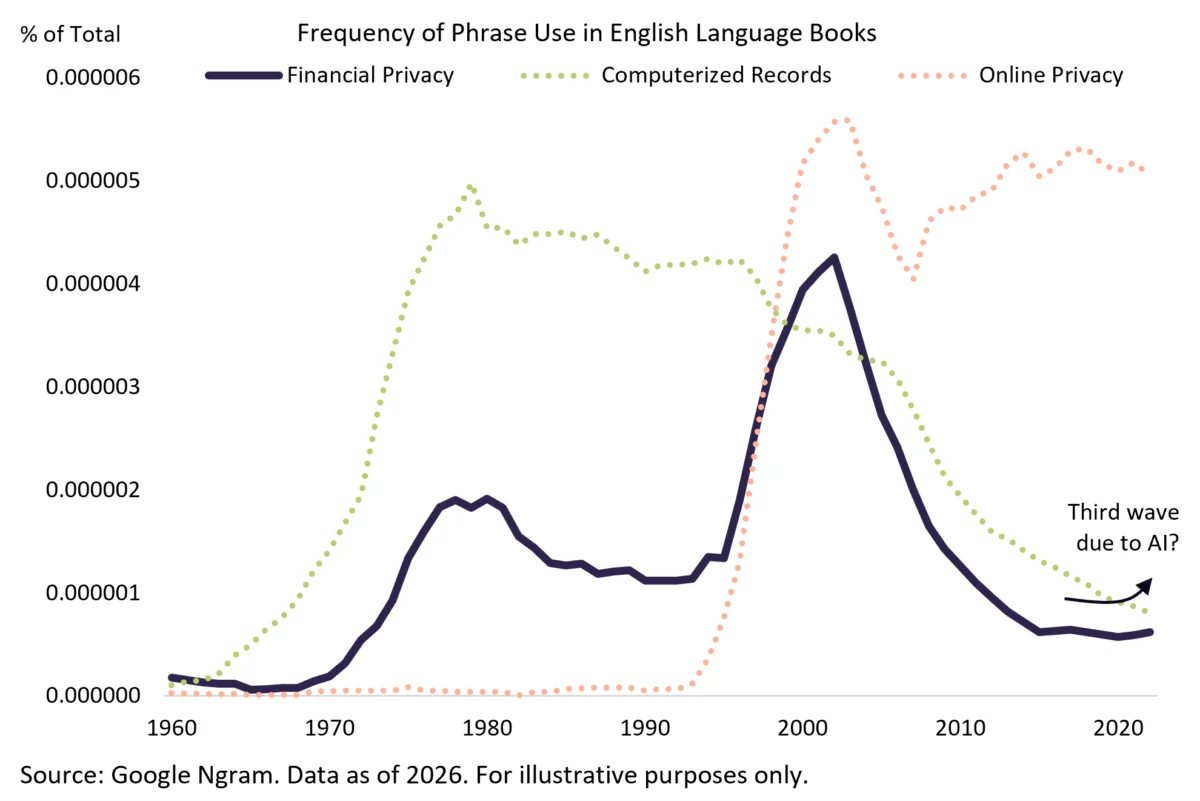
The rapid integration of artificial intelligence into the global financial ecosystem has introduced a new paradigm of risk regarding digital privacy and financial surveillance. According to a comprehensive report released by Grayscale Research, the inherent transparency of public blockchains, once hailed as a triumph of accountability, may now serve as a vulnerability. The report suggests that AI’s burgeoning capabilities in data processing and pattern recognition are significantly enhancing the ability of third parties to link anonymous blockchain transactions with real-world identities, effectively de-anonymizing users on a scale previously thought impossible.
As AI tools become more sophisticated, they are being leveraged to bridge the gap between on-chain transactional data and off-chain personal information. This development has prompted a re-evaluation of privacy-preserving technologies, with Grayscale highlighting Zcash (ZEC) as a potential cornerstone for users seeking to maintain financial confidentiality in an increasingly transparent digital world. The research underscores a pivotal shift: privacy is no longer just a philosophical preference but is becoming a functional necessity for participants in the digital economy.
The Evolution of Privacy Concerns: Three Waves of Technological Disruption
The Grayscale report situates the current AI-driven privacy crisis within a broader historical context, identifying it as the "third wave" of technological shifts that have challenged individual financial autonomy. Understanding this chronology is essential to grasping the gravity of the current situation.
The First Wave: The Digitization of the 1970s
The first significant threat to financial privacy emerged in the 1970s with the digitization of financial records. As banks moved away from paper-based ledgers toward computerized systems, the ease of tracking and storing financial data increased exponentially. This era saw the birth of modern financial surveillance, as governments and institutions gained the ability to aggregate and search through records that were previously siloed and difficult to access.
The Second Wave: The Rise of the Internet in the 1990s
The 1990s marked the second wave, driven by the commercialization of the internet. While the internet democratized information, it also created a massive footprint of digital breadcrumbs. E-commerce and online banking meant that every transaction left a permanent record. This era introduced the concept of "big data," where corporations began harvesting user information to build consumer profiles, leading to the erosion of the boundary between public and private digital lives.
The Third Wave: The AI Revolution
We are now entering the third wave, characterized by the intersection of blockchain transparency and artificial intelligence. Unlike previous eras, where data analysis required significant manual effort and human oversight, AI can process billions of data points in real-time. By applying machine learning algorithms to public ledgers like Bitcoin’s, AI can identify "fingerprints" in transaction behavior, linking disparate addresses to single entities with high degrees of accuracy.
The Mechanics of De-Anonymization in the AI Era
Public blockchains like Bitcoin operate on a pseudonymity model rather than a true anonymity model. Every transaction—including the sender’s address, the receiver’s address, and the amount transferred—is recorded on a public ledger accessible to anyone. While these addresses are alphanumeric strings not directly tied to names, they are not invisible.
AI enhances surveillance through several sophisticated techniques:
- Address Labeling and Clustering: AI models can analyze the timing, frequency, and size of transactions to cluster multiple addresses belonging to the same user. By cross-referencing these clusters with data from centralized exchanges (KYC data), social media, or leaked databases, the user’s identity can be unmasked.
- Heuristic Analysis: Advanced algorithms can detect patterns in how users move funds, such as "peeling chains" or change-address behaviors, which were previously used to obfuscate trails but are now easily recognizable to trained neural networks.
- Off-Chain Data Integration: The most significant threat involves AI’s ability to scrape the web for metadata—IP addresses, browser cookies, and digital signatures—and correlate it with on-chain activity. This holistic view allows for the de-anonymization of "transparent" blockchains at scale.
Zcash as a Technological Countermeasure
In light of these escalating risks, Grayscale Research points toward Zcash (ZEC) as a primary solution. Originally launched in 2016 based on the Bitcoin codebase, Zcash was designed specifically to address the privacy shortcomings of its predecessor.
Zach Pandl, Grayscale’s Head of Research, emphasizes that the AI era will inevitably drive a search for robust privacy solutions. "We expect AI to create new threats to financial privacy, and to motivate a search for new solutions," Pandl stated. He noted that Zcash’s unique architecture allows it to function like physical cash in a digital environment.
The Power of Zero-Knowledge Cryptography
The core of Zcash’s privacy feature lies in Zero-Knowledge Succinct Non-Interactive Arguments of Knowledge, or zk-SNARKs. This cryptographic breakthrough allows one party to prove to another that a statement is true without revealing any information beyond the validity of the statement itself.

In the context of a Zcash transaction, a user can prove they have the funds and the authorization to send them without revealing their address, the recipient’s address, or the transaction amount. These are known as "shielded transactions." Unlike Bitcoin, where privacy is an afterthought or requires complex "mixing" services that often attract regulatory scrutiny, Zcash builds privacy into its core protocol.
Shielded vs. Transparent Pools
Zcash offers two types of addresses:
- T-Addresses (Transparent): These function similarly to Bitcoin addresses and are visible on the blockchain.
- Z-Addresses (Shielded): These utilize zk-SNARKs to provide complete privacy.
The Grayscale report suggests that as AI-driven surveillance becomes a standard tool for both state and non-state actors, the use of shielded transactions could transition from a niche preference to a "must-have" feature for institutional and individual users alike.
Market Context and Institutional Perspective
At the time of the report’s writing, Zcash (ZEC) was trading at $826.25. While the asset has faced volatility and regulatory headwinds in the past—specifically regarding its delisting from certain exchanges due to its privacy features—the narrative is shifting. The conversation is moving away from the misuse of privacy for illicit activities toward the essential protection of legitimate financial data in an age of total surveillance.
Grayscale’s advocacy for Zcash signals a growing institutional recognition that privacy is a prerequisite for a functional digital economy. Without privacy, businesses risk exposing their supply chains, payrolls, and strategic movements to competitors, while individuals risk identity theft and predatory targeting by AI-driven marketing or surveillance algorithms.
Regulatory Implications and the Privacy Paradox
The rise of AI-enhanced blockchain analysis presents a paradox for regulators. On one hand, these tools assist law enforcement in tracking criminal activity. On the other hand, the total loss of privacy for law-abiding citizens contradicts fundamental rights in many jurisdictions.
The Grayscale report implies that the "third wave" will force a legislative reckoning. As AI makes it impossible to remain anonymous on transparent chains, the demand for "Privacy-Enhancing Technologies" (PETs) will likely increase. Regulators may eventually have to distinguish between "anonymity-enhanced cryptocurrencies" used for illicit purposes and the legitimate need for financial confidentiality, similar to how encrypted messaging has become a standard for global communication despite its potential for misuse.
Chronology of Zcash and Privacy Milestones
To understand the current position of Zcash, it is helpful to look at the timeline of its development and the broader privacy landscape:
- 2008: Satoshi Nakamoto releases the Bitcoin Whitepaper, noting the risks of public transaction visibility.
- 2014: The "Zerocash" protocol is proposed by academic researchers, improving upon the earlier "Zerocoin" concept.
- 2016: Zcash officially launches, introducing zk-SNARKs to the blockchain space.
- 2018: The "Sapling" upgrade significantly improves the speed and memory efficiency of shielded transactions, making them more accessible on mobile devices.
- 2022: The "NU5" upgrade introduces the Halo proving system, removing the need for a "trusted setup" and further decentralizing the protocol’s security.
- 2024-2025: The explosion of Generative AI and Large Language Models (LLMs) provides new tools for mass data correlation, marking the beginning of Grayscale’s "Third Wave."
Analysis of Broader Impacts
The implications of AI-driven financial surveillance extend far beyond the cryptocurrency market. If public ledgers become fully de-anonymized, the original vision of blockchain as a decentralized, permissionless system is compromised. It essentially becomes a high-speed, automated version of the current banking system, but with even less inherent privacy.
The shift toward Zcash and other zero-knowledge protocols represents a defensive maneuver by the digital asset community. If AI is the "sword" of surveillance, zero-knowledge cryptography is the "shield." The success of Zcash in this new era will likely depend on its ability to balance privacy with compliance features, such as "view keys," which allow users to selectively disclose transaction details to auditors or tax authorities without exposing them to the public or AI scrapers.
Furthermore, the integration of AI in blockchain analysis is expected to lead to a "cat and mouse" game. As AI improves at de-anonymizing, developers will iterate on privacy protocols to make them more robust. This competition will likely drive innovation in the field of cryptography, potentially leading to new forms of "fully homomorphic encryption" where data can be processed without ever being decrypted.
Conclusion
Grayscale Research’s warning serves as a clarion call for the digital asset industry. The intersection of AI and transparent blockchains has effectively ended the era of "security through obscurity" on public ledgers. As AI tools lower the barrier to entry for mass financial surveillance, the value proposition of privacy-centric assets like Zcash is being redefined. In the emerging digital landscape, the ability to shield transactions is no longer just a feature for the privacy-conscious—it is a fundamental requirement for the preservation of individual and institutional financial sovereignty. The "third wave" of privacy concerns is here, and the technological solutions adopted today will determine the level of freedom inherent in the financial systems of tomorrow.