Fresh market signals and technical chart structures suggest that the cryptocurrency market may be approaching a significant transition, with altcoins positioned for a period of relative outperformance. Recent cycle analysis indicates that Ethereum (ETH) is entering the early stages of a phase characterized by strength against Bitcoin (BTC), a development that has historically served as a precursor to broad-based rallies across the altcoin sector. This shift in market leadership is a cornerstone of digital asset market cycles, where capital typically flows from Bitcoin into Ethereum before trickling down to high-cap altcoins and eventually the speculative tail of the market.
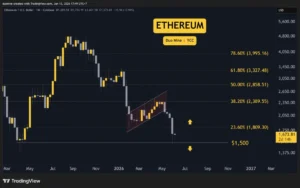
The ETH-to-BTC relationship is widely regarded by analysts as one of the most reliable indicators for identifying shifts in crypto market dominance. Throughout previous cycles, Ethereum has assumed a leadership role during periods of expanding global liquidity. In these scenarios, Ethereum acts as a functional bridge, translating the momentum gathered by Bitcoin into a wider appetite for risk that fuels the rest of the ecosystem. Current chart structures reveal that the ETH/BTC pair is moving into a rotation phase, which many market participants believe could mark the beginning of the current cycle’s most aggressive upside for alternative cryptocurrencies.
Technical Indicators and the Bullish MACD Flip
This emerging pattern is supported by more than just price action; it aligns with long-term momentum indicators that have turned constructive for the first time in several years. Specifically, the long-term Moving Average Convergence Divergence (MACD) for the aggregate altcoin market capitalization—often tracked via the "TOTAL3" index (which excludes Bitcoin and Ethereum)—has flipped bullish.
The MACD is a trend-following momentum indicator that shows the relationship between two moving averages of an asset’s price. A bullish crossover on a high-timeframe chart, such as the weekly or monthly, is a rare event that typically signals the end of a prolonged consolidation or downtrend. Historical data from the 2017 and 2021 bull cycles show that similar MACD signals coincided with robust, multi-month expansions. During these periods, many altcoins delivered exponential returns as capital rotated away from Bitcoin’s dominance, which tends to peak early in a market cycle.
The Dynamics of Speculative Capital and Memecoin Dominance
Speculative segments of the market are also exhibiting signs of a potential revival. Memecoin dominance, a gauge of retail investor sentiment and high-risk appetite, underwent a steady decline following a period of intense mania in late 2024. At its peak, memecoins accounted for approximately 11% of the total altcoin market capitalization. However, by the end of 2024 and into the early stages of the current observation period, this figure retraced to a historically low level of just over 3%.
In the professional trading environment, such a drastic reduction in dominance often suggests a "washout" of speculative excess, creating a healthier foundation for the next leg up. In recent days, several major memecoins have recorded double-digit gains, lifting the dominance ratio off its floor. While confirmation of a full-scale speculative trend is still developing, these early movements hint at a shifting risk appetite among both retail and institutional participants.
Chronology of the Current Market Cycle
To understand the current setup, it is necessary to examine the timeline of the 2023–2024 market cycle:
- Late 2023 – Early 2024 (The Bitcoin Lead): Driven by the anticipation and eventual approval of Spot Bitcoin ETFs in the United States, Bitcoin saw a massive influx of institutional capital, pushing its price toward new all-time highs and increasing its market dominance to over 55%.
- Mid 2024 (Consolidation and Ethereum Stagnation): While Bitcoin held its gains, Ethereum and the broader altcoin market faced headwinds. Regulatory uncertainty regarding the status of Ethereum and a "sell-the-news" event following the launch of Spot Ethereum ETFs led to a period of underperformance for the ETH/BTC pair.
- Late 2024 (The Altcoin Bottom): During this period, most altcoins retraced 50% to 70% from their yearly highs, and the altcoin MACD remained in bearish territory. Memecoin dominance fell from 11% to the 3% level mentioned previously.
- Current Phase (The Rotation): As of the present quarter, Bitcoin’s dominance has begun to plateau. Technical structures show Ethereum forming a "double bottom" against Bitcoin, while the altcoin MACD has completed its bullish crossover.
Analysis of Key Altcoins: Polygon, Cardano, and Solana
Among the assets poised for potential growth, three major projects—Polygon (POL), Cardano (ADA), and Solana (SOL)—are frequently cited due to their significant infrastructure updates and ecosystem maturity.

Solana (SOL): Solana has emerged as a primary competitor to Ethereum, particularly in the realms of decentralized finance (DeFi) and retail trading. Its focus on high throughput and low transaction costs has made it the preferred chain for the recent memecoin surge. The upcoming "Firedancer" upgrade, a new validator client developed by Jump Crypto, is expected to further enhance the network’s resilience and speed, providing a fundamental catalyst for price appreciation.
Cardano (ADA): Cardano recently transitioned into the "Voltaire" era following the Chang hard fork. This milestone introduced decentralized governance, allowing ADA holders to have a direct say in the network’s future. By moving toward a fully community-governed model, Cardano aims to differentiate itself from more centralized competitors, appealing to investors who prioritize long-term decentralization and formal verification in blockchain architecture.
Polygon (POL): Formerly known as MATIC, Polygon has undergone a major rebranding and technical migration to the POL token. This transition is part of the "Polygon 2.0" roadmap, which envisions an "AggLayer" (Aggregation Layer) designed to unify liquidity across various Ethereum Layer 2 networks. By solving the problem of fragmented liquidity, Polygon positions itself as an essential piece of infrastructure for the Ethereum scaling roadmap.
Broader Macroeconomic Impact and Institutional Influence
The potential for an altcoin-led expansion is not occurring in a vacuum. Broader macroeconomic conditions are becoming increasingly favorable for risk assets. Central banks globally have begun to signal a shift toward more accommodative monetary policies, including interest rate cuts. Lower interest rates generally lead to a weaker US Dollar and increased liquidity in global markets, which historically benefits high-growth assets like cryptocurrencies.
Furthermore, the institutional landscape has changed. The introduction of Spot ETFs for both Bitcoin and Ethereum has created a permanent bridge for traditional finance capital. While Bitcoin was the primary beneficiary in 2024, the "wealth effect"—where investors move profits from established assets into higher-beta opportunities—is expected to drive significant inflows into the altcoin market. Analysts suggest that as institutional portfolios rebalance, even a small percentage shift toward altcoins could result in massive price volatility given the lower liquidity and market caps of these assets compared to Bitcoin.
Potential Risks and Market Hurdles
Despite the constructive technical setup, several risks remain. The "altcoin season" narrative relies heavily on Ethereum’s ability to maintain its momentum against Bitcoin. If Bitcoin undergoes a sharp correction due to geopolitical instability or unexpected economic data, altcoins typically suffer higher percentage losses in the short term.
Additionally, the regulatory environment continues to be a point of contention. While the approval of Ethereum ETFs was a major win, the legal status of many other altcoins remains a subject of debate in various jurisdictions. Ongoing litigation between the SEC and various crypto entities could introduce volatility that disrupts the technical breakout patterns currently observed on the charts.
Conclusion and Future Outlook
Historical evidence indicates that when liquidity expansion occurs in tandem with a bullish MACD flip and an Ethereum-led rotation, market movements can accelerate rapidly. For now, the setup for a "meteoric boost" in the altcoin sector appears to be emerging rather than fully realized.
The convergence of technical indicators, such as the ETH/BTC rotation and the 3% memecoin dominance floor, suggests that the market has cleared the speculative excess of the previous year. If the current trend holds, the final months of the cycle could see a significant redistribution of market share, with Polygon, Cardano, and Solana leading a broader charge that redefines the hierarchy of the digital asset space. Investors and analysts alike are now watching for a definitive break in the ETH/BTC ratio as the final confirmation that the next phase of the bull market has officially begun.