


The most dormant Bitcoin on the network, comprising digital assets that have remained untouched for a decade or even longer, is experiencing an unusual and notable surge in activity this year, according to fresh data released by Galaxy Research. This unprecedented awakening of historically inactive coins signals a significant shift in the behavior of long-term holders or the strategic repositioning of substantial legacy wealth within the cryptocurrency ecosystem, drawing considerable attention from market analysts and investors alike.
Unprecedented Activity: A Closer Look at the Data
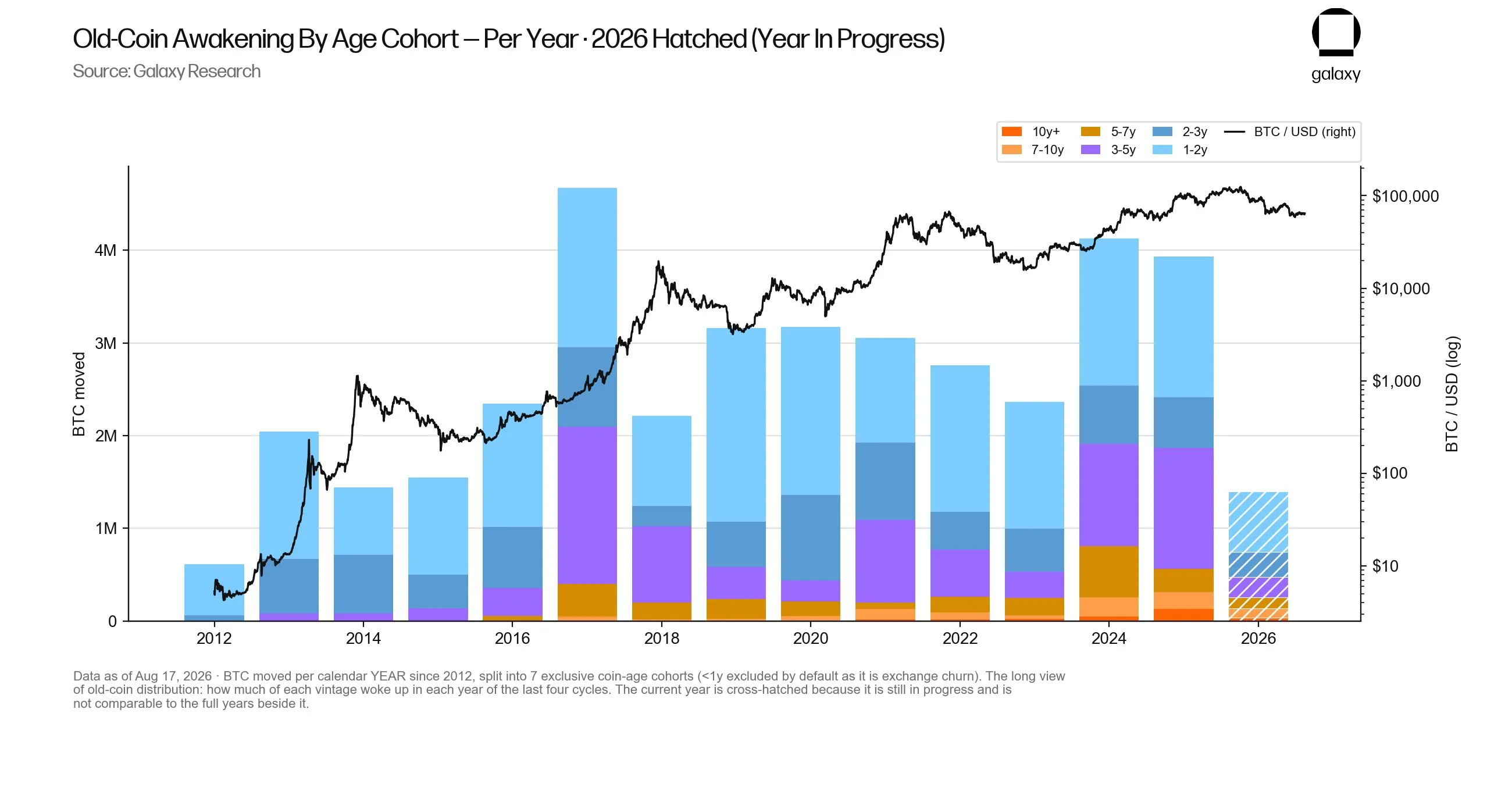
Galaxy Research, a prominent firm specializing in digital asset insights and investment, published a compelling chart last week that meticulously tracks the "awakening" of Bitcoin from various age cohorts since 2012. This visualization categorizes Bitcoin movements by the vintage of the coins, illustrating precisely when different age groups of Bitcoin became active after prolonged periods of dormancy. The most striking revelation from this comprehensive data set is a distinct, visible band of 10-year-and-older coins stirring in 2026, prominently rendered in red at the very bottom of the year’s activity bar. This vivid representation immediately draws the eye, highlighting a trend that stands apart from previous years.
While 2026 is still underway, and Galaxy has judiciously cross-hatched its bar to denote its incomplete nature compared to the full calendar years presented alongside it, the sheer prominence of this oldest cohort’s movement is undeniable. In prior years, activity from decade-old coins was often barely perceptible, a thin, almost invisible line at best, indicating minimal transfers. The current year, however, registers a significantly more pronounced and consistent stir among these ancient holdings, suggesting a fundamental and perhaps systemic change in the long-term holding patterns that have historically defined a substantial portion of Bitcoin’s fixed supply.
The trend of these "sleeping giants"—a colloquial term for long-dormant, large Bitcoin holdings—re-entering circulation has intensified markedly in recent weeks. According to Galaxy’s meticulous on-chain analysis, a cluster of six wallets, which had maintained an uninterrupted dormancy since 2011, 2012, and 2014, collectively initiated movements totaling a substantial 553.59 BTC between August 16 and August 26 alone. At current valuations, this moved sum is worth approximately $40.15 million, representing a significant flow of capital from historically inactive addresses back into active management or circulation.
Individual transactions within this flurry of activity further underscore the extraordinary gains realized by these early adopters, illustrating the immense long-term value appreciation of Bitcoin. One particular address initiated a movement of 212 BTC, valued at approximately $13.66 million, which had lain untouched since August 2012. This staggering 14-year period of inactivity translates into an astonishing gain of roughly 557,640% from an estimated cost basis near $12 per Bitcoin at the time of its initial acquisition. Another wallet, which had been dormant since June 2011, stirred to move 10.74 BTC, worth around $692,000. Perhaps the most financially lucrative of the recently active batch involved 40 BTC, last held in May 2012, which found its new destination at the German custody bank Boerse Stuttgart Digital. This particular transfer marked a breathtaking 1,535,911% gain for its owner, a testament to an investment strategy characterized by extreme patience and conviction over more than a decade. These figures vividly illustrate the transformative wealth creation potential Bitcoin has offered to its earliest and most steadfast investors, often colloquially known as "HODLers."
Historical Context: The Genesis of Bitcoin’s Dormancy
To fully appreciate the profound significance of these recent awakenings, it is essential to delve into the historical context of Bitcoin’s formative years and the genesis of its dormant supply. Created by the pseudonymous Satoshi Nakamoto in 2009, Bitcoin began as an obscure digital experiment, a revolutionary peer-to-peer electronic cash system. In its nascent stages, Bitcoin held virtually no monetary value in the broader financial markets, primarily exchanged within a small, dedicated community of tech enthusiasts, cryptographers, and cypherpunks. Early transactions often involved thousands of coins for trivial goods and services, exemplified by the famous 10,000 BTC used to purchase two pizzas in 2010, an amount now worth hundreds of millions of dollars.
Early adopters, many of whom were computer scientists, developers, or simply curious individuals fascinated by the concept of decentralized digital money, accumulated Bitcoin through various means. This included mining on standard personal computers, often receiving 50 BTC per block in the early days, or by purchasing it for mere cents on rudimentary exchanges. For many of these early participants, these holdings were speculative, experimental, or even acquired out of intellectual curiosity, with little expectation of their eventual monumental value. Over the years, as Bitcoin’s value began its meteoric and often volatile rise, a significant portion of these early coins remained in their original addresses, untouched and inactive.
The reasons for this long-term inactivity, or "dormancy," are multifaceted and often unique to the early days of a nascent technology:
- Lost Private Keys: A prevalent issue for early Bitcoin users was the rudimentary nature of security practices. Many participants failed to adequately back up or secure their private keys, which are essential for accessing and spending Bitcoin. This unfortunate oversight has led to the permanent loss of access to millions of BTC, rendering them effectively out of circulation.
- The "HODLing" Philosophy: The term "HODL" originated from a misspelling of "holding" in a 2013 forum post during a market downturn. It quickly evolved into a rallying cry and a core philosophy for investors committed to holding Bitcoin through extreme market volatility, driven by a profound belief in its long-term potential as a store of value or a future global reserve asset. Many early adopters intrinsically embodied this philosophy, choosing never to touch their coins despite dramatic price swings.
- Strategic Long-Term Investment: Some sophisticated early investors and entities recognized Bitcoin’s revolutionary potential from the outset. They intentionally held onto their assets for decades, viewing them as a generational investment and anticipating its eventual mainstream adoption and substantial value appreciation, akin to venture capital in its purest form.
- Forgotten or Overlooked Assets: For a segment of early users, Bitcoin holdings may have been acquired and subsequently forgotten, or simply dismissed as having negligible value. These "digital archaeological finds" are sometimes rediscovered years later amidst renewed public interest and surging prices, often to the owner’s profound surprise.
The movement of these "ancient" coins draws intense scrutiny within the cryptocurrency community precisely because so few holders from Bitcoin’s earliest days still retain control of their private keys or have chosen to move their substantial holdings. Each awakening is therefore seen as a potential signal of long-dormant supply re-entering circulation, carrying significant implications for market dynamics, overall supply pressure, and broader investor sentiment. The mystery often lies in deciphering the precise intent behind these movements: are the coins being sold on the open market, transferred to new, more secure custody solutions, or simply being consolidated by their original owners for strategic management? On-chain analysis alone rarely provides definitive answers regarding the ultimate intent, though recent patterns offer crucial clues. In the majority of the recent cases, the funds have been observed flowing toward professional infrastructure and regulated entities, rather than directly onto open market exchanges for immediate liquidation. This distinction is critical for understanding the potential market impact and suggests a sophisticated approach to managing these valuable assets.
Understanding the Motivations: Why Now?
The sudden resurgence of activity among these vintage Bitcoin wallets is not an isolated phenomenon but rather appears to be occurring due to a convergence of several distinct forces. These drivers reflect a complex interplay of legal pressures, heightened security concerns, and the ongoing maturation of the cryptocurrency financial landscape, influencing even the most patient and long-term holders.
One significant factor contributing to this wave of awakenings is directly linked to an ongoing legal proceeding in New York, known as the Noah Doe case. This lawsuit seeks to have approximately 39,069 dormant Bitcoin addresses declared as abandoned property, potentially allowing the state or other claimants to gain control over these substantial assets. Intriguingly, several of the recently reawakened wallets carry a distinctive "Salomon Client Dusted" tag, which is specifically tied to this legal battle. Since a judge paused the case in June, a noticeable and consistent pattern has emerged where named wallets, or those associated with similar dormancy characteristics, have begun stirring regularly. This suggests that owners of these long-inactive addresses are taking proactive measures to secure their assets. These actions might include moving them to new wallets under their explicit control, transferring them to professional custodians, or engaging with legal counsel, all aimed at preventing potential forfeiture or navigating complex legal complications. The looming specter of governmental or legal claims over dormant assets often serves as a powerful and undeniable catalyst for owners to reassert control and demonstrate ownership.
A second major catalyst for the recent awakenings stems from heightened security concerns within the cryptocurrency community. Approximately 233,000 BTC reportedly left long-term wallets in the wake of a hardware wallet exploit, specifically targeting Coldcard devices. While the exact details of the exploit are complex, such incidents understandably create a ripple effect of anxiety among holders, particularly those with significant, long-term holdings who prioritize the utmost security for their digital assets. In response to such perceived vulnerabilities, many cautious holders rushed to transfer their funds to what they considered safer setups. This could include newer, more robust hardware wallets, implementing multi-signature wallet configurations, or migrating to institutional-grade cold storage solutions offered by professional custodians. Crucially, such movements are primarily driven by a desire to mitigate security risks and upgrade asset protection protocols, rather than an intent to sell. The observation by Galaxy Research that funds have primarily flowed toward professional infrastructure rather than directly to open market exchanges aligns perfectly with this explanation, indicating a shift towards enhanced security and professional management rather than an immediate desire for market liquidity.
Beyond these specific triggers, the broader market environment also plays a role in influencing these long-term holders. While the article notes that funds have predominantly flowed towards professional infrastructure rather than open markets, the sheer appreciation in value of these ancient coins cannot be overlooked. For many early adopters, their initial investments, often made when Bitcoin was worth cents or mere dollars, have grown by hundreds of thousands, if not millions, of percentage points. This unprecedented accumulation of wealth may prompt individuals or entities to engage in strategic asset rebalancing, estate planning, or to diversify their portfolios to manage such significant capital gains. The increasing availability of sophisticated, regulated, and secure institutional custody solutions, such as those offered by Boerse Stuttgart Digital, provides a compliant and highly secure pathway for managing such substantial digital wealth. This represents a significant evolution from Bitcoin’s early days, when self-custody was often the only viable option, and it reflects the growing legitimacy and seamless integration of digital assets into the broader, regulated financial system.
Market Dynamics and Broader Implications
The movement of these long-dormant Bitcoin has profound implications for the overall market, touching upon critical aspects such as supply dynamics, investor sentiment, and the ongoing maturation of the cryptocurrency ecosystem. Understanding these implications is key to interpreting the long-term significance of this trend.
Supply Dynamics: Bitcoin’s foundational value proposition rests heavily on its finite supply, capped at 21 million coins. The vast majority of early-mined Bitcoin is already in circulation, and a significant portion has historically been held off-market by long-term holders, effectively reducing the liquid supply available for trading. When dormant coins awaken, the primary concern for market participants is whether this represents new selling pressure that could flood the market. If these hundreds of thousands of Bitcoin were to be immediately sold on open exchanges, it could temporarily increase the circulating supply and potentially exert downward pressure on prices due to an influx of sell orders. However, the consistent observation that most of these funds are moving towards professional infrastructure and institutional custody solutions rather than directly to retail exchanges suggests a different dynamic. This indicates a preference for secure, often offline, storage and managed solutions, rather than immediate liquidation. Such moves could even be interpreted as a strengthening of the "HODL" conviction among institutional players, as they secure these assets for long-term strategic purposes, effectively removing them from the immediate liquid supply. This crucial distinction differentiates the current awakening from scenarios where dormant coins are suddenly "dumped" on the market, which can induce panic selling and significant price corrections. Instead, it speaks to a more deliberate and strategic reallocation of wealth.
Investor Sentiment: The psychological impact of "whale" movements, particularly those involving ancient coins, can be profound within the emotionally driven cryptocurrency markets. On one hand, the sight of large, old holdings stirring can trigger apprehension among retail investors, leading to fears of a potential sell-off by early adopters looking to cash out their immense profits. This fear can contribute to market volatility and uncertainty. On the other hand, the prevailing trend of these coins moving into regulated, professional custody can instill a powerful sense of confidence. It suggests that major holders and institutions are increasingly entrusting their assets to secure, compliant entities, indicating a professionalization of Bitcoin wealth management. This can be interpreted as a fundamentally bullish signal for institutional adoption and the long-term stability of the asset, potentially offsetting any immediate concerns about increased supply. The fact that an address moved 40 BTC to Boerse Stuttgart Digital, a German custody bank, reinforces this narrative of growing institutional integration and acceptance, positioning Bitcoin as a legitimate and manageable asset within traditional finance.
Maturation of the Ecosystem: The increasing number of options for secure, professional custody and asset management is a testament to the maturing Bitcoin ecosystem. In Bitcoin’s early days, securing large amounts of the digital currency was a complex, often perilous, and largely self-managed endeavor, with individuals solely responsible for their private keys. Today, a robust and increasingly regulated industry of custodians, asset managers, and specialized financial institutions exists to cater to high-net-worth individuals and institutional investors. The choice by owners of ancient Bitcoin to move their assets to such entities highlights a growing preference for professional management, enhanced security features, and compliance with evolving regulatory frameworks. This trend signifies Bitcoin’s transition from a purely speculative, niche digital curiosity to a recognized, albeit volatile, component of global financial portfolios, requiring sophisticated management solutions akin to traditional asset classes. This evolution underscores Bitcoin’s journey toward mainstream financial legitimacy.
Current Market Climate: A Choppy Yet Bullish Backdrop
These significant awakenings of ancient Bitcoin are unfolding against a complex and somewhat contradictory backdrop in the broader cryptocurrency market. Recent weeks have seen a notably choppy stretch for Bitcoin, with its price falling as low as $76,877 on Friday, surrendering a notable portion of its double-digit weekly gains observed earlier. This period of volatility can be attributed to a confluence














