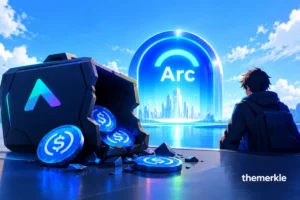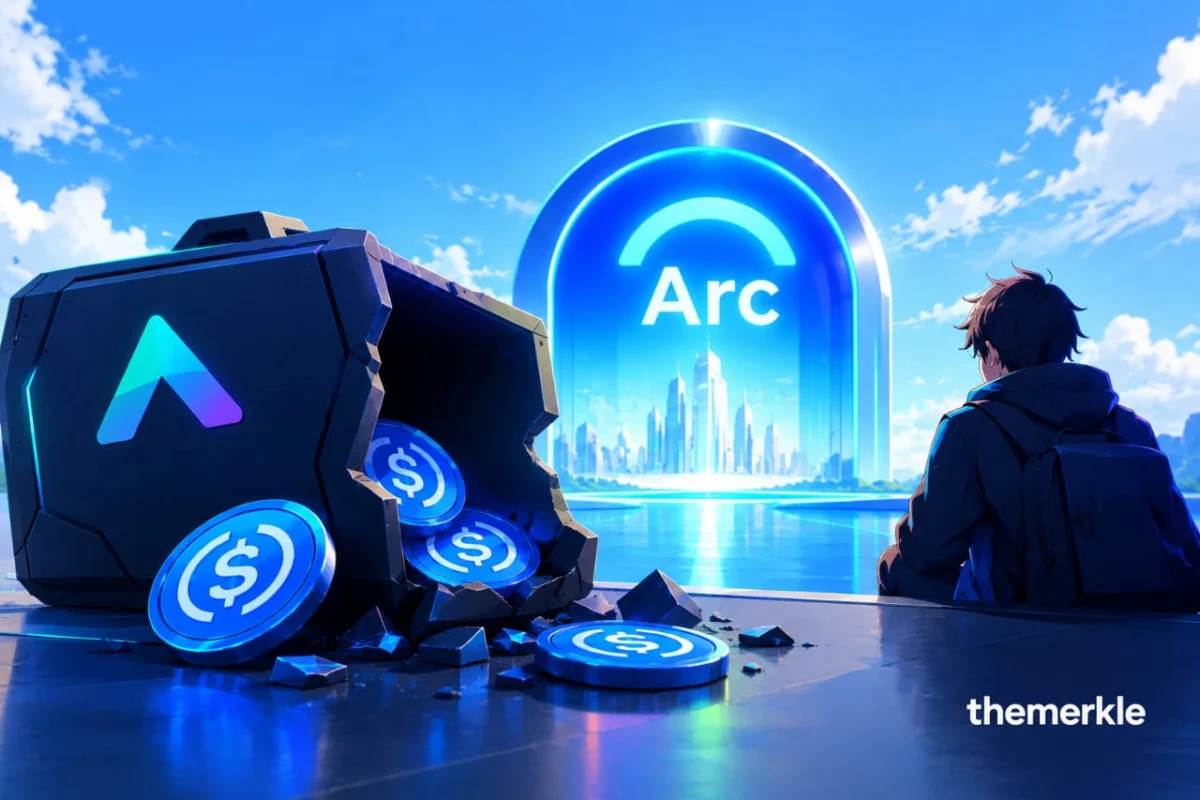
The cryptocurrency world witnessed a stark dichotomy on September 16, 2026, as Circle Internet Group celebrated the momentous public mainnet launch of Arc, its highly anticipated Layer 1 blockchain, while simultaneously, an alleged "rug pull" by one of the network’s earliest community launchpads, ACTFUN, sent shockwaves through the nascent ecosystem. This unfortunate incident, which saw investor funds reportedly vanish within hours of the platform going live, cast an immediate shadow over what was designed to be a monumental day for institutional finance’s deeper integration with blockchain technology. The timing of the alleged scam could not have been more damaging, positioning a narrative of vulnerability and deception against the backdrop of a meticulously orchestrated debut backed by titans such as BlackRock, Visa, and Mastercard.
Arc Network’s Grand Entrance: A Vision for Institutional DeFi
Circle’s Arc mainnet was unveiled with ambitious claims, positioning itself as an open Layer 1 blockchain specifically engineered for financial markets, real-time money movement, and what the company termed "agentic economic activity." This grand vision aimed to bridge the gap between traditional finance and the decentralized world, offering a robust and compliant infrastructure. A defining characteristic of Arc is its innovative fee structure, where transaction costs are paid entirely in USDC, Circle’s stablecoin, rather than a volatile native gas token. This design choice, coupled with what Circle promised as sub-second, deterministic finality, was intended to appeal directly to institutional players seeking predictability and efficiency.
The network’s launch was not just a technical milestone but a strategic alignment of significant financial powerhouses. Eleven founding validators, an unusually high number of institutional participants for a brand-new Layer 1 chain, were announced. This esteemed group included BlackRock, Visa, Mastercard, Standard Chartered, and the Depository Trust & Clearing Corporation (DTCC), alongside Circle itself. This formidable lineup underscored Arc’s aspirations to become a foundational layer for global financial services, a "money internet" where transactions are instantaneous, transparent, and settled with unprecedented finality. Circle executives had eloquently articulated their belief that money should function with the same seamless efficiency as the internet, and Arc was presented as the technological embodiment of that philosophy.
The scale of day-one participation on Arc was also remarkable. Circle reported that over 100 institutional and ecosystem builders were actively operating on the network from its very first block. Prominent decentralized finance (DeFi) protocols like Aave, Uniswap, and Morpho were among the applications immediately available, signaling a broad and diverse initial ecosystem. The public testnet preceding the mainnet launch had already processed hundreds of millions of transactions, demonstrating the network’s capacity and readiness for high-volume operations. These successes were intended to set a precedent for a secure, efficient, and institutionally-friendly blockchain environment.
ACTFUN’s Deceptive Promise and Sudden Disappearance
Amidst Arc’s auspicious launch, ACTFUN emerged as an early community launchpad, attracting investors with a seemingly innovative and trust-minimized model. According to its own detailed documentation, ACTFUN pitched itself as a community-mined token launchpad on the Arc Network, fundamentally different from the typical speculative launchpad playbook. Its core premise was that users would earn tokens by contributing content and posts on-chain, rather than through traditional capital injection and the hope of a price "pump." The platform’s entire pitch was meticulously crafted around the explicit absence of common cryptocurrency red flags: there were "no presales," "no team allocation," and, most poignantly given the subsequent events, a direct promise of "no rug pulls."
Under ACTFUN’s stated operational model, an impressive 95% of every token launched through its platform was reserved for community miners, designed to foster genuine participation and decentralized distribution. The remaining 5% was earmarked to go directly into a liquidity pool upon a token’s "graduation," ensuring immediate trading availability. The platform’s whitepaper and marketing materials emphasized a complete lack of team allocation, no venture capitalist (VC) cut, and no complex, separate migration transactions. Instead, it promised a transparent, time-limited mining window, followed by automatic trading. The platform’s live site, prior to its disappearance, clearly indicated that its native token sale had closed on September 14, 2026, with refunds and ACT token claims explicitly scheduled to open on September 16 at 15:00 UTC—the very day this story of alleged malfeasance broke.

The news of ACTFUN’s collapse spread rapidly through community channels. Reports quickly surfaced detailing that the platform had officially "rugged" its community. The alleged modus operandi was chillingly familiar: the platform’s founder reportedly deleted his Telegram account, a primary hub for community engagement and project communication, and allegedly absconded with funds invested by community members. The disappearance of the Telegram account, a channel typically used for daily coordination, support, and building trust, served as a potent and deliberate signal. It was not merely a project going quiet; it was the digital equivalent of a storefront owner not just closing early, but tearing down the sign on the building on their way out, erasing any trace of their presence.
The Real-Time Panic and Vanishing Traces
The immediate aftermath of the alleged rug pull was characterized by a palpable sense of panic and betrayal among the ACTFUN investor community. This was not a situation observed from a distance; it unfolded in real-time as individuals who had placed their trust and funds in the platform watched their investments evaporate. Social media platforms and remaining crypto forums became conduits for their distress. Community members publicly demanded answers, openly accusing the team of orchestrating a scam. Pointed questions were raised about the fate of the promised liquidity pool, with many issuing stern warnings of legal action against those responsible.
This raw, real-time reaction is crucial for understanding the human element behind every "rug pull" headline. It represents the abrupt realization of individuals who genuinely believed in a promised refund window and a scheduled token claim, only to witness both vanish precisely on the day they were due. The anger was not an abstract concept; it was the visceral reaction of investors discovering, in real-time, that the liquidity they were counting on for their investments was simply no longer there. The financial losses, for many, translated into significant personal setbacks, eroding trust not just in ACTFUN, but in the broader integrity of new crypto ventures.
Compounding the situation, ACTFUN’s official social media presence also disappeared shortly after the founder’s vanishing act from Telegram. With a deleted Telegram account, eradicated official social media pages, and a founder nowhere to be found, the platform effectively erased every digital channel its community once used to communicate or seek recourse. Affected users were left with no team to contact, no support line, and no clear avenue to publicly pressure anyone for a response, trapping them in a void of uncertainty and financial loss.
A Disturbing Pattern: Early Warnings and Vulnerabilities on Arc
The ACTFUN incident did not appear to be an isolated event, a fact that amplified concerns regarding the security and integrity of Arc’s nascent ecosystem. Even as Arc’s mainnet was going live, reputable blockchain security firms had already issued public alerts, warning investors to exercise extreme caution and watch for potential copycat rug pull schemes emerging across the network. Specifically, these warnings highlighted the rapid circulation of fake versions of already popular launchpad tokens, such as ARGUS and TOLLY, which began appearing within hours of Arc’s launch. Users were emphatically urged to meticulously verify contract addresses before engaging in any trading activity, a standard but often overlooked precaution in the frenetic pace of new chain launches.
Adding to this precarious environment, concerns had surfaced days prior to the mainnet launch regarding another Arc-based launchpad, long.supply. Prominent crypto commentators and analysts raised alarms about the platform’s custom cross-chain bridge, which was designed to facilitate the transfer of stock tokens. The critical issue identified was that this bridge was not built on established, audited, and widely trusted infrastructure like Wormhole or LayerZero. This architectural choice implied a significant vulnerability: the project team reportedly retained the technical capability to shut down the bridge and withdraw locked funds at will. Such a centralized point of control in a system designed for decentralization represented a profound security risk, contrasting sharply with the robust, audited solutions preferred by institutional-grade platforms.
The sheer scale of trading activity on Arc’s very first day—a massive volume arriving all at once on a brand-new chain—created precisely the kind of environment opportunistic bad actors tend to target most aggressively. New blockchain launches often act as magnets for both legitimate innovation and malicious exploitation. The initial hype, the influx of new capital, and the general rush to be "early" on a promising network provide fertile ground for scams. In such an environment, the incentive for bad actors to move swiftly, before detailed scrutiny can catch up with their operations, is significantly higher than on more mature, thoroughly vetted chains.

The Proliferation of Launchpads and the Challenge of Due Diligence
Beneath the institutional headline names validating Arc, a genuinely large crowd of retail-facing launchpads had strategically positioned themselves to launch alongside the network’s public debut. Platforms such as ArcPad, Tolly, and Flipt were reportedly already active on Arc’s private mainnet ahead of the public opening, with plans to open fully to the public on launch day itself. Separately, a host of other projects, including aka.fun (a MemeFi launchpad structured around Uniswap liquidity rather than traditional bonding curves), along with UnitFlow, Synthra, Tower, Hibachi, and Sidoor, had all been diligently building out different components of Arc’s broader retail ecosystem in the lead-up to the highly anticipated launch.
The sheer density and rapid proliferation of these launchpads are critical factors, as the ACTFUN collapse so vividly illustrates. A brand-new chain that draws this much simultaneous retail attention, combined with genuinely large day-one trading volume, creates ideal conditions for exactly the kind of rapid, opportunistic rug pull that ACTFUN’s community now claims it experienced. When dozens of platforms are all racing to capture early attention on the same network at once, distinguishing a legitimate, well-intentioned team from an exit scam becomes incredibly difficult, especially within the first few hours or days. The pressure to invest quickly to capture perceived "early bird" advantages often overrides cautious due diligence, making investors more susceptible to sophisticated scams disguised as innovative projects.
Implications and Future Outlook for Arc’s Ecosystem
The ACTFUN incident serves as a stark reminder that the promises of decentralization and secure financial innovation coexist with significant risks in the nascent crypto space. It is unlikely that ACTFUN will be the last launchpad to collapse in this manner on Arc; history suggests such patterns are reliably observed in the earliest days of new blockchain ecosystems. Typically, genuine institutional infrastructure establishes itself at the top, while a wave of smaller, often unaudited, and sometimes malicious platforms rush in underneath, all chasing the same early attention and liquidity. Inevitably, a portion of these ventures proves to be built on nothing more than the ephemeral promise of trust, rather than any real, verifiable mechanism enforcing security or accountability.
For anyone considering participation in Arc’s ecosystem moving forward, the more durable and reliable signals for investment are likely to be verifiable volume, transparent team operations, and demonstrable security measures, rather than merely clever tokenomics pitches or grand, unbacked claims. Platforms with genuine institutional backing, established audit histories from reputable firms, or direct partnerships already disclosed through Circle’s own official channels represent a meaningfully safer starting point. These established credentials offer a layer of accountability and scrutiny that newly minted, unaudited projects simply cannot provide. ACTFUN, ironically, made precisely the promise of having "solved rug pulls entirely through mechanism design alone." That promise, tragically, did not last a single full day after its claims and refund schedule went public. By the time its community began demanding answers, there was no one left to provide them.
This incident underscores a critical challenge for Circle and the broader Arc ecosystem: how to foster an environment of open innovation and rapid growth while simultaneously safeguarding retail investors from predatory schemes. While Circle’s focus is on institutional adoption, the health of the broader ecosystem inevitably impacts its reputation and long-term success. The incident highlights the enduring need for robust security measures, comprehensive due diligence by investors, and perhaps more proactive monitoring and warning systems within emerging blockchain environments. The future success of Arc, despite its strong institutional foundations, will heavily depend on its ability to cultivate a secure and trustworthy environment for all participants, from the largest financial institutions to the individual retail investor.
Disclosure: This is not trading or investment advice. Always do your research before buying any cryptocurrency or investing in any services.