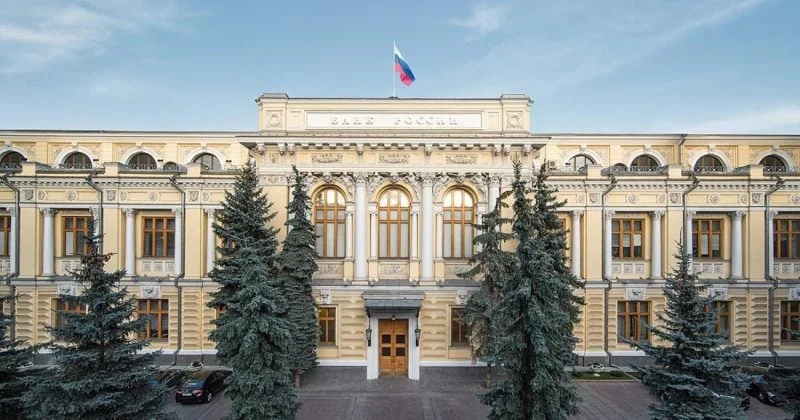
The Bank of Russia has officially released a series of draft regulations aimed at institutionalizing the cryptocurrency market and establishing a robust technical and legal infrastructure for digital asset trading within the federation. This regulatory package, unveiled through an official announcement by the central bank, represents a pivotal shift in the Kremlin’s approach to decentralized finance, moving from a position of historical skepticism toward a structured, state-supervised integration of digital assets into the national financial system. The proposed amendments to organized trading regulations seek to bring cryptocurrencies and digital rights under the direct oversight of the regulator, providing a clear pathway for the establishment of regulated exchanges and specialized financial intermediaries known as digital depositories.
Under the proposed framework, the Bank of Russia aims to standardize the mechanics of digital asset trading, ensuring that market participants operate under a unified set of rules comparable to those governing traditional securities. The draft regulations mandate that trading platforms must implement rigorous methodologies for calculating both market and weighted-average prices for digital assets. This move is intended to eliminate price manipulation and provide transparency for both retail and institutional investors. Furthermore, the central bank has outlined mandatory disclosure requirements, forcing platforms to provide comprehensive data on trading volumes and liquidity directly to the regulator. In a bid to manage volatility and systemic risk, the amendments also introduce formal procedures for the suspension of trading, allowing the Bank of Russia to intervene during periods of extreme market instability or suspected fraudulent activity.
The Emergence of Digital Depositories and Capital Requirements
Central to this new regulatory architecture is the creation of a new category of financial institution: the digital depository. These entities will serve as the backbone of the Russian crypto infrastructure, responsible for the secure recording of ownership for both cryptocurrencies and digital rights. The Bank of Russia has modeled these institutions after traditional securities depositories, ensuring that the legal certainty of asset ownership is maintained through a centralized, supervised register. By establishing these entities, the regulator seeks to bridge the gap between the decentralized nature of blockchain technology and the legal requirements of the Russian civil code.
To ensure the stability and reliability of these new intermediaries, the Bank of Russia has proposed stringent capital adequacy requirements. Depending on the complexity and scope of their business activities—specifically whether they engage in operations involving public blockchains or post-trade settlement services—digital depositories will be required to maintain a minimum equity buffer ranging from ₽50 million (approximately $550,000) to ₽250 million (approximately $2.75 million). These funds must be composed of liquid, high-credit-quality assets to ensure that the depositories can meet their obligations even in adverse market conditions. Comparable financial thresholds will also be applied to electronic platform operators tasked with the settlement of digital financial asset (DFA) transactions, creating a high barrier to entry that favors established financial players and well-capitalized fintech firms.
Beyond capital requirements, the central bank has proposed a suite of standards governing the day-to-day operations of these digital entities. These include detailed protocols for recordkeeping, customer information management, and access controls. The regulator emphasizes that digital depositories must maintain the highest standards of data integrity to prevent unauthorized access to private keys or the falsification of ownership records. The supervision of these entities will be conducted through a central register maintained by the Bank of Russia, granting the regulator real-time visibility into the health and compliance of the digital asset ecosystem.
Chronology of Russia’s Crypto Legislative Journey
The release of these draft regulations follows the recent passage of a landmark cryptocurrency bill by the State Duma, Russia’s lower house of parliament. This legislative journey reflects a significant evolution in Russian economic policy, driven largely by the need to circumvent international sanctions and modernize the nation’s payment infrastructure.
- January 2022: The Bank of Russia initially proposed a near-total ban on the use and mining of cryptocurrencies, citing risks to financial stability and the potential for illegal activities.
- February 2022 – 2023: Following the onset of major international sanctions, the Russian Ministry of Finance and various industry stakeholders began advocating for a regulated approach to crypto to facilitate cross-border trade.
- August 2024: The State Duma passed a comprehensive crypto regulation law, creating the legal foundation for the current draft regulations. This law explicitly permits the use of cryptocurrencies for international commercial transactions while maintaining a strict ban on using them as a domestic means of payment for goods and services within Russia.
- September 2024: The Bank of Russia releases the draft regulations for public consultation, initiating the regulatory impact assessment process.
- September 1, 2026: Most provisions of the new law and accompanying regulations are scheduled to take effect, marking the beginning of the formal transition period.
- July 2027: Full compliance with all aspects of the regulatory framework will be required for all market participants.
- Late 2027: Additional measures specifically focused on fraud prevention and advanced surveillance are expected to be implemented.
Supporting Data and Market Context
The move to regulate the crypto sector comes at a time when Russian involvement in digital assets has reached unprecedented levels. While exact figures are difficult to verify due to the off-shore nature of many transactions, Russian officials have previously estimated that citizens hold over ₽16.5 trillion (approximately $180 billion) in various crypto assets. By bringing this activity onshore, the Russian government aims not only to collect tax revenue but also to gain control over capital flows that have previously bypassed the domestic banking system.
The equity requirements of ₽50 million to ₽250 million are strategically calibrated. For comparison, the minimum capital requirement for a Russian bank with a basic license is ₽300 million. By setting the ceiling for digital depositories at ₽250 million, the Bank of Russia is positioning these institutions as significant financial players, though slightly less capital-intensive than traditional commercial banks. This reflects the regulator’s desire to foster a specialized sector that can handle the unique technical risks of blockchain without the full overhead of a traditional banking license.
Official Responses and Institutional Readiness
The reaction from Russia’s financial sector has been one of cautious optimism. Major state-linked banks, including Sberbank and VTB, have already been experimenting with digital financial assets (DFAs) under earlier, more limited legal frameworks. These institutions are widely expected to be the first to apply for digital depository licenses, leveraging their existing infrastructure and capital reserves to dominate the emerging market.
Anatoliy Aksakov, the head of the State Duma Financial Market Committee and a key architect of the legislation, has stated that the new rules will provide the "legal certainty" required for businesses to utilize digital assets in international settlements. He noted that while the central bank remains wary of the "ruble-substitution" risk—where crypto might undermine the national currency—the compromise reached allows for crypto to serve as a vital tool for foreign trade in a "sanctions-heavy environment."
Industry experts suggest that the Bank of Russia’s focus on "organized trading" is an attempt to replicate the success of the Moscow Exchange (MOEX) in the digital realm. By mandating price transparency and reporting, the regulator is signaling that it will not tolerate the "Wild West" atmosphere often associated with global crypto exchanges. Instead, it is building a "walled garden" where every transaction is traceable and every participant is verified.
Broader Impact and Strategic Implications
The implications of Russia’s new crypto framework extend far beyond its borders. By legalizing crypto for cross-border transactions, Russia is providing a blueprint for other nations facing similar financial isolation. This move aligns with broader efforts within the BRICS bloc to develop alternative payment systems that do not rely on the US dollar or the SWIFT messaging network. The integration of digital assets into the regulated exchange framework could facilitate more seamless trade with partners in Asia, the Middle East, and Latin America.
Domestically, the framework represents a significant step toward the "tokenization" of the Russian economy. The distinction between "cryptocurrencies" (like Bitcoin) and "digital financial assets" (tokenized versions of traditional assets) is crucial. The new regulations provide a unified platform for both, potentially allowing Russian companies to issue tokenized debt or equity that can be traded on regulated exchanges and held by digital depositories. This could provide a new source of liquidity for Russian firms that have been cut off from Western capital markets.
However, the path to full implementation remains fraught with challenges. The long lead time—with full compliance not required until 2027—suggests that the Bank of Russia is aware of the technical and security hurdles involved in building a state-wide crypto infrastructure. Issues such as the interoperability of different blockchain protocols, the cybersecurity of digital depositories, and the effective enforcement of AML/KYC (Anti-Money Laundering/Know Your Customer) standards in a decentralized environment will require ongoing refinement.
Furthermore, the ban on domestic payments ensures that the Russian Ruble remains the sole legal tender within the country. This "two-tier" system—where crypto is a tool for investment and international trade but not for daily commerce—is a delicate balancing act. The success of this experiment will depend on the Bank of Russia’s ability to prevent the "leakage" of crypto into the domestic retail economy while providing enough freedom for the international trade sector to thrive.
As the public consultation period progresses, the global financial community will be watching closely. The Bank of Russia’s draft regulations represent one of the most comprehensive attempts by a major economy to bring the entire lifecycle of a digital asset—from issuance and trading to custody and settlement—under a single, cohesive regulatory umbrella. Whether this framework can provide the necessary agility for the fast-moving crypto market while maintaining the rigid control required by the central bank remains to be seen.