


A day of unprecedented volatility in the cryptocurrency market saw Bitcoin achieve its largest single-day short liquidation event in history, simultaneously casting a harsh spotlight on the pervasive issue of authenticity and misrepresentation within crypto social media. The dramatic surge in Bitcoin’s value, which saw the digital asset breach the $71,000 mark and add hundreds of billions to the total crypto market capitalization, was accompanied by a contentious public dispute on X (formerly Twitter) concerning a trader’s alleged multi-million-dollar loss—a claim quickly challenged as potentially fabricated using a demo account. This confluence of genuine market upheaval and alleged online deception provides a candid reflection of the dynamic and often opaque nature of the cryptocurrency landscape.
The Unprecedented Market Surge and Record Liquidations
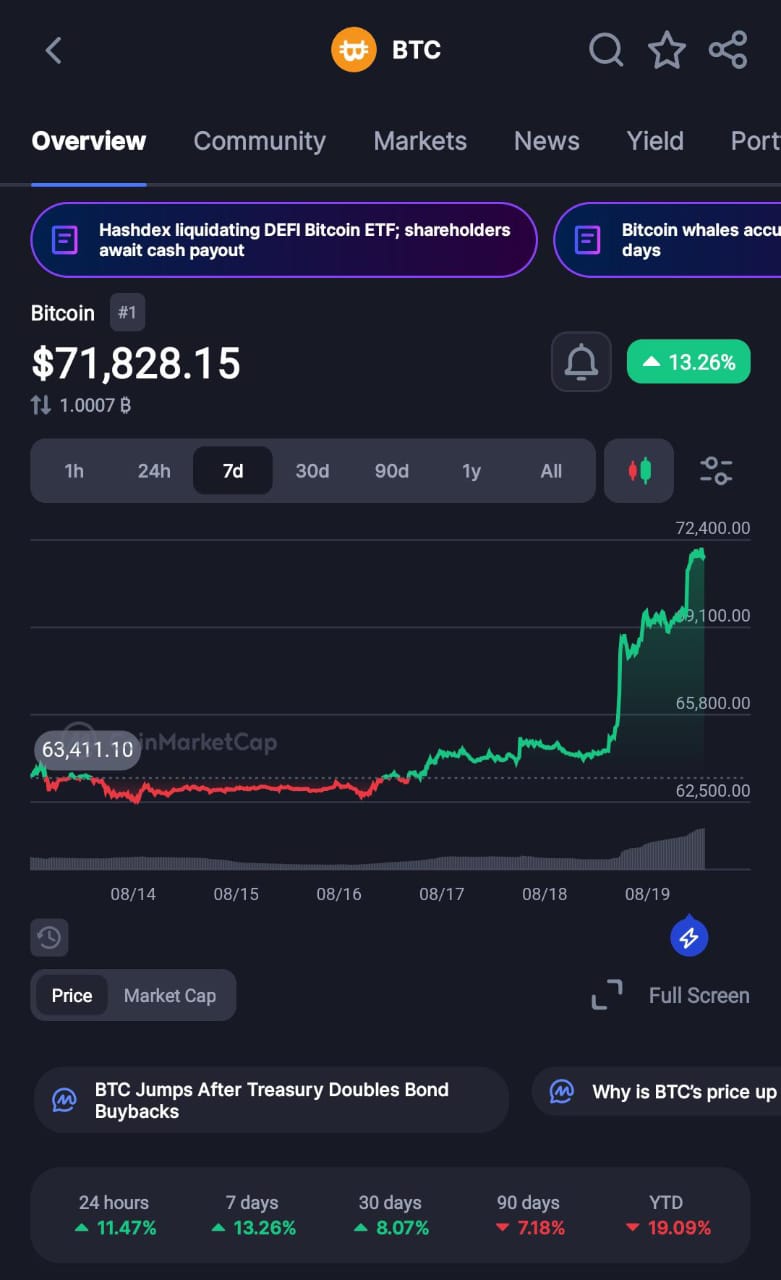
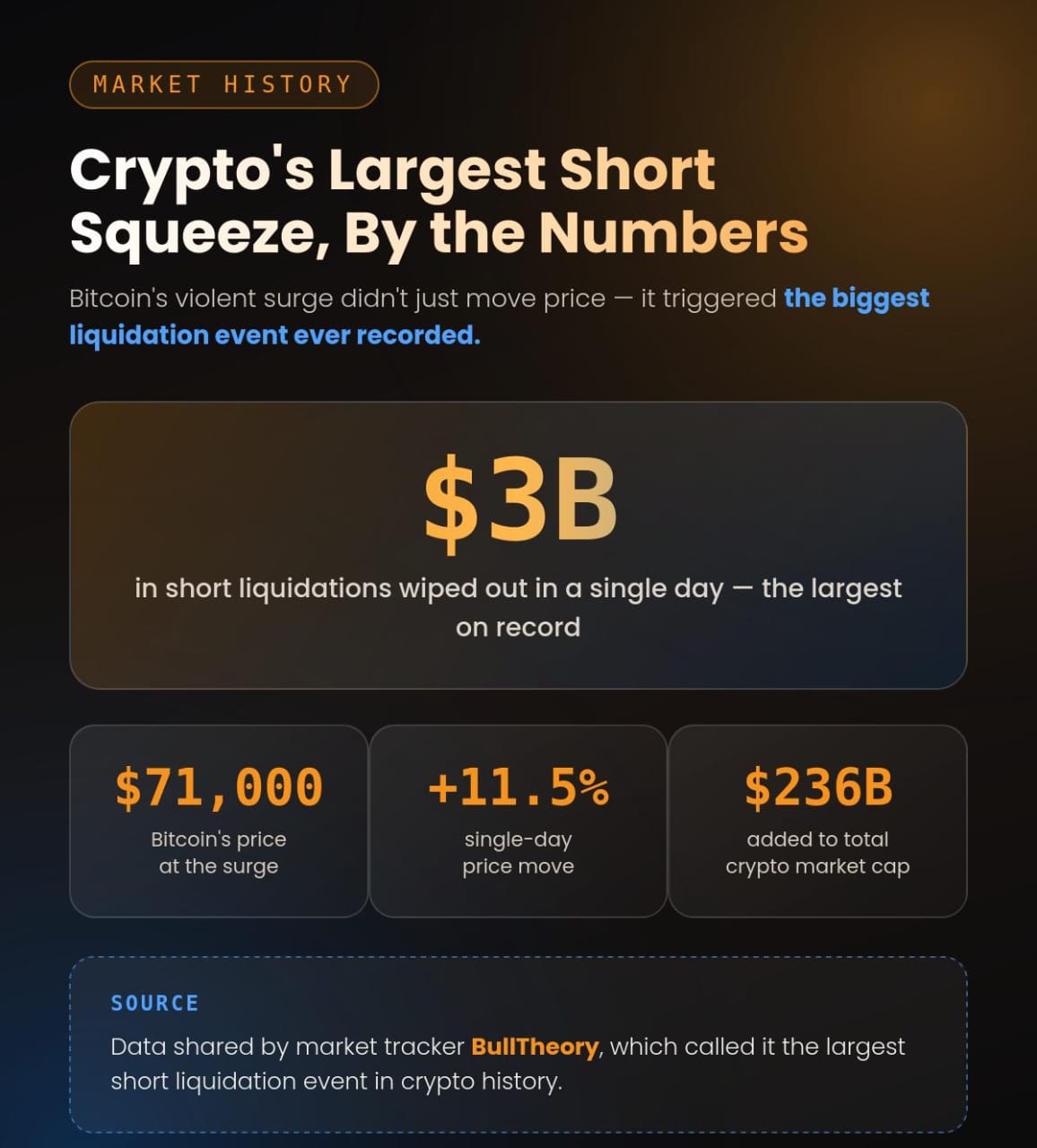
On a recent trading day, Bitcoin orchestrated a monumental rally, climbing approximately 11.50% to touch highs around $71,000. This sharp upward movement triggered a cascade of liquidations for traders holding short positions, resulting in what market analysts are calling the largest short squeeze in cryptocurrency history. Short selling, a trading strategy where an investor borrows an asset, sells it, and then buys it back at a lower price to return it, aiming to profit from a price decline, proved catastrophic for many leveraged participants.
Data compiled by market tracker BullTheory indicated that short sellers collectively lost an astonishing $3 billion in liquidations within a mere 24-hour period. This figure dwarfs previous liquidation events, underscoring the extreme pressure exerted on bearish bets. To put this in perspective, prior significant liquidation events, while impactful, rarely approached this magnitude in such a condensed timeframe. For instance, while other flash crashes or rallies have wiped out hundreds of millions, a $3 billion single-day liquidation event is a stark anomaly, even in the notoriously volatile crypto sphere.

The mechanics behind such a massive short squeeze are rooted in the nature of leveraged trading. When traders open short positions using leverage, they borrow funds to amplify their potential returns. However, this also magnifies potential losses. As Bitcoin’s price surged unexpectedly, these leveraged short positions began hitting their predetermined liquidation thresholds. At these points, exchanges automatically close out the positions by buying back the underlying asset (Bitcoin) in the open market. This forced buying creates a powerful feedback loop, driving the price even higher and triggering further liquidations, leading to an exponential price ascent. This cascading effect, often referred to as a "short squeeze," traps short sellers in a rapidly escalating scenario where their losses mount quickly, compelling more forced buying and further fueling the rally.
The immediate consequence extended beyond individual traders. In the same window, an estimated $236 billion was injected into the total cryptocurrency market capitalization. This surge in value, while not uncommon in crypto’s history of rapid growth, stood out for its swiftness and scale, highlighting the intense capital flows that can characterize Bitcoin’s price action. Market observers suggest this event cleared a significant amount of "excess leverage" from the derivatives market, potentially resetting the landscape for future price movements. The substantial reduction in open interest on futures contracts post-liquidation often signals a market reset, where positions are re-evaluated, and new trends can emerge from a cleaner slate.
The Anatomy of a Public Accusation: @Cryptolaanie vs. @Crypto__haris
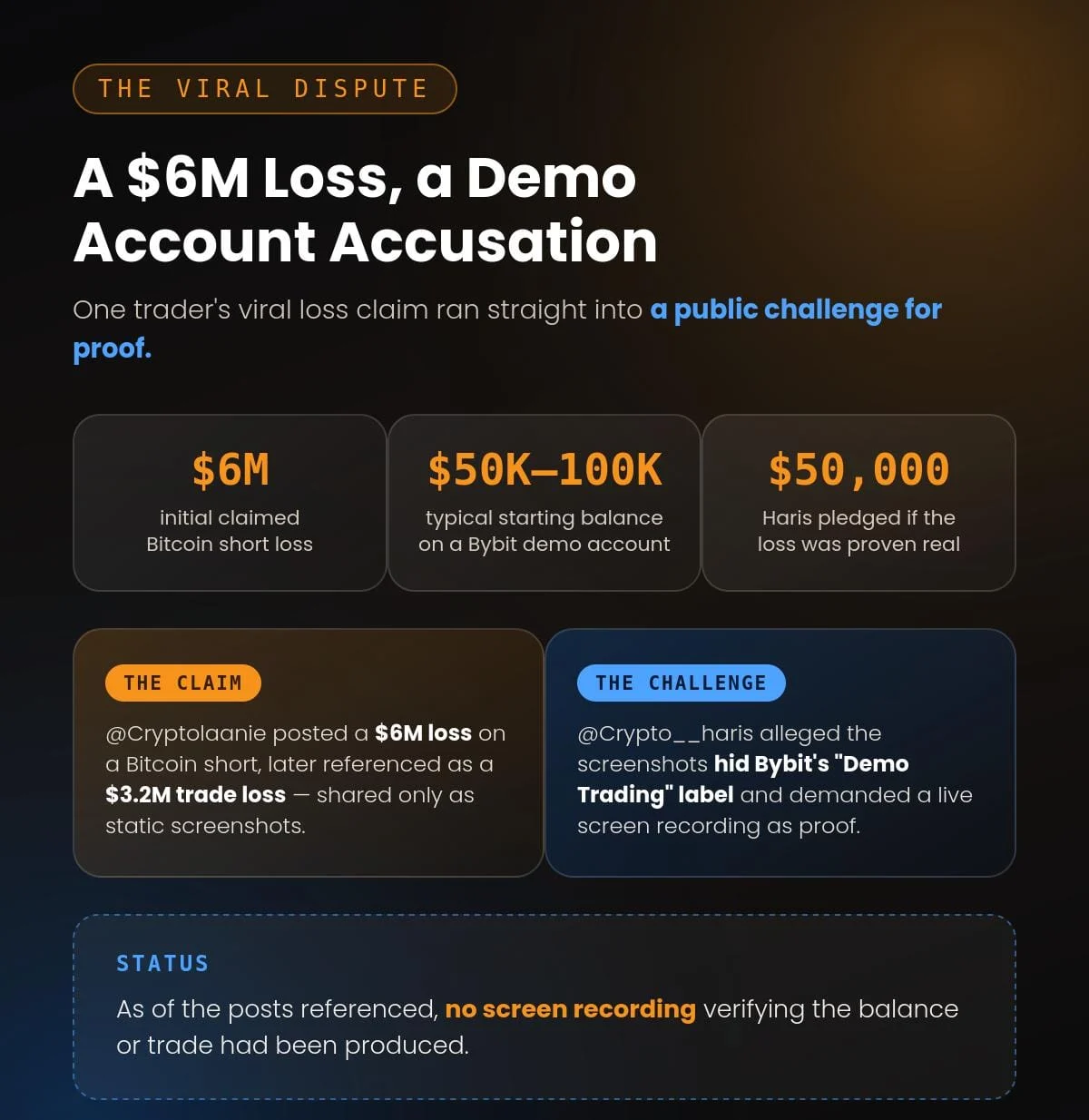
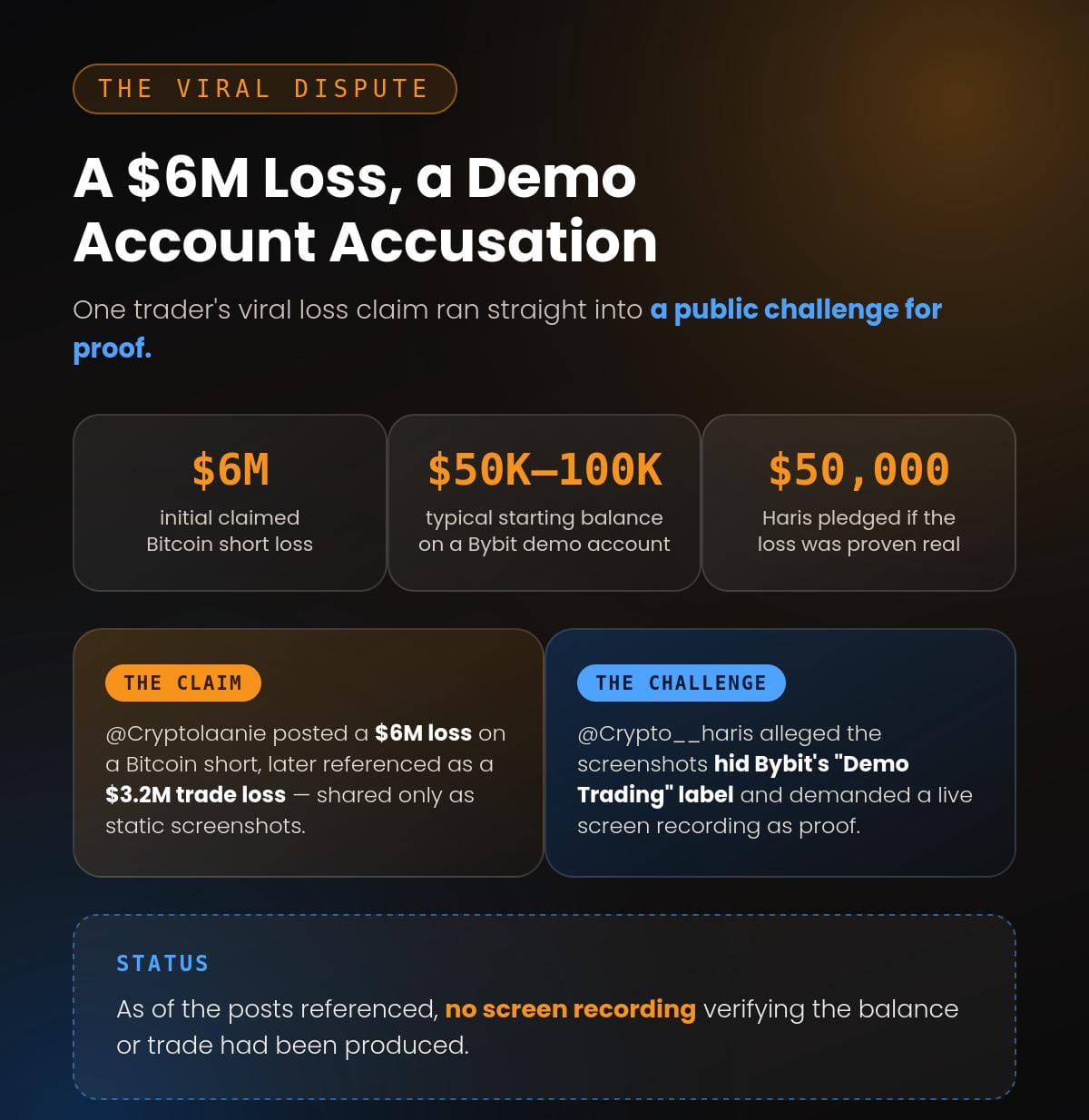
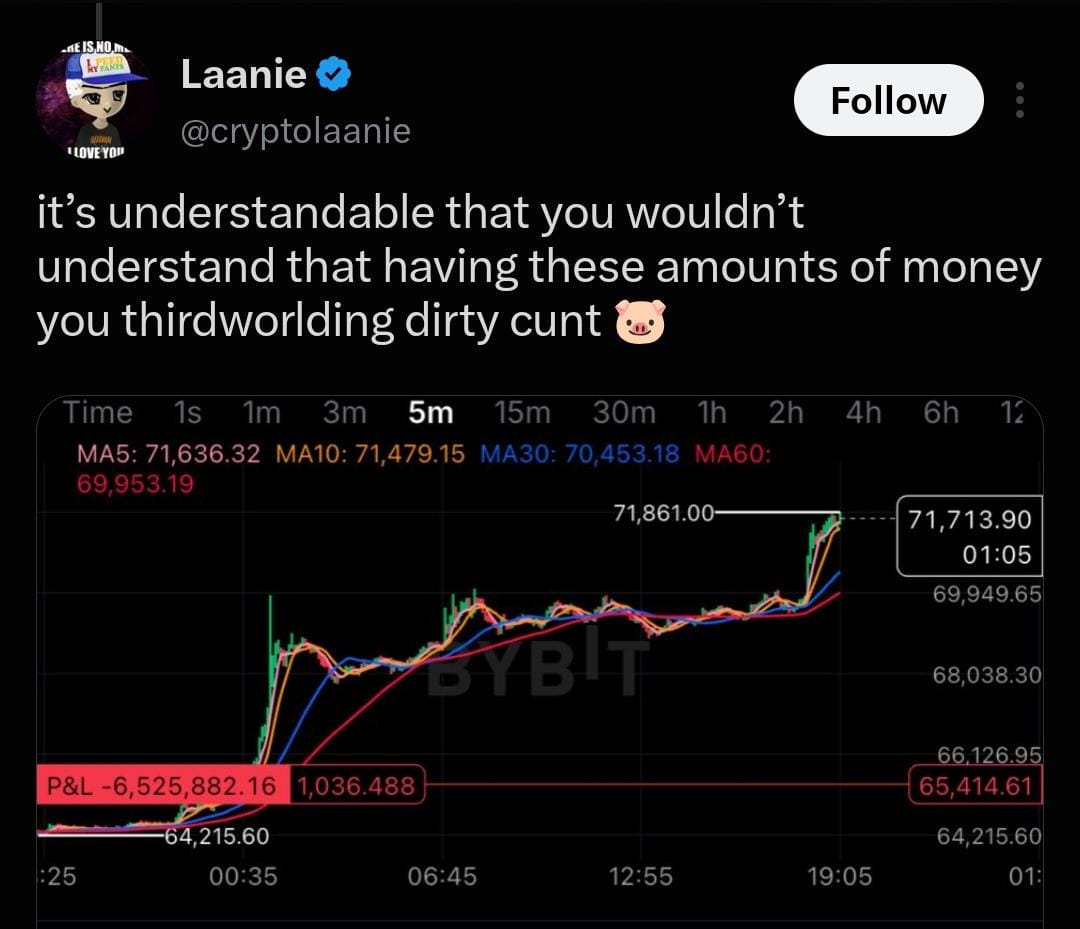
Simultaneously with this historic market event, a parallel drama unfolded on social media, intertwining the genuine market chaos with allegations of digital deception. A user operating under the handle @Cryptolaanie claimed to have incurred a staggering $6 million loss on a Bitcoin short position. Given the market’s violent upward trajectory against short sellers, a loss of this magnitude, though immense, did not immediately seem implausible. This perception allowed the claim to quickly gain traction across crypto Twitter, a platform notorious for rapid information dissemination and the amplification of dramatic trading narratives.
However, the authenticity of this claim was swiftly challenged by another prominent crypto Twitter user, @Crypto__haris. Haris publicly alleged that @Cryptolaanie was not trading with real money but rather utilizing a demo account provided by the Bybit exchange. Furthermore, Haris accused @Cryptolaanie of intentionally cropping or editing screenshots to obscure the "Demo Trading" label that Bybit typically displays on its practice accounts.
This accusation introduced a crucial element of technical plausibility. Bybit, like many cryptocurrency exchanges, offers a demo trading feature designed for users to practice trading strategies without risking real capital. These simulated accounts are typically pre-loaded with virtual funds, often starting from $50,000 to $100,000 in test assets, and critically, they mirror live market prices exactly. Users can request additional virtual funds indefinitely if their simulated balance runs low. This functionality means that screenshots depicting seven-figure balances, gains, or losses are entirely reproducible within a demo environment, without a single real dollar ever being at stake. The ability to generate such impressive-looking figures from virtual funds makes it easy for individuals to fabricate trading success or catastrophic losses for social media consumption.
The Escalation: From Claim to Confrontation
The dispute escalated rapidly from a mere accusation to a public confrontation. According to the documented exchanges, when @Cryptolaanie was challenged on the legitimacy of the claimed $6 million loss, their response to @Crypto__haris was dismissive and overtly derogatory. Rather than addressing the core allegation, @Cryptolaanie reportedly resorted to classist and vulgar insults, essentially suggesting that Haris lacked the financial standing to comprehend such a significant loss. This response, avoiding direct engagement with the evidence presented, further fueled suspicions among the online community.
Undeterred, @Crypto__haris pressed the issue. His subsequent reply was direct and unequivocal: he labeled @Cryptolaanie as "just a poor editor" and issued a public challenge. Haris demanded verifiable proof of the loss, specifically a live screen recording that would display both @Cryptolaanie’s real-time wallet balance and the $3.2 million trade loss (the claimed loss amount had reportedly shifted to $3.2 million in later posts) in a continuous, unedited format. To incentivize this verification, Haris pledged to personally send $50,000 if the screen recording conclusively confirmed the claim. As of the latest available information regarding this dispute, no such screen recording has been publicly produced by @Cryptolaanie to substantiate the alleged loss.
The Pervasive Problem of "Larping" in Crypto Communities
While the specific allegations against @Cryptolaanie remain unverified by independent sources and should be treated as such—an accusation, not a confirmed fact—the underlying behavior described is a well-documented and recurring problem within cryptocurrency trading communities. The term "larping," borrowed from "live-action role-playing," has become ubiquitous in these online spaces. It describes traders who intentionally fabricate or grossly exaggerate their trading positions, gains, or losses to cultivate a persona of success, influence, or dramatic experience for social clout. This often involves the use of demo accounts, meticulously edited screenshots, or the selective showcasing of only successful trades while omitting failures.
The implications of "larping" extend far beyond mere entertainment or individual ego boosts. These fabricated narratives significantly influence how newer, less experienced traders perceive the inherent risks and rewards associated with leveraged trading. When aspiring traders see a social media figure claiming massive gains or losses, they might be encouraged to take on similarly outsized leverage, chasing unrealistic returns without realizing that the original claim might have been entirely divorced from real capital. This creates a dangerous feedback loop where aspirational narratives, however false, can lead to real financial harm for impressionable individuals.
This phenomenon highlights the critical distinction between static screenshots and dynamic screen recordings. Screenshots are inherently easy to manipulate—they can be cropped, edited, or taken from demo accounts without context. In contrast, a live screen recording that captures the user interface of an exchange, including wallet balances, live market prices, timestamps, and account labeling (e.g., "live account" vs. "demo account"), is significantly more difficult to fake convincingly. This is precisely why @Crypto__haris’s challenge, demanding a live recording with real money on the line, cut directly to the heart of the problem, offering a robust method for genuine verification in an environment rife with artifice.
Broader Implications: Market Integrity, Trust, and Regulation
The juxtaposition of Bitcoin’s historic short squeeze with the @Cryptolaanie dispute offers a multifaceted view of the cryptocurrency ecosystem. On one hand, the market demonstrated its raw, unfiltered power, capable of generating billions in value and losses within hours. This genuine volatility is a core characteristic of crypto and necessitates extreme caution from participants, particularly those employing leverage. The $3 billion liquidation event serves as a potent reminder of the unforgiving nature of derivatives trading.
On the other hand, the social media controversy underscores the persistent challenges of trust and transparency in a largely unregulated and decentralized online environment. When real market events produce headline-worthy numbers, it becomes significantly easier for fabricated or exaggerated claims to blend in and spread unchecked. The perceived plausibility of massive losses during such volatile periods makes it harder for the average user to discern truth from fiction.
For Exchanges and the Crypto Industry: While exchanges like Bybit provide demo accounts for legitimate educational purposes, the ease with which these can be misused for misrepresentation presents a dilemma. Exchanges generally promote responsible trading and risk management. However, policing every user’s social media activity is an insurmountable task. The industry’s focus must remain on educating users about the risks of leverage and the prevalence of online misinformation, perhaps by making demo accounts even more clearly distinguishable or by developing tools that allow for easier, verifiable proof of real trading activity.
For Financial Regulators: The prevalence of "larping" and the potential for social media figures to mislead investors through fabricated claims pose a significant challenge for financial regulators globally. While direct market manipulation via fake trades is illegal, the lines blur when it comes to social media influence and indirect encouragement of risky behavior. This issue highlights the need for clearer guidelines on financial promotion in digital spaces and robust mechanisms to combat misinformation that could lead to consumer harm. The global and borderless nature of crypto further complicates regulatory oversight.
For Individual Investors and Traders: The most crucial takeaway for individuals engaging with cryptocurrency is the imperative for rigorous due diligence. Blindly trusting trading claims on social media, especially those involving significant sums, is fraught with peril. The practical advice offered by @Crypto__haris—always ask for a screen recording, not just a static screenshot—is a fundamental principle for discerning authenticity. This small habit can make the difference between learning from genuine experience and falling victim to a carefully curated performance.
Conclusion
The recent events in the Bitcoin market and the accompanying social media debate encapsulate the dual realities of the cryptocurrency world: a legitimate, highly volatile financial market capable of immense wealth creation and destruction, existing alongside a vibrant but often deceptive online culture. While the market side saw genuine money destroyed and created on an epic scale, the @Cryptolaanie dispute served as a timely reminder that not every viral trading story on social media is what it purports to be. In an ecosystem where information travels at lightning speed and authenticity can be easily faked, critical thinking, skepticism, and a demand for verifiable proof are not just good habits—they are essential tools for survival. Navigating this landscape requires not only an understanding of market mechanics but also a keen awareness of the digital narratives that shape perception, ensuring that real insights are gleaned from real experiences, not from carefully constructed fictions.
Disclosure: This article is for informational purposes only and does not constitute trading or investment advice. Always conduct thorough research and consult with a qualified financial professional before making any investment decisions in cryptocurrency or related services.














