The cryptocurrency market recently witnessed a dramatic confluence of events, with Bitcoin at the epicenter of both historic financial movements and a high-profile social media dispute. This dual narrative unfolded simultaneously, offering a stark illustration of the industry’s inherent volatility and the often-unregulated nature of its online discourse. On one side, Bitcoin executed a monumental ascent, triggering the largest short liquidation event ever recorded in the crypto space. On the other, a contentious public argument erupted on X (formerly Twitter) concerning the veracity of a trader’s claimed multi-million dollar loss, highlighting the pervasive issue of fabricated trading claims. These two distinct yet parallel occurrences provided a candid snapshot of the crypto ecosystem, where genuine financial devastation for some coexists with manufactured theatrics for online clout.
Bitcoin’s Historic Ascent and the Largest Short Squeeze on Record
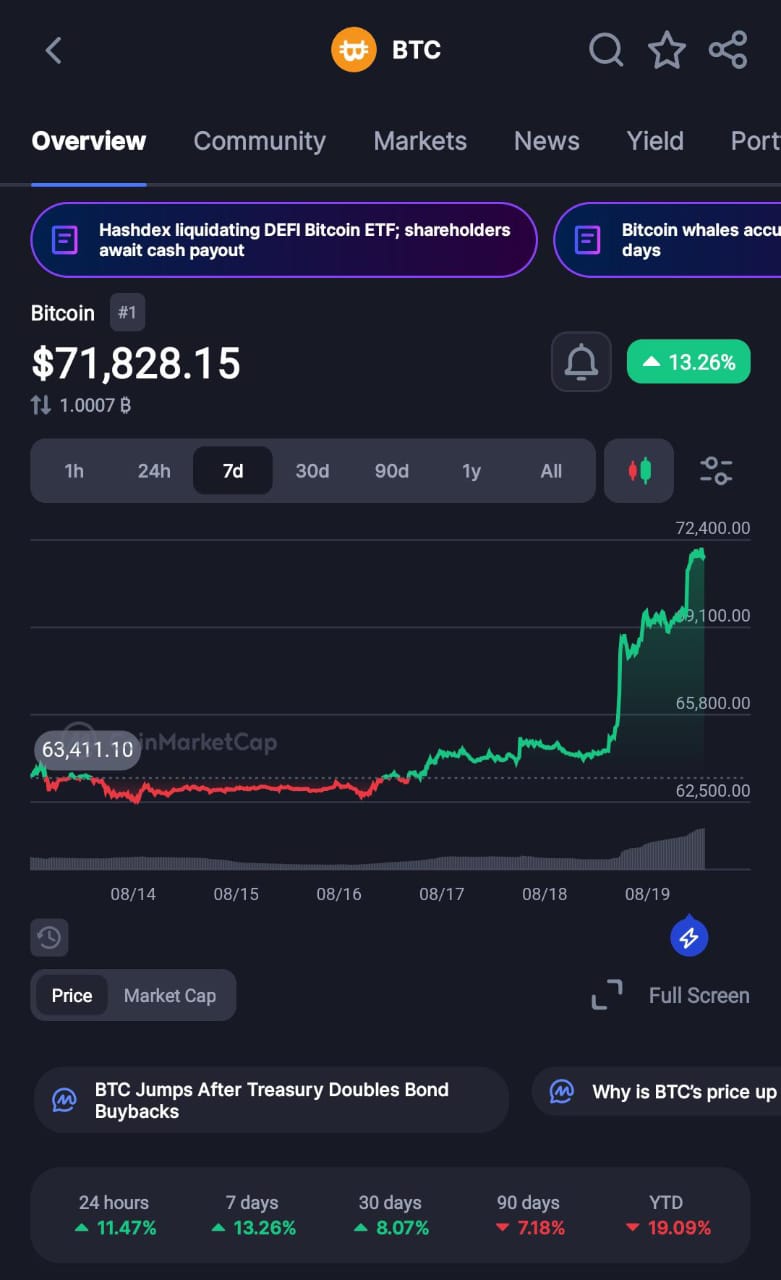
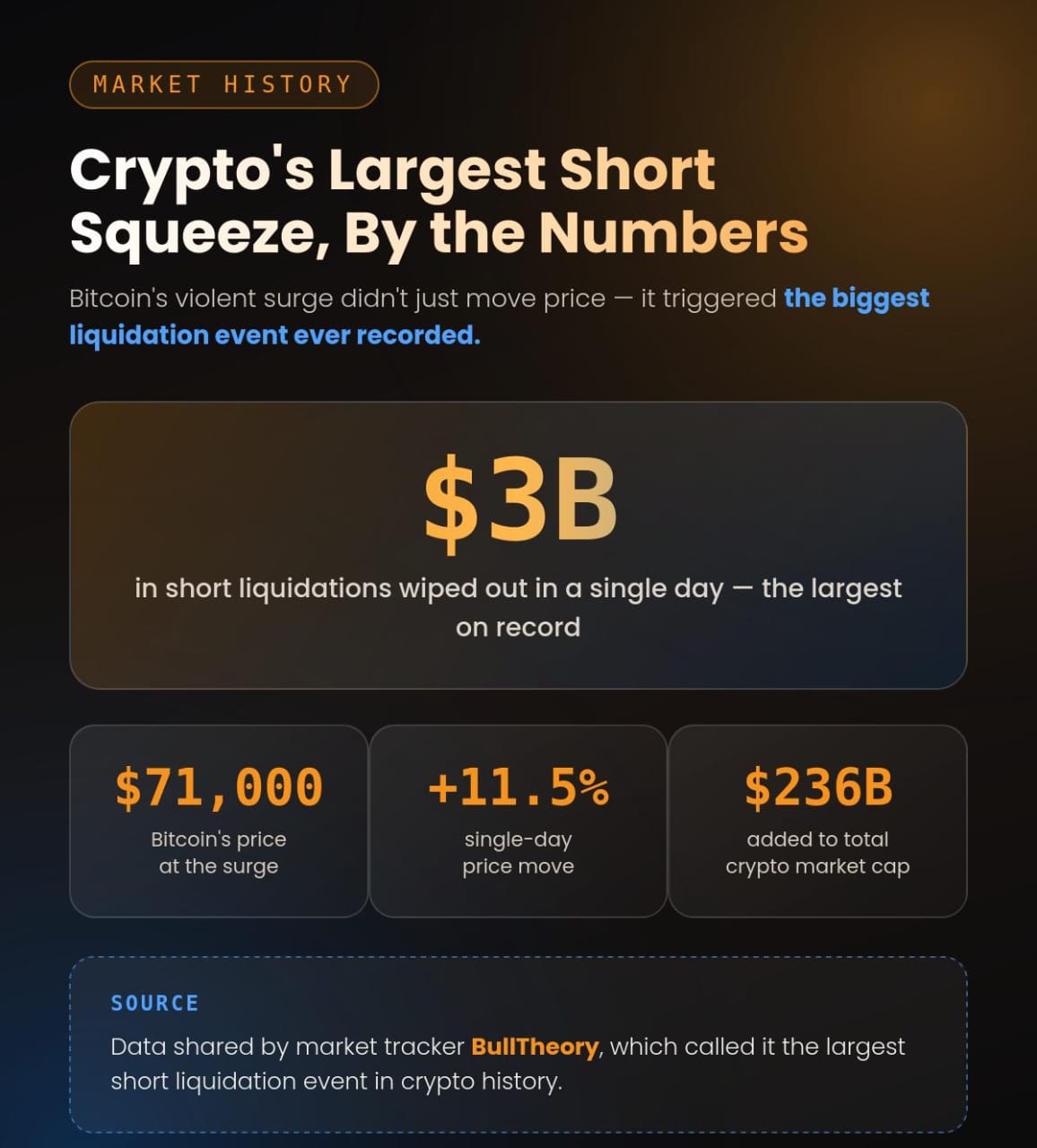
The financial seismic activity commenced with Bitcoin’s aggressive surge, propelling its price past the significant $71,000 mark. This rapid appreciation, registering an approximate 11.50% gain within a single day, created an environment of extreme pressure for traders holding short positions. A short position, in essence, is a bet that an asset’s price will fall. Traders "short" an asset by borrowing it, selling it at the current price, and hoping to buy it back later at a lower price to return to the lender, profiting from the difference. When the price moves contrary to their bet – in this case, sharply upward – these positions become unprofitable, leading to potential liquidation.
The scale of this particular price movement was unprecedented. According to data compiled by market trackers such as BullTheory, short sellers collectively incurred an staggering $3 billion in liquidations within a 24-hour period. This figure not only represents a significant loss for individual traders and institutional entities but also marks it as the largest single-day short liquidation in the history of cryptocurrency trading. To put this into perspective, previous major liquidation events, while substantial, rarely approached this magnitude, underscoring the exceptional force of Bitcoin’s recent rally. Alongside this massive unwinding of short positions, the total market capitalization of the cryptocurrency sector expanded by approximately $236 billion within the same timeframe. This rapid influx of value, even by the volatile standards of the crypto market, stands out as an unusually sharp single-day swing, indicative of intense buying pressure and renewed investor confidence.

Understanding the Mechanics of a Short Squeeze
To fully grasp the gravity of a $3 billion liquidation, it’s crucial to understand the "short squeeze" mechanism. This phenomenon is a self-reinforcing feedback loop that exacerbates price movements. When Bitcoin’s price begins to climb unexpectedly or rapidly, leveraged short positions, which utilize borrowed capital to amplify potential gains (and losses), start approaching their pre-determined liquidation prices. At these points, cryptocurrency exchanges automatically intervene, forcibly closing out these short positions. To close a short position, the exchange must buy back the underlying asset (Bitcoin, in this instance) in the open market.
This forced buying activity adds further upward pressure on Bitcoin’s price. This increased price then triggers the liquidation thresholds of the next batch of short positions situated slightly higher, leading to another wave of forced buying. This cascading effect can escalate quickly, creating a domino effect that traps an increasing number of short sellers. The result is an accelerated price ascent, often catching even seasoned traders off guard and leading to substantial, often devastating, losses for those on the wrong side of the market. The recent event was a textbook example of such a cascade, amplified by the immense leverage prevalent in crypto derivatives markets.
The Social Media Controversy: A $6 Million Loss Under Scrutiny
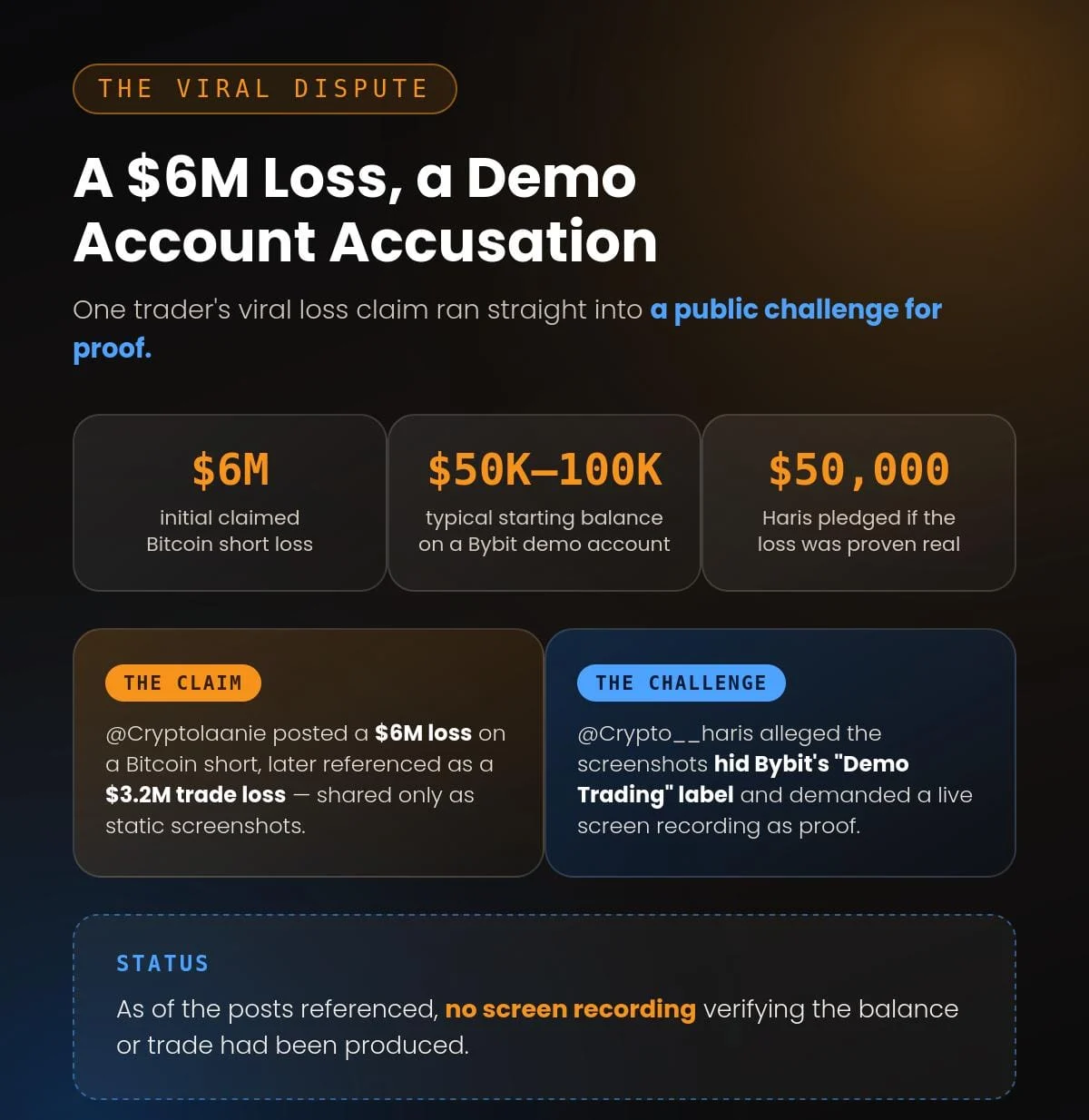
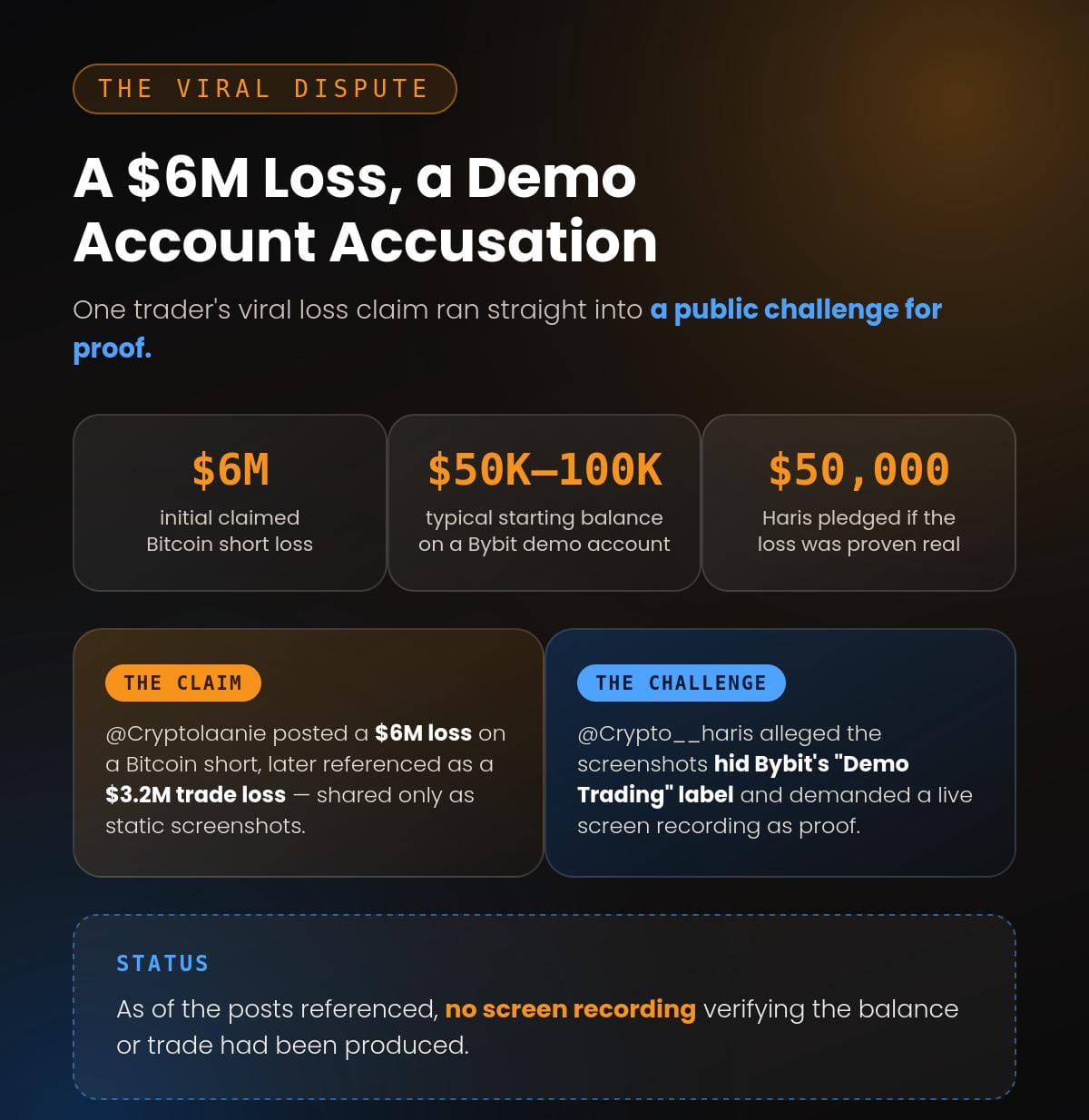
Against this backdrop of genuine market upheaval, a parallel drama unfolded on social media, specifically X. A trader operating under the handle @Cryptolaanie publicly claimed to have suffered an enormous loss on a Bitcoin short position, initially citing a figure of $6 million. Given the authentic and violent market movements against short positions that day, a loss of this scale was not inherently implausible, which contributed to the rapid spread of the claim across crypto Twitter. Large, high-leverage positions could indeed yield such outcomes in extreme market conditions.
However, the narrative quickly shifted when another prominent crypto Twitter user, @Cryptoharis, openly challenged the legitimacy of @Cryptolaanie’s claim. @Cryptoharis alleged that the purported multi-million dollar loss was not incurred with real funds but rather on a Bybit demo account. The accusation centered on the assertion that screenshots shared by @Cryptolaanie had been deliberately cropped or edited to obscure the "Demo Trading" label that Bybit prominently displays on its practice accounts.
The Functionality and Misuse of Demo Trading Accounts
The technical plausibility of @Crypto__haris’s accusation lies in the design of demo trading features offered by many cryptocurrency exchanges, including Bybit. These simulated accounts provide users with virtual funds, typically starting with amounts ranging from $50,000 to $100,000 in test assets. Crucially, these demo accounts mirror live market prices precisely, allowing users to practice trading strategies without risking real capital. Furthermore, users can often request additional virtual funds indefinitely if their simulated balance dwindles, making it entirely feasible to generate screenshots depicting seven-figure balances, gains, or losses—all without a single real dollar ever being at stake. This functionality, while invaluable for learning and strategy testing, inherently creates an avenue for deceptive practices.
The Public Confrontation and Demand for Verification
The dispute quickly escalated beyond a simple debate about trading. When initially challenged, @Cryptolaanie reportedly responded to @Cryptoharis with dismissive and derogatory remarks, implying that @Cryptoharis lacked the financial means to comprehend losses of such magnitude. The language used reportedly leaned into classist and vulgar insults, sidestepping the core accusation regarding the authenticity of the trade.
Unfazed, @Cryptoharis pressed the issue further. In a direct and public reply, he labeled @Cryptolaanie "just a poor editor" and issued a clear challenge: prove the loss was real by posting a live screen recording. This recording, @Cryptoharis stipulated, needed to display both @Cryptolaanie’s live wallet balance and the alleged $3.2 million trade loss in real-time. The demand for a screen recording, as opposed to static screenshots, is critical because recordings are significantly harder to fabricate convincingly. They capture live interfaces, timestamps, and account labeling dynamically, offering a much higher degree of verifiable proof. To underscore the seriousness of the challenge, @Crypto__haris publicly offered to personally send $50,000 if the screen recording conclusively verified the claim. As of the latest reports, no such screen recording has been produced by @Cryptolaanie to substantiate the alleged loss.
"Larping" and the Pervasive Problem of Deception in Crypto
While the specific claims in this dispute remain unverified beyond the allegations made by the involved parties, the underlying pattern described is a well-documented and persistent issue within crypto trading communities. The term "larping," borrowed from "live-action role-playing," is frequently used in these spaces to describe individuals who fabricate or significantly exaggerate their trading positions, gains, or losses. This behavior is primarily motivated by a desire for social clout, recognition, or to cultivate a persona of being a highly successful or influential trader. Methods commonly employed include using demo accounts, selectively editing screenshots, or cherry-picking isolated profitable trades while concealing numerous losses.
The implications of "larping" extend far beyond mere online entertainment. These fabricated narratives and exaggerated displays of wealth or trading prowess can profoundly influence newer and less experienced traders. By presenting an unrealistic portrayal of risk and reward in highly leveraged trading, such content can inadvertently encourage novice participants to take on excessive leverage or engage in risky strategies, chasing gains they believe others have achieved. The critical distinction that these "claimed" gains or losses may have never involved real money is often lost on impressionable audiences. This underscores why @Crypto__haris’s demand for a screen recording is so pertinent: it cuts directly to the heart of this deceptive practice, demanding tangible proof over easily manipulated static images.
Broader Implications for Market Integrity and Investor Education
The simultaneous occurrence of a genuine, historic market event and a highly public accusation of trading fabrication offers profound insights into the current state of the cryptocurrency market. On one hand, the market’s capacity for rapid, multi-billion dollar movements is undeniably real. A legitimate $3 billion short liquidation event, an 11.5% single-day Bitcoin surge, and a $236 billion increase in market capitalization are tangible indicators of intense market forces. It is entirely plausible, and indeed likely, that numerous legitimate traders incurred substantial real losses on leveraged short positions that day.
On the other hand, the @Cryptolaanie dispute serves as a crucial reminder that not every viral trading claim or loss circulating on social media reflects genuine financial activity. In periods of extreme market volatility, such as the one recently experienced, it becomes considerably easier for fabricated or exaggerated claims to blend seamlessly with authentic narratives. The sheer scale of real market movements lends a deceptive plausibility to even the most outlandish fake losses, making it challenging for casual observers to discern truth from fiction.
For market participants, particularly those new to the high-stakes world of leveraged crypto trading, the practical takeaway is clear and vital. Before accepting any trading claim on social media at face value, especially if it influences perceptions of risk or potential returns, a rigorous approach to verification is essential. The demand for a screen recording, rather than a static screenshot, represents a simple yet effective habit that can act as a significant deterrent against deception. A screen recording, by its nature, provides a dynamic, real-time view of account balances, trade executions, and platform interfaces, making it far more difficult to manipulate or fake convincingly.
This dual narrative highlights the critical need for enhanced investor education and media literacy within the crypto space. While the allure of quick riches or the drama of massive losses can be captivating, distinguishing between verifiable market events and performative social media theatrics is paramount for informed decision-making. Developing a healthy skepticism towards unverified claims and prioritizing verifiable proof can mean the difference between learning from genuine market experiences and falling prey to deceptive performances designed purely for online engagement and personal gain. As the crypto market continues to mature and attract a broader audience, fostering an environment of transparency and accountability for online claims will be crucial for its long-term health and the protection of its participants.
Disclosure: This is not trading or investment advice. Always conduct thorough research before engaging in any cryptocurrency transactions or investing in any services.