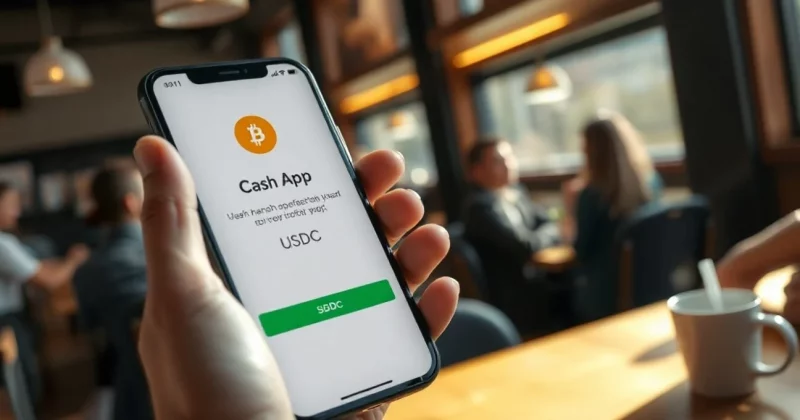
Cash App, a leading consumer finance platform operated by Jack Dorsey’s fintech giant Block, has taken a significant stride into the realm of digital currencies by rolling out stablecoin payment functionality. This integration, which commenced on May 27th, allows approximately 15 million of its nearly 60 million monthly active users to send and receive USD Coin (USDC), marking one of the largest consumer platforms to embrace stablecoin payments. The move signifies a strategic pivot for Cash App, expanding its digital asset offerings beyond Bitcoin and potentially reshaping how millions of users engage with digital money.
The newly introduced feature leverages the Solana blockchain for transaction settlement, enabling users to instantly convert USDC to their existing U.S. dollar Cash Balance within the app. This seamless integration aims to abstract away the complexities often associated with cryptocurrency transactions, such as managing separate wallets or navigating fluctuating gas fees, thereby enhancing user accessibility and experience.
How the Integration Streamlines Digital Currency Transactions
At its core, Cash App’s USDC integration is designed for simplicity and efficiency. Each Cash App user is assigned a unique blockchain deposit address specifically for USDC transactions. This crucial element allows anyone, regardless of whether they are a Cash App user themselves, to send USDC directly to a Cash App account using a standard Solana wallet address. This interoperability is a key feature, fostering broader adoption and utility for the stablecoin.
The conversion between USDC and fiat U.S. dollars is handled automatically and instantaneously within the Cash App interface. Users do not need to manage separate cryptocurrency wallets, perform complex bridging operations between different blockchain networks, or worry about unpredictable transaction costs, often referred to as "gas fees." This "no-fuss" approach is a deliberate design choice by Block to appeal to a mainstream consumer base that may be unfamiliar with or intimidated by the technical intricacies of blockchain technology.
Block’s decision to utilize the Solana blockchain as the settlement layer was driven by its inherent advantages in speed and low transaction costs. In contrast to networks like Ethereum, which can experience significant fee spikes during periods of high congestion, Solana’s infrastructure offers sub-cent transaction costs. This economic viability is critical for enabling micropayments and making everyday transactions with digital currencies practical. For instance, sending a small amount like $20 on Ethereum during peak times could become prohibitively expensive, rendering such transactions economically nonsensical. Solana’s cost-effectiveness, however, makes such scenarios feasible, paving the way for wider adoption of digital currency payments for smaller, more frequent transactions.
The phased rollout of this feature began earlier this week, with the initial deployment targeting about 25% of Cash App’s user base. Block anticipates that the functionality will be fully available to all users by the end of this week, indicating a swift and efficient expansion from the initial cohort to the broader user base. This rapid deployment suggests a high level of confidence in the system’s stability and scalability.
From Bitcoin Pioneer to a Comprehensive Digital Asset Ecosystem
Cash App has a long-standing relationship with Bitcoin, having been one of the first major financial applications to enable users to buy, sell, and make payments using the cryptocurrency, notably through the Lightning Network. The addition of USDC represents a significant strategic evolution, moving beyond Bitcoin’s primary use case as a store of value and speculative asset. While Bitcoin is well-suited for these purposes, its price volatility can make it less ideal for everyday transactions where precise dollar values are required. The time lag between initiating a payment and its final settlement, coupled with potential price fluctuations, can introduce uncertainty.
USDC, on the other hand, is designed to maintain a stable value, pegged 1:1 to the U.S. dollar. Its stability is underpinned by reserves consisting of cash and short-dated U.S. Treasuries, managed by regulated financial institutions. This inherent stability makes it a far more practical option for transactions requiring predictable value, such as sending money to friends, paying for goods and services, or facilitating remittances.
The journey to integrating USDC began earlier. Block first announced its intentions to incorporate stablecoin support on Solana in November 2025. At that time, the company outlined plans to not only add USDC functionality but also to enhance its existing Bitcoin payment features. The current May rollout effectively delivers on that roadmap, aligning closely with the timeline Block initially projected for a launch in early 2026. This consistent progress underscores Block’s commitment to expanding its digital asset offerings.
Implications for Investors and the Wider Digital Currency Landscape
The integration of USDC payments by a platform with nearly 60 million monthly active users carries substantial downstream implications for various stakeholders in the digital currency ecosystem.
For the Solana blockchain, this partnership represents a potentially transformative catalyst. As Cash App scales its USDC payment capabilities across its entire user base, Solana could experience a dramatic surge in transaction volume. This increased activity not only validates Solana’s technological capabilities but also positions it as a leading blockchain for mainstream consumer applications. Such a development could attract further developer interest and investment into the Solana ecosystem.
For Circle, the issuer of USDC, this deal is equally consequential. Cash App’s vast user reach provides a significant on-ramp for USDC, potentially boosting its circulation and daily transaction volume. This could further solidify USDC’s competitive standing against Tether’s USDT, the dominant stablecoin in terms of market capitalization, by demonstrating its practical utility and widespread adoption in consumer-facing applications. Increased adoption by a platform like Cash App can enhance the perceived legitimacy and trustworthiness of USDC in the eyes of both consumers and institutions.
From Block’s perspective, the introduction of stablecoin payments unlocks new avenues for revenue generation. The company could potentially earn revenue through several mechanisms:
- Conversion Spreads: While the app aims for seamless conversion, there might be minor spreads charged on the exchange between USDC and USD balances.
- Transaction Fees: Although Solana’s fees are low, Block could potentially implement nominal transaction fees for certain services or premium features.
- Yield Generation: Holding USDC reserves on behalf of users could present opportunities to earn yield through established DeFi protocols or other financial instruments, subject to regulatory compliance.
This diversification complements the revenue already generated from Cash App’s robust Bitcoin trading features, further strengthening Block’s financial standing and its position in the digital asset market.
The trend of major financial and payment companies embracing stablecoins is becoming increasingly evident. PayPal launched its own stablecoin, PayPal USD (PYUSD), earlier in 2023. Stripe, a competitor to Block in the payment processing space, acquired Bridge, a stablecoin infrastructure provider, signaling its commitment to stablecoin payments. Now, Cash App’s routing of consumer transactions through Solana adds another significant player to this growing landscape. This collective movement suggests a maturing market where stablecoins are viewed as a viable and increasingly essential component of the digital payment infrastructure.
Regulatory Headwinds and the Future of Remittances
Despite the promising outlook, the stablecoin landscape remains subject to regulatory scrutiny. The evolving regulatory framework in the United States, in particular, could introduce new requirements that might alter the economic viability of offering stablecoin services. Any future legislation could impose stringent compliance obligations, capital reserve requirements, or consumer protection measures that would need to be carefully navigated by platforms like Cash App.
However, the potential for stablecoins to disrupt traditional financial services, especially in areas like remittances, is significant. Legacy remittance services, such as Western Union, typically charge fees ranging from 5% to 10% for international money transfers. Stablecoins, with their significantly lower transaction costs and faster settlement times, present a formidable competitive threat to these incumbents. Cash App’s integration, by making stablecoin payments more accessible to millions, could accelerate this disruption, offering a more cost-effective and efficient alternative for global money movement. This could particularly benefit underserved populations who rely on remittances for financial support.
The strategic decision by Block to integrate USDC on Solana is not merely a technological upgrade; it represents a fundamental shift in how mainstream consumers can interact with digital currencies. By prioritizing user experience and leveraging the strengths of a high-performance blockchain, Cash App is poised to play a pivotal role in driving the widespread adoption of stablecoins, potentially reshaping the future of digital payments and financial inclusion. The coming months will be critical in observing how this integration unfolds and its broader impact on the evolving digital economy.