The Commodity Futures Trading Commission (CFTC) has officially unveiled a comprehensive proposal aimed at significantly tightening the regulatory oversight of prediction markets, marking a pivotal shift in how the federal government monitors the burgeoning sector of event-based derivatives. Through a formal Notice of Proposed Rulemaking (NPRM), the agency is seeking to refine the procedures by which event contracts are reviewed, listed, and cleared under the federal Commodity Exchange Act (CEA). This move comes at a time of unprecedented growth for platforms that allow users to wager on the outcomes of real-world events, ranging from political elections and economic indicators to geopolitical conflicts.
The proposed rules are designed to provide the CFTC with a more robust toolkit to assess whether specific event contracts align with the public interest. Under the new framework, the agency would evaluate whether proposed contracts implicate activities that are expressly restricted or prohibited under the CEA. These categories include, but are not limited to, terrorism, assassination, war, gaming, or any conduct that would be considered unlawful under state or federal law. By establishing a standardized set of criteria, the Commission aims to prevent the commodification of events that could undermine national security, public safety, or the integrity of the democratic process.
The Evolution of the Regulatory Framework
For years, the CFTC has grappled with the classification of event contracts. Unlike traditional commodity futures—such as those for wheat, oil, or gold—event contracts derive their value from the occurrence or non-occurrence of a specific event. While these instruments can serve as valuable tools for hedging risk or gathering "wisdom of the crowd" data, they also tread dangerously close to the territory of unregulated gambling.
The new proposal seeks to replace the current, often fragmented approach with a "durable and transparent" framework. Central to this proposal is the introduction of a formal 90-day review window for any new event contract that the Commission deems potentially problematic. This period would allow for a thorough examination of the contract’s mechanics, its potential impact on the public interest, and its susceptibility to manipulation.
According to the Commission, these changes are not merely administrative but are essential to maintaining procedural clarity as trading activity expands across CFTC-registered platforms. As more retail investors enter the space through decentralized finance (DeFi) protocols and traditional exchanges alike, the agency is under increasing pressure to ensure that the rules of the road are clearly defined and consistently applied.
Defining Prohibited Activities and the Public Interest
One of the most significant aspects of the NPRM is the detailed list of activities that the CFTC believes should be barred from the derivatives markets. The inclusion of "gaming" is particularly noteworthy, as it has been a point of legal contention between the agency and various prediction market platforms. By formalizing the definition of gaming within the context of event contracts, the CFTC hopes to create a clear boundary between legitimate financial risk management and speculative wagering that serves no broader economic purpose.
The "public interest" test is another cornerstone of the proposal. The CFTC asserts that it has a mandate from Congress to ensure that the markets it oversees do not facilitate activities that are morally or legally objectionable. For instance, contracts based on the outcome of military conflicts (war) or the death of individuals (assassination) have long been viewed as contrary to public policy. The new rules would provide the Commission with the explicit authority to prohibit such listings before they reach the clearing stage.
Chronology of Prediction Market Regulation
To understand the necessity of this proposal, one must look at the timeline of the CFTC’s engagement with prediction markets over the last decade:
- 2012: The CFTC issued its first major order against an event market, banning the North American Derivatives Exchange (Nadex) from listing contracts based on political election results, citing the "gaming" and "public interest" provisions.
- 2022: The agency intensified its focus on decentralized platforms, reaching a $1.4 million settlement with Polymarket. The platform was charged with offering illegal, off-exchange event-based binary options and was forced to wind down its services for U.S. users.
- 2023: A significant legal battle ensued with Kalshi, a regulated exchange that sought to list contracts on which party would control the U.S. Congress. The CFTC initially blocked these contracts, leading to a high-profile lawsuit that challenged the agency’s definition of "gaming."
- 2024 (Present): With the 2024 U.S. election cycle driving record interest in prediction markets, the CFTC has moved to codify its oversight through this Notice of Proposed Rulemaking to avoid ad-hoc enforcement and provide the industry with a predictable regulatory environment.
Industry Growth and Market Data
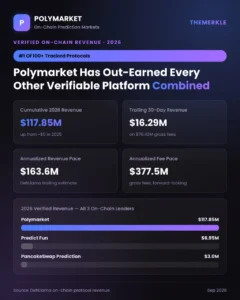
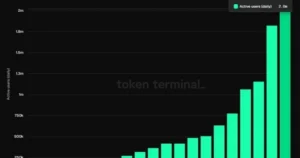
The push for new regulations is driven by the sheer volume of capital now flowing into event-based derivatives. Market data suggests that prediction markets have evolved from niche academic experiments into multi-billion-dollar ecosystems. During the previous election cycle, trading volumes on both regulated and unregulated platforms saw exponential growth, with some estimates suggesting that total open interest across global event markets has increased by over 300% since 2020.
Proponents of these markets argue that they provide superior data to traditional polling. Because participants have "skin in the game," the price of a contract is often seen as a more accurate reflection of the probability of an event than a subjective survey. However, the CFTC remains concerned that this same financial incentive could lead to market manipulation, where wealthy individuals or entities might attempt to influence the outcome of an event to profit from their positions in the derivatives market.
Official Responses and Leadership Perspectives
CFTC Chairman Michael Selig emphasized that the proposed framework is not intended to stifle the industry but rather to provide the clarity necessary for responsible growth. In his statement accompanying the proposal, Selig sought to strike a balance between the agency’s dual roles as a regulator and an enabler of market evolution.
“The CFTC will protect the integrity of our regulated markets without standing in the way of responsible innovation,” Selig said. “This proposal gives the Commission a durable, transparent framework to identify the contracts Congress directed us to scrutinize while letting legitimate markets move forward.”
The Chairman’s comments reflect a desire to move past the "regulation by enforcement" critique that has often been leveled at the agency by the crypto and fintech sectors. By laying out standardized factors for evaluation, the CFTC is offering a roadmap for exchanges to follow, potentially reducing the risk of costly legal battles after a contract has already been launched.
Reactions from Market Participants and Legal Experts
While the official comment period for the NPRM is just beginning, early reactions from the industry are mixed. Some market operators have welcomed the move toward transparency, noting that a formal 90-day review window is preferable to the uncertainty of an open-ended investigation.
"The industry has been asking for a clear set of rules for years," said one legal analyst specializing in derivatives law. "The challenge will be in the definitions. What one person calls ‘gaming,’ another calls ‘risk management.’ The CFTC will need to be very precise in how it distinguishes between the two if it wants to avoid further litigation."
Conversely, some advocacy groups have expressed concern that the "public interest" criteria could be used too broadly, potentially blocking innovative contracts that do not fit traditional molds. There is also a fear that overly stringent U.S. regulations will simply drive liquidity to offshore, unregulated platforms where U.S. authorities have little to no oversight.
Analysis of Broader Implications
The implications of this proposal extend far beyond the immediate world of prediction markets. It signals a broader trend in U.S. financial regulation toward a more proactive stance on "non-traditional" commodities. As the line between gambling, investing, and insurance continues to blur, the CFTC is asserting its role as the primary arbiter of what constitutes a "legitimate" financial instrument.
Furthermore, the focus on "unlawful conduct" and "terrorism" reflects a growing concern within the federal government about the national security implications of financial markets. If a prediction market allows for bets on the timing of a terrorist attack or the assassination of a political leader, it could inadvertently create financial incentives for those very acts to occur. The CFTC’s proposal is a preemptive attempt to ensure that the U.S. financial system is not used to facilitate or profit from such tragedies.
For the 2024 election and beyond, this rule could mean that voters and investors see fewer opportunities to hedge against political outcomes on regulated U.S. exchanges, or at the very least, those opportunities will be subject to much more rigorous vetting.
Conclusion and Next Steps
The Notice of Proposed Rulemaking will now enter a public comment period, during which stakeholders, including exchange operators, investors, and legal scholars, can submit their feedback to the Commission. Following the review of these comments, the CFTC will decide whether to finalize the rule as proposed or make adjustments based on the input received.
As the agency moves forward, the primary challenge will be to maintain the "integrity of regulated markets" without being perceived as an obstacle to the technological advancements that are reshaping the global financial landscape. Whether this new framework will successfully balance these competing interests remains to be seen, but it undoubtedly marks the beginning of a new era for prediction markets in the United States.