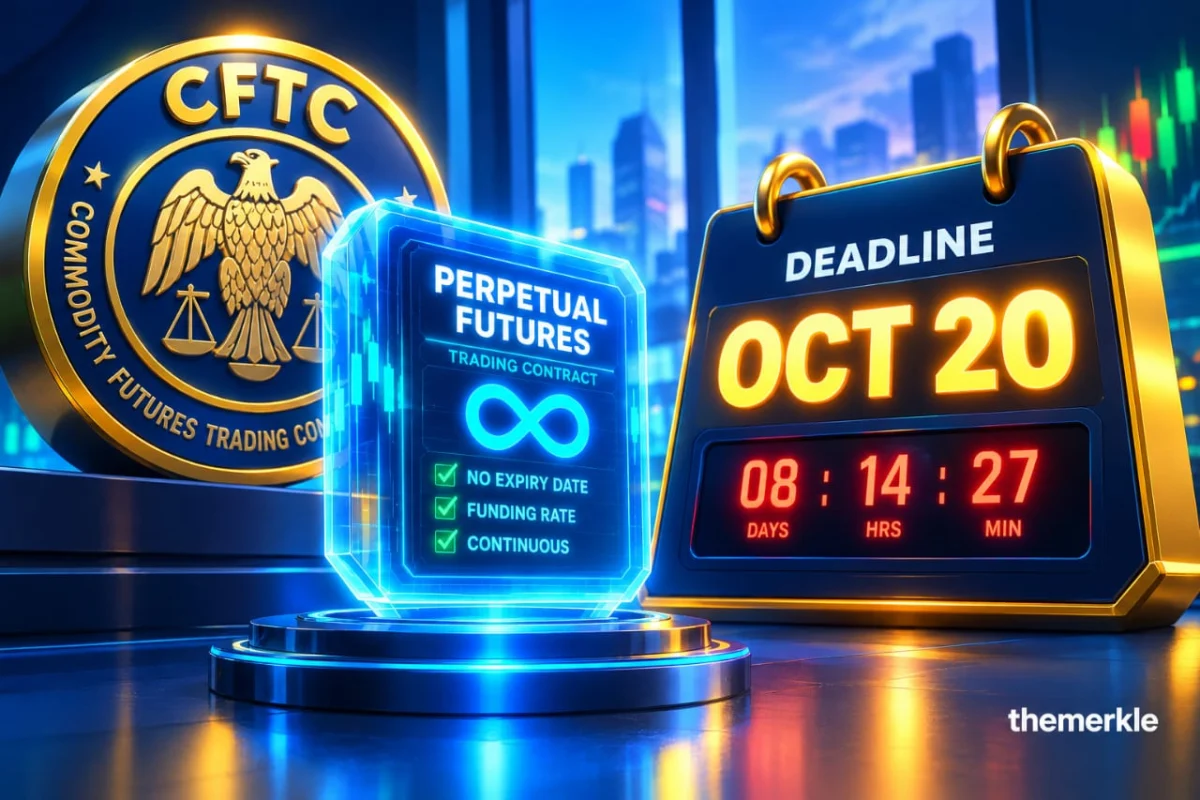
The Commodity Futures Trading Commission (CFTC) has consistently opened fast-track regulatory pathways for Designated Contract Markets (DCMs) seeking to transform existing perpetual-style derivative contracts into true perpetual futures. While these conditional no-action positions offer crucial relief, they are characterized by remarkably tight expiration dates, presenting immediate operational hurdles for market participants diligently tracking the agency’s evolving regulatory mechanics. The latest instance, CFTC Staff Letter 26-29, issued on October 3, 2026, grants temporary permission for regulated exchanges to remove maturity dates from broad-based security index futures, yet the entire window for these complex conversions slams shut on October 20, 2026 – providing venues with a mere two weeks to navigate stringent notice and participant protection requirements.
This rapid, time-boxed approach from the CFTC’s Division of Market Oversight (DMO) underscores the agency’s dual commitment: fostering innovation in the U.S. derivatives market while rigorously upholding its mandate for market integrity and investor protection. The ongoing series of no-action letters indicates a pragmatic response to evolving market demands, particularly from the burgeoning digital asset space, where perpetual futures have become a dominant trading instrument. However, the compressed timelines for compliance with these regulatory carve-outs are placing significant strain on the operational and legal departments of DCMs, forcing a sprint to adapt sophisticated trading infrastructure within days rather than weeks or months.
The Rise of Perpetual Futures and Their Regulatory Conundrum
To fully appreciate the significance of the CFTC’s actions, it is essential to understand the unique nature of perpetual futures and the regulatory challenges they pose. Unlike traditional futures contracts, which have a defined expiration date, perpetual futures do not. This characteristic allows traders to maintain positions indefinitely, provided they meet margin requirements, offering continuous exposure to an underlying asset without the need for periodic rollovers.
Perpetual futures originated and gained immense popularity in the cryptocurrency markets, where they quickly became the most traded derivative product. Their appeal stems from their flexibility, capital efficiency, and the ability to mimic spot market exposure while offering leverage. This innovation resonated deeply with both institutional and retail traders, who valued the continuous trading experience. However, the indefinite nature of these contracts presented a significant challenge for traditional financial regulators like the CFTC. Existing regulatory frameworks in the U.S. are largely predicated on contracts with defined maturities, making it difficult to shoehorn perpetuals into established categories without significant reinterpretation or new rulemaking.
To bridge this regulatory gap and offer similar products within regulated U.S. markets, some DCMs initially listed "perpetual-style" contracts. These were essentially traditional futures contracts but with exceptionally long maturity dates, sometimes stretching up to 25 years. This workaround aimed to replicate the continuous trading experience of true perpetuals while technically adhering to existing regulatory definitions of fixed-term derivatives. While a clever interim solution, it was always understood that this approach was a temporary measure, awaiting a more definitive regulatory stance on genuine perpetual contracts. The CFTC’s recent actions signal a critical evolution in how these innovative products are being integrated into the regulated financial ecosystem, moving beyond the "perpetual-style" workaround to embrace true perpetual futures.
A Chronology of Regulatory Adaption and Expedited Relief
The current regulatory landscape for perpetual futures in the U.S. has been shaped by a series of targeted actions from the CFTC, demonstrating an accelerating pace of adaptation.
-
May 2026: Groundbreaking Approval Order: The foundation for integrating perpetuals into the regulated U.S. market was laid in May 2026, when the CFTC issued a "groundbreaking approval order under Regulation 40.3." This pivotal decision specifically addressed digital commodity perpetuals, setting a precedent for their acceptance within the Commission’s regulatory framework. This order was a clear signal that the CFTC was prepared to evolve its approach to accommodate innovative financial products.
-
June 12, 2026: Staff Letter 26-19 for Digital Commodities: Following the May approval, the DMO swiftly issued CFTC Staff Letter 26-19 on June 12, 2026. This letter provided temporary relief designed to facilitate the conversion mechanics for existing digital-commodity perpetual-style contracts into true perpetual futures. The letter recognized the operational complexities of such conversions and aimed to streamline the process for DCMs.
-
June 30, 2026: First Hard Deadline: The relief granted by Staff Letter 26-19, however, came with an exceptionally tight deadline. DCMs wishing to convert their digital-commodity perpetuals had until June 30, 2026, to complete the process. This gave exchanges a mere 18 days to implement the necessary changes, conduct participant outreach, and ensure compliance with all associated conditions. The brevity of this window set a pattern for subsequent regulatory actions.
-
October 2, 2026: KalshiEX Precedent for Security Index Perpetuals: A new significant milestone was reached on October 2, 2026, when the Commission deemed approved a KalshiEX broad-based security index perpetual. This approval extended the regulatory acceptance of perpetual futures beyond digital commodities to include security index derivatives, establishing a crucial precedent for a broader range of financial products. This move highlighted the CFTC’s intent to apply a consistent regulatory philosophy across different asset classes.
-
October 3, 2026: Staff Letter 26-29 for Index Derivatives: Hot on the heels of the KalshiEX approval, the DMO issued CFTC Staff Letter 26-29 on October 3, 2026. This letter explicitly applied the "identical short-term playbook" used for digital commodities to index derivatives. It granted temporary relief, allowing regulated exchanges to strip maturity dates from existing broad-based security index futures, thereby converting them into true perpetuals.
-
October 20, 2026: Second Hard Deadline: Mirroring the earlier digital commodity relief, Staff Letter 26-29 imposes an equally stringent deadline: all conversions must be executed by October 20, 2026. This provides DCMs with barely two weeks from the issuance of the letter to comply with a host of stringent notice and participant protection requirements. This consistent pattern of time-boxed regulatory relief underscores the CFTC’s strategy of pragmatic, albeit accelerated, integration of these innovative products.
Navigating the Regulatory Labyrinth: Staff Letters 26-19 and 26-29
The DMO’s issuance of Staff Letters 26-19 and 26-29 serves a critical purpose: to prevent market fragmentation and allow competing DCMs to adjust existing contracts without undergoing the full 10-business-day waiting periods typically required under Regulation 40.6. This regulation mandates a specific review period for new products or significant contract modifications, designed to allow adequate time for public comment and regulatory scrutiny. By issuing conditional no-action relief, the DMO effectively provides an expedited "exit ramp" from this standard waiting period, recognizing the immediate competitive pressures and the need for market harmonization.
The scope of the two letters is distinct but follows the same operational blueprint. Staff Letter 26-19 was specifically tailored for digital-commodity perpetuals, addressing the conversion of contracts whose underlying assets were digital commodities. This was a direct follow-up to the CFTC’s initial approval of such products. Staff Letter 26-29, in turn, extended this relief to broad-based security index futures, reflecting the broader regulatory acceptance established by the KalshiEX approval.
Response letters from various exchanges, including Coinbase Derivatives, LLC, have shed light on the operational realities that necessitated this regulatory flexibility. These venues had originally listed perpetual-style contracts with ultra-long maturities, some extending up to 25 years. This approach was a creative solution to navigate existing regulatory ambiguity while mimicking the on-chain funding mechanics and continuous exposure characteristic of true perpetuals. The DMO’s no-action relief now allows these exchanges to shed these artificial maturity dates, bringing their offerings into full alignment with the concept of perpetual futures. This move is particularly significant as it enables U.S.-regulated exchanges to offer products more directly comparable to those widely available on offshore platforms, potentially repatriating trading volume and enhancing the competitiveness of the U.S. market.
The Eight Conditions: A Framework for Responsible Conversion
Exchanges seeking to bypass standard waiting periods under the expedited relief framework, as outlined in CFTC Press Release 9308-26 and the accompanying staff letters, must satisfy eight strict conditions before the respective deadlines. While the full text of these conditions is not publicly detailed in the immediate news, the CFTC’s emphasis on "notice and participant protection requirements" and the potential for "redistribute gains and losses independently of market fundamentals" provides strong indicators of their nature. These conditions are designed as essential safeguards, ensuring that the transition to perpetual futures is executed responsibly, transparently, and without unduly disadvantaging market participants.
Based on standard regulatory practices and the stated concerns, these eight conditions likely cover critical areas of compliance:
- Advance Notice to Market Participants: DCMs are required to provide clear, comprehensive, and timely advance notice (at least five business days, as specified for exit requirements) to all holders of open interest regarding the proposed conversion. This notice must detail the changes in contract terms, the implications for existing positions, and the process for exercising exit options.
- Voluntary Exit Mechanism: Exchanges must establish a robust, fair, and accessible mechanism allowing participants to voluntarily close out their positions before the conversion date without incurring undue penalties, if they do not wish to hold a perpetual contract. This is crucial for protecting participants who may not desire the characteristics of a perpetual future.
- Client Protection Measures: Specific safeguards must be in place for both retail and institutional clients. This includes ensuring they fully understand the change in contract terms, the associated risks (e.g., funding rates, continuous margin requirements), and the implications for their trading strategies. Educational materials and clear disclosures are paramount.
- Operational Readiness and System Integrity: DCMs must demonstrate that their trading, clearing, and settlement systems are fully capable of handling true perpetual contracts. This includes implementing and thoroughly testing mechanisms for funding rates, continuous margin calculations, position management, and accurate data reporting.
- Compliance with Core Principles: The conversion process and the resulting perpetual contracts must remain fully compliant with the CFTC’s core principles for DCMs. This includes principles related to the prevention of market manipulation, ensuring orderly liquidation, maintaining financial integrity, and providing fair access.
- Enhanced Transparency and Reporting to the CFTC: DCMs are likely required to provide enhanced reporting to the CFTC regarding the conversion process. This would include data on participant uptake of exit options, the volume of converted contracts, any unusual market activity during the conversion window, and detailed attestations of compliance with all conditions.
- Updated Risk Management Frameworks: Exchanges must update their internal risk management frameworks to adequately address the unique characteristics and potential risks associated with perpetual futures, such as funding rate volatility, prolonged exposure, and liquidity dynamics in the absence of a maturity date.
- Formal Certification of Compliance: A formal certification by the DCM’s senior management or legal counsel, affirming that all conditions have been met and that the conversion has been conducted in a manner consistent with market integrity and participant protection, is typically required for such regulatory relief.
The "five-day notice and exit requirements" highlighted in the original article are particularly critical, as they directly address the potential for "redistributing gains and losses." Without adequate notice and an easy exit, market participants holding open interest could find their positions involuntarily transformed into a contract with fundamentally different risk profiles, potentially leading to unforeseen financial consequences.
Industry Perspectives and Operational Challenges
While the CFTC’s expedited relief is largely welcomed by DCMs seeking to innovate and compete, the compressed timelines present significant operational challenges. Exchange operators and their legal, compliance, and technology teams are reportedly grappling with a logistical sprint to meet these deadlines.
The process of converting open interest in existing derivative contracts is far from trivial. It requires:
- System Upgrades: Adjusting trading platforms, clearing systems, and data infrastructure to handle perpetual contracts, including new funding rate mechanisms and continuous margin calculations.
- Legal Documentation: Revising and re-executing legal agreements with market participants to reflect the new contract terms.
- Client Communication: Developing clear, concise, and timely communications to inform a diverse range of market participants – from large institutional traders to individual retail investors – about the impending changes, their implications, and available options.
- Risk Management Adjustments: Updating internal risk models and stress testing scenarios to account for the unique characteristics of perpetual futures.
- Regulatory Reporting: Ensuring all new reporting requirements to the CFTC are met accurately and promptly.
The tight two-week window for the latest Staff Letter 26-29, following a similar timeframe for 26-19, means that DCMs must mobilize substantial resources almost instantaneously. This pressure cooker environment increases the potential for operational errors and places a heavy burden on internal teams. Industry observers suggest that while exchanges appreciate the regulatory clarity, the operational constraints imposed by such short deadlines might limit the number of participants who can fully leverage this relief, or at least force them into exceptionally high-pressure execution cycles.
Implications for Market Structure and Competition
The CFTC’s proactive stance on perpetual futures carries significant implications for the structure and competitive dynamics of the U.S. derivatives market.
Firstly, it prevents market fragmentation. By allowing existing DCMs to convert their "perpetual-style" contracts, the CFTC ensures that the market for these innovative products does not become splintered between a few newly approved entities (like KalshiEX) and a larger group of legacy exchanges struggling to adapt. This levels the playing field, fostering healthy competition among regulated venues.
Secondly, it fosters innovation within a regulated environment. The CFTC is demonstrating a willingness to adapt its regulatory framework to accommodate market-driven innovation, rather than stifling it. By providing pathways for products that originated in less regulated spaces (like crypto), the agency is effectively drawing innovation into its purview, enhancing oversight and investor protection. This approach is crucial for the U.S. to maintain its leadership position in global financial markets.
Thirdly, it enhances the competitiveness of U.S.-regulated exchanges. For years, offshore exchanges have dominated the perpetual futures market, particularly for digital assets. By enabling U.S. DCMs to offer true perpetuals, the CFTC is providing them with the tools to compete more effectively on a global scale, potentially attracting trading volume back to regulated U.S. venues. This alignment of onshore product listings with global digital asset market structures is a strategic move to ensure the U.S. remains a key player in the evolving landscape of financial derivatives.
Finally, the emphasis on investor protection through stringent conditions, notice periods, and exit mechanisms highlights the CFTC’s balanced approach. While promoting innovation, the agency is not compromising its core mission to protect market participants and ensure market integrity. This careful calibration is vital for building confidence in these relatively new product types within a traditional regulatory framework.
Beyond October 20: Evaluating Future Scenarios
The central question for institutional traders and DCM legal desks revolves around what happens when the clock strikes midnight on October 20, 2026. Market participants tracking administrative developments across the official CFTC Staff Letter Index are evaluating three distinct scenarios for the future of these expedited conversion pathways:
- Further Extensions or New No-Action Relief: Given the complexity of these conversions and the ongoing evolution of the digital asset and index derivatives markets, it is plausible that the DMO might issue further extensions or new rounds of no-action relief. This could occur if a significant number of DCMs require more time, or if new types of perpetual-style contracts emerge that require similar expedited pathways. This scenario would indicate the CFTC’s continued pragmatic and flexible approach to market adaptation.
- Transition to a More Permanent Regulatory Framework: A more significant development could see the CFTC initiate formal rulemaking processes. Instead of relying on temporary no-action letters, the Commission might propose and implement permanent regulations specifically tailored for perpetual futures. This would provide long-term clarity and stability for DCMs, allowing for more strategic product development and investment. Such a framework could address specific aspects like funding rates, margin requirements, and settlement procedures unique to perpetuals.
- No Further Relief and Reliance on Standard Approval Processes: The CFTC could decide that the provided windows were sufficient, and no further special relief will be granted. In this scenario, any DCM that failed to convert its contracts by the October 20 deadline (or the earlier June 30 deadline for digital commodities) would be required to undergo the full 10-business-day waiting period under Regulation 40.6 for any subsequent conversions or new perpetual listings. This would place a significant administrative burden on those exchanges and potentially delay their ability to offer competitive products.
The path taken by the CFTC will profoundly influence the trajectory of regulated digital asset and index derivatives markets in the U.S. It will signal whether the agency intends to keep onshore perpetual conversions on a "short leash," maintaining tight control through conditional, temporary measures, or if it is ready to transition toward a more permanent and comprehensive regulatory framework that fully embraces these innovative financial instruments. The outcome will shape not only the competitive landscape for DCMs but also the overall accessibility and robustness of perpetual futures within the highly regulated U.S. financial system.
Broader Regulatory Landscape and Future Outlook
The CFTC’s active engagement with perpetual futures is part of a broader trend of financial regulators globally grappling with the integration of digital assets and innovative derivative products into traditional financial markets. The U.S. has often been at the forefront of derivatives regulation, and these recent actions demonstrate a commitment to maintaining that leadership while adapting to new market realities.
The CFTC’s approach, characterized by staff-level no-action letters, offers a nimble way to provide guidance and temporary relief without the lengthy process of full Commission rulemaking. This flexibility allows the agency to respond quickly to market developments. However, the temporary nature of these letters also creates uncertainty, which DCMs and market participants would ideally prefer to avoid in the long run. A more permanent regulatory framework, perhaps through an updated Regulation 40.3 or new dedicated rules, would offer greater stability and predictability, encouraging deeper institutional participation and investment in these markets.
Ultimately, the CFTC’s actions reflect a calculated effort to balance innovation with regulatory oversight. By facilitating the conversion of perpetual-style contracts into true perpetual futures, the agency is acknowledging the significant market demand for these products and working to integrate them into a robust, regulated environment. The coming weeks and months, particularly after the October 20, 2026, deadline, will be critical in observing the CFTC’s next moves and understanding the long-term regulatory trajectory for these transformative financial instruments in the United States.