The Stellar network has officially integrated Chainlink’s decentralized oracle services, marking a significant infrastructure upgrade aimed at bolstering its decentralized finance (DeFi) capabilities and fostering the growth of real-world assets (RWAs) on the blockchain. However, the launch has drawn attention to the nuanced interpretation of Stellar’s stated "over $4 billion RWA ecosystem" and the initial scope of the deployed oracle feeds, prompting a closer look at the actual assets currently supported by Chainlink’s price data. While the Stellar Development Foundation (SDF) has championed the integration as a catalyst for innovation, a detailed analysis reveals that the headline RWA figure is contingent on the inclusion of stablecoins, and the initial set of Chainlink data feeds does not yet cover some of Stellar’s most prominent tokenized real-world assets.
The Chainlink-Stellar Integration: A New Era for Real-World Assets
On October 19, 2023, the Stellar Development Foundation confirmed the live deployment of Chainlink’s Data Feeds and Data Streams on the Stellar mainnet. This integration is a critical development for Stellar, a blockchain network designed for fast, low-cost cross-border payments and asset issuance. By bringing Chainlink’s industry-standard oracle solutions to Stellar, the network aims to provide reliable, tamper-proof external data—such as asset prices—to smart contracts, which is essential for building robust and secure DeFi applications and expanding the tokenization of RWAs.
Chainlink, the industry’s leading decentralized oracle network, solves the "oracle problem," which refers to the challenge of securely and reliably connecting blockchain-based smart contracts with off-chain data and systems. Without oracles, smart contracts are limited to the data already on their native blockchain. For applications like lending protocols, derivatives, and stablecoins, accurate and up-to-date price feeds for various assets are paramount. The absence of such feeds can lead to exploits, inaccurate liquidations, and a general lack of trust in the underlying DeFi ecosystem.
The SDF emphasized that these feeds are designed for a range of critical DeFi functions, including collateral checks, loan-to-value (LTV) calculations, automated liquidations, and stablecoin reference rates. This suggests a strategic move to position Stellar as a more attractive platform for institutional and retail DeFi participants looking to leverage tokenized assets. However, notably absent from this initial launch is Chainlink’s Cross-Chain Interoperability Protocol (CCIP), which enables secure cross-chain messaging and token transfers. While CCIP was mentioned in earlier SDF announcements regarding Stellar’s participation in the Chainlink Scale program, the launch post itself did not list it as live, indicating a phased rollout of Chainlink’s full suite of services.
Dissecting Stellar’s "Over $4 Billion" RWA Ecosystem Claim
A central point of discussion surrounding the Chainlink launch has been the Stellar Development Foundation’s claim that "The Stellar network already supports $4+ billion in RWAs." This figure, frequently cited and linked to Stellar’s Dune dashboard, is also prominently displayed on Stellar’s official real-world assets page, which states "$4 billion as of September 1, 2026," a curious future date that was seven weeks prior to the oracle launch.
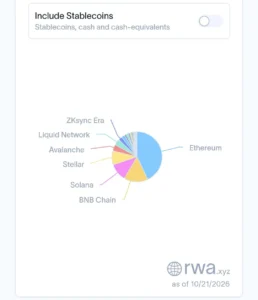
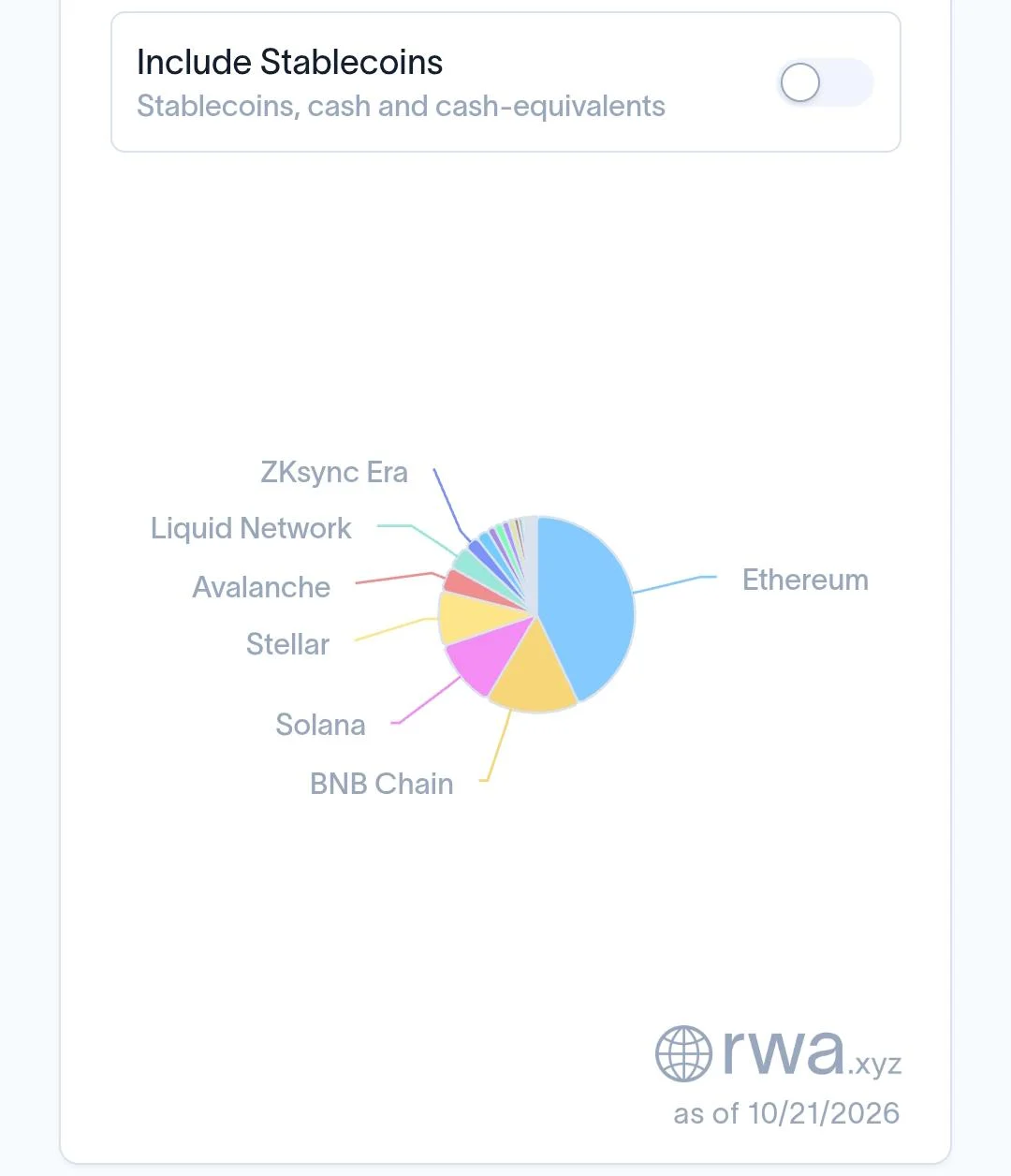
To contextualize this claim, an examination of data from RWA.xyz, a leading analytics platform for tokenized real-world assets, provides a more granular perspective. As of October 21, RWA.xyz’s network table, by default, excludes stablecoins from its RWA total. Under this methodology, Stellar’s distributed RWA figure stood at approximately $3.5 billion, which, when combined with represented assets, reached around $3.64 billion. This figure falls short of the $4 billion mark by roughly $360 million.

The "$4B+" claim becomes defensible only when stablecoins—which RWA.xyz typically categorizes separately from other RWAs due to their cash-like nature and distinct risk profiles—are included. Adding Stellar’s stablecoin value of $517,814,875 to the $3,640,460,565 in other distributed and represented RWAs brings the total to $4,158,275,440. This clarifies that the headline figure depends entirely on the definitional choice of whether to count cash-equivalent tokens as "real-world assets" in the same vein as tokenized bonds, credit, or funds. Industry analysts often distinguish between these categories to provide clearer insights into market composition and growth drivers. While stablecoins are indeed real-world assets in the sense that they are backed by fiat currencies or other assets, their primary function as a medium of exchange and store of value often places them in a separate analytical category when discussing the tokenization of more complex or yield-bearing assets.
Despite the definitional debate, Stellar’s RWA market is undeniably dynamic. RWA.xyz’s data for October 21 showed Stellar attracting a substantial $258 million in net inflows over the preceding 30 days. This performance positioned Stellar as the third-largest network in terms of net inflows during that period, trailing only BNB Chain ($463 million) and Ethereum ($297 million), and significantly outperforming networks like Solana and Arbitrum, which experienced net outflows of $73 million and $147 million, respectively. This strong inflow trend suggests that Stellar is capturing significant momentum in the tokenized asset space. With distributed RWAs across all networks totaling $39.00 billion at the time, Stellar’s $3.56 billion (excluding stablecoins) accounted for approximately 9% of the total market. This pace of growth indicates that Stellar could plausibly cross the $4 billion threshold on RWA.xyz’s stablecoin-exclusive count in the near future, reinforcing its meaningful position in the ecosystem regardless of the current definitional nuances. Stellar currently ranks fourth on RWA.xyz’s network table, boasting 83 RWA assets and 23,695 holders, underscoring its established presence and growing adoption.
Initial Scope of Chainlink Oracles on Stellar
While the narrative surrounding the integration heavily emphasized Stellar’s RWA ecosystem, a closer look at the initially deployed Chainlink feeds reveals a focus that is primarily on cryptocurrencies and stablecoins rather than the specific tokenized funds that constitute Stellar’s largest RWAs.
According to SDF’s developer guide, "Two Ways to Read Chainlink Prices on Stellar," published on October 19, a total of nine Data Feeds were live at the time of writing. These feeds primarily cover major cryptocurrencies and a stablecoin:
- BTC/USD
- ETH/USD
- XLM/USD
- LINK/USD
- SOL/USD
- AVAX/USD
- MATIC/USD
- USDC/USD
- XAU/USD (Gold)
Of these nine feeds, eight update when the price deviates by 0.5% or after a maximum of 24 hours (a "heartbeat" mechanism). The gold (XAU/USD) feed utilizes a tighter 0.1% threshold, also with a 24-hour heartbeat. This tighter threshold for gold is particularly relevant, as gold-backed tokens often experience meaningful price movements within fractions of a percent, requiring more frequent updates to accurately reflect market conditions, especially for critical financial applications.
The discrepancy between the headline RWA figure and the initial feed coverage is notable. Stellar’s own RWA page highlights its largest tokenized products: Spiko, valued at $1.7 billion; Ondo’s USDY, exceeding $500 million; and Franklin Templeton’s BENJI, at $605 million (as of October 6, per RWA.xyz). Crucially, none of these prominent real-world asset funds have a dedicated price feed in SDF’s initial launch list. Only one feed, XAU/USD, is directly labeled as an RWA.
This initial deployment suggests that the Chainlink oracle network on Stellar is, in its early stages, primarily geared towards supporting existing crypto and stablecoin-centric DeFi activities on the network. While this lays a foundational layer for future RWA integration, it indicates that the full potential of Chainlink for Stellar’s leading tokenized assets has yet to be realized. The SDF has acknowledged that this feed list is a snapshot and will evolve, with Chainlink’s official Stellar Data Feeds documentation serving as the definitive source for updates.
Understanding Chainlink’s Data Feeds and Data Streams

The integration brings two distinct Chainlink products to Stellar: Data Feeds and Data Streams, each designed for different types of applications and data consumption patterns.
Data Feeds are Chainlink’s classic "push" model oracles. In this setup, a decentralized network of Chainlink nodes (oracles) constantly monitor off-chain asset prices. When predefined conditions are met (e.g., a price deviation threshold like 0.5% or a time-based heartbeat like 24 hours), the oracles collectively submit a new, aggregated price update directly to a smart contract on the blockchain. This "push" mechanism ensures that on-chain applications always have access to a relatively fresh price, making them suitable for applications that require consistent, periodic updates, such as collateral management, lending platforms, and automated liquidations where timely data is crucial to prevent undercollateralization. The fixed update schedule and threshold provide a predictable cost model and a known latency profile.
Data Streams, in contrast, operate on a "pull" model, offering higher frequency updates and on-demand data retrieval. With Data Streams, applications fetch signed price reports off-chain from Chainlink’s oracle network via various methods, including REST APIs, WebSockets, or SDKs. Once retrieved, these signed reports are then sent to a verifier contract on the Stellar blockchain. This verifier contract validates the report by checking for a minimum number of valid, unique signatures (f+1, where ‘f’ is the maximum number of Byzantine or malicious oracles in the network) from registered oracles. If verified, the application can then use this fresh, authenticated price data. This "pull" model is ideal for applications requiring ultra-low latency price updates (sub-second resolution) and high throughput, such as derivatives trading, sophisticated trading bots, and other time-sensitive financial instruments where every millisecond counts. However, unlike Data Feeds, there is no public list of available Data Streams for Stellar mainnet, and Chainlink’s documentation indicates that access often requires contacting them directly and potentially involves an allowlisted account, suggesting a more tailored or institutional-focused rollout for this product.
The presence of both mechanisms provides Stellar developers with flexibility, allowing them to choose the most appropriate data solution based on their application’s specific requirements for frequency, latency, and cost.
The Broader Context: Stellar’s Strategic Play in the RWA Landscape
Stellar’s strategic focus on real-world assets is a natural extension of its core mission. Since its inception, Stellar has aimed to make money more fluid and accessible, facilitating cross-border payments and asset issuance. The network’s architecture, with built-in features for tokenizing assets (referred to as "anchors"), makes it well-suited for RWAs. Anchors issue tokenized representations of real-world assets (like fiat currencies, commodities, or securities) on the Stellar network, acting as bridges between traditional finance and the blockchain.
The increasing institutional interest in tokenized RWAs—from central bank digital currencies (CBDCs) to tokenized bonds and private equity—underscores the foresight of Stellar’s long-term vision. Major players like Franklin Templeton, with its BENJI fund, and Ondo Finance, with USDY, choosing Stellar for their tokenization efforts, validate the network’s capabilities and its appeal to regulated entities. These projects benefit from Stellar’s compliance features, speed, and cost-effectiveness. The Chainlink integration is designed to further accelerate this trend by providing the essential data infrastructure needed for these tokenized assets to become programmable and interoperable within a DeFi ecosystem.
Stellar’s consistent positive net inflows in the RWA space, as reported by RWA.xyz, further cement its position as a key player. This growth trajectory indicates not only the increasing adoption of Stellar for RWA tokenization but also the potential for significant expansion as the market matures and more traditional assets migrate onto blockchain rails. The ability to attract and retain capital in a competitive landscape, where other networks are experiencing outflows, highlights Stellar’s compelling value proposition.
Developer Considerations and Oracle Limitations

The Stellar Development Foundation’s guide included important caveats for developers, which are crucial for responsible smart contract design:
- No Price Guarantees: Developers are explicitly warned against relying on the oracle to guarantee a specific price for an asset. Oracles provide a data feed, but market conditions can change rapidly.
- Market Risk: The guide highlights that the oracle does not protect against general market risk or price volatility. This is a fundamental principle of financial markets, regardless of the underlying technology.
- Staleness: With a 24-hour heartbeat and a 0.5% threshold, prices on-chain could remain unchanged for up to a day in a calm market. Lending protocols and other DeFi applications must implement their own "staleness limits" to determine how old a price can be before it’s considered unreliable for critical operations. Relying solely on the oracle’s update schedule without additional checks could lead to significant risks if market conditions shift dramatically between updates. This is a standard practice for developers utilizing push oracles and underscores the need for robust risk management strategies within smart contracts.
- Security: Developers are reminded that oracles are a critical component but are not a panacea for all security concerns. Comprehensive smart contract audits and secure coding practices remain paramount.
These warnings, while standard for oracle integrations, are vital for developers to heed. They emphasize that while Chainlink provides decentralized, reliable data, the responsibility for building secure and resilient applications ultimately rests with the smart contract developers.
Industry Perspectives and Future Outlook
Industry analysts view the Chainlink integration as a pivotal strategic move for Stellar. It addresses a fundamental need for external data, which is essential for attracting more sophisticated DeFi protocols and institutional capital. The ability to access reliable, decentralized price feeds unlocks new possibilities for lending, borrowing, and synthetic asset creation on Stellar.
While the initial focus on crypto and stablecoin feeds might seem limited given Stellar’s RWA ambitions, it represents a foundational step. It allows developers to begin building and testing DeFi applications with familiar assets while the infrastructure for broader RWA integration is progressively built out. The SDF’s assurance that the feed list will expand is critical. The true measure of this integration’s success in the RWA space will be the addition of feeds for prominent tokenized funds like Spiko, USDY, and BENJI. Once these assets are directly supported by Chainlink oracles, it will unlock their full potential for use in on-chain financial applications, allowing them to be used as collateral, reference assets for derivatives, or as components in more complex DeFi strategies.
Moreover, the ongoing positive net inflows into Stellar’s RWA ecosystem indicate strong organic growth. If this trend continues, Stellar could naturally surpass the $4 billion mark (excluding stablecoins) on RWA.xyz’s metrics, further validating its position without relying on definitional inclusions. The combination of Chainlink’s robust oracle infrastructure and Stellar’s growing RWA market could create a powerful synergy, attracting new projects and driving innovation in the tokenization space.
In conclusion, the launch of Chainlink oracles on Stellar is a significant infrastructure enhancement, providing critical data feeds for the network’s evolving DeFi landscape. While the initial RWA ecosystem claims warrant a nuanced understanding regarding stablecoin inclusion, and the initial oracle feeds primarily support cryptocurrencies and stablecoins rather than Stellar’s largest tokenized funds, the integration lays a crucial foundation. The path forward will involve the expansion of Chainlink’s feed coverage to encompass these key real-world assets and continued organic growth in Stellar’s RWA market, ultimately aligning the network’s impressive RWA narrative with the robust data infrastructure needed to support it. The financial industry will be closely watching Stellar’s progress as it leverages this new capability to deepen its role in the burgeoning world of tokenized real-world assets.