


The global financial markets experienced a significant jolt on Friday following the stealthy launch of Kimi K3, a new advanced artificial intelligence model from Chinese startup Moonshot AI. Unveiled "in the dead of night" according to market observers, the release sent a ripple of apprehension across semiconductor and AI stocks worldwide, echoing a familiar pattern of market volatility whenever a Chinese laboratory demonstrates a substantial leap in AI capabilities, effectively narrowing the technological gap with Western counterparts.
Immediate Market Reaction and Sector-Wide Impact
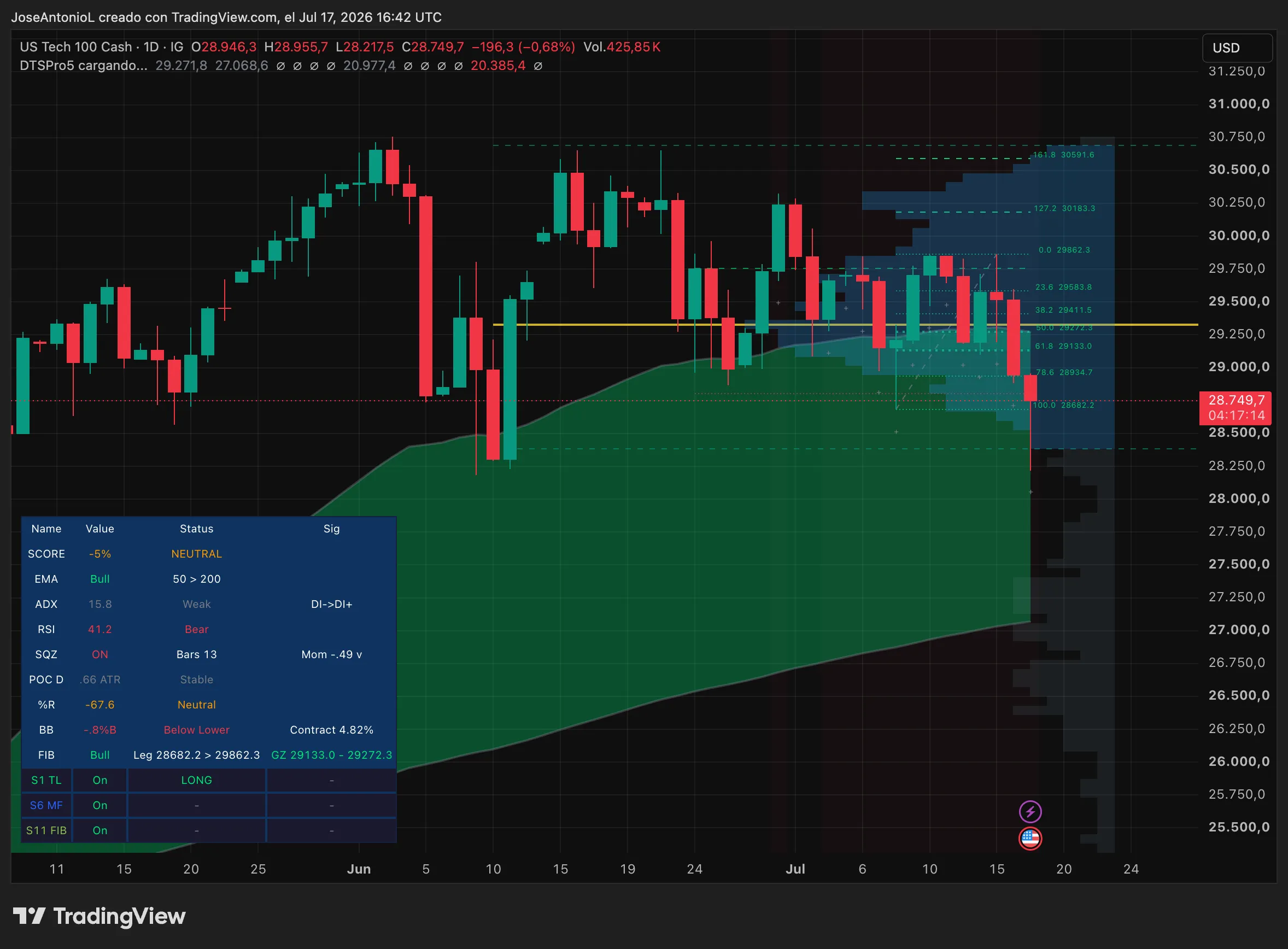
Friday’s trading session saw a widespread decline in technology-focused indices and individual stocks. Taiwan’s benchmark index, heavily influenced by its dominant semiconductor industry, bore the brunt of the panic, plummeting by over 6%. Japan’s markets also closed down sharply, shedding 4% of their value. The Nasdaq Composite, a bellwether for global tech sentiment, registered its worst session of the week, sliding by 1.5%. This immediate and broad-based downturn underscored the market’s deep sensitivity to shifts in the highly competitive and capital-intensive artificial intelligence sector.
The impact was particularly acute within the semiconductor industry, which forms the foundational hardware layer for AI development. The VanEck Semiconductor ETF (SMH), a key indicator for the sector’s health, breached its Exponential Moving Average (EMA) support band—a technical signal often interpreted as a bearish trend—for the first time since April. This marked a significant escalation of a broader decline, with the SMH now trading more than 20% below its late-June record high, signalling investor concern over future demand and the competitive landscape.
A Precedent Set: The DeepSeek Effect
This latest market reaction bears a striking resemblance to events that unfolded in January 2025 with the launch of DeepSeek R1, another groundbreaking Chinese AI model. At that time, DeepSeek R1’s emergence fundamentally challenged the prevailing assumption that achieving frontier AI capabilities necessitated astronomical spending on compute infrastructure and, consequently, massive chip orders. The revelation that advanced AI could be developed with potentially greater efficiency sent shockwaves through the market, leading to a single-session loss of approximately $590 billion in market capitalization for Nvidia, the dominant player in AI accelerators. The Kimi K3 launch, however, distinguished itself by broadening the scope of market damage, affecting a wider array of semiconductor and AI-related companies, suggesting a more systemic re-evaluation of the industry’s future trajectory.
Unpacking Kimi K3’s Technical Prowess
The core of the market’s anxiety stems from Kimi K3’s impressive technical performance. On the Artificial Analysis Intelligence Index, an independent composite benchmark that meticulously aggregates model performance across crucial metrics such as reasoning, knowledge, mathematics, and coding, K3 achieved a remarkable score of 57. This places it demonstrably above established Western models like Claude Opus 4.8 and GPT-5.5. Furthermore, K3 is practically on par with more recent advancements like Claude Fable 5 and OpenAI’s GPT-5.6 Sol, even outperforming them in specific, critical benchmarks.
What makes Kimi K3 particularly disruptive is not just its raw performance but its efficiency. Industry reports suggest that K3 achieves these state-of-the-art results at a fraction of the cost associated with its leading global competitors. This cost-efficiency challenges the established paradigm that sheer scale of investment in hardware and training data is the sole determinant of AI superiority. The implications for the entire AI ecosystem are profound, suggesting that innovation in model architecture and training methodologies could democratize access to advanced AI, shifting the competitive advantage beyond pure financial might.
Adding to its disruptive potential, Moonshot AI announced that the full weights for Kimi K3 will be released on July 27 under a Modified MIT license. This open-source approach means that smaller laboratories, research institutions, and individual developers will have free access to this cutting-edge model. This move is poised to accelerate innovation across the global AI community, enabling a broader range of entities to build upon and integrate advanced AI capabilities without the prohibitive costs typically associated with proprietary frontier models. It fosters an environment where innovation can proliferate rapidly, potentially leading to unforeseen applications and further challenging the dominance of a few well-funded tech giants.
Analyst Reactions and Shifting Industry Narratives
Wall Street analysts, while caught by the sudden market downturn, largely acknowledged that Kimi K3’s emergence was not entirely unexpected but rather a significant data point in an ongoing trend. Robin Zhu, an analyst at Bernstein, described the release as "confirmatory," reinforcing the view that the AI state-of-the-art (SOTA) continues its rapid evolution and that Chinese AI developers are not only keeping pace but are also strategically positioned to capture market share over time. This sentiment reflects a growing recognition within financial circles of China’s sustained progress in AI research and development.
Gary Yu, an analyst at Morgan Stanley, echoed this perspective, framing K3 as the outcome of steady, compound progress rather than a sudden, unpredictable shock. Yu’s analysis highlighted the comprehensive nature of China’s catch-up: "K3 has received positive feedback globally, signaling an all-round catch-up of Chinese LLMs with U.S. leaders in model size, performance, and pricing." This observation is critical, as it points to a holistic advancement across multiple dimensions of AI development, moving beyond isolated breakthroughs to a more mature and competitive ecosystem. The implication is that Chinese firms are not merely replicating Western models but are developing their own sophisticated architectures and optimization techniques.
These analyst comments collectively paint a picture of an industry grappling with a fundamental shift. The narrative of Western technological supremacy, particularly in frontier AI, is being increasingly challenged by the rapid and efficient advancements from Chinese labs. This necessitates a re-evaluation of investment strategies, supply chain dependencies, and geopolitical risks associated with the global AI race.
Moonshot AI: A Rising Force in the AI Landscape
Moonshot AI, the company behind Kimi K3, has rapidly ascended to prominence in the global AI arena. The startup’s formidable capabilities are underpinned by substantial financial backing, notably from Chinese e-commerce giant Alibaba, which invested $1 billion in Moonshot AI in 2024, valuing the company at $2.5 billion at the time. Following the K3 launch and its subsequent market impact, Moonshot AI’s valuation has surged dramatically, now estimated at roughly $31.5 billion, underscoring the immense market confidence in its innovative trajectory.
Moonshot AI’s influence extends beyond its direct product launches. As revealed in May, the company already had deeper, albeit less publicized, roots within U.S. developer circles. It was discovered that Cursor’s Composer 2, a popular coding assistant, was operating on Kimi K2.5, a predecessor model, without explicit disclosure. This discovery, which led to the Cursor team acknowledging its reliance on the open-source base provided by Moonshot AI, highlights the subtle but pervasive integration of Chinese AI technologies into global development workflows. It also points to the strategic importance of open-source initiatives in disseminating AI capabilities and influencing developer ecosystems.
Broader Implications: Geopolitics, Investment, and the Future of AI
The launch of Kimi K3 and its ensuing market reaction carry significant geopolitical and economic implications. The ongoing technological rivalry between the United States and China, particularly in critical areas like semiconductors and artificial intelligence, is one of the defining features of the current global landscape. K3’s success demonstrates that despite export controls and sanctions aimed at limiting China’s access to advanced chip technology, Chinese AI labs are finding ways to innovate and compete at the frontier. This raises questions about the long-term effectiveness of such controls and may prompt further policy adjustments from Western governments.
For investors, the volatility underscores the need for a more nuanced understanding of the global AI market. The assumption that investment in leading Western AI and semiconductor firms would yield uninterrupted growth is being challenged. Investors may increasingly look for diversification, considering the potential for disruptive innovation from non-Western sources and evaluating companies based on their adaptability and resilience in a rapidly shifting competitive environment. The "AI arms race" is no longer a unipolar or bipolar contest but a multi-faceted competition with diverse players and approaches.
The move to release Kimi K3’s full weights under a Modified MIT license is a game-changer for the entire AI industry. It heralds a potential democratization of advanced AI, lowering barriers to entry for new innovators and fostering a more collaborative, albeit competitive, global research environment. This open-source strategy could accelerate the development of specialized AI applications, drive down the cost of AI integration, and potentially lead to a Cambrian explosion of AI-powered products and services. However, it also raises complex questions about intellectual property, ethical AI development, and the governance of powerful open-source models.
In conclusion, Moonshot AI’s Kimi K3 is more than just another advanced AI model; it is a powerful symbol of China’s ascendant role in global technological innovation. Its launch has not only triggered immediate market volatility but has also forced a fundamental re-evaluation of the competitive dynamics in artificial intelligence, challenging established narratives, and setting the stage for a new era of global AI development characterized by intense competition, rapid innovation, and increasing accessibility. The world is now watching closely to see how this latest "moonshot" reshapes the future of technology and global power.














