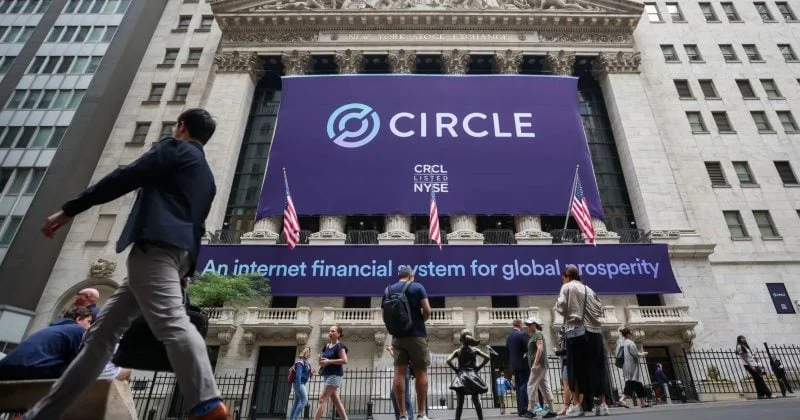
The Office of the Comptroller of the Currency (OCC) has officially granted Circle Internet Financial, the issuer of the USD Coin (USDC) stablecoin, a charter to operate as a national digital currency bank. This landmark decision represents a watershed moment for the cryptocurrency industry, marking the first time a major stablecoin issuer has been fully integrated into the federal banking system. The approval elevates Circle from a state-regulated money transmitter to a federally chartered financial institution, placing it on the same legal and regulatory footing as some of the largest commercial banks in the United States. For an industry that has long navigated a fragmented landscape of state-level oversight and regulatory ambiguity, Circle’s successful bid for a national charter signals a fundamental shift in how digital assets are governed and perceived within the broader financial ecosystem.
The transition to a national bank status is more than a branding exercise; it is a structural transformation of Circle’s business model. As a national bank, Circle will now operate under the direct supervision of the OCC, an independent bureau within the U.S. Department of the Treasury. This oversight brings with it a rigorous set of standards regarding capital adequacy, liquidity management, and risk mitigation. For USDC, which maintains a market capitalization of tens of billions of dollars, the charter provides a robust framework for reserve transparency and consumer protection that was previously managed through third-party audits and state-level disclosures.
The Strategic Importance of the National Bank Charter
To understand why this approval is a transformative event, one must look at the historical friction between "crypto-native" firms and the traditional banking sector. Historically, stablecoin issuers have operated as "shadow banks," performing functions similar to traditional deposit-taking institutions—such as holding reserves and facilitating payments—without the benefit of federal insurance or direct access to the central bank’s payment rails. By obtaining an OCC charter, Circle effectively bridges this gap.
The national bank charter allows Circle to bypass the cumbersome process of maintaining individual money transmitter licenses in all 50 U.S. states. This "federal preemption" simplifies the company’s compliance burden and provides a uniform regulatory standard across the country. Furthermore, the charter opens the door for Circle to eventually seek direct access to the Federal Reserve’s master account system. While the OCC charter does not automatically grant access to the Fed’s payment rails, it is a necessary prerequisite. Direct access would allow Circle to settle transactions in central bank money, reducing reliance on intermediary commercial banks and potentially lowering the costs and increasing the speed of cross-border USDC transactions.
A Chronology of Circle’s Regulatory Ambitions
Circle’s path to this charter has been a multi-year endeavor characterized by strategic pivots and a consistent "regulation-first" philosophy. Founded in 2013, Circle initially focused on peer-to-peer payments before launching USDC in 2018 in partnership with Coinbase. From the outset, Circle positioned USDC as the "compliant" alternative to other stablecoins, focusing on transparency and U.S. dollar reserves held in regulated financial institutions.
In July 2021, Circle first announced its intention to become a "full-reserve national digital currency bank." This announcement came at a time when the OCC, then under the leadership of Acting Comptroller Brian Brooks, had begun issuing interpretive letters suggesting that national banks could provide custody services for digital assets and use stablecoins for payment activities. However, the regulatory environment cooled significantly following the collapse of several major crypto firms in 2022 and early 2023.
The most critical test for Circle occurred in March 2023, during the regional banking crisis. When Silicon Valley Bank (SVB) failed, it was revealed that Circle held approximately $3.3 billion of its USDC reserves at the institution. This led to a temporary "de-pegging" event where USDC’s value dipped below $1.00. While Circle successfully navigated the crisis by moving reserves to BNY Mellon and utilizing the Federal Reserve’s emergency liquidity programs, the event underscored the risks of relying on commercial banks for reserve management. This incident likely accelerated Circle’s resolve to secure a national charter, seeking the stability and direct federal oversight that would prevent such vulnerabilities in the future.
Comparative Analysis: Circle vs. Tether
The granting of a national charter creates a stark divergence between Circle and its primary competitor, Tether (USDT). Tether remains the largest stablecoin by market capitalization but operates largely outside the primary U.S. regulatory perimeter. Domiciled in the British Virgin Islands and managed by a complex web of entities, Tether has frequently faced scrutiny regarding the composition of its reserves and its lack of a comprehensive federal audit.
While Tether dominates liquidity in offshore exchanges and emerging markets, Circle’s new status as a national bank targets the "onshore" institutional market. Institutional investors, including hedge funds, asset managers, and corporate treasuries, operate under strict fiduciary mandates that often require them to deal only with regulated counterparties. A federally chartered bank is a "gold standard" for these entities. By securing this charter, Circle is positioning USDC as the primary liquidity vehicle for the institutionalization of decentralized finance (DeFi) and the tokenization of real-world assets.
Data from recent market cycles shows that during periods of high volatility, there is often a "flight to quality" where capital moves from less transparent stablecoins into USDC. With the OCC’s seal of approval, this trend is expected to intensify, potentially shifting the market share of the $150 billion+ stablecoin industry toward regulated, U.S.-based issuers.
Implications for Institutional Adoption and Reserve Management
The OCC charter mandates that Circle adhere to bank-level scrutiny of its reserves. Currently, USDC reserves are comprised primarily of short-dated U.S. Treasuries and cash deposits. Under OCC supervision, the management of these reserves will be subject to regular examinations and strict "stress testing" scenarios. This level of oversight is designed to ensure that even in a "black swan" market event, Circle can meet redemption demands without delay.
Furthermore, the involvement of major financial institutions like BlackRock—which manages the Circle Reserve Fund—highlights the growing intersection between traditional finance and digital currencies. As a national bank, Circle can more seamlessly integrate with these partners to offer sophisticated financial products. This might include interest-bearing accounts (subject to further regulatory clarity), automated treasury management for corporations, and more efficient settlement layers for global trade.
For the broader market, a federally chartered stablecoin issuer provides a reliable "on-ramp" and "off-ramp" for capital. It reduces the systemic risk often associated with "unbacked" or "algorithmic" stablecoins, which have historically caused significant market disruptions.
Legislative Context and Policy Reactions
The OCC’s decision arrives as the U.S. Congress continues to debate the "Clarity for Stablecoins Act" and other related legislation. Lawmakers have been divided on whether stablecoin issuers should be regulated like banks or under a new, bespoke framework. By granting Circle a bank charter under existing law, the OCC has established a "real-world" precedent that may influence the direction of future legislation.
Reactions from Capitol Hill have been mixed. Proponents of the move argue that bringing stablecoins into the federal banking fold is the best way to protect consumers and maintain the dominance of the U.S. dollar in the digital age. They see Circle’s charter as a victory for American innovation. Conversely, some critics express concern that granting bank charters to crypto-native firms could introduce "contagion" risks into the traditional banking system. They argue that the high-speed, 24/7 nature of crypto markets could lead to "digital bank runs" that are faster and more destructive than traditional ones.
The OCC has countered these concerns by emphasizing that Circle will be held to the highest standards of safety and soundness. The charter likely includes specific conditions regarding capital buffers and "living wills"—plans for an orderly resolution in the event of insolvency—to ensure that the broader financial system remains insulated from potential shocks.
Operational Risks and the Burden of Compliance
While the national bank charter is a significant victory, it also introduces substantial operational challenges for Circle. Operating as a bank is fundamentally different from operating as a technology company. Circle must now implement comprehensive Anti-Money Laundering (AML) and Know Your Customer (KYC) protocols that meet federal banking standards. This includes sophisticated monitoring of on-chain transactions to prevent illicit finance, a task that is notoriously difficult given the pseudonymous nature of blockchain technology.
Moreover, being a bank means playing by rules that were not originally designed for programmable money. The OCC’s supervision framework will need to adapt to handle things like smart contract audits and the technical risks associated with different blockchain protocols (e.g., Ethereum vs. Solana). If the OCC imposes overly restrictive constraints on Circle’s ability to interact with DeFi protocols, the company might find itself at a competitive disadvantage compared to offshore entities that operate with more flexibility.
There is also the matter of capital requirements. Traditional banks are required to hold a certain amount of capital against their assets. For a "full-reserve" bank like Circle, which does not engage in fractional-reserve lending, the calculation of these requirements is a subject of ongoing discussion between the company and regulators. High capital requirements could impact Circle’s profitability, as it would need to keep more cash on the sidelines rather than investing it in yield-generating Treasuries.
Conclusion: A New Era for Digital Finance
The approval of Circle as a national digital currency bank marks the end of the "Wild West" era for major stablecoin issuers and the beginning of a more mature, regulated phase of the digital asset economy. It represents a significant step toward the "tokenization of the dollar," where the efficiency of blockchain technology is combined with the stability and trust of the U.S. federal banking system.
As Circle begins its operations under the OCC charter, the financial world will be watching closely. Success could pave the way for other digital asset firms to seek similar status, leading to a new class of "narrow banks" that specialize in payments and digital settlement. Failure, or excessive operational friction, could embolden critics who believe that crypto and traditional banking should remain separate.
For now, the message from the OCC is clear: the U.S. regulatory framework is capable of evolving to include digital innovations, provided those innovations are willing to submit to the rigors of federal oversight. For Circle, the journey from a startup to a national bank is complete, but the challenge of defining the future of money has only just begun. The integration of USDC into the core of the American financial system may well be remembered as the moment the "crypto" industry finally became part of the "finance" industry.