An experienced cryptocurrency trader, identified only by the handle @ika_xbt on social media, has lost their entire digital asset portfolio, estimated to be worth over $400,000, after falling victim to a meticulously crafted phishing campaign. The scam, which leverages sponsored advertisements on Google, tricked the trader into interacting with a fraudulent website that bore an uncanny resemblance to the legitimate Uniswap decentralized exchange (DEX). This incident highlights a growing and persistent threat within the cryptocurrency ecosystem, where malicious actors exploit user trust in established search engines to conduct large-scale financial fraud.
The phishing operation, which gained prominence on May 26th, employed cloned versions of the Uniswap interface, strategically promoted through Google Search ads. Initial investigations by blockchain security analysts have identified two cryptocurrency wallets associated with the perpetrators, collectively holding approximately 146 Ether (ETH), valued at roughly $306,000 at the time of their discovery. However, the total value of funds siphoned from victims, including @ika_xbt’s substantial loss, is believed to exceed the $400,000 mark. This incident is not an isolated event but rather part of a disturbing trend that has seen significant financial losses for DeFi users.
The Mechanics of Deception: A Digital Trojan Horse
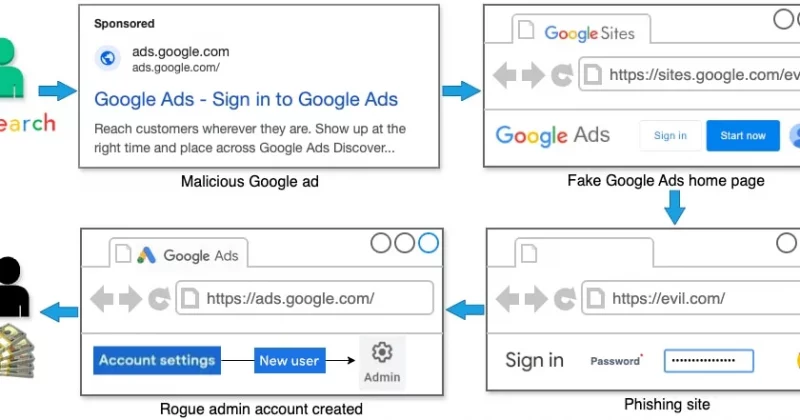
The modus operandi of this sophisticated scam is disturbingly simple yet highly effective. Attackers meticulously purchase sponsored advertisements on Google, specifically targeting the highly sought-after keyword "Uniswap." When unsuspecting users initiate a search for the popular decentralized exchange, the fraudulent advertisement appears prominently at the top of the search results, often eclipsing the genuine organic listing. The deceptive brilliance of the scam lies in the near-perfect replication of the Uniswap website’s visual interface and user experience. Every element, from the branding and layout to the interactive features, is designed to instill confidence and bypass critical user scrutiny.
Once a user lands on the phishing site and proceeds to connect their cryptocurrency wallet, the critical juncture is reached. The scam’s architects have designed the malicious interface to prompt users to approve a transaction. This approval, often disguised as a routine interaction necessary for accessing certain features or updating wallet information, is, in reality, a direct authorization for the attackers’ smart contract to drain the connected wallet of all accessible assets. The immutable and irreversible nature of blockchain transactions means that once this approval is granted and the transaction is executed, there is no recourse. Unlike traditional financial systems, there is no customer service hotline to contact, no chargeback mechanism to initiate, and crucially, no undo button to reverse the devastating consequences.
In the specific case of @ika_xbt, a single, seemingly innocuous approval was sufficient to liquidate their entire portfolio. It is imperative to understand that this attack did not exploit any vulnerabilities within Uniswap’s underlying smart contracts or its core infrastructure. The protocol itself remained secure and uncompromised. Instead, the scam masterfully exploited a fundamental human vulnerability: trust in the perceived legitimacy of search engine results. Users are conditioned to believe that sponsored ads, especially on a platform as ubiquitous as Google, are vetted and reliable. This misplaced trust becomes the primary vector for the attack.
A Recurring Nightmare: The Escalation of Search Engine Phishing
The Security Alliance, widely known as SEAL, has been tracking this alarming trend and has documented a significant surge in Google Search phishing campaigns targeting various cryptocurrency protocols since March 2026. The playbook remains remarkably consistent: attackers invest in paid advertisements, meticulously clone the interfaces of trusted decentralized finance (DeFi) platforms, and patiently await users who, in their quest for legitimate services, inadvertently connect their digital wallets to malicious sites.
This pattern of deception has resulted in substantial financial losses. As recently as February 2026, similar phishing attacks perpetrated through Google sponsored ads were responsible for six-figure losses. Even more alarmingly, in July 2025, a comparable scheme orchestrated through search engine manipulation led to an staggering $1.2 million in stolen cryptocurrency. These figures underscore the sheer scale and profitability of these operations for malicious actors.
Prominent figures within the cryptocurrency space have voiced their frustration and concern over this persistent issue. Hayden Adams, the founder of Uniswap, has been a vocal critic, repeatedly condemning search platforms for their perceived inaction and insufficient measures to combat fraudulent advertisements. His public statements reflect a broader sentiment of disappointment and a call for greater accountability from technology giants that host these deceptive campaigns. These concerns are not new and have been amplified following numerous earlier incidents of a similar nature.
Protecting Yourself: Essential Safeguards for DeFi Investors
The escalating threat posed by these sophisticated phishing attacks necessitates a proactive and informed approach from cryptocurrency investors. While the decentralized nature of blockchain offers significant advantages, it also strips away the traditional safety nets present in conventional finance.
The single most effective and cost-efficient defense against this type of attack is remarkably simple: bookmark the correct, official URLs for all decentralized finance protocols you regularly use. This practice requires minimal effort – mere seconds to implement – and costs absolutely nothing. By directly accessing these bookmarked sites, users bypass the need to rely on search engine results, thereby eliminating the risk of clicking on a deceptive sponsored ad.
For users employing hardware wallets, there is a partial advantage. Many reputable hardware wallets incorporate a crucial security feature: requiring explicit on-device confirmation of transaction details before execution. This provides a vital final checkpoint, allowing users to meticulously review the proposed transaction and identify any discrepancies or malicious intent before irrevocably approving it. However, it is critical to emphasize that this safeguard is not foolproof. Even with hardware wallet protection, the user must remain vigilant and diligently review the information presented on the device. A hasty or inattentive confirmation can still lead to a compromise.
The inherent characteristic of blockchain technology – the irreversibility of transactions – transforms into its most significant liability in scenarios like these. Traditional financial systems have developed intricate fraud protection mechanisms, including chargebacks, insurance policies, and dispute resolution processes, precisely because human error is an unavoidable reality. These safeguards are designed to mitigate the impact of mistakes, negligence, or outright fraud. DeFi, by its very design, operates without these established safety nets. This lack of traditional recourse places an immense burden of responsibility on the individual user to remain educated, vigilant, and to implement robust security practices.
The ongoing proliferation of these sophisticated phishing schemes, particularly those leveraging the perceived trustworthiness of major search engines, serves as a stark reminder of the evolving threat landscape in the digital asset space. As the cryptocurrency market matures and attracts a broader range of investors, the onus is on both the platforms facilitating these transactions and the users themselves to adapt and implement stringent security protocols to safeguard against financial loss. The future of secure DeFi participation hinges on a collective commitment to education, vigilance, and the adoption of best-in-class security practices.