A seasoned cryptocurrency trader, identified by the handle @ika_xbt, has become the latest victim of a devastating phishing campaign, losing their entire digital asset portfolio, estimated to be worth over $400,000, after falling prey to a meticulously crafted Google advertisement. The ad, which mimicked the official Uniswap website with uncanny accuracy, led the trader directly into a trap designed to drain their funds. This incident, which surfaced around May 26th, highlights a persistent and growing threat within the decentralized finance (DeFi) ecosystem, where trust in seemingly legitimate search results can have catastrophic financial consequences.
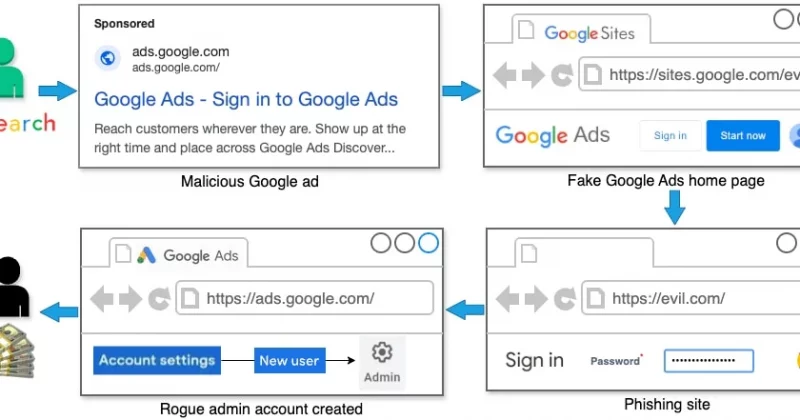
The sophisticated phishing operation leveraged Google Search ads to intercept users actively seeking access to Uniswap, one of the largest and most widely used decentralized exchanges. By purchasing sponsored ad placements for the keyword "Uniswap," the perpetrators ensured their fraudulent link appeared prominently at the top of search results, often above the genuine organic listing. This deceptive strategy exploits the user’s immediate need to access the platform, potentially bypassing critical verification steps.
Upon clicking the malicious ad, users were directed to a website that was an almost perfect replica of the real Uniswap interface. The visual fidelity was so high that it would be difficult for even a discerning user to spot the discrepancies. The critical moment of vulnerability occurred when users, believing they were interacting with the legitimate platform, connected their cryptocurrency wallets and subsequently approved a transaction. This single approval, granted under the false premise of a legitimate DeFi interaction, empowered the malicious smart contract to siphon any accessible assets from the compromised wallet.
The stark reality of blockchain technology, where transactions are immutable and irreversible, means there is no recourse once funds have been transferred. Unlike traditional financial systems that offer fraud protection, chargebacks, and customer service, the decentralized nature of cryptocurrency leaves users exposed to the full consequences of their actions. In @ika_xbt’s case, a single wallet connection and transaction approval resulted in the complete liquidation of their substantial portfolio. It is crucial to note that this attack did not exploit any vulnerabilities within Uniswap’s smart contracts or underlying infrastructure. The protocol itself remained secure; the compromise lay in the manipulation of user trust and the deceptive use of search engine advertising.
The Anatomy of the Scam: Exploiting Trust in Search
The modus operandi of this phishing campaign is deceptively simple yet highly effective. Attackers strategically bid on high-traffic keywords like "Uniswap" on Google Search. When users, eager to engage with DeFi services, perform these searches, the fraudulent ad, designed to look indistinguishable from the legitimate link, is presented. The illusion is further solidified by the cloned website, which replicates the user interface, branding, and even the operational flow of the real Uniswap platform.
The critical juncture for victims is the wallet connection and subsequent transaction approval. DeFi platforms require users to grant permissions for smart contracts to interact with their wallets, a necessary step for trading, staking, or providing liquidity. In this phishing scenario, the malicious smart contract, masquerading as a legitimate Uniswap function, requests these permissions. Once granted, the contract is authorized to drain the wallet of all available funds or a pre-determined maximum amount. The irreversible nature of blockchain transactions means that once this approval is executed, the funds are effectively lost forever.
The Security Alliance, a collective dedicated to safeguarding the crypto space, has observed a disturbing surge in these Google Search-based phishing campaigns targeting various DeFi protocols since March 2026. This tactic has become a recurring and increasingly successful method for cybercriminals to defraud investors. The playbook remains consistent: acquire sponsored ad space on search engines, create a convincing replica of a trusted DeFi platform, and await unsuspecting users to connect their wallets.
A Pattern of Devastating Losses
This is not an isolated incident. Phishing attacks facilitated by Google-sponsored ads have resulted in significant financial losses for crypto investors on multiple occasions. As recently as February 2026, similar schemes led to six-figure losses. A particularly egregious example occurred in July 2025, when a comparable attack orchestrated through Google ads netted attackers an astonishing $1.2 million. The consistent nature of these attacks underscores a systemic failure to adequately address the problem at its source.
Hayden Adams, the founder of Uniswap, has been a vocal critic of search platforms’ perceived inaction against fraudulent advertisements. His public condemnations highlight the frustration felt by many in the crypto community who believe that these platforms are not doing enough to protect users from scams that directly leverage their advertising services. These concerns have been amplified following multiple incidents, yet the problem persists.
Chronology of the Latest Incident and Broader Trend
- May 26, 2026 (approximate surfacing): The phishing campaign targeting Uniswap users through Google ads gains significant attention following the loss of @ika_xbt’s $400K portfolio.
- Discovery of Attacker Wallets: Investigations reveal two wallets linked to the attackers holding a combined 146 ETH, valued at approximately $306,000 at the time of discovery. Total stolen funds are estimated to exceed $400,000.
- March 2026 onwards: The Security Alliance (SEAL) notes a substantial increase in Google Search phishing campaigns targeting crypto protocols.
- February 2026: Six-figure losses reported from similar Google Search phishing attacks.
- July 2025: A comparable scheme results in $1.2 million being stolen.
What This Means for Investors: Navigating the Minefield
The vulnerability exposed by this attack underscores the critical need for enhanced vigilance and proactive security measures among cryptocurrency investors. The irreversible nature of blockchain transactions amplifies the consequences of such scams, making prevention paramount.
1. Bookmark Trusted URLs: The most straightforward and effective defense against this type of phishing attack is to bookmark the official URLs of the DeFi protocols you frequently use. By bypassing search engines entirely and navigating directly to a bookmarked site, users eliminate the risk of encountering a fraudulent ad. This simple action costs nothing and takes mere seconds, yet it significantly reduces exposure.
2. Hardware Wallets as a Partial Safeguard: Users employing hardware wallets, such as Ledger or Trezor, possess a degree of protection. Many hardware wallets necessitate explicit on-device confirmation of transaction details before execution. This serves as a critical final checkpoint, allowing users to scrutinize the transaction’s purpose and recipient before authorizing it. However, this is not a foolproof solution. Investors must still exercise diligence and carefully review the information presented on the hardware wallet’s screen, as a hasty confirmation could still lead to a loss if the user doesn’t fully understand what they are signing.
3. The Double-Edged Sword of Blockchain Immutability: The very principle that makes blockchain technology revolutionary – its immutability – also renders it a perilous landscape for individual investors when mistakes or malicious actions occur. Traditional financial systems have evolved to include robust fraud detection, chargeback mechanisms, and consumer protection insurance precisely because human error is an inherent part of any system. DeFi, by design, foregoes these centralized safety nets, placing the onus of security almost entirely on the individual user.
Broader Implications for the DeFi Ecosystem
The persistent threat of Google ad-based phishing attacks poses a significant challenge to the broader adoption and trust in DeFi. While the underlying technology of decentralized exchanges like Uniswap is sound, the gateway through which many users access these platforms – search engines – is being compromised. This erodes confidence and can deter new entrants who may be understandably wary of the risks involved.
The reliance on search engines as a primary discovery tool for DeFi services creates a critical vulnerability. The fact that platforms with significant advertising revenue potential are seemingly slow to implement stringent measures against demonstrably fraudulent ads raises questions about their commitment to user safety versus profit motives. The crypto community, including prominent figures like Hayden Adams, will likely continue to pressure these platforms for more robust content moderation and enforcement policies.
Moving forward, the DeFi space will need to explore more decentralized and resilient methods for protocol discovery and user onboarding. Innovations in decentralized identity, secure browsing extensions, and community-driven verification systems could offer long-term solutions. However, in the interim, the responsibility rests heavily on individual investors to adopt stringent personal security practices, recognizing that in the world of decentralized finance, vigilance is not just a recommendation; it is a necessity. The loss of @ika_xbt’s substantial portfolio serves as a stark, expensive reminder of this critical reality.