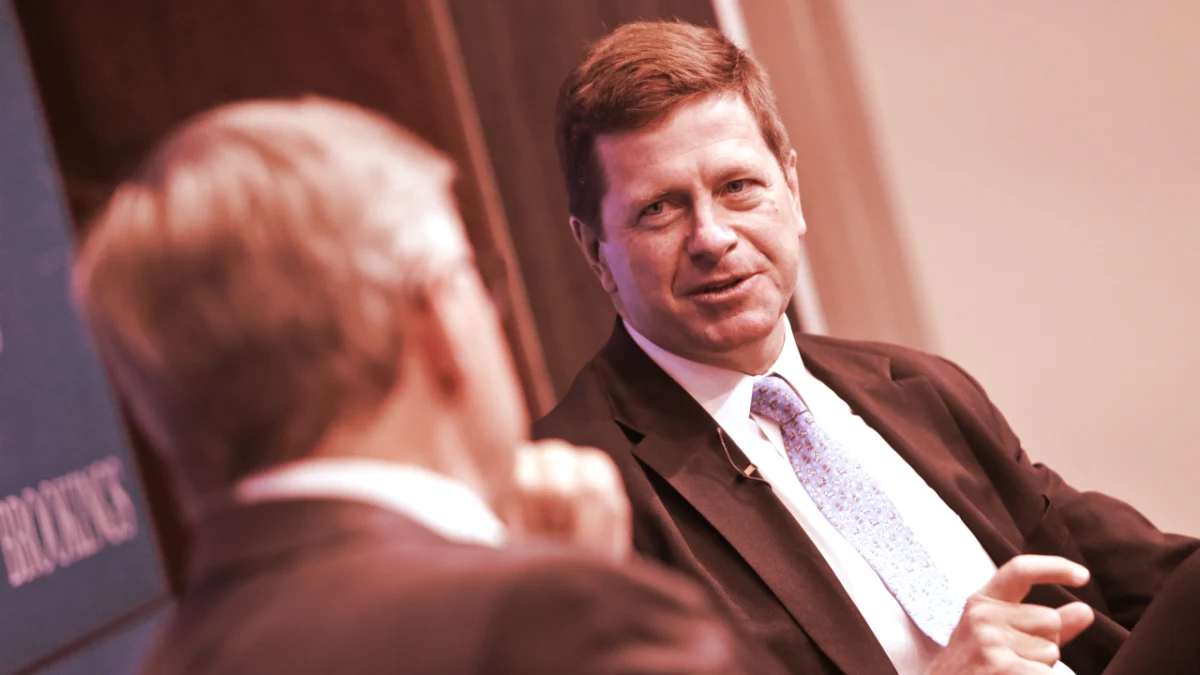
The man who spearheaded the Securities and Exchange Commission’s (SEC) aggressive crackdown on the cryptocurrency industry during the previous administration is now poised to direct Washington’s comprehensive approach to artificial intelligence. In a significant move announced on Truth Social on Sunday, President Donald Trump revealed the formation of a "Super Intelligence Force," a high-level task force explicitly charged with synchronizing the federal government’s multifaceted efforts to ensure the United States maintains its preeminence in the rapidly evolving field of artificial intelligence. This initiative underscores a clear intention to centralize and accelerate national AI strategy under the direct oversight of the executive branch.
The Dawn of the "Super Intelligence Force"
President Trump’s announcement, delivered through his preferred social media platform, outlined the immediate establishment of this new federal body. The term "Super Intelligence," frequently employed by Trump, reflects his administration’s distinctive framing of the advanced technological frontier, often implying a focus on highly autonomous and powerful AI systems that could potentially surpass human cognitive abilities. At the helm of this formidable new force is Jay Clayton, currently serving as Director of National Intelligence, who has been widely reported as the administration’s newly designated "AI czar." His appointment immediately signals a regulatory-heavy, enforcement-oriented philosophy likely to shape the nation’s AI trajectory, drawing parallels to his controversial tenure at the SEC.
The "Super Intelligence Force" is designed to act as a pivotal coordinating body, bridging various governmental agencies and external stakeholders. According to Trump’s statement, its expansive mandate includes coordinating federal engagement with a broad spectrum of entities: consumers, public interest groups, religious organizations, critical infrastructure providers, and the very AI companies driving innovation. This wide-ranging scope suggests an intent to address not only the technical and economic aspects of AI but also its profound societal, ethical, and security implications.
Joining Clayton in this critical endeavor are several other key figures from across the federal apparatus: Federal Trade Commission Chairman Andrew Ferguson, Under Secretary of War for Research and Engineering Emil Michael, and Office of Personnel Management Director Scott Kupor. This diverse composition, drawing from regulatory, defense, and human resources sectors, highlights the administration’s perception of AI as a technology with cross-cutting impacts requiring a multidisciplinary approach to governance. The task force is structured to report directly to President Trump and White House chief of staff Susie Wiles, indicating its strategic importance and direct line to the highest levels of executive authority.
A New Frontier: Why a Dedicated AI Task Force?
The creation of the "Super Intelligence Force" comes amidst a surging global race for AI dominance, particularly between the United States and strategic competitors like China. Experts widely acknowledge that leadership in AI is not merely an economic advantage but a critical component of national security, military superiority, and geopolitical influence in the 21st century. The sheer scale of investment, research, and development in AI worldwide has accelerated exponentially in recent years. Global spending on AI is projected to reach hundreds of billions of dollars annually within the next decade, with nations vying for talent, intellectual property, and market share.
For the United States, maintaining its technological edge in AI is seen as paramount to future economic prosperity and strategic independence. The establishment of a dedicated task force, as opposed to relying on existing inter-agency committees, underscores a perceived urgency and the need for a more cohesive, top-down strategy. This move can be seen as a direct response to the multifaceted challenges posed by AI, including the rapid pace of technological advancement, the ethical dilemmas associated with autonomous systems and data privacy, and the potential for misuse in areas like disinformation and cyber warfare.
President Trump’s announcement follows what he previously termed the "Historic White House Accord on Super Intelligence." This accord, signed by leaders of major technology companies including OpenAI, Google, and Nvidia, served as a foundational step, with these industry giants "confirming their responsibilities to the American People" regarding the development and deployment of AI. While the specific commitments within this accord were described as "morally binding" rather than legally enforceable, it signaled an early effort by the administration to engage with the private sector and establish a framework for responsible AI innovation. The subsequent formation of the "Super Intelligence Force" suggests a progression from voluntary industry commitments to a more formalized, federally coordinated regulatory and strategic framework. This trajectory reflects a growing consensus among policymakers globally that AI, much like nuclear power or biotechnology, requires dedicated governmental oversight and strategic direction.
Jay Clayton: From Crypto Czar to AI Architect
The appointment of Jay Clayton as the de facto "AI czar" is arguably the most striking element of the new initiative, drawing immediate attention due to his prominent and often polarizing record in regulating the cryptocurrency space. Clayton’s career trajectory, marked by significant roles in both finance and government, provides crucial context for understanding the potential direction of U.S. AI policy.
Early Career and SEC Tenure:
Before his foray into government, Clayton was a distinguished lawyer with Sullivan & Cromwell, specializing in mergers and acquisitions and capital markets. His deep understanding of traditional finance profoundly influenced his approach to the burgeoning crypto market when he was appointed SEC Chair by President Trump in 2017. During his tenure, Clayton became synonymous with the SEC’s "regulation-by-enforcement" strategy in the crypto sector. This approach involved bringing legal actions against companies and projects deemed to be violating existing securities laws, rather than issuing clear, forward-looking guidance specific to digital assets.
Under Clayton’s leadership, the SEC initiated a staggering 57 cases against various crypto firms, initial coin offerings (ICOs), and other blockchain projects. He frequently touted this tally as a measure of his agency’s commitment to investor protection as he departed the SEC. For the crypto industry, this period was characterized by uncertainty and frustration, as many argued that the SEC’s actions stifled innovation and failed to provide the necessary regulatory clarity for legitimate businesses to thrive. Critics pointed to the lack of bespoke legislation or clear rules, forcing projects to navigate a complex legal landscape with little foresight.
His most consequential move against the crypto industry came at the very end of his term. In December 2020, in one of his final acts as chair, Clayton’s SEC filed a landmark lawsuit against Ripple Labs, the company behind the XRP digital asset. The SEC alleged that Ripple had engaged in the unregistered sale of XRP as a security, seeking $1.3 billion in damages. This case became a foundational template for many subsequent lawsuits brought by the SEC under his successor, Gary Gensler, against other major token issuers and cryptocurrency exchanges. The Ripple lawsuit, which dragged on for years, profoundly impacted the market for XRP and sent shockwaves through the entire crypto ecosystem, underscoring the formidable power of the SEC’s enforcement arm. It ignited a fierce debate about what constitutes a "security" in the context of digital assets, a question that continues to challenge regulators and innovators alike.
Post-SEC Journey and Shifting Sands:
Clayton’s relationship with the crypto industry became more nuanced after his departure from the SEC. In 2021, he joined One River Asset Management as a crypto adviser, a move that raised eyebrows given his previous enforcement actions. He also served on the advisory board of Fireblocks, a prominent crypto custody provider. These roles led some industry observers to suggest a perceived "zigzag" in his stance, or at least a willingness to engage with the very industry he had so rigorously pursued.

His return to government service under Trump further highlighted his regulatory background. In a previous attempt by the administration, Trump had tried to install Clayton atop the U.S. Attorney’s office in Manhattan in 2020 while he was still leading the SEC. Subsequently, during a later period of the Trump administration, Clayton was appointed interim U.S. Attorney for the Southern District of New York (SDNY). In this role, his office notably pushed ahead with the high-profile prosecution of Tornado Cash developer Roman Storm, a case that underscored the government’s increasing focus on decentralized finance (DeFi) and privacy-enhancing technologies within the crypto space. This demonstrated a consistent theme in Clayton’s career: a propensity for robust enforcement against perceived illicit or non-compliant activities, regardless of the technological domain. His track record suggests a leader who prioritizes establishing clear boundaries and accountability, often through direct legal action, a philosophy he is now expected to bring to the rapidly evolving AI landscape.
The Mandate: Navigating the Complexities of AI Governance
The "Super Intelligence Force" faces an incredibly complex and dynamic mandate, requiring coordination across an unprecedented array of sectors and concerns. The specified areas of engagement—consumers, public interest groups, religious organizations, critical infrastructure providers, and AI companies—each present unique challenges and opportunities.
Consumers and Public Interest: Addressing the concerns of consumers and public interest groups will be crucial for building trust and ensuring AI development aligns with societal values. Key issues include data privacy (how AI systems collect, process, and use personal data), algorithmic bias (ensuring AI systems do not perpetuate or amplify existing societal biases), and the broader societal impact of AI, such as job displacement and the spread of misinformation. The task force will need to balance the push for innovation with the imperative to protect individual rights and well-being.
Religious Organizations: The inclusion of religious organizations underscores a recognition of the profound ethical and moral questions raised by advanced AI. Discussions around the nature of consciousness, the definition of humanity in an age of intelligent machines, and the ethical implications of creating autonomous systems will likely fall within this purview. Engaging with these groups could help shape a moral compass for AI development, ensuring that technological progress is guided by broader human values.
Critical Infrastructure Providers: The integration of AI into critical infrastructure—ranging from energy grids and transportation networks to financial systems and healthcare—presents immense opportunities for efficiency but also significant risks. The task force will need to focus on cybersecurity to protect AI-powered systems from attacks, ensure the resilience of these systems against failures, and develop standards for autonomous systems that operate in vital sectors. The potential for AI to enhance or disrupt national security infrastructure will be a paramount concern.
AI Companies: Perhaps the most direct engagement will be with the AI companies themselves. The task force’s role will be to foster an environment that encourages innovation and investment, ensuring the U.S. remains globally competitive, while simultaneously establishing guardrails for responsible development. This involves striking a delicate balance between avoiding overly burdensome regulations that could stifle growth and implementing necessary oversight to prevent catastrophic risks or societal harm. Areas of focus might include promoting transparency in AI models, developing industry-wide safety standards, and encouraging ethical design principles. The "Historic White House Accord" serves as a precedent for direct collaboration, which the task force will likely seek to expand and formalize.
Broader Implications and Anticipated Reactions
The formation of the "Super Intelligence Force" and Jay Clayton’s appointment carry significant implications across various domains, and immediate reactions from stakeholders are anticipated.
For the AI Industry: The industry’s response will likely be mixed. On one hand, a centralized federal strategy could bring much-needed clarity and potentially streamline funding for AI research and development. On the other hand, Clayton’s "regulation-by-enforcement" background might cause apprehension among AI companies, particularly startups, who fear stringent and retroactive regulatory actions. Experts anticipate a push for clearer guidelines and proactive engagement from the task force to avoid stifling innovation. There will be intense scrutiny on whether the task force leans towards aggressive enforcement or a more collaborative, standards-based approach.
For the Crypto Sector: While the task force’s primary focus is AI, Clayton’s deep history in crypto regulation means the two fields could intersect. Industry observers might speculate whether AI tools could be leveraged for enhanced crypto enforcement, or if the task force might draw parallels between the regulatory challenges of novel decentralized technologies (crypto) and rapidly evolving autonomous systems (AI). The crypto community will be watching closely for any indirect signals or policy spillover effects, especially given the ongoing debate about appropriate regulatory frameworks for digital assets.
National Security and Geopolitics: The "Super Intelligence Force" is a clear signal of the U.S.’s commitment to winning the global AI race. This will likely be welcomed by national security experts who advocate for strong governmental leadership in this domain. The task force’s work will have direct implications for defense capabilities, intelligence gathering, and cyber warfare strategies, solidifying the U.S.’s position against rival nations. This move underscores the understanding that AI leadership is synonymous with global leadership.
Ethical and Societal Concerns: Civil liberties groups and AI ethics advocates will likely scrutinize the task force’s approach to issues like privacy, bias, and accountability. There will be calls for robust public participation and transparency in the decision-making process to ensure that AI development benefits all segments of society and adheres to democratic values. The inclusion of "public interest groups" and "religious organizations" suggests an intent to address these broader concerns, but the actual implementation will be key.
Political Landscape: The announcement of such a high-profile initiative positions AI as a central policy plank for the administration. It will likely play into broader political narratives, emphasizing technological leadership and national security, especially in an election cycle. The success or perceived failure of this task force could become a significant talking point in future political discourse.
Conclusion
The establishment of the "Super Intelligence Force" marks a pivotal moment in the United States’ approach to artificial intelligence, signaling a decisive shift towards a more coordinated and executive-led national strategy. With Jay Clayton, a figure known for his rigorous enforcement background in the crypto sector, at its helm, the task force is poised to navigate the complex interplay of innovation, regulation, ethics, and national security in the AI domain. While President Trump’s announcement on Truth Social did not spell out a precise mandate or timeline, the ambitious scope and high-profile leadership suggest that the "Super Intelligence Force" will be a central player in shaping the future of AI in America. The coming months will undoubtedly reveal more about its operational framework, specific policy directives, and the challenges it will face in balancing rapid technological advancement with responsible governance.