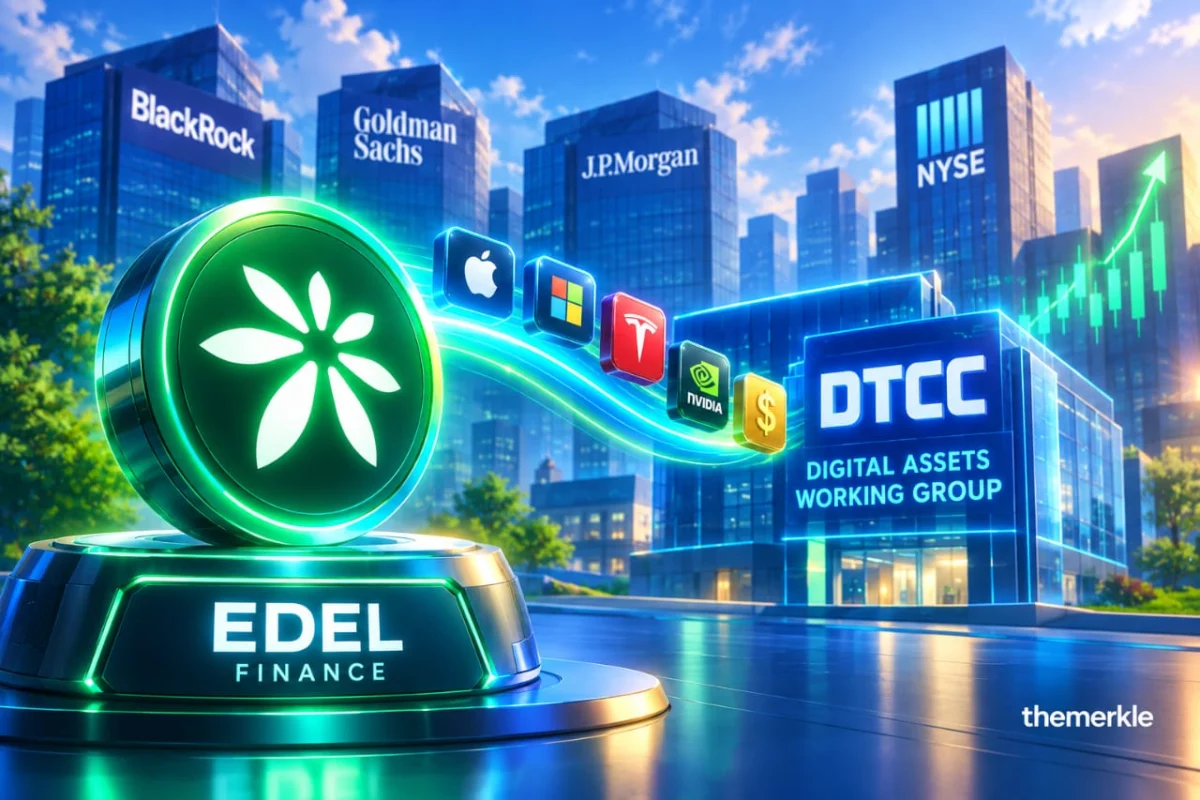
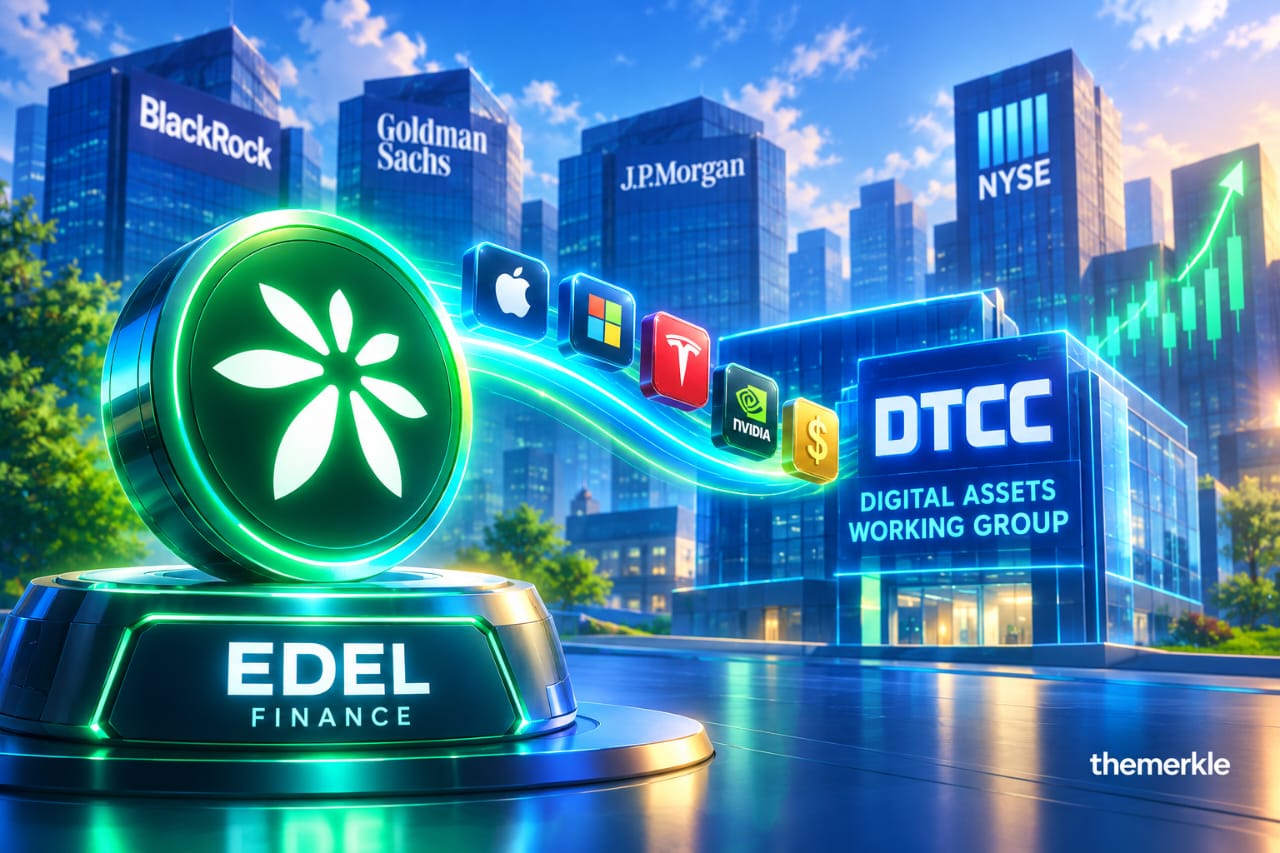
When Edel Finance and the nascent pioneers of decentralized finance (DeFi) initially embarked on their mission to revolutionize traditional capital markets, few within the industry could have envisioned a scenario where a specialized on-chain lending protocol would be granted access to the very heart of global clearing infrastructure. Yet, this improbable convergence has indeed materialized with Edel Finance’s significant inclusion in the Depository Trust & Clearing Corporation’s (DTCC) Digital Assets Solutions Industry Working Group. This strategic invitation marks a watershed moment, bridging the innovative capabilities of decentralized finance with the established, multi-trillion-dollar frameworks of Wall Street.
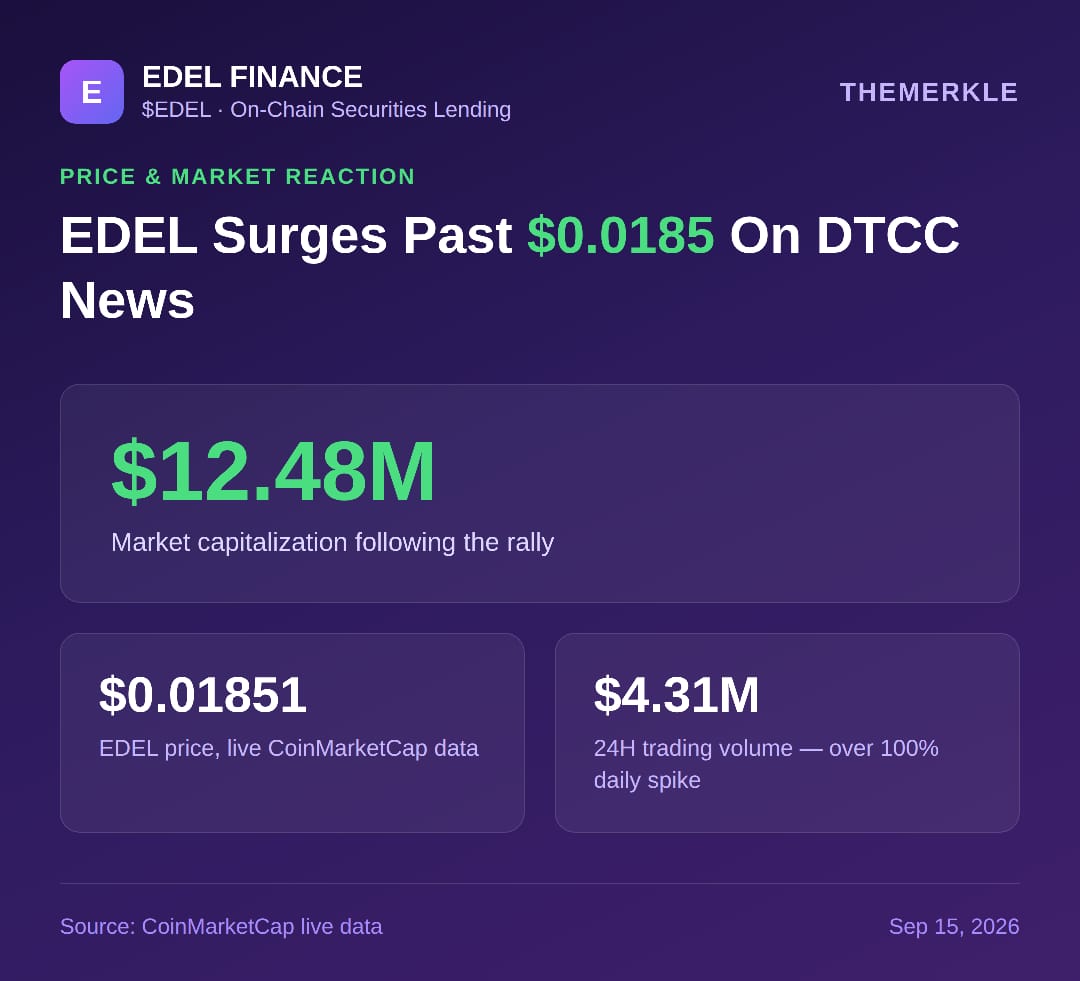
The announcement reverberated immediately across digital asset markets. According to live market data tracked on CoinMarketCap, the EDEL token experienced an immediate and substantial surge, climbing to $0.01851. This price appreciation propelled its market capitalization to an impressive $12.48 million, accompanied by a dramatic increase in trading activity, with daily volume spiking by over 100% to $4.31 million. While the immediate price rally naturally captured the attention of headline-chasers and speculative traders, the far more profound and consequential narrative lies in understanding why a protocol designed specifically for on-chain equity lending now finds itself positioned alongside institutional behemoths such as BlackRock, Goldman Sachs, JPMorgan, and the New York Stock Exchange within such a critical industry body.
The DTCC: Architect of Financial Stability and Its Digital Evolution
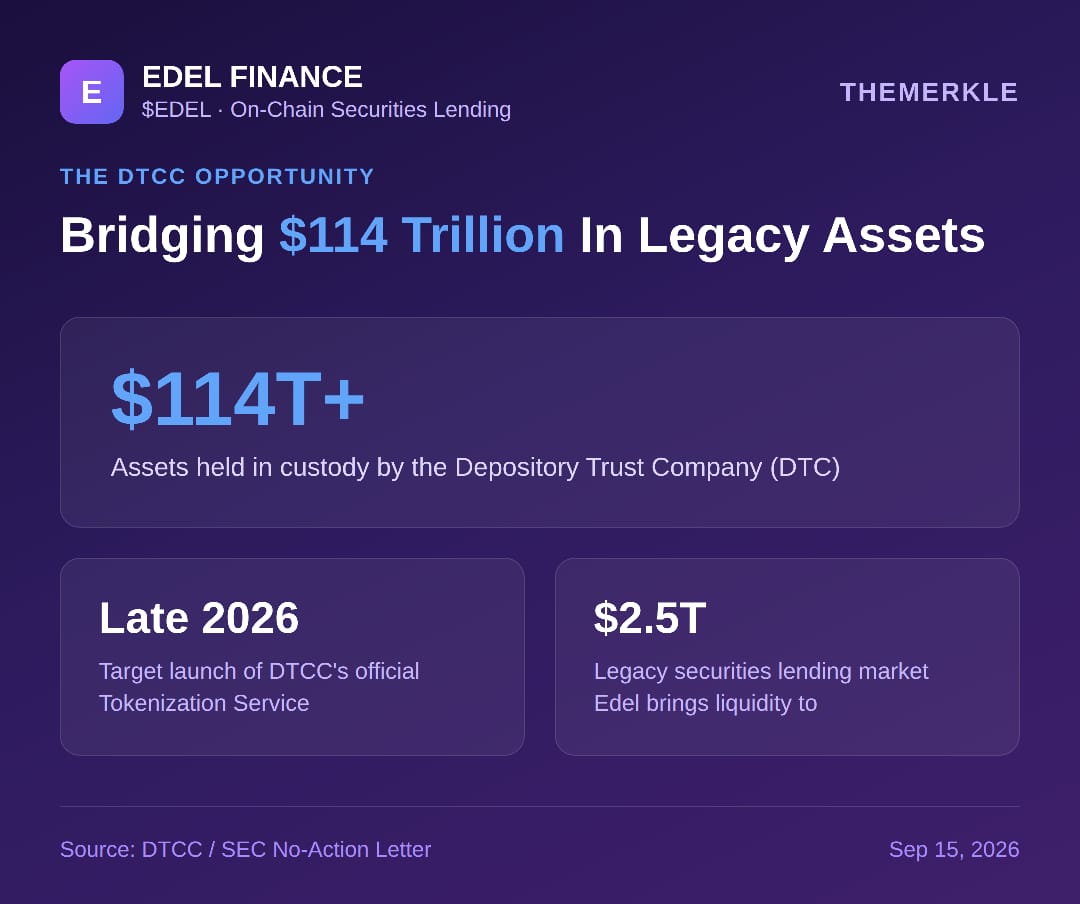
To fully comprehend the magnitude of Edel Finance’s involvement, one must first grasp the indispensable role of the Depository Trust & Clearing Corporation (DTCC) within the global financial ecosystem. As the premier post-trade market infrastructure for U.S. capital markets, the DTCC is not merely a participant but a foundational pillar. Its primary subsidiary, the Depository Trust Company (DTC), holds custody over an staggering $114+ trillion in securities, encompassing a vast array of equities, corporate and municipal bonds, and money market instruments. This immense figure underscores the DTCC’s critical function in safeguarding assets, reducing risk, and ensuring the efficient and secure settlement of transactions across the world’s largest capital market.
For decades, the DTCC has been synonymous with stability and reliability, processing millions of transactions daily and acting as the central clearinghouse that minimizes counterparty risk for its members. Its operations are vital for maintaining investor confidence and the smooth functioning of financial markets. However, recognizing the transformative potential of blockchain and distributed ledger technology (DLT), the DTCC embarked on a deliberate and measured journey into the digital asset space. This strategic pivot is not a sudden reaction but the culmination of years of research, pilot programs, and stakeholder engagement.
A pivotal moment in this evolution was the receipt of a No-Action Letter from the U.S. Securities and Exchange Commission (SEC) in November 2025. This regulatory green light authorized a regulated pilot program for tokenized security entitlements, effectively paving the way for the DTCC to actively explore and implement DLT-based solutions for traditional assets. Building on this regulatory clarity, the DTCC is now actively preparing to launch its official Tokenization Service in late 2026, a move poised to fundamentally reshape how traditional securities are issued, transferred, and managed.
The Genesis of the Digital Assets Solutions Industry Working Group
The DTCC’s approach to digital transformation is characterized by collaboration rather than isolation. Rather than developing its tokenization solutions in a vacuum, the corporation wisely established the Digital Assets Solutions Industry Working Group. This consortium was formed with a clear objective: to bring together a diverse array of stakeholders from across the financial spectrum – including leading global asset managers, custodians, broker-dealers, and, crucially, select innovative DeFi platforms – to collectively refine the methodologies for transitioning real-world equities, Treasury bills, and Exchange Traded Funds (ETFs) onto digital rails. The overarching goal is to achieve this transition without compromising the stringent regulatory compliance, security, and operational efficiency that underpin traditional capital markets.
The working group serves as a critical forum for dialogue, problem-solving, and standard-setting. Its members are tasked with addressing complex challenges such as interoperability between DLT networks and existing infrastructure, legal and regulatory considerations for tokenized assets, risk management in a decentralized environment, and the development of common industry best practices. The presence of financial titans like BlackRock, the world’s largest asset manager; Goldman Sachs and JPMorgan, two of the most influential investment banks; and the New York Stock Exchange, the emblem of traditional equity trading, underscores the gravity and strategic importance of this initiative. Their participation signals a collective commitment from Wall Street to explore, understand, and ultimately integrate digital assets into the core fabric of global finance.
Why Edel Finance Fits the Institutional Puzzle
Amidst this assembly of traditional finance giants, Edel Finance’s inclusion stands out as particularly noteworthy. Most decentralized finance protocols primarily deal in crypto-native collateral – digital assets like Bitcoin, Ethereum, or various altcoins. Edel Finance, however, occupies a unique and strategically vital niche at the direct intersection of decentralized credit mechanisms and tokenized Real-World Assets (RWAs). This distinction is precisely why it has earned a seat at the DTCC’s table.
The DTCC’s initiative to tokenize traditional securities is a monumental undertaking. While the process of issuing tokenized shares represents a significant technological leap, the true utility and transformative potential of these digital assets will only be realized if robust, efficient, and compliant secondary markets can emerge around them. This is where Edel Finance’s expertise becomes indispensable. By inviting Edel into this high-level working group, the DTCC is not merely seeking advice on the technicalities of asset custody or the issuance of tokens. Instead, they are deeply analyzing and strategizing how tokenized shares – representing real-world equities – will actually be borrowed, lent, and collateralized once they exist on-chain.
Edel Finance’s protocol offers a blueprint for creating automated, transparent, and efficient credit markets for tokenized RWAs. In a future where vast quantities of traditional securities are tokenized, the ability to engage in on-chain lending and borrowing of these assets will unlock unprecedented levels of capital efficiency and liquidity. For instance, institutional investors holding tokenized equities could use them as collateral to borrow other tokenized assets or stablecoins, facilitating new hedging strategies, short-selling mechanisms, or enhanced yield generation. Edel’s focus on structured lending against real-world assets provides a critical piece of the puzzle for the DTCC: how to move beyond mere token issuance to create a fully functional, dynamic digital financial ecosystem that mirrors – and potentially surpasses – the capabilities of the traditional system.
The Broader Context: The Rise of Tokenized Real-World Assets (RWA)
Edel Finance’s strategic positioning aligns perfectly with one of the most significant emerging trends in both traditional finance and decentralized finance: the tokenization of Real-World Assets (RWAs). This involves representing tangible or intangible assets – ranging from real estate and commodities to private equity, debt, and even intellectual property – as digital tokens on a blockchain.
The motivations behind RWA tokenization are compelling and multifaceted:
- Increased Liquidity: Tokenization can fractionalize high-value assets, making them accessible to a broader range of investors and creating new secondary markets that might otherwise be illiquid.
- Enhanced Transparency: Blockchain’s immutable ledger provides a transparent record of ownership and transaction history, reducing fraud and increasing auditability.
- Operational Efficiency: Automation through smart contracts can streamline processes like settlement, dividend distribution, and corporate actions, reducing costs and delays.
- Global Accessibility: Digital tokens can be traded globally 24/7, breaking down geographical barriers and expanding investor pools.
- Reduced Intermediaries: By leveraging DLT, some traditional intermediaries can be disintermediated, potentially lowering fees and increasing efficiency.
Major financial institutions and consulting firms project staggering growth in the RWA tokenization market. Reports from industry giants like Boston Consulting Group (BCG) and Citi have estimated the market for tokenized real-world assets could reach trillions of dollars by the end of the decade. BCG, for instance, projected that tokenized assets could represent a $16 trillion opportunity by 2030. This robust outlook underscores why the DTCC, as the guardian of capital market infrastructure, is making such a concerted effort to integrate these innovations. Edel Finance, with its expertise in facilitating credit markets for these very assets, is therefore not just participating in a trend but helping to build its foundational layers.
Market Dynamics: High-Volume Momentum Meets On-Chain Whales
The sudden influx of liquidity and the pronounced price action observed for the EDEL token on CoinMarketCap did not occur in a vacuum. Transparent on-chain tracking mechanisms reveal a clear pattern: large capital holders, often referred to as "whales," were steadily positioning themselves ahead of and during the news breakout. This behavior is distinct from typical retail-driven speculative pumps.
When sustained whale accumulation – characterized by significant transfers and holdings by large, often institutional-grade wallets – occurs concurrently with a doubling or more of 24-hour trading volume, it points towards a strategic, institutionally-minded capital positioning. Such activity suggests investors are not merely chasing a temporary speculative surge but are making calculated moves based on perceived long-term structural utility and fundamental value. These investors often possess deeper insights into market developments, access to private information, or sophisticated analytical capabilities that allow them to anticipate significant events. Their actions indicate a belief in Edel Finance’s enduring role within the evolving financial landscape, particularly its potential to contribute meaningfully to the integration of decentralized lending into traditional asset markets. This kind of "smart money" movement provides a strong signal of conviction beyond mere short-term trading excitement.
Implications for Traditional Finance and DeFi: A Converging Future
Edel Finance’s advisory role within the DTCC working group is, by its very nature, not a direct commercial adoption guarantee. It does not imply that the DTCC will natively plug Edel’s smart contracts into its core settlement system tomorrow. However, dismissing the significance of this moment would be a profound oversight, especially when considering how Wall Street typically constructs new financial infrastructure.
When legacy clearing houses and custodians like the DTCC embark on the monumental task of tokenizing securities, their primary friction points extend far beyond the mere technical issuance of tokens. The more complex challenges lie in managing secondary liquidity, enabling automated borrowing and lending against these tokenized assets, and establishing real-time collateralization mechanisms. These are precisely the functionalities that mature DeFi protocols like Edel Finance are designed to provide.
By actively engaging a dedicated on-chain lending protocol, the institutions responsible for running global market infrastructure are implicitly acknowledging a fundamental truth: tokenized real-world assets, while offering immense potential, are only as valuable as the robust, automated credit markets built to support them. Without efficient mechanisms for lending, borrowing, and using tokenized assets as collateral, their liquidity and capital efficiency benefits remain largely theoretical.
Broader Impact and Future Outlook:
- Legitimization of DeFi: Edel Finance’s inclusion serves as a powerful validation of DeFi primitives by the traditional financial establishment. It signals that certain aspects of decentralized finance are no longer viewed solely as fringe experiments but as viable, technologically advanced solutions that can complement and enhance traditional systems.
- New Interoperability Standards: The working group’s efforts will likely lead to the development of new standards and best practices for interoperability between legacy financial systems and blockchain networks. This is crucial for seamless asset transfer and data exchange.
- Enhanced Capital Efficiency: The ability to lend and borrow tokenized securities on-chain, facilitated by protocols like Edel Finance, promises to unlock unprecedented levels of capital efficiency within traditional markets. This could lead to lower borrowing costs, increased market liquidity, and more dynamic risk management.
- Regulatory Evolution: The collaboration between DeFi innovators and regulated entities within the DTCC framework will inevitably inform and accelerate the development of clearer, more comprehensive regulatory frameworks for digital assets and blockchain-based finance.
- Competitive Landscape: This move could inspire other DeFi protocols specializing in RWA lending or other critical financial primitives to seek engagement with traditional financial infrastructure providers, fostering a new era of collaboration rather than pure competition.
- Risk and Challenges: While the opportunities are vast, challenges remain. These include ensuring the security and integrity of smart contracts handling vast sums, addressing legal complexities around digital ownership and enforceability across jurisdictions, and managing the operational risks associated with integrating disparate technological stacks.
In conclusion, Edel Finance’s invitation to the DTCC’s Digital Assets Solutions Industry Working Group is far more than just a news item about a token price surge. It is a profound symbolic and practical step towards a future where the lines between traditional finance and decentralized finance increasingly blur. It represents a strategic move by Wall Street to harness the innovation of blockchain-native protocols to build the next generation of financial infrastructure. By bringing a specialized on-chain lending protocol into its inner circle, the DTCC is not merely acknowledging the existence of tokenized assets but actively seeking to understand and integrate the automated credit markets that will be essential for their long-term utility and success, effectively laying the groundwork for a more integrated, efficient, and technologically advanced global financial system.