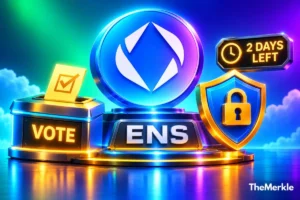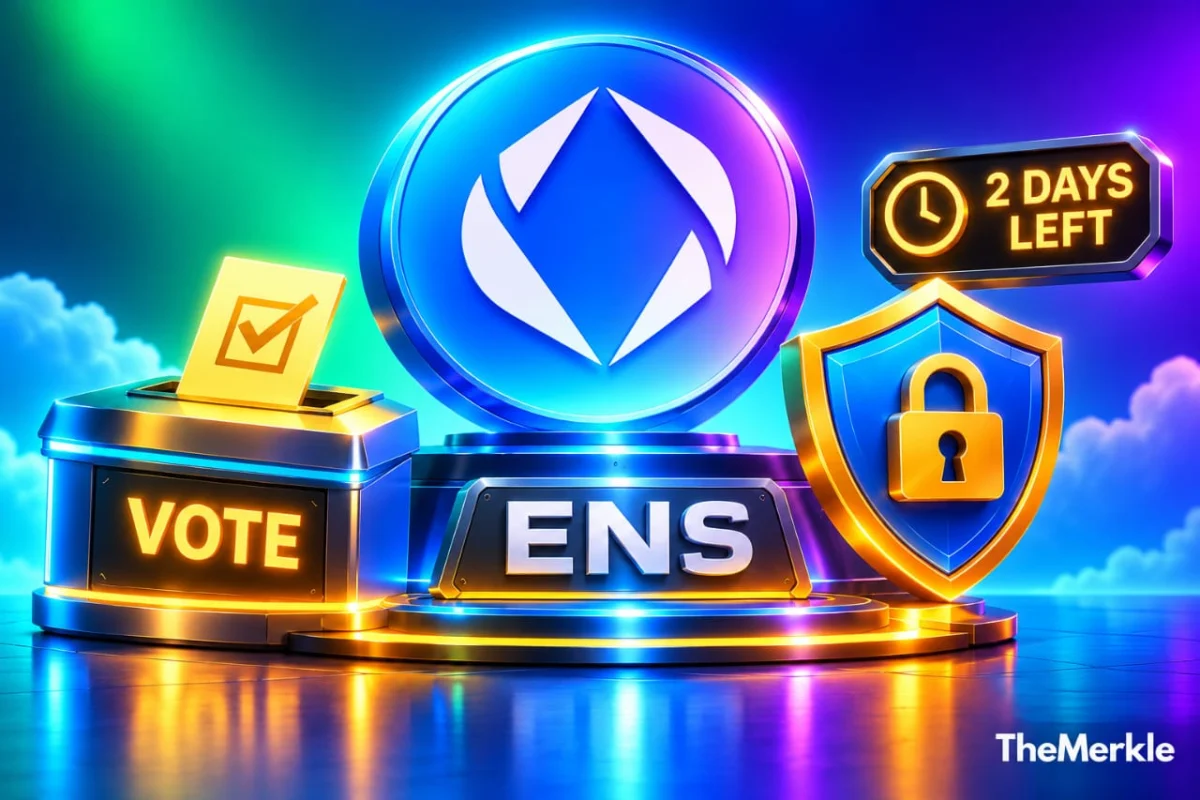
The Ethereum Name Service (ENS) DAO is currently engaged in a pivotal "Governor Nexus Update" social vote, a critical step towards enhancing the security and resilience of its on-chain governance mechanisms. The vote, which concludes on November 3, signals community support for a comprehensive overhaul of the DAO’s governor contract, a system that has underpinned ENS governance since 2021. This proposed upgrade, built on the robust OpenZeppelin Contracts v5.6.1 framework, directly targets several identified weaknesses, including a glaring one-block voting delay that leaves the DAO vulnerable to rapid-fire exploits and governance manipulation.
While the current vote is purely social, serving as an expression of the community’s intent, its successful passage would initiate a multi-stage process. This includes a rigorous external security audit and a subsequent executable on-chain vote, both essential precursors before any fundamental changes are deployed to the ENS protocol. The initiative underscores a growing maturity within the decentralized autonomous organization (DAO) landscape, where robust and secure governance is increasingly recognized as the bedrock of long-term stability and user trust.
The Impetus for Change: Fortifying ENS Governance
ENS, as a foundational layer of Web3 infrastructure, provides human-readable names for Ethereum addresses, making the decentralized web more accessible and user-friendly. Its governance, managed by the ENS DAO and token holders, is responsible for crucial decisions regarding the protocol’s evolution, treasury management, and overall direction. The integrity of this governance system is paramount; any vulnerability could expose the DAO’s substantial treasury or compromise the protocol’s operational continuity.
The current governor contract, a Bravo-style implementation based on an older OpenZeppelin v4 standard, was deployed with fixed settings, limiting its adaptability and exposing it to modern attack vectors. A security assessment conducted under the Anticapture framework, cited in the Request for Comments (RFC) for Governor Nexus, rated ENS’s existing setup at "Stage 0," indicating a foundational level of security with known critical weaknesses. The "Governor Nexus Update" aims to elevate ENS to "Stage 1," signifying a significantly enhanced security posture. This move is not merely a technical upgrade but a strategic imperative to safeguard the future of one of Web3’s most vital public goods.
A Critical Vulnerability: The One-Block Window
Perhaps the most startling vulnerability identified in the current ENS governance setup is the single-block voting delay. When a proposal is submitted to the DAO, it can open for voting within approximately 12 seconds – the average time it takes to mine a new block on the Ethereum blockchain. This minuscule window provides delegates and token holders with virtually no time to coordinate, analyze, or react to a potentially malicious or hastily conceived proposal before votes can be cast. In the fast-paced, high-stakes environment of blockchain, 12 seconds is an eternity for an attacker but a blink for a defender.
This "one-block window" is just one of five critical and medium-severity weaknesses that Governor Nexus is explicitly designed to address. The brevity of this delay leaves the DAO susceptible to "flash votes" or "front-running," where an attacker with significant voting power could push through a detrimental proposal before the broader community can organize a counter-response. This vulnerability not only undermines the democratic principles of a DAO but also poses a direct threat to the security of its treasury and the integrity of the ENS protocol itself.
Unpacking Governor Nexus: A Modular Security Overhaul
Governor Nexus is the brainchild of Blockful, a dedicated ENS service provider. The initiative began with a Request for Comments (RFC) in March, outlining a vision to "modernize the ENS Governor while preserving full compatibility with the existing Timelock contract." This was followed by a detailed implementation report on August 19, accompanied by the public release of the code in Blockful’s nexus repository on GitHub.
The core philosophy behind Governor Nexus is modularity and adherence to best practices. The new governor contract is rebuilt on OpenZeppelin Contracts v5.6.1, leveraging the latest advancements in secure smart contract design. OpenZeppelin is widely regarded as the industry standard for secure blockchain development, providing audited and battle-tested smart contract libraries. Blockful’s team emphasizes that the core of Governor Nexus is "composed from the standard audited Governor modules," with custom code written only where OpenZeppelin does not offer an equivalent, thus minimizing the surface area for new vulnerabilities. This approach contrasts sharply with the older OpenZeppelin v4 Bravo-style contract, which, by fixing all settings at deployment, offered less flexibility and updateability.
Key Enhancements: Addressing Identified Weaknesses
The README in Blockful’s nexus repository meticulously details the critical and medium-severity weaknesses in the live governor and how Governor Nexus systematically addresses them.
Mitigating the Proposal Flood and Vote Sniping
Two critical weaknesses concerned how a hostile proposal could potentially bypass scrutiny:
- Insufficient Voting Delay (Critical): The original one-block delay is replaced with a 24-hour voting delay. This provides ample time for delegates, token holders, and the broader community to review, discuss, and coordinate responses to new proposals, significantly reducing the risk of malicious proposals being passed unnoticed.
- Lack of Proposal Throttling (Critical): The current system allows an address to submit an unlimited number of proposals, potentially flooding the governance portal and making it difficult to discern legitimate proposals from spam or coordinated attacks. Governor Nexus introduces a limit of five pending or active proposals per address. While developers acknowledge this limit applies per address and doesn’t stop an attacker spreading voting power across multiple wallets, it significantly raises the cost and complexity of a "proposal flood" attack.
A medium-severity concern, "last-minute flips can pass without response time," is addressed by the anti-snipe extension. This crucial feature ensures that if a proposal’s status changes from failing to passing within the final 24 hours of its voting period, the voting is automatically extended once by an additional 48 hours. This mechanism provides a vital window for token holders to react to sudden shifts in voting sentiment, preventing last-minute manipulations. The code further enhances this by:
- Preventing repeated extensions: Only one extension is permitted per proposal, preventing infinite delays.
- Resetting the "final period": The 24-hour "final period" resets with the extension, ensuring that the anti-snipe rule remains active throughout the extended voting period.
Ensuring Proposer Accountability and Voter Flexibility
Beyond proposal submission and voting periods, Governor Nexus also tightens rules around proposer accountability and voter engagement:
- Ephemeral Proposer Threshold (Critical): Under the live governor, a proposer could submit a proposal and immediately sell or move their ENS tokens, potentially leaving a proposal active without the required backing. Governor Nexus treats the proposal threshold as a continuing requirement. If a proposer’s voting power falls below their proposal type’s threshold at any point while the proposal is pending or in voting, anyone can cancel it. This continuous monitoring, even for a single block’s dip, enforces genuine commitment from proposers.
- Irreversible Votes (Medium): The current system makes votes final once cast, offering "no correction path if a voting interface is compromised" or if a voter changes their mind. Governor Nexus introduces changeable votes, allowing voters to modify their selection on an open proposal. Casting a new vote simply replaces the earlier one. This not only enhances voter autonomy but also aligns with the dynamic nature of the anti-snipe rule, as vote tallies can now shift in both directions, necessitating the careful observation of the entire final window.
Other notable changes include:
- A "minimum voting power" setting for delegates: This feature, if implemented, could allow the DAO to set a minimum amount of ENS a wallet must hold to be eligible as a delegate, potentially increasing the quality and commitment of delegates.
- Removing the "cancel" function from the Timelock: This significantly enhances security by preventing the direct cancellation of proposals that have already passed and are awaiting execution in the Timelock, thus protecting the integrity of approved governance decisions.
Revolutionizing Proposal Pathways: Standard, Optimistic, and Bond
One of the most innovative aspects of Governor Nexus is its replacement of the single proposal path with three distinct proposal types, each tailored with specific rules and thresholds to cater to different governance needs and risk profiles:
-
Standard Proposals: These function similarly to the current governor, requiring a 100,000 ENS voting-power threshold to initiate, a simple majority for approval, and a quorum of 1% of the total ENS supply (approximately 1 million ENS tokens based on current supply) for validity. This path remains suitable for significant, high-impact decisions where broad consensus and active participation are crucial.
-
Optimistic Proposals: This new paradigm streamlines decision-making for less controversial or routine matters. Optimistic proposals pass by default unless 500,000 ENS votes against them by the deadline. Crucially, they require no quorum for approval, making them highly efficient. To mitigate potential risks associated with this streamlined approach:
- They are subject to a 24-hour voting delay and a 48-hour voting period, providing a reasonable window for any dissenting votes to be cast.
- The anti-snipe rule is particularly relevant here; if a veto is withdrawn at the last moment, causing the proposal to flip from failing (due to sufficient ‘against’ votes) to passing, it triggers the 48-hour extension, safeguarding against last-minute manipulation of the veto mechanism.
-
Bond Proposals: This innovative type aims to significantly broaden participation in governance by allowing anyone to propose by locking 1,000 ENS instead of needing to hold the 100,000 ENS voting power threshold required for Standard proposals. This dramatically lowers the barrier to entry for proposing ideas. To manage the risks associated with lower thresholds, Bond proposals introduce a fourth voting option: "Against and Slash." The proposer’s locked bond is forfeited to the ENS treasury only if two conditions are met: the proposal is rejected (meaning ‘Against’ votes outweigh ‘For’ votes), and the ‘Against and Slash’ votes outnumber the plain ‘Against’ votes. This mechanism aligns with the predicate approved in ENS DAO’s EP 5.15, acting as a deterrent against frivolous or malicious proposals without overly penalizing well-intentioned but ultimately unsuccessful ones.
Blockful openly lists the trade-offs associated with these new proposal types, acknowledging the inherent balance between efficiency, security, and decentralization. While Optimistic proposals offer speed and reduce voter fatigue, they place a greater burden on dissenters to actively veto. Bonded proposals democratize proposal submission but introduce the complexity of bond management and the "Against and Slash" mechanism.
The Road Ahead: From Social Signal to On-Chain Reality
A successful "yes" vote on the current social snapshot does not immediately change the live ENS governor. As outlined in the contract’s own documentation, the process is deliberately multi-phased to ensure due diligence and security:
- Social Consensus: The current Snapshot vote serves as a temperature check, gauging the community’s support for the Governor Nexus design.
- External Audit: Following community approval, the Governor Nexus code will undergo a thorough external security audit by independent blockchain security experts. This critical step identifies and remediates any potential vulnerabilities before deployment.
- Executable On-Chain Vote: Once the code has been audited and deemed secure, a final, executable on-chain vote will be held. This vote, if passed, will trigger the deployment of the new Governor Nexus contract and transfer control of the DAO’s Timelock to it, effectively activating the new governance system.
Until these rigorous steps are completed, ENS will continue to operate under its 2021 governor, with its inherent one-block delay, fixed votes, and other identified weaknesses. The current vote is not about deploying the contract itself, but about formally commencing the comprehensive process that will ultimately lead to its implementation.
Broader Implications for Decentralized Autonomous Organizations
The ENS DAO’s proactive approach to governance security, exemplified by the "Governor Nexus Update," carries significant implications not just for ENS but for the entire decentralized autonomous organization ecosystem. As DAOs manage increasingly vast treasuries and control critical protocols, the robustness of their governance mechanisms becomes paramount.
- Setting a Standard: ENS, as a high-profile and influential DAO, is setting a new benchmark for governance security. Its adoption of a modular, OpenZeppelin v5-based governor, coupled with sophisticated anti-exploitation features, could inspire other DAOs to re-evaluate and upgrade their own governance systems.
- Mitigating Systemic Risk: Vulnerabilities in large DAOs pose systemic risks to the broader Web3 space. By actively addressing these, ENS contributes to the overall stability and trustworthiness of the decentralized economy.
- Evolving Governance Paradigms: The introduction of Optimistic and Bond proposals showcases a forward-thinking approach to governance design. These models offer blueprints for other DAOs looking to balance efficiency, security, and broad participation, potentially leading to more dynamic and inclusive governance structures across Web3.
- Enhancing Trust: Transparently identifying and mitigating governance risks builds trust among token holders, delegates, and the wider user base. This trust is essential for the long-term viability and adoption of decentralized technologies.
The "Governor Nexus Update" represents a pivotal moment in ENS DAO’s evolution. It reflects a commitment to continuous improvement, security best practices, and a more resilient decentralized future. The community’s decision in this social vote will determine whether ENS embarks on this crucial journey towards next-generation on-chain governance.