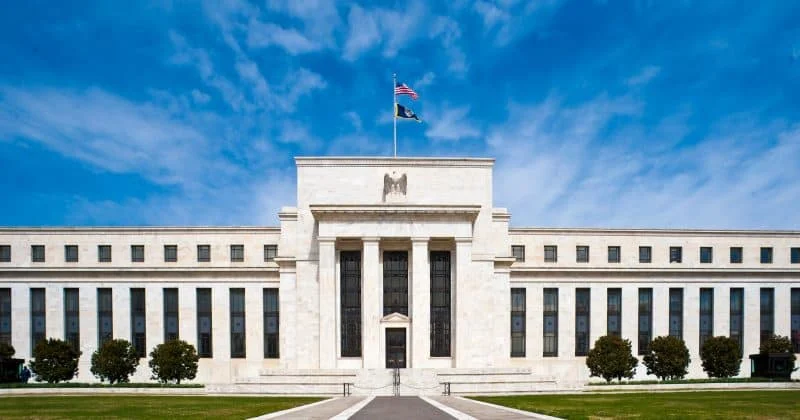
The Federal Reserve Board, in coordination with the Financial Crimes Enforcement Network (FinCEN) and the Office of the Comptroller of the Currency (OCC), announced on Thursday a formal proposal that would require certain payment stablecoin issuers to implement rigorous customer identification programs (CIP). This regulatory move represents a significant step in the ongoing effort to integrate the burgeoning digital asset sector into the established framework of the United States financial system. By mandating that stablecoin issuers adhere to the same identification and verification standards as traditional banks and credit unions, the proposal seeks to close perceived loopholes that have historically allowed for the movement of illicit funds through the cryptocurrency ecosystem. The initiative specifically aims to fulfill the core mandates of the Guiding and Establishing National Innovation for US Stablecoins (GENIUS) Act, a legislative framework designed to provide clarity and security for the stablecoin market while fostering domestic innovation.
Under the proposed rule, entities designated as permitted payment stablecoin issuers (PPSIs) would be legally obligated to maintain and update effective customer identification programs. These programs are designed to ensure that issuers can verify the identity of any individual or entity opening an account to hold or transact in payment stablecoins. This includes the collection of essential data points such as legal names, dates of birth, physical addresses, and taxpayer identification numbers. The proposal is currently open for a 60-day public comment period following its publication in the Federal Register, allowing industry stakeholders, privacy advocates, and financial experts to provide feedback on the technical and economic feasibility of the new requirements.
Bridging the Regulatory Gap Between Crypto and Traditional Banking
For years, the digital asset industry has operated in a legal gray area, often existing on the periphery of the Bank Secrecy Act (BSA). While many centralized exchanges have voluntarily adopted Know Your Customer (KYC) and Anti-Money Laundering (AML) protocols to secure banking relationships, the requirements for stablecoin issuers themselves have been less uniform. The Federal Reserve’s new proposal aims to eliminate this inconsistency by treating payment stablecoins—digital assets designed to maintain a stable value relative to a fiat currency—as functional equivalents to traditional deposit accounts in the context of identity verification.
The joint agency press release emphasized that the customer identification rules are not merely a hurdle for innovation, but a necessary foundation for the long-term stability of the ecosystem. By mitigating the risks of money laundering, terrorist financing, and sanctions evasion, the regulators argue that a more transparent environment will eventually attract more institutional capital and consumer trust. The proposal aligns US policy with international standards set by the Financial Action Task Force (FATF), which has long advocated for the "Travel Rule" and other identity-linked measures for virtual asset service providers.
Technical Requirements of the Proposed Customer Identification Programs
The core of the proposal lies in the "effective" nature of the CIP. Unlike simple data collection, an effective program requires issuers to develop risk-based procedures for verifying the identity of each customer to the extent reasonable and practicable. This involves:
- Identity Verification: Issuers must use both documentary and non-documentary methods to verify information provided by customers. This could include checking government-issued IDs against third-party databases or using biometric verification technologies.
- Recordkeeping: Issuers would be required to maintain records of the information used to verify a customer’s identity, including descriptions of any document relied upon and the results of any measures undertaken to resolve identity discrepancies.
- Comparison with Government Lists: The rule would mandate that issuers check customer names against lists of known or suspected terrorists or terrorist organizations provided to the financial institution by any government agency.
- Customer Notice: Issuers must provide customers with adequate notice that the institution is requesting information to verify their identities, a standard practice in the traditional banking sector.
By codifying these requirements, the Federal Reserve intends to create a level playing field where stablecoin issuers cannot gain a competitive advantage by bypassing the costly but necessary infrastructure of financial surveillance and compliance.
The Legislative Backbone: Understanding the GENIUS Act
The proposal is a direct administrative response to the Guiding and Establishing National Innovation for US Stablecoins (GENIUS) Act. The GENIUS Act was introduced to create a federal floor for stablecoin regulation, moving beyond the patchwork of state-level money transmitter licenses that currently govern most issuers. The Act envisions a dual-banking system approach where both state-chartered and federally-chartered entities can issue stablecoins, provided they meet strict requirements regarding reserves, transparency, and illicit finance prevention.
The Federal Reserve’s move to implement the CIP provisions of the GENIUS Act signals that the central bank is moving forward with enforcement mechanisms even as the broader legislative package continues to navigate the complexities of Congressional approval. It reflects a "regulation by rulemaking" strategy where agencies use existing authorities—or authorities granted by specific sections of new acts—to shape the industry before a comprehensive federal crypto law is fully enacted.
Michael Barr’s Critique: The Vulnerability of Secondary Markets
While the proposal was met with general support from the participating agencies, Federal Reserve Governor Michael Barr offered a more cautious perspective. In his statement accompanying the release, Barr highlighted what he perceives as a significant "gap" in the proposed framework: the secondary market.
Stablecoins are unique because, once issued, they can be traded on decentralized exchanges (DEXs) or transferred between unhosted (private) wallets without the direct intervention of the original issuer. Barr expressed concern that while the GENIUS Act addresses the "on-boarding" and "off-boarding" of customers at the issuer level, it does little to track the flow of stablecoins once they enter the secondary market.
“I remain concerned, however, that the GENIUS Act regulatory framework does not do enough so far to address the risks of illicit finance conducted through secondary market transactions in payment stablecoins,” Barr stated. He noted that while some digital asset service providers are subject to AML requirements in their home jurisdictions, the pseudonymity of blockchain technology makes it "far too easy for bad actors to evade these restrictions." Barr’s comments suggest that the Federal Reserve may eventually push for even more expansive rules that could target decentralized protocols or require issuers to implement "blacklisting" capabilities that can freeze assets even in private wallets.
The Growing Role of Stablecoins in the Global Financial Ecosystem
The urgency behind the Fed’s proposal is driven by the explosive growth of the stablecoin market. As of mid-2024, the total market capitalization of stablecoins exceeds $160 billion. Tether (USDT) and Circle (USDC) dominate the market, serving as the primary liquidity bridge between fiat currency and the broader digital asset market.
Beyond their use in crypto trading, stablecoins are increasingly being used for cross-border remittances, business-to-business payments, and as a store of value in hyperinflationary economies. This "real-world" utility makes them a systemic concern for the Federal Reserve. If a major stablecoin were to be used for large-scale sanctions evasion—such as by entities in Russia or Iran—it could undermine the efficacy of US foreign policy and the role of the dollar as the global reserve currency.
Historical Context: A Chronology of US Digital Asset Regulation
The Thursday proposal is the latest in a series of escalations in US crypto oversight. To understand the significance of this move, it is helpful to look at the timeline of regulatory milestones over the last few years:
- March 2022: President Biden issues Executive Order 14067, "Ensuring Responsible Development of Digital Assets," which called for a whole-of-government approach to addressing the risks and benefits of crypto.
- November 2022: The collapse of FTX highlights the catastrophic risks of unregulated offshore entities, prompting a more aggressive stance from the SEC and the Fed.
- January 2023: The Federal Reserve, FDIC, and OCC issue a joint statement on crypto-asset risks to banking organizations, warning of "liquidity risks" and "contagion."
- July 2023: The House Financial Services Committee advances the Clarity for Payment Stablecoins Act, which shares several goals with the GENIUS Act.
- June 2024: The Federal Reserve and joint agencies formally propose the CIP mandate for stablecoin issuers, marking the first major move to treat issuers directly as BSA-regulated entities.
Analyzing the Risks of Illicit Finance and Money Laundering
Data from blockchain analytics firms like Chainalysis and TRM Labs provide the empirical backing for the Fed’s concerns. While the percentage of total crypto transaction volume linked to illicit activity is relatively small (estimated at less than 1% in 2023), the absolute value remains in the billions of dollars.
Stablecoins have become the "currency of choice" for many cybercriminals. Unlike Bitcoin, which is highly volatile, stablecoins allow hackers and scammers to lock in the value of their stolen funds. Furthermore, the use of "mixers" and decentralized bridges allows these actors to obfuscate the trail of funds. The Federal Reserve’s proposal is designed to ensure that at the very least, the entry and exit points—the issuers who convert fiat to stablecoins and vice versa—are under strict surveillance.
Industry Implications and the Path Toward Compliance
The reaction from the stablecoin industry is expected to be mixed. Major US-based issuers like Circle, which issues USDC, have long advocated for federal regulation, believing that clear rules will help them compete with offshore rivals like Tether. For these entities, the proposed CIP mandate may not require a radical shift in operations, as they already maintain high compliance standards to satisfy their banking partners.
However, smaller issuers and newcomers may find the cost of compliance prohibitive. Implementing a full-scale CIP requires significant investment in legal counsel, compliance software, and identity verification vendors. Critics of the proposal argue that by imposing bank-like requirements on tech startups, the Fed may inadvertently stifle the very "innovation" it claims to support, potentially pushing stablecoin activity to jurisdictions with more lax oversight.
Furthermore, there is the question of privacy. The collection of sensitive personal data by stablecoin issuers creates a new target for hackers. If a major issuer were to suffer a data breach, the personal financial information of millions of users could be compromised. This tension between financial security and personal privacy remains one of the most contentious aspects of the digital asset debate.
Public Consultation and Next Steps for the Federal Reserve
The Federal Reserve has invited comments on several specific aspects of the proposal. These include whether the definition of "permitted payment stablecoin issuer" is sufficiently clear, whether the 60-day window is adequate for implementation, and if there are alternative methods for achieving the same AML goals without the same level of data collection.
Following the 60-day comment period, the agencies will review the feedback and decide whether to proceed with a final rule, modify the proposal, or conduct further study. Given the current political climate and the bipartisan interest in stablecoin regulation, it is likely that some version of this mandate will become law within the next year.
The proposal marks a definitive end to the "wild west" era of stablecoin issuance in the United States. By bringing these assets into the fold of the Bank Secrecy Act, the Federal Reserve is asserting that if a digital asset is to function as money, it must be subject to the same rules that govern money. As the 60-day window begins, the financial world will be watching closely to see how the industry adapts to this new era of oversight and whether these measures will be enough to satisfy regulators concerned about the "shadow" secondary markets.