


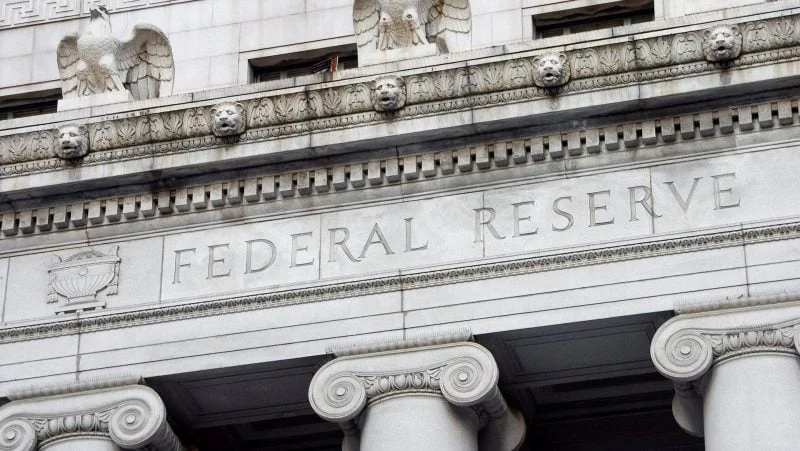
The Board of Governors of the Federal Reserve System has introduced a landmark set of proposed rules designed to govern the issuance and oversight of payment stablecoins, marking a significant step in the federal government’s efforts to integrate digital assets into the formal financial system. These proposals, which advance the regulatory framework established by the Global Electronic Network for Investment and Universal Security (GENIUS) Act, seek to mitigate the systemic risks associated with digital currencies pegged to the U.S. dollar while providing a clear pathway for supervised financial institutions to participate in the burgeoning market.
The central component of the Federal Reserve’s initiative involves two distinct but interconnected proposals. The first proposal establishes stringent requirements for the backing of stablecoins, mandating that any tokens issued by Board-supervised firms be fully collateralized by permitted reserve assets. The second proposal outlines a structured application and approval process for banks under the Fed’s jurisdiction that intend to issue these digital assets, ensuring that only institutions with robust financial standing and operational integrity are permitted to enter the space.
Strengthening the Foundation of Stablecoin Reserves
Under the first proposal, the Federal Reserve seeks to eliminate the ambiguity surrounding the composition of stablecoin reserves—a long-standing point of contention in the cryptocurrency industry. The proposed rules would require stablecoins to be backed 1:1 by high-quality liquid assets (HQLA), primarily consisting of short-term U.S. Treasury bills and other low-risk, highly liquid instruments. By restricting reserve assets to these categories, the Fed aims to ensure that stablecoin issuers can meet redemption demands even during periods of extreme market volatility or "runs" on the digital asset.
Beyond the composition of reserves, the proposal introduces standardized capital requirements. These requirements are designed to provide a financial cushion against credit and operational risks. Credit risk, in this context, refers to the potential for the value of the underlying reserve assets to fluctuate or for counterparty defaults to occur. Operational risk encompasses a broader range of threats, including technological failures, cyberattacks, and internal management errors. By mandating that issuers hold a specific level of regulatory capital, the Fed intends to prevent the insolvency of a stablecoin issuer from spilling over into the broader banking sector.
Furthermore, the proposal clarifies the Fed’s expectations for firms that safeguard stablecoin reserve assets. Custodians would be subject to specific requirements regarding the segregation of assets and the implementation of internal controls to prevent the misappropriation of funds. This clarification is particularly relevant for banks under Federal Reserve supervision, as it defines the boundaries of permitted stablecoin-related activities, reducing the legal and regulatory uncertainty that has previously deterred many traditional financial institutions from engaging with digital assets.
The Tailored Application and Approval Process
Recognizing that the issuance of digital currency represents a significant shift in traditional banking activities, the Federal Reserve’s second proposal establishes a comprehensive application framework for Board-supervised banks. This process is not merely a formality but a rigorous evaluation of a bank’s readiness to manage the unique challenges of the digital asset ecosystem.
Banks seeking approval to issue payment stablecoins will be required to submit detailed business plans that outline the intended use case for the stablecoin, the target market, and the technological infrastructure supporting the issuance and redemption processes. Additionally, applicants must provide extensive financial documentation, including projections of how the stablecoin activity will impact the bank’s overall capital adequacy and liquidity profile.
The Federal Reserve has emphasized that the application process will be "tailored," suggesting that the level of scrutiny will be proportional to the size and complexity of the proposed stablecoin operation. To ensure transparency and due process, the framework also establishes formal procedures for appeals, hearings, and final decisions. This structured approach is intended to provide banks with a predictable regulatory environment, encouraging innovation while maintaining the safety and soundness of the financial system.
Chronology of Regulatory Evolution and the GENIUS Act
The current proposals are the culmination of several years of escalating regulatory focus on the stablecoin market. The journey began in earnest in late 2021, when the President’s Working Group on Financial Markets released a report highlighting the potential risks stablecoins pose to financial stability and calling for urgent legislative action.
Following that report, the legislative landscape began to shift with the introduction and eventual passage of the GENIUS Act. This legislation provided the statutory authority for federal banking regulators to develop a cohesive framework for "permitted" payment stablecoin issuers. The act was designed to bridge the gap between the fast-moving crypto industry and the highly regulated traditional financial sector, focusing on four key pillars: reserves, capital, liquidity, and risk management.
In June 2024, the Federal Reserve, in conjunction with other federal agencies, took a major step forward by proposing that stablecoin issuers be treated as "financial institutions" under the Bank Secrecy Act (BSA). This proposal required issuers to operate robust customer identification programs (KYC) and anti-money laundering (AML) protocols. The current proposals released by the Fed build directly upon that foundation, shifting the focus from financial crime prevention to the structural integrity and solvency of the issuers themselves.
Supporting Data: The Scale of the Stablecoin Market
The Federal Reserve’s move comes at a time when the stablecoin market has reached a critical mass, making it impossible for regulators to ignore. As of late 2024, the total market capitalization of stablecoins exceeds $175 billion, with the vast majority of that value concentrated in tokens pegged to the U.S. dollar.
Tether (USDT) continues to lead the market with a capitalization of over $115 billion, followed by USD Coin (USDC) at approximately $35 billion. While these dominant players have historically operated outside the direct supervision of the Federal Reserve, the emergence of bank-issued stablecoins and the entry of major payment processors like PayPal—which launched its PYUSD stablecoin in 2023—have fundamentally changed the landscape.
Data from the Federal Reserve’s own research suggests that stablecoins are increasingly being used not just as a bridge for cryptocurrency trading, but as a medium for cross-border remittances and wholesale settlements. This transition into "payment stablecoins" is what triggered the specific mandates of the GENIUS Act. The Fed’s proposal to mandate Treasury-backed reserves is supported by historical data on "private money" systems; throughout history, private currencies that lacked high-quality, liquid backing have frequently been subject to catastrophic collapses during liquidity crises.
Official Responses and Industry Reactions
While the Federal Reserve’s proposals have been met with cautious optimism by some sectors of the banking industry, they have also sparked debate regarding the potential for "regulatory moat" creation.
A spokesperson for the American Bankers Association (ABA) stated that the group is "reviewing the proposals to ensure that the requirements do not place an undue burden on community banks that may wish to utilize blockchain technology for faster payments." The ABA noted that while clarity is welcome, the capital requirements must be balanced so as not to stifle domestic innovation in favor of offshore, unregulated entities.
Conversely, proponents of the GENIUS Act have praised the Fed for its decisive action. "For too long, the stablecoin market has operated in a legal gray area that put consumers at risk," said a senior staffer involved in the drafting of the legislation. "By requiring full backing by Treasury bills and creating a clear application process, the Fed is ensuring that the U.S. dollar remains the anchor of the global digital economy."
Within the crypto-native community, reactions have been mixed. Jeremy Allaire, CEO of Circle (the issuer of USDC), has frequently advocated for federal oversight, suggesting that a clear regulatory framework is the "only path to global scale." However, critics argue that the Fed’s strict definitions of "permitted assets" could limit the flexibility of issuers and potentially centralize the market around a few large, politically connected banks.
Analysis of Implications for Financial Stability
The Federal Reserve’s proposals carry profound implications for the future of the U.S. financial system. By bringing stablecoin issuance under the umbrella of federal supervision, the Fed is essentially attempting to "domesticate" a technology that was originally designed to bypass traditional intermediaries.
-
Mitigation of Systemic Contagion: One of the primary goals of the standardized capital and reserve requirements is to prevent a "stablecoin shock" from affecting the broader economy. If a large stablecoin were to fail today, the forced liquidation of billions of dollars in assets could cause a spike in Treasury yields or a freeze in repo markets. The new rules aim to ensure that stablecoins are "money-like" in their stability, reducing the risk of fire sales.
-
The "Bank-ification" of Crypto: The tailored application process for banks signals a shift where the Fed prefers stablecoins to be issued by existing, regulated financial institutions rather than "shadow banks." This could lead to a consolidation of the market, where traditional banks leverage their existing compliance infrastructure to displace smaller, crypto-native issuers.
-
Global Standards: As the issuer of the world’s primary reserve currency, the Federal Reserve’s regulatory choices often set the standard for other central banks. By formalizing the GENIUS Act’s requirements, the U.S. is positioning itself to influence international standards for digital assets, potentially countering the influence of other jurisdictions that have moved faster to implement their own frameworks, such as the European Union’s Markets in Crypto-Assets (MiCA) regulation.
-
Technological Infrastructure: The Fed’s focus on "operational risk" suggests a deep concern regarding the underlying blockchain technology. Banks will likely need to prove that their smart contracts are audited and that they have "kill switches" or other governance mechanisms to freeze assets in the event of a hack—a requirement that sits in direct tension with the decentralized ethos of many blockchain proponents.
Future Outlook and Implementation
The release of these proposals marks the beginning of a public comment period, during which stakeholders from the banking, technology, and legal sectors will provide feedback. Following the comment period, the Federal Reserve will review the input before issuing a final rule.
The implementation of the GENIUS Act via these Fed proposals represents a "maturation phase" for the digital asset industry. While the rules are stringent, they offer something that the industry has long craved: legitimacy. For a bank-issued stablecoin to be labeled as a "permitted payment stablecoin" under federal law, it must meet the highest standards of financial integrity.
As the digital landscape continues to evolve, the Federal Reserve’s framework will likely serve as the bedrock for future innovations, including the potential integration of stablecoins into real-time gross settlement systems and the eventual exploration of a Central Bank Digital Currency (CBDC). For now, the focus remains on ensuring that the current generation of digital dollars is as safe and reliable as the physical ones they are intended to represent.














