


Today, global financial markets presented a stark dichotomy, with two of the world’s largest economic blocs moving in dramatically opposing directions, offering a nuanced and complex picture of investor sentiment. While Asian markets experienced a substantial influx of capital, signaling renewed optimism, Wall Street witnessed a sharp retraction, particularly in its high-flying artificial intelligence (AI) sector, indicating a shift towards increased scrutiny of growth narratives. This divergence, far from being a simple geographical split, points to a more selective and discerning investment landscape where macroeconomic tailwinds are lifting entire regions, while individual companies are being judged with greater rigor on their path to profitability.
A Half-Trillion Dollar Influx Electrifies Asian Markets
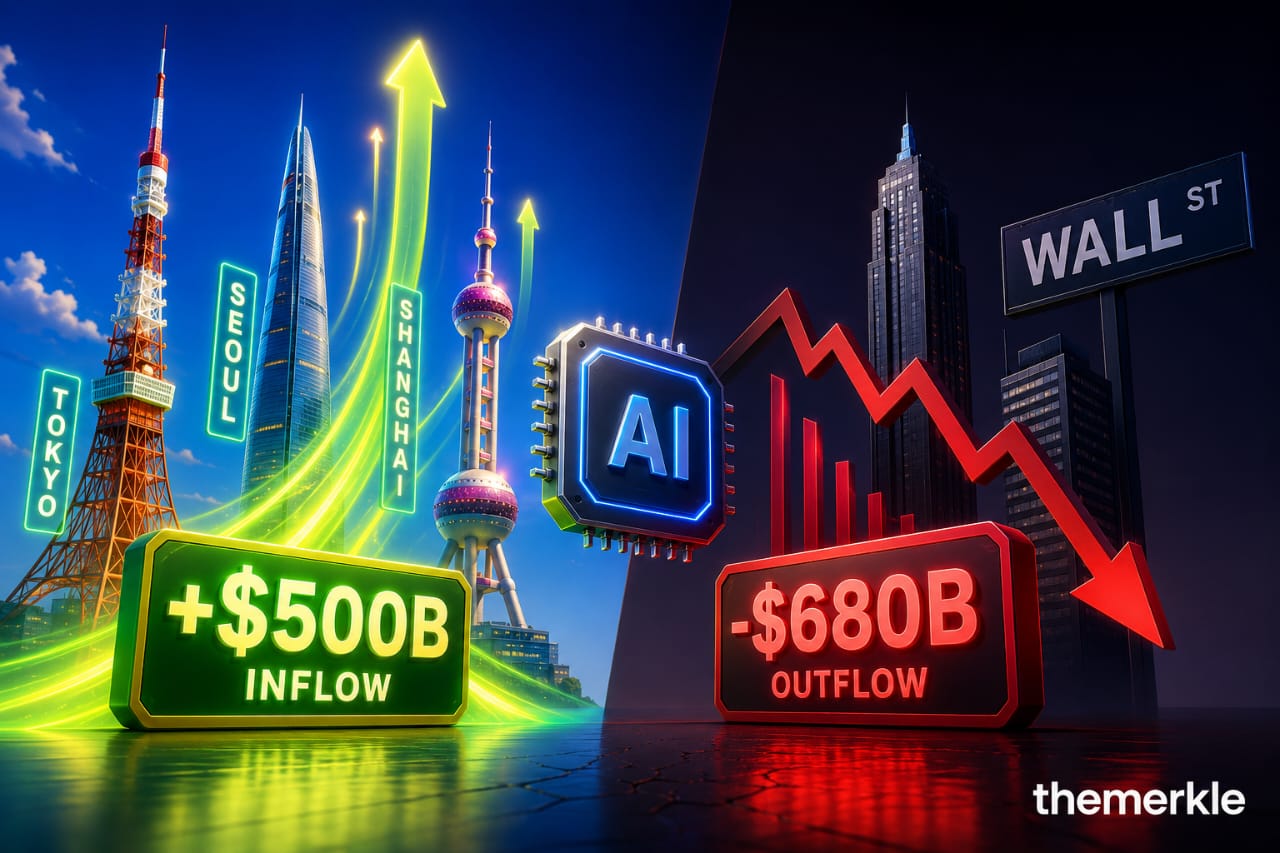
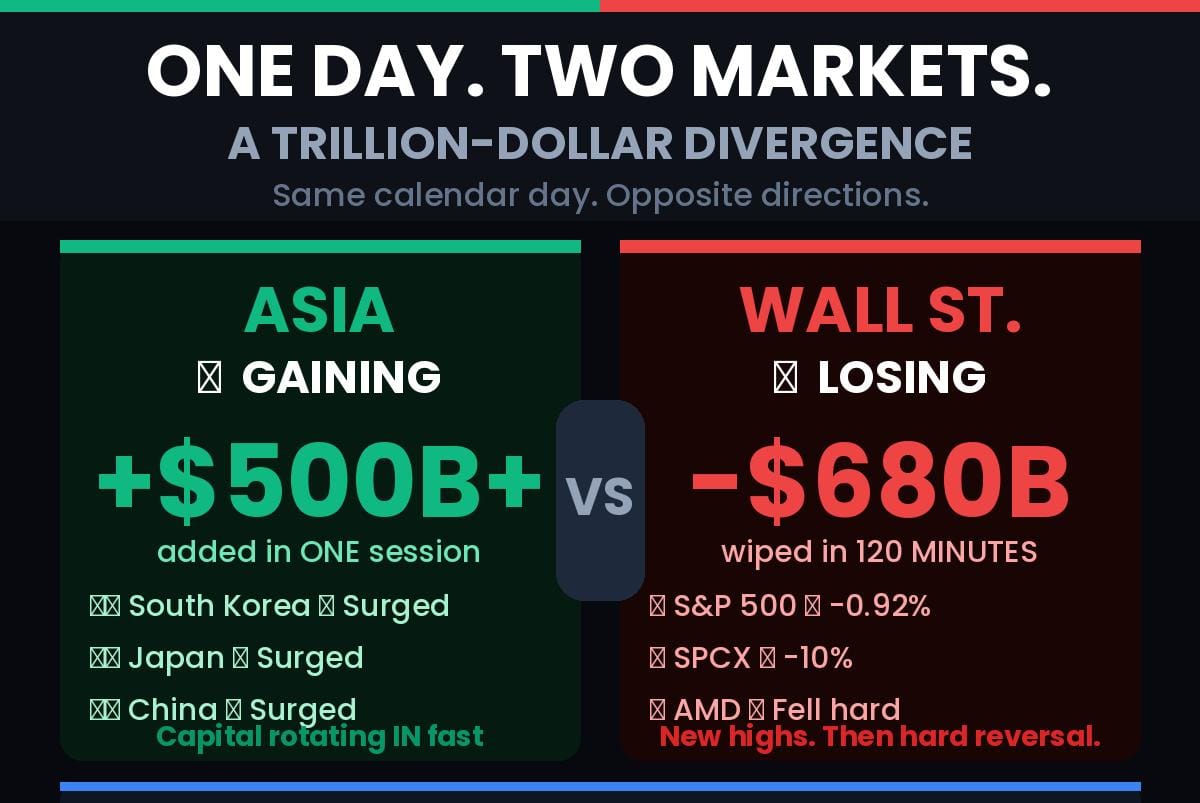
On one side of the Pacific, a staggering sum exceeding half a trillion dollars ($500 billion) flowed into South Korean, Japanese, and Chinese equities within a single trading session. This monumental capital injection, confirmed by market data that garnered significant attention throughout the morning, represents a robust vote of confidence in Asian economies. It was not a gradual accumulation but a rapid, concentrated movement across three of the continent’s most influential exchanges, signaling an immediate and powerful market reaction to a confluence of favorable conditions.
The optimism in Asia was palpable, manifesting in significant gains across key regional indices. The Nikkei 225 in Japan, for instance, recorded its strongest daily performance in months, reflecting broad-based buying. Similarly, the KOSPI in South Korea and major Chinese indices like the Shanghai Composite and Shenzhen Component saw substantial upward movements, indicating a widespread positive sentiment. This surge highlights the interconnectedness of global markets, demonstrating how significant developments can trigger swift reallocations of capital on a grand scale. Historically, such concentrated inflows often precede periods of sustained growth, drawing further attention to the underlying drivers.
Drivers Behind Asia’s Bullish Momentum
Several powerful forces converged to fuel this remarkable surge in Asian equities, each reinforcing the others to create a compelling bull case for the region.
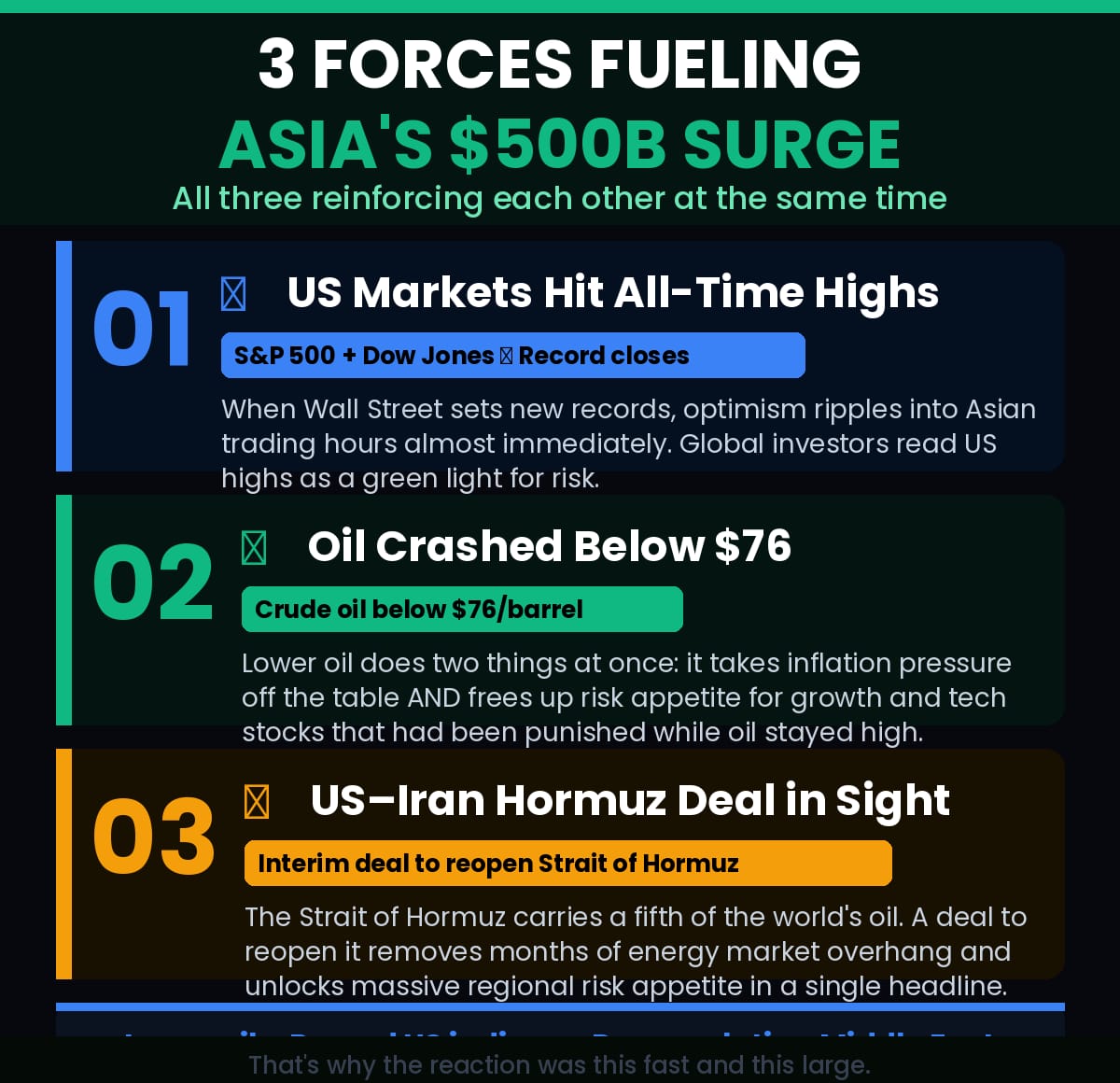
Firstly, the momentum was partly a spillover from prior gains on Wall Street. The S&P 500 and Dow Jones Industrial Average had both closed at fresh all-time highs in the preceding session. This positive sentiment from the world’s largest economy often generates a ripple effect, extending into Asian trading hours. Investors, buoyed by record-setting performances in the U.S., tend to extend that optimism globally, particularly to markets perceived as having strong growth potential or undervalued assets. This "contagion of confidence" frequently acts as a catalyst for early-day trading in Asian markets, setting a positive tone.
Secondly, and arguably the most significant macroeconomic driver, reports emerged indicating that the United States and Iran were nearing an interim agreement to facilitate the reopening of the Strait of Hormuz. This vital waterway is an indispensable artery for global energy trade, through which approximately one-fifth of the world’s total petroleum consumption, including crude oil and refined products, physically passes. For months, geopolitical tensions in the Middle East, particularly concerning Iran, have cast a shadow over energy markets, leading to fears of supply disruptions and price spikes. An agreement, even an interim one, to de-escalate these tensions and ensure the free flow of shipping through the Strait, is a profound development. It signals a reduction in geopolitical risk premiums, offering greater stability to global supply chains and significantly easing concerns about energy security. For energy-importing nations in Asia, this news is particularly impactful, promising more predictable and potentially lower energy costs.
Thirdly, in direct correlation with the de-escalation news, crude oil prices experienced a sharp decline, crashing below the critical psychological threshold of $76 per barrel. This drop serves a dual purpose for market sentiment. On one hand, lower oil prices immediately alleviate inflationary pressures across economies worldwide. For central banks, this provides greater flexibility in monetary policy, potentially reducing the urgency for aggressive interest rate hikes or even paving the way for future rate cuts. On the other hand, reduced energy costs translate into lower operational expenses for businesses and increased disposable income for consumers. This effectively "frees up" risk appetite, encouraging investors to reallocate capital towards growth-oriented and technology stocks, which often thrive in environments of lower inflation and robust consumer spending. The combination of lower oil, record U.S. indices, and a de-escalating Middle East situation provided macro traders with an almost unequivocal "green-light" signal, explaining the speed and magnitude of capital inflows into Asian equities.
Wall Street’s Abrupt Reversal: A $680 Billion Gut Punch
In stark contrast to Asia’s ascent, Wall Street experienced an abrupt and significant reversal just hours after its own record-setting closes. An estimated $680 billion was wiped off the U.S. stock market within a mere two-hour window, with the S&P 500 index dropping 0.92%. This swift and violent shift underscored a critical distinction: achieving a new market high does not automatically equate to sustained conviction among investors. Instead, it highlighted a market increasingly sensitive to specific sector-level concerns and the underlying fundamentals of individual companies, particularly within the previously unassailable AI sector.
This sudden downturn was not a broad-based market correction, but rather a highly concentrated episode of selling pressure, primarily targeting a few very specific, high-profile names. This focused nature of the decline suggests that while overall market sentiment might still be generally positive, investors are becoming highly selective, scrutinizing valuations and growth trajectories with renewed intensity, especially in areas that have seen exponential growth based on future potential rather than immediate, proven profitability.
SpaceX’s Lockup Expiry and the AI Spending Bill
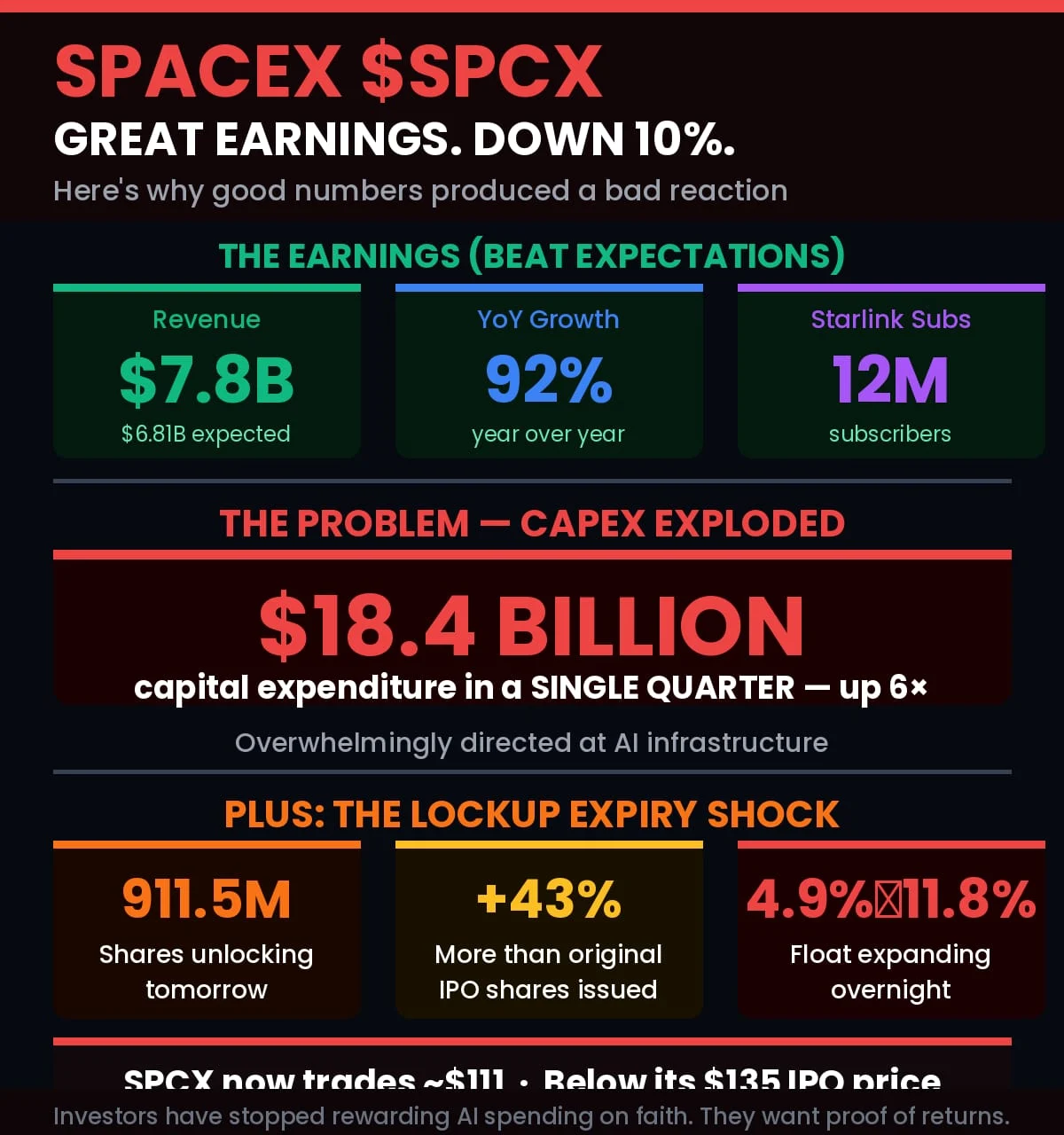
At the epicenter of Wall Street’s reversal was SpaceX, or more accurately, the trading vehicle often associated with it, $SPCX. The specific dynamics surrounding $SPCX provided a fascinating case study in how structural market details can significantly outweigh seemingly positive headline news. A staggering 911.5 million shares of $SPCX, primarily held by employees and early investors, were slated to become eligible for trading in the immediate future. This colossal supply shock represented approximately 43% more shares than the 638.9 million originally issued at the company’s initial public offering (IPO), effectively expanding SpaceX’s free float from a constrained 4.9% to a more substantial 11.8% of outstanding shares. Such a dramatic increase in available shares, often associated with the expiration of lockup periods, typically creates significant selling pressure as early investors and employees realize gains, irrespective of the company’s underlying performance.
What made this situation particularly telling was that the company’s latest earnings report was, by most conventional metrics, robust. Revenue climbed to $7.8 billion against an expected $6.81 billion, marking an impressive 92% year-over-year increase. Furthermore, its Starlink satellite internet service had reached a significant milestone of 12 million subscribers. Under normal circumstances, these figures would likely be met with investor enthusiasm. Yet, $SPCX plummeted by 10% on the day, illustrating a profound disconnect between strong operational performance and negative market reaction.
The core issue, however, was not revenue but capital expenditure (capex). SpaceX’s spending had surged sixfold in a single quarter, reaching an eye-watering $18.4 billion, overwhelmingly directed towards artificial intelligence infrastructure. This colossal investment, while indicative of aggressive growth strategies and a commitment to future technologies, struck a nerve with investors. The market has demonstrably shifted from simply rewarding companies for declaring their intention to invest heavily in AI to demanding tangible proof that this massive spending will convert into commensurate profits and sustainable revenue streams in the near term. This represents a significantly higher bar than what AI-adjacent companies have been clearing over the past couple of years, a bar that is unlikely to be lowered anytime soon.
Elon Musk’s response to these developments was to double down, accelerating his already ambitious targets. He revised SpaceX’s annual revenue projection to $1 trillion by 2030, a year earlier than his previous forecast of 2031. While such bold pronouncements are characteristic of Musk’s leadership and can inspire long-term vision, the immediate market reaction was telling. The stock, trading around $111, remained below its $135 IPO price, and the impending lockup expiry, which could potentially flood the market with up to 20% of outstanding shares, only intensified the overhang. For those hoping for a swift turnaround in sentiment, the timing of these events could hardly have been more challenging.
AMD’s Parallel Plight and the AI Investment Reassessment
The narrative unfolding with Advanced Micro Devices (AMD) echoed SpaceX’s experience in a strikingly similar fashion, further underscoring the market’s evolving stance on AI investments. AMD, a critical player in the semiconductor industry and a key supplier of chips essential for AI processing, found itself facing comparable investor skepticism. Despite its strategic positioning and significant investments in AI-related technologies, the market signaled that it was no longer willing to underwrite AI spending based on faith alone.
Like SpaceX, AMD’s operational metrics might have indicated strong underlying business activity and future potential in the AI space. However, investors are now asking harder questions about the return on investment for these capital-intensive AI ventures. The focus has shifted from the "promise" of AI to the "profitability" of AI. This scrutiny is particularly acute for companies that have seen their valuations soar on the back of AI hype, leading to a reassessment of their long-term financial models and their ability to translate innovation into bottom-line results. The parallel reactions to SpaceX and AMD suggest a broader recalibration of expectations within the technology sector, especially concerning companies heavily investing in AI infrastructure.
Broader Implications: A Shifting Investment Landscape
The profound divergence observed across global markets today offers critical insights into a rapidly evolving investment landscape. It signals that the market is becoming acutely more selective, moving beyond a simplistic "rising tide lifts all boats" mentality, especially within the technology and growth sectors that have dominated recent bullish cycles.
This phenomenon is best understood as a significant capital rotation. Investors are not merely retreating from risk; rather, they are reallocating capital based on a more nuanced assessment of opportunities and risks. Macroeconomic tailwinds, such as falling energy prices and de-escalating geopolitical tensions, are proving powerful enough to lift entire regions and broad indices, making Asian markets particularly attractive. These are factors that reduce systemic risk, improve economic outlooks, and offer a clear path to broader market appreciation.
Conversely, individual companies, particularly those that have benefited from the AI boom, are now facing unprecedented scrutiny. The era of rewarding ambition and investment in AI without a clear, demonstrable path to profitability appears to be waning. Investors are demanding concrete evidence that massive capital expenditures, even those directed at cutting-edge AI infrastructure, will translate into tangible revenue growth and improved earnings per share. This means that future investment in the AI sector will likely favor companies that can articulate a clear business model for monetizing their AI capabilities and demonstrate efficient capital allocation.
The interplay of geopolitical events on market sentiment is also increasingly evident. The prospect of stability in the Strait of Hormuz vividly illustrates how global political developments can directly influence commodity prices, inflation expectations, and, consequently, investor appetite for risk across different geographies. This highlights the growing importance of geopolitical analysis in investment decision-making.
Furthermore, the backdrop of global monetary policy, characterized by higher interest rates compared to the ultra-low rates of the past decade, plays a crucial role. In an environment where the cost of capital is higher, the valuation of future profits is discounted more heavily. This inherently leads investors to demand quicker returns and a clearer path to profitability from high-growth, capital-intensive ventures, making the scrutiny on AI spending particularly intense. The shift from a "Fear of Missing Out" (FOMO) mentality to a more disciplined, value-oriented approach signifies a maturation in the market’s assessment of innovation.
In conclusion, today’s market action was far more than a simple geographical dichotomy of "Asia good, America bad." It was a complex and telling illustration of a global market in transition. While macro-level improvements are creating opportunities in certain regions, a fundamental reassessment is underway at the micro-level, especially within the AI sector. Investors are asking harder questions, demanding greater accountability for capital deployment, and prioritizing proven profitability over speculative growth. This split, driven by a combination of macroeconomic tailwinds and heightened individual company scrutiny, will likely define investment trends for the foreseeable future, making diligent analysis of both broad market forces and specific company fundamentals more critical than ever.
Disclosure: This is not trading or investment advice. Always do your research before buying any cryptocurrency or investing in any services.
Follow us on Twitter @themerklehash to stay updated with the latest Crypto, NFT, AI, Cybersecurity, and Metaverse news!














