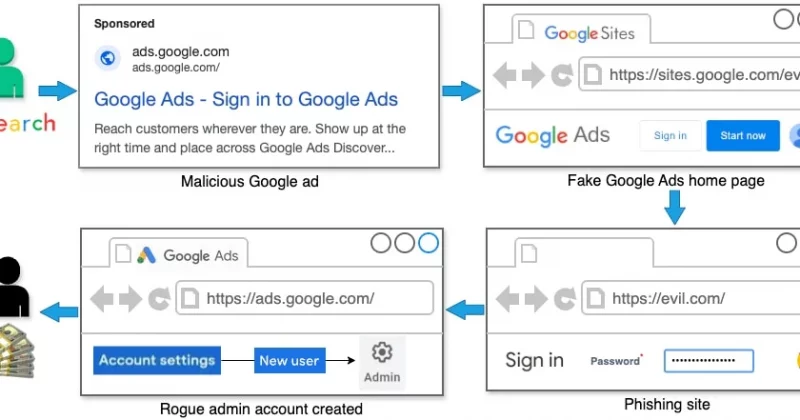
An experienced cryptocurrency trader, known online as @ika_xbt, has suffered a devastating loss, seeing their entire portfolio, valued at over $400,000, vanish after falling victim to a sophisticated phishing scam. The incident, which came to light on May 26th, involved clicking on a sponsored Google advertisement that mimicked the legitimate Uniswap decentralized exchange (DEX) website with uncanny accuracy. The deceptive ad led the trader to a fraudulent site, resulting in the irreversible loss of their digital assets.
The phishing campaign, which appears to have gained traction around May 26th, leveraged Google Search ads to promote cloned versions of Uniswap’s user interface. When unsuspecting users searched for "Uniswap," the malicious advertisement would appear prominently at the top of the search results, often above the genuine listing. This tactic preyed on the trust users place in search engine rankings, leading them directly into the attackers’ trap. Initial investigations have identified two cryptocurrency wallets linked to the perpetrators, collectively holding approximately 146 Ether (ETH), which at the time of discovery was valued at around $306,000. The total amount stolen, however, is confirmed to exceed the $400,000 mark.
The Mechanics of the Deceptive Operation
The modus operandi of this particular phishing scheme is disturbingly simple yet highly effective. Attackers strategically purchase sponsored advertisements on Google, specifically targeting the highly searched keyword "Uniswap." This ensures that anyone actively seeking to access the popular decentralized exchange is likely to encounter the fraudulent link. The cloned website presented to users is a near-perfect replica of the real Uniswap interface, meticulously designed to bypass scrutiny. Users are tricked into connecting their digital wallets to this fake platform and subsequently approving a transaction.
Once a user grants permission for a transaction on the phishing site, the malicious smart contract deployed by the attackers is triggered. This contract is designed to swiftly and systematically drain all accessible funds from the connected wallet. The inherent nature of blockchain technology, with its immutable and irreversible transactions, means that once these funds are moved, there is no recourse. Unlike traditional financial systems, there is no customer service department to contact, no chargeback mechanism to initiate, and crucially, no "undo" button.
In the case of @ika_xbt, a single, seemingly innocuous approval on the fake Uniswap site led to the complete depletion of their entire digital asset holdings. It is critical to understand that this attack did not exploit any vulnerabilities within Uniswap’s underlying smart contracts or its core infrastructure. The protocol itself remained secure and uncompromised. Instead, the scam’s success hinged entirely on exploiting human trust in the perceived legitimacy of Google’s sponsored search results.
A Recurring Pattern of Digital Deception
This incident is not an isolated event but rather a chilling example of a growing trend in the cryptocurrency space. The Security Alliance, widely known as SEAL, has been diligently tracking and documenting an alarming surge in Google Search-based phishing campaigns targeting various prominent crypto protocols. This pattern has been escalating significantly since March 2026, with the core methodology remaining remarkably consistent: attackers acquire advertising space, meticulously clone a trusted decentralized finance (DeFi) interface, and then patiently await unsuspecting users to connect their wallets.
The financial repercussions of these Google-driven phishing attacks have been substantial and persistent. As recently as February 2026, similar campaigns were responsible for losses amounting to six figures. An even more significant incident occurred in July 2025, when a comparable scheme resulted in a staggering $1.2 million being stolen from users. This ongoing vulnerability highlights a critical gap in the security ecosystem of digital asset trading.
Hayden Adams, the founder of Uniswap, has been a vocal critic of this persistent problem. He has publicly condemned search platforms, including Google, for what he perceives as a lack of decisive action in combating these fraudulent advertisements. Adams’s frustration is a sentiment echoed by many within the crypto community, particularly in the wake of previous, similar incidents that have eroded trust and caused significant financial harm to users. His public statements underscore the need for greater accountability from advertising platforms in vetting and removing malicious content.
Implications for Investors and the Path Forward
The devastating loss experienced by @ika_xbt serves as a stark reminder of the inherent risks associated with navigating the decentralized finance landscape, particularly when relying on search engines for access. The most effective and cost-efficient defense against this specific type of attack is remarkably straightforward: users should bookmark the direct URLs of the DeFi protocols they frequent. Taking a few seconds to save the correct web address can prevent potentially catastrophic financial losses. This simple habit bypasses the need to rely on search results, thereby mitigating the risk of landing on a phishing site.
For users employing hardware wallets, there is a partial layer of protection. Many hardware wallets necessitate explicit on-device confirmation of transaction details. This process acts as a crucial final checkpoint, allowing users to carefully review the specifics of any proposed transaction before it is authorized. However, even this robust security measure is not foolproof. It relies on the user’s diligence in meticulously examining the information presented on the hardware wallet’s screen. A cursory glance or a lack of understanding of the transaction details can still lead to a malicious approval.
The irreversible nature of blockchain transactions, often touted as a strength for its transparency and security, becomes its most dangerous liability in scenarios like this. Traditional financial systems, while not immune to fraud, incorporate numerous safeguards precisely because human error is a reality. These safeguards include fraud detection systems, chargeback mechanisms, and insurance policies that offer a degree of protection and recourse. Decentralized finance, by its very design, largely omits these traditional safety nets, placing a greater burden of responsibility and vigilance squarely on the shoulders of the individual investor.
Broader Impact and Analysis
The recurring nature of these phishing scams, particularly those exploiting search engine advertising, raises significant questions about the responsibilities of major tech platforms in protecting their users from financial harm. The sheer volume of searches for popular cryptocurrency exchanges and protocols suggests that these platforms are prime targets for malicious actors. The fact that sophisticated, visually identical phishing sites can be promoted via paid advertising underscores a critical failure in the ad verification and content moderation processes employed by these search giants.
The financial losses, consistently reaching six and even seven figures, have a ripple effect beyond the individual victims. They contribute to a broader erosion of trust in the nascent DeFi space, potentially deterring new users who are already cautious about the perceived volatility and complexity of cryptocurrencies. For seasoned traders, like @ika_xbt, the experience highlights the constant need for heightened security awareness and the adoption of best practices, even when seemingly interacting with familiar and trusted brands.
The legal and regulatory landscape surrounding decentralized finance is still evolving. While some jurisdictions are beginning to implement frameworks for digital asset regulation, the cross-border nature of cryptocurrency and the decentralized architecture of many DeFi protocols present significant challenges for enforcement. The perpetrators of these phishing scams, often operating anonymously from various parts of the world, are difficult to trace and prosecute, further exacerbating the problem.
Looking Ahead: A Call for Enhanced Vigilance and Platform Accountability
The future of secure participation in the decentralized finance ecosystem hinges on a multi-pronged approach. Firstly, continued education and awareness campaigns are vital to equip users with the knowledge to identify and avoid phishing attempts. This includes understanding the risks associated with clicking on sponsored ads, verifying website URLs meticulously, and being wary of any requests to connect wallets or approve transactions on unfamiliar or suspiciously presented platforms.
Secondly, there is an urgent need for greater accountability from the platforms that facilitate these advertisements. Search engines and social media platforms have a moral and, increasingly, a potential legal obligation to implement more robust vetting processes for advertisers, particularly those in high-risk sectors like cryptocurrency. Proactive measures to identify and remove fraudulent ads, coupled with swift action when scams are reported, are essential.
Finally, the development and adoption of enhanced security tools and practices within the crypto community itself are crucial. While protocols like Uniswap are not inherently compromised, the interfaces and access points users interact with must be secured. Innovations in wallet security, such as more advanced transaction simulation and verification features, can provide additional layers of defense.
The loss of over $400,000 for @ika_xbt is a stark and painful testament to the evolving sophistication of crypto scams. It serves as a critical warning to all participants in the digital asset space that vigilance, due diligence, and a commitment to security best practices are not merely recommended, but absolutely essential for survival and success. The industry, platform providers, and individual users must collectively address these vulnerabilities to foster a safer and more trustworthy environment for the future of decentralized finance.