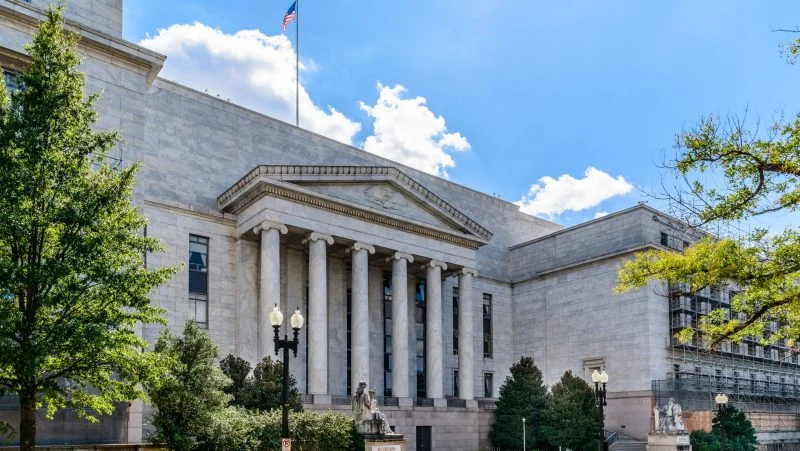
The United States House Committee on Oversight and Accountability has significantly broadened its investigation into the operations of online prediction markets, signaling a major escalation in federal oversight of the rapidly growing sector. In a series of letters dispatched on Tuesday, Committee Chairman James Comer (R-Ky.) requested extensive internal records from several major platforms, including Hyperliquid Labs, Crypto.com, and entities associated with the Aristotle-linked PredictIt exchange. This move marks a critical expansion of a probe that initially focused on industry leaders Polymarket and Kalshi, as lawmakers pivot toward a more comprehensive examination of how these platforms manage sensitive information, verify user identities, and enforce geographic restrictions.
The primary objective of the expanded inquiry is to determine whether prediction markets—venues where users wager on the outcomes of real-world events ranging from elections to Federal Reserve interest rate hikes—possess adequate safeguards to prevent insider trading. Of particular concern to the committee is the potential for individuals with access to nonpublic or classified government information to leverage that knowledge for financial gain. The committee has set a firm deadline of October 13, 2024, for the platforms to produce records dating back to the beginning of the year.
The Scope of the Expanded Investigation
The House Oversight Committee’s latest actions target a diverse cross-section of the prediction market and cryptocurrency landscape. While earlier phases of the investigation focused on dedicated event-contract platforms, the new requests encompass decentralized finance (DeFi) protocols and major international cryptocurrency exchanges.
For Hyperliquid Labs, the committee has requested detailed documentation regarding its identity verification procedures (Know Your Customer, or KYC), geographic controls designed to prevent users in prohibited jurisdictions from accessing the platform, and internal systems for flagging anomalous or suspicious trading activity. A specific point of contention for lawmakers is a massive leveraged short position opened on the platform shortly before a major policy announcement regarding international trade.
Crypto.com, one of the world’s largest retail cryptocurrency exchanges, received similar inquiries. The committee is seeking records related to both its international operations and its North American derivatives arm. Lawmakers are specifically interested in the internal restrictions Crypto.com maintains to prevent its own employees, who may have access to confidential market-moving data, from participating in related event contracts.
Furthermore, the committee’s reach has extended to Aristotle-related entities and PredictIt. PredictIt is a long-standing player in the political wagering space, operating under a specific "no-action" framework from the Commodity Futures Trading Commission (CFTC). The committee is seeking clarity on how these platforms manage political event contracts and what measures are in place to detect trades that might be influenced by privileged political insights.
The Hyperliquid Anomaly: A $1.1 Billion Red Flag
A central catalyst for the expansion of this probe involves a highly suspicious sequence of trades on Hyperliquid, a decentralized exchange known for its high-leverage offerings. According to public blockchain data cited by the committee, a single trader opened approximately $1.1 billion in leveraged Bitcoin and Ether short positions roughly 30 hours before President Donald Trump announced a new round of tariffs on China in October 2025.
When the announcement was made public, the market reacted sharply, and the trader subsequently closed the positions, netting a profit exceeding $150 million. While the committee has not officially established that the trader was in possession of nonpublic government information, the timing and scale of the transaction have raised significant alarms regarding the potential for "information leakage" from government circles into the crypto-derivatives market.
Lawmakers are now demanding that Hyperliquid provide a comprehensive accounting of this transaction, including any internal flags the trade might have triggered and the extent to which the platform verified the identity of the individual or entity behind the account. This specific case highlights a growing fear among regulators: that the anonymity and high leverage afforded by DeFi platforms could provide a "perfect storm" for state-sponsored or high-level insider trading that is difficult for traditional financial regulators to track.
A Chronology of the Prediction Market Probe
The current investigation did not emerge in a vacuum; it is the result of a multi-month effort to understand the systemic risks posed by the event-contract industry.
- May 2024: Chairman James Comer officially launches the probe by sending letters to Polymarket and Kalshi. The initial requests focused on KYC procedures and the methods used to restrict access in jurisdictions where such gambling or trading is prohibited.
- Summer 2024: Polymarket and Kalshi engage in a series of briefings with committee staff. During this period, the platforms reportedly handed over nearly 1,000 documents detailing their compliance frameworks and suspicious activity reporting (SAR) protocols.
- August–September 2024: High-profile legal cases involving insider trading on prediction markets begin to surface in federal courts, providing the committee with "proof of concept" for their concerns.
- October 1, 2024: The committee officially expands the probe to include Hyperliquid, Crypto.com, and Aristotle/PredictIt, citing the need for a broader understanding of the industry beyond just the primary market leaders.
- October 13, 2024: The deadline for the newly targeted platforms to submit their records to the House Oversight Committee.
Case Studies in Misconduct: Maduro and Google
The committee’s concerns are bolstered by two recent federal prosecutions that demonstrate how prediction markets can be exploited by those with privileged access.
In April 2024, federal prosecutors charged U.S. Army Master Sergeant Gannon Ken Van Dyke. The allegations suggest that Van Dyke utilized classified military information regarding a sensitive operation—the removal of Venezuelan leader Nicolás Maduro from power—to place bets on Polymarket. Van Dyke allegedly turned this classified knowledge into approximately $400,000 in profit. While the case is still pending and no conviction has been reached, the mere allegation that a member of the armed forces could monetize state secrets via a crypto-based prediction market has deeply unsettled national security officials.
A month later, a separate case emerged involving a software engineer at Google. Prosecutors alleged that the employee used confidential internal company data to inform wagers on Polymarket, resulting in roughly $1.2 million in illicit gains. In this instance, Polymarket reportedly cooperated with federal authorities, providing data that helped lead to the charges. These cases serve as a primary justification for the House Oversight Committee’s insistence that platforms must have more robust, proactive systems for detecting trades that deviate from standard market behavior.
The Regulatory Tug-of-War and Geographic Restrictions
A major theme of the investigation is the efficacy of "geo-fencing." Many prediction markets, particularly Polymarket, are officially barred from operating in the United States due to previous settlements with the CFTC. However, the use of Virtual Private Networks (VPNs) has made these restrictions notoriously easy to bypass.
The committee is seeking to understand if these platforms are merely performing "theatrical compliance"—setting up basic blocks that they know can be circumvented—or if they are taking meaningful steps to verify the physical location and identity of their users. The lack of stringent KYC on decentralized platforms is a particular point of friction. If a platform does not know who its users are, it cannot effectively determine if a user is a government official, a corporate insider, or a foreign national attempting to manipulate domestic sentiment.
This investigation also coincides with a broader legal battle between the CFTC and the industry. Kalshi recently won a landmark court case against the CFTC, which had attempted to block the platform from offering contracts on which party would control Congress. The court’s ruling suggested that the CFTC had overstepped its authority, a decision that has emboldened the industry but simultaneously increased the resolve of lawmakers like Comer to find other avenues of regulation—such as through the lens of national security and insider trading.
Implications for the Future of Decentralized Finance
The expansion of the probe into Hyperliquid and Crypto.com suggests that lawmakers no longer view prediction markets as a niche corner of the internet. Instead, they are being treated as integral parts of the broader financial ecosystem that require the same level of scrutiny as traditional stock exchanges.
For the decentralized finance (DeFi) sector, this represents a significant challenge. Many DeFi protocols operate on the principle of permissionless access and pseudonymity. If the House Oversight Committee successfully pressures these platforms to adopt bank-grade KYC and monitoring systems, it could fundamentally alter the "decentralized" nature of these services.
Industry analysts suggest that the outcome of this investigation could lead to new legislative proposals in 2025. These might include:
- Mandatory Insider Trading Policies: Requiring all event-contract platforms to implement and enforce strict "no-trade" lists for employees and government contractors.
- Enhanced Reporting Standards: Creating a centralized database or a standardized protocol for reporting suspicious trades to the CFTC and the SEC.
- Stricter Geographic Enforcement: Potential fines for platforms that fail to implement "reasonable" measures to block users from prohibited jurisdictions, with "reasonable" being defined much more strictly than current standards.
Official Responses and Industry Reaction
While many of the platforms have remained tight-lipped regarding the specific details of the committee’s letters, representatives from the broader industry have expressed a mix of cooperation and concern. A spokesperson for one of the targeted entities, speaking on the condition of anonymity, noted that "compliance is a moving target in a rapidly evolving technological landscape," but emphasized that the platforms are "committed to maintaining market integrity."
Advocacy groups for the crypto industry, such as the Coin Center and the Blockchain Association, have previously argued that overly burdensome regulations could drive innovation offshore, leaving U.S. regulators with even less visibility into these markets. However, the House Oversight Committee appears undeterred by these arguments, focusing instead on the immediate risks of market manipulation and the protection of sensitive government data.
As the October 13 deadline approaches, the financial and political worlds will be watching closely. The documents provided to the committee may reveal the true extent of "informed" trading in these markets, potentially uncovering more instances where the line between a lucky guess and a criminal act has been blurred. For an industry that prides itself on the "wisdom of the crowd," the coming months may prove that some members of the crowd are significantly more wise—and more dangerous—than others.