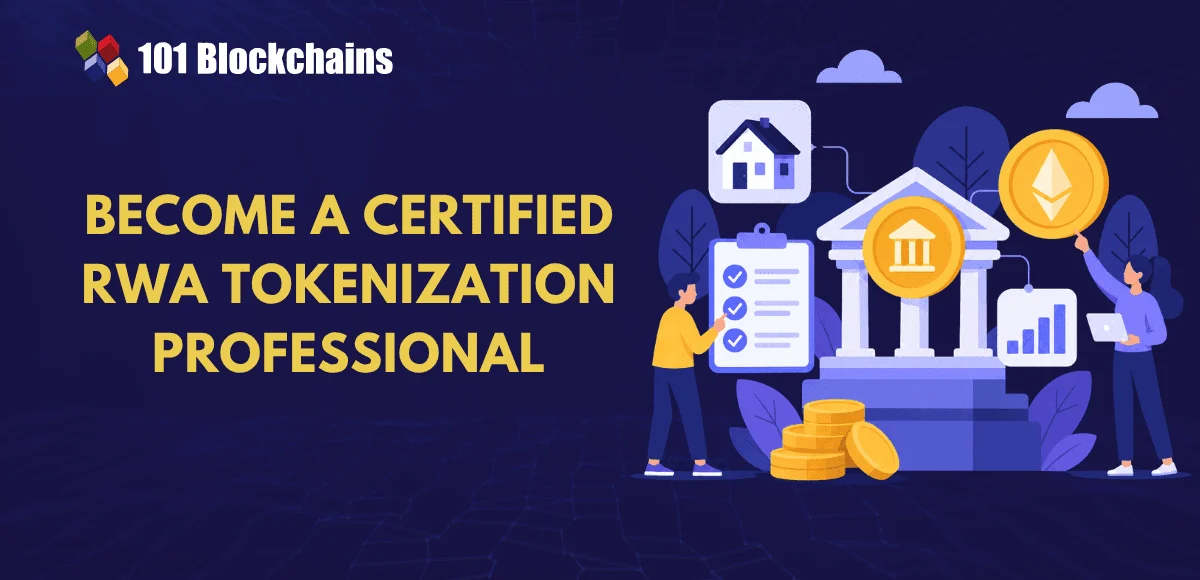
The global financial landscape is experiencing a profound transformation, driven by the burgeoning field of real-world asset (RWA) tokenization. This revolutionary approach, which involves digitizing tangible and intangible assets on blockchain networks, is attracting significant attention from financial giants like JP Morgan and Franklin Templeton. As these institutions increasingly explore and implement RWA tokenization, a substantial talent gap has emerged, prompting professionals to seek specialized certifications such as the Certified RWA Tokenization Professional (CRWATP)™ to carve out promising careers in this rapidly evolving sector. The shift from traditional, often illiquid assets to a more accessible and efficient digital format demands a new breed of experts who possess a comprehensive understanding of both finance and cutting-edge blockchain technology.
The Paradigm Shift: Understanding Real-World Asset Tokenization
Real-world asset tokenization represents the process of converting the rights to an external, tangible, or intangible asset into a digital token on a blockchain. These assets can range from commercial real estate and US Treasury bonds to fine art, intellectual property, and even private equity. Historically, many of these assets have been characterized by their illiquidity, high transaction costs, and opaque ownership structures. RWA tokenization offers an elegant solution to these challenges, effectively bridging the divide between traditional finance and the decentralized world of blockchain.
The core premise is straightforward: a token on a blockchain legally represents a fractional or full ownership stake in a real-world asset. This digital representation brings with it a host of benefits that are poised to redefine global finance. As assets worth trillions of dollars are projected to migrate to the digital space, the demand for multidisciplinary experts who can navigate the complexities of RWA tokenization is escalating dramatically. Professionals seeking to enter this domain require a robust understanding of its mechanisms, legal implications, and technological underpinnings.
Driving Forces and Transformative Benefits of RWA Tokenization
The surge in interest surrounding RWA tokenization is not merely a fleeting trend; it is underpinned by fundamental advantages that address long-standing inefficiencies in traditional financial markets. These benefits are the primary drivers behind the creation of a vibrant new job market and numerous career opportunities.
-
Enhanced Liquidity: One of the most significant advantages of RWA tokenization is its ability to unlock liquidity for historically illiquid assets. Traditional assets like real estate, private debt, and infrastructure projects are often difficult and slow to trade. By tokenizing these assets, they can be divided into smaller, tradable units (tokens) and exchanged on secondary markets 24/7, significantly enhancing their liquidity. This allows investors to enter and exit positions more easily, reducing market friction and unlocking capital.
-
Fractional Ownership and Democratization of Investment: RWA tokenization enables fractional ownership, meaning that expensive assets can be divided into numerous tokens, each representing a small share. For instance, instead of requiring an investor to purchase a multi-million dollar commercial property outright, they can buy a token representing a $500 share of that property. This democratizes access to high-value assets previously exclusive to institutional or ultra-high-net-worth investors, opening new investment avenues for a broader base of retail participants.
-
Increased Transparency and Auditability: When RWA tokens are placed on a blockchain, ownership records and transaction histories become immutable and transparent. Every transfer and change of ownership is recorded on a distributed ledger, providing an indisputable audit trail. This inherent transparency significantly reduces the potential for fraud, enhances trust among participants, and streamlines regulatory oversight, leading to a more secure and accountable financial ecosystem.
-
Operational Efficiencies and Cost Reduction: By leveraging blockchain technology, RWA tokenization can significantly reduce the number of intermediaries involved in asset transactions. This leads to faster settlement times, lower administrative costs, and reduced counterparty risk. The automation potential offered by smart contracts for tasks such as dividend distribution, interest payments, or voting rights further streamlines operations, driving down operational overheads for asset managers and issuers.
-
Global Accessibility and Financial Inclusion: Blockchain-based assets are inherently global, allowing for cross-border transactions with greater ease and lower costs than traditional systems. This facilitates access to a wider pool of investors and capital, potentially bringing financial services to underserved populations and regions.
Industry Momentum and Projections: A Rapidly Expanding Market
The growing adoption of RWA tokenization by major financial players underscores its potential to reshape global finance. JP Morgan’s Onyx platform has been instrumental in exploring blockchain-based solutions for wholesale payments and tokenized collateral, showcasing institutional confidence in the technology. Franklin Templeton’s OnChain U.S. Government Money Market Fund (FOBXX), which uses the Stellar and Polygon blockchains to process transactions and record share ownership, is another prominent example of a regulated investment product leveraging tokenization. Beyond these giants, companies like Siemens have issued digital bonds on public blockchains, and numerous startups are innovating across various asset classes, from real estate (e.g., Brickken, RealT) to private credit (e.g., Centrifuge, Ondo Finance).
Market analysts and consulting firms have offered compelling projections for the growth of this sector. A Boston Consulting Group (BCG) report, in collaboration with ADDX, estimated that the tokenization of illiquid assets could reach $16 trillion by 2030. Citi’s "Future of Money" report highlighted tokenization as a key technology that could revolutionize capital markets. BlackRock CEO Larry Fink has publicly stated that the next generation of markets will be tokenized, emphasizing the efficiency and cost reduction it brings. These statements from industry leaders and the substantial market forecasts indicate that RWA tokenization is not just a technological advancement but a fundamental shift in how assets will be owned, managed, and traded globally.
Navigating the Talent Gap: Who Needs RWA Tokenization Expertise?
The exponential growth of the RWA tokenization market directly translates into a soaring demand for specialized professionals. However, merely being a "crypto enthusiast" is insufficient. The industry requires individuals with a deep, multidisciplinary understanding of finance, technology, legal frameworks, and regulatory compliance. The Certified RWA Tokenization Professional (CRWATP)™ certification is designed for a diverse range of professionals looking to capitalize on this burgeoning field:
- Financial Professionals: Asset managers, investment bankers, wealth advisors, portfolio managers, and institutional investors who need to understand how to integrate tokenized assets into their strategies, evaluate new investment opportunities, and manage digital portfolios.
- Legal and Compliance Experts: Lawyers, compliance officers, and regulatory specialists who must navigate the complex and evolving legal landscape surrounding digital securities, understand jurisdiction-specific regulations (e.g., SEC regulations in the US, MiCA in Europe), and ensure adherence to KYC (Know Your Customer) and AML (Anti-Money Laundering) procedures in token design and issuance.
- Blockchain Developers and Architects: While not requiring the expertise of a senior software engineer, professionals involved in building robust and secure smart contracts, choosing appropriate blockchain networks, and developing tokenization platforms will greatly benefit from a holistic understanding of RWA principles.
- Real Estate Professionals: Brokers, developers, and investors in commercial and residential real estate can leverage tokenization to unlock liquidity, reduce transaction costs, and attract a broader investor base.
- Venture Capitalists and Private Equity Specialists: Professionals involved in funding and managing private assets need to understand the potential for tokenization to enhance liquidity, facilitate secondary trading, and broaden investor access for private market investments.
- Traditional Finance Professionals: Individuals working in traditional financial institutions who aim to future-proof their careers and lead tokenization initiatives within their organizations, showcasing their capability to adapt to the digital asset revolution.
The CRWATP™ Curriculum: A Holistic Approach to Expertise
A comprehensive RWA tokenization certification program, such as the CRWATP™, goes far beyond merely understanding smart contract code. It focuses on the entire lifecycle of a tokenized asset, requiring candidates to develop a holistic understanding of several core concepts.
-
Strategic Asset Selection and Valuation: Not every asset is suitable for tokenization. Certified RWA tokenization experts must be able to identify assets with genuine market demand, predictable cash flows, and clear legal title. This involves understanding valuation methodologies specific to tokenized assets, designing appropriate yield mechanisms, and conducting thorough due diligence on the underlying physical or intangible asset. The ability to assess regulatory viability and market fit is paramount.
-
Legal and Regulatory Frameworks: The tokenization of real-world assets operates within a complex and often fragmented global regulatory environment. Professionals must deeply understand relevant securities laws (e.g., the Securities Act of 1933 and the Exchange Act of 1934 in the US, MiCA in the EU), corporate law, property law, and international legal considerations. Crucially, they must master the integration of KYC/AML procedures into token design and issuance, ensuring compliance at every stage. This also includes understanding how legal restrictions can be embedded into smart contracts.
-
Blockchain Technology and Smart Contracts: While not requiring expert-level coding, a professional needs a strong awareness of the underlying technological stack. This includes selecting the most appropriate blockchain for a given asset (e.g., public chains like Ethereum, Polygon, Solana, or permissioned enterprise blockchains), understanding various token standards (e.g., ERC-20, ERC-721, ERC-1400/Security Token Standard), and grasping concepts like interoperability, cross-chain liquidity mechanisms, and oracle integration for data feeds. Knowledge of smart contract security audits and common vulnerabilities is also critical.
-
Issuance, Custody, and Distribution of RWA Tokens: Creating RWA tokens is only one part of the equation. Experts must understand the entire process from primary issuance to secondary market trading. This involves knowledge of digital asset custody solutions (hot, cold, multi-signature wallets, institutional custodians), the development of robust RWA tokenization infrastructures, and effective strategies for distributing tokens to both institutional and retail investors. It also encompasses understanding investor onboarding, wallet management best practices, and the integration with secondary trading venues.
An Ideal Roadmap to Becoming a Certified RWA Tokenization Professional
Success in becoming a certified RWA tokenization expert requires a strategic and structured roadmap.
-
Build Foundational Knowledge: Begin by acquiring a solid understanding of the broader digital asset ecosystem. This includes fundamental blockchain concepts, the principles of decentralized finance (DeFi), and how they intersect with traditional financial systems. Familiarize yourself with different blockchain protocols and the basic working mechanisms of various RWA projects.
-
Engage in Specialized Learning: Enroll in professional courses that delve specifically into digital securities, asset tokenization, and Web3 finance. Look for programs that incorporate practical case studies, real-world project simulations, and insights into different RWA protocols and platforms. This specialized knowledge is crucial for bridging theoretical understanding with practical application.
-
Master Regulatory and Legal Acumen: Dedicate significant time to understanding the complex and evolving legal and regulatory landscape. This involves not just memorizing laws but understanding how smart contracts can enforce legal restrictions, how to navigate cross-jurisdictional challenges, and the importance of collaboration with legal counsel. Staying abreast of global regulatory developments (e.g., MiCA, upcoming US legislation) is vital.
-
Gain Practical Experience: Theoretical knowledge alone is insufficient. Seek opportunities for practical experience through internships, participation in pilot projects, or contributing to open-source RWA initiatives. Hands-on involvement in token design, platform development, or compliance implementation will significantly enhance credibility and expertise.
-
Achieve Certification and Network: The final, crucial step is to pursue and successfully complete a reputable RWA tokenization certification program like the CRWATP™. Once certified, prominently display your achievement on professional platforms like LinkedIn. This certification acts as a powerful signal to employers and peers, validating your expertise and commitment to a career in this cutting-edge field. Actively engage with the RWA community through forums, conferences, and industry events to build a strong professional network.
Broader Implications and The Future of Finance
RWA tokenization is not merely an incremental improvement; it is a transformative force that is blurring the lines between traditional finance (TradFi) and decentralized finance (DeFi). This convergence holds the potential to create a more efficient, transparent, and inclusive global financial system. We can expect to see new financial products, innovative investment vehicles, and a re-imagining of capital markets.
However, the path forward is not without its challenges. Issues such as regulatory harmonization across different jurisdictions, scalability of blockchain infrastructure, interoperability between various networks, and the development of robust market infrastructure for secondary trading of tokenized assets will need to be addressed. Despite these hurdles, the long-term vision is clear: a globally connected financial system where assets can be seamlessly traded, owned, and managed with unprecedented efficiency and accessibility.
In conclusion, real-world asset tokenization represents one of the fastest-growing and most impactful sectors within the broader digital asset space. It offers distinct benefits for businesses, investors, and the global financial system at large, leading to a surge in demand for specialized talent. For professionals seeking to build a thriving career at the forefront of financial innovation, becoming a Certified RWA Tokenization Professional through a trusted certification program is not just an option but a strategic imperative. The future of finance is digital, and those who master RWA tokenization will be instrumental in shaping it.