Humanity Protocol, a project focused on decentralized identity, is undertaking a comprehensive overhaul of its token infrastructure, moving to scrap its existing ‘H’ token and introduce a brand-new Ethereum-based version. This drastic measure comes in the wake of a significant security breach that severely impacted the project’s ecosystem, necessitating a complete reset to restore integrity and user confidence.
The project team officially confirmed this pivotal decision in a Tuesday statement, detailing an elaborate migration plan designed to ensure a structured recovery. This plan encompasses a precise snapshot-based airdrop, a full mainnet relaunch for the project’s underlying infrastructure, and the establishment of a dedicated compensation fund to address complex edge cases. Crucially, the announcement explicitly stated that individuals who acquired the H token after the security incident, particularly those who "bought the dip" in anticipation of a recovery, will not be eligible for the replacement tokens. This stance marks a deliberate and potentially contentious decision aimed at delineating eligible holders.
This token replacement operation stands out as one of the more profound post-exploit recovery efforts in the recent history of decentralized finance (DeFi) and blockchain projects. The meticulous details outlined by Humanity Protocol are of paramount importance for all stakeholders, particularly existing token holders, as they navigate the implications for their digital assets and understand their standing in this intricate migration process.
The Security Incident: A Catalyst for Drastic Action
The root cause of this extensive recovery operation was a severe security breach that compromised the Humanity Protocol ecosystem. While specific technical details of the exploit were not fully disclosed in the initial announcement, the project’s decision to pursue a full token retirement rather than a piecemeal patch-and-continue approach underscores the gravity of the attack. Such a measure typically indicates that the integrity of the original token contract, its associated smart contracts, or a significant portion of the project’s underlying architecture was fundamentally compromised, rendering a simple fix insufficient.
Security breaches in the cryptocurrency space have become an unfortunately common occurrence, ranging from flash loan attacks and reentrancy vulnerabilities to private key compromises and sophisticated phishing schemes. According to various blockchain security reports, billions of dollars are lost annually to such exploits. Projects operating in the decentralized identity space, like Humanity Protocol, are particularly sensitive targets given the fundamental role they play in user verification and data security. A breach in such a protocol can erode trust at a foundational level, making a "clean break" strategy, despite its complexity, often the most viable path to long-term sustainability.
Rather than attempting to fortify a potentially compromised foundation, Humanity Protocol has opted for a complete rebuild. This involves deploying a new, rigorously audited ERC-20 contract, a standard known for its widespread adoption and robust security framework within the Ethereum ecosystem. The decision to draw a hard line using a pre-attack snapshot is a common, albeit sometimes controversial, method to determine legitimate token ownership prior to the malicious activity.
The critical timestamp for this snapshot was precisely recorded across three distinct blockchain networks: Ethereum block 25,274,179, BNB Chain block 103,071,069, and Humanity Mainnet block 24,247,803. All these block heights correspond to a unified timestamp of June 8, 2026, at 17:25:35 UTC. This timestamp serves as the definitive point of reference, with token balances recorded at this exact moment forming the basis for eligibility for the new tokens. Any acquisition of H tokens after this precise moment, including speculative purchases made by traders attempting to capitalize on the post-crash price dip, is explicitly excluded from the replacement airdrop.
This strict cutoff represents a deliberate and strategic choice by the Humanity Protocol team. It signals a refusal to validate or reward any market activity that occurred after the exploit window commenced, thereby isolating the impact of the breach and focusing recovery efforts solely on those who held tokens prior to the malicious event. This policy, while potentially disappointing for opportunistic buyers, is framed as a necessary measure to ensure fairness to original holders and to prevent further financial manipulation in the wake of a security incident.
Humanity Protocol’s Mission and the Broader Context
Humanity Protocol positions itself at the forefront of the decentralized identity movement, aiming to provide a secure and privacy-preserving method for individuals to verify their identity in the digital realm. In an increasingly digital world plagued by data breaches and centralized control over personal information, projects like Humanity Protocol offer a compelling alternative by empowering users with self-sovereign identity. Their mission involves leveraging blockchain technology to create a robust, censorship-resistant, and user-centric identity layer.
A security breach, therefore, strikes at the very core of such a project’s value proposition. The integrity of identity solutions hinges entirely on trust and immutability. An exploit threatens not only the financial stability of the token but, more critically, the foundational trust in the protocol’s ability to secure sensitive identity data. This broader context explains why a partial recovery was deemed insufficient and why a full token replacement and mainnet relaunch were considered imperative to rebuild that trust from the ground up. The decision reflects a commitment to long-term security over short-term expediency.
Chronology of the Exploit and Recovery Initiative
While the exact hour of the initial exploit on June 8, 2026, leading up to the snapshot time, remains somewhat obscured, the project’s response followed a critical timeline:
- June 8, 2026, 17:25:35 UTC: This precise moment marks the point at which the exploit was either detected, or the decision was made to freeze token states by taking a snapshot across Ethereum (block 25,274,179), BNB Chain (block 103,071,069), and Humanity Mainnet (block 24,247,803). This timestamp serves as the definitive cutoff for token eligibility.
- Post-Snapshot Period (June 8, 2026 onwards): This period likely involved internal investigations by the Humanity Protocol team, engagement with blockchain security experts, and the formulation of a comprehensive recovery strategy. During this time, the H token would have experienced significant volatility and price depreciation, attracting speculative buyers.
- Tuesday Statement (Date not specified, but subsequent to exploit): Humanity Protocol publicly announced the full token replacement plan, detailing the migration process, eligibility criteria, and the establishment of the compensation fund. This statement would have communicated the new contract address and the 1:1 swap ratio.
- Ongoing: The project team continues to coordinate with centralized exchanges (CEXs) and integrate with DeFi protocols to ensure a smooth transition for all eligible holders, while simultaneously preparing for the mainnet relaunch.
This structured approach, from immediate snapshot to detailed migration plan, is indicative of a project attempting to manage a crisis with transparency and a clear path forward, even if the decisions made are difficult.
The New Token: Contract, Ratio, and Multi-Network Details
The replacement asset will retain the familiar ‘$H’ ticker, ensuring brand continuity, but will be relaunched on the Ethereum network as a new ERC-20 token. The official smart contract address for this new token is 0xE76c5b78f93909d34404E9eb4C1f19e7582a5dE1. The choice of Ethereum and the ERC-20 standard is a strategic one, leveraging Ethereum’s robust security infrastructure, extensive developer tooling, and the vast liquidity and interoperability of its ecosystem. ERC-20 tokens are the most common type of fungible tokens on Ethereum, benefiting from widespread wallet support, exchange listings, and integration with numerous DeFi protocols.
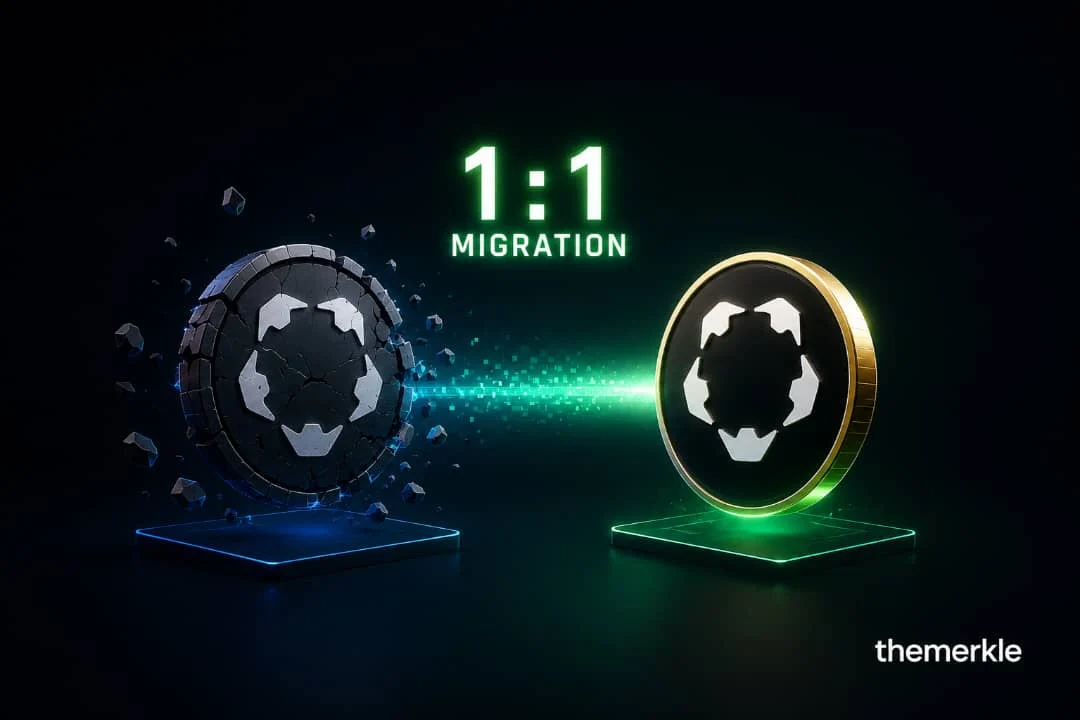
A key aspect of the migration plan is the swap ratio, which has been set at a straightforward 1:1. This means that every old H token held by an eligible user before the snapshot will be directly replaced with one new H token, without any "haircut" or reduction in the quantity of tokens. This 1:1 ratio is a positive signal for eligible holders, indicating that the project is striving to restore their holdings fully, rather than imposing a collective burden from the exploit.
Eligibility for the new tokens extends across three distinct blockchain networks where the original H token was present: Ethereum, BNB Chain, and Humanity Mainnet. This multi-network approach acknowledges the decentralized nature of the project’s user base and the need to account for holdings across various ecosystems.
- Self-Custody Wallets: Users holding H tokens in standard, non-custodial wallets (e.g., MetaMask, Ledger, Trust Wallet) will be the primary beneficiaries of the direct airdrop mechanism. The new tokens will be automatically distributed to the wallet addresses that held the old H tokens at the time of the snapshot.
- DeFi Protocols and Liquidity Pools: Tokens locked within decentralized finance protocols (e.g., lending platforms, decentralized exchanges) and liquidity pools (LPs) present a more complex challenge. These balances are typically held in smart contracts rather than directly in user wallets. The Humanity Protocol team is managing a separate, dedicated distribution process for these assets, acknowledging the nuanced on-chain structure of such holdings. This often involves coordinating with the specific DeFi protocols or performing manual claims for users whose LP tokens or staked assets were affected.
- Centralized Exchanges (CEXs): For users holding H tokens on centralized exchanges, the migration process will be coordinated directly between Humanity Protocol and the respective exchange platforms. CEX-based H holders are advised to monitor official announcements from their specific exchanges for detailed instructions on how the transition will be handled, including any temporary suspension of trading or deposit/withdrawal services during the migration period.
A critical security measure in this migration is the explicit exclusion of addresses identified as being connected to the exploit. This proactive step is vital for preventing malicious actors from profiting from their illegal activities and ensuring that the new token distribution benefits only legitimate holders.
A Compensation Fund Covers the Edge Cases
Recognizing that snapshot-based recoveries, no matter how meticulously planned, invariably encounter unique and complex scenarios, the Humanity Protocol team has proactively established both a compensation fund and a dedicated claims portal. This foresight is crucial for addressing what are commonly referred to as "edge cases" – situations that do not fit neatly into the standard snapshot-based airdrop parameters.
Such edge cases frequently include:
- Tokens in Transit: Users whose H tokens were in the process of being transferred between wallets or exchanges at the exact moment the snapshot was taken.
- Pending Transactions: Tokens locked in pending transactions on-chain that had not yet been confirmed by the network.
- Unusual Custody Arrangements: Tokens held in less common smart contract configurations, multi-signature wallets with specific approval processes, or certain bridging mechanisms that might not be directly captured by a standard wallet snapshot.
- Eligible Post-Snapshot Purchasers: While the general rule excludes post-snapshot buyers, there might be specific, verified instances (e.g., certain types of market-making activities or bona fide errors) that could warrant consideration through a formal claims process, though the primary announcement strongly discourages this.
The existence of a formal claims portal is a significant relief for these categories of holders, providing a structured pathway for resolution rather than leaving them without recourse. This demonstrates a commitment from the project to fairness and comprehensive user support beyond the default airdrop. Users with unique circumstances will likely need to provide detailed transaction hashes, wallet addresses, and explanations to validate their claims through this portal.
Alongside the migration details, the team has issued a stern and timely security warning: all official announcements and instructions regarding the token swap will originate exclusively from verified Humanity Protocol channels. This warning is paramount given the pervasive threat of post-exploit phishing attempts and scam campaigns that invariably target affected communities. Malicious actors frequently leverage the confusion and urgency following a breach to trick users into clicking fraudulent "claim" links, which can lead to the compromise of their wallets and the theft of their remaining assets. Users are strongly advised to exercise extreme caution and verify all information through official sources before taking any action.
Market Reaction and Investor Sentiment
The market’s immediate response to both the security breach and the subsequent migration news has been predictably negative, reflecting significant pressure on the H token’s value. According to CoinMarketCap data, the H token experienced an approximately 17% decline on the day of the announcement. This drop is a multifaceted reflection of several factors:
- Direct Impact of the Exploit: The initial shock and inherent devaluation caused by the security incident itself. Investors typically react by selling compromised assets to mitigate further losses.
- Uncertainty of Migration: Even with a well-structured recovery plan, forced token migrations introduce a period of uncertainty. This uncertainty often translates into selling pressure as some investors prefer to exit rather than navigate the complexities of a swap, especially if they perceive long-term reputational damage to the project.
- Exclusion of Post-Snapshot Buyers: A significant portion of the 17% decline can be directly attributed to the market pricing in the confirmation that post-snapshot buyers will not receive replacement tokens. In the hours immediately following the attack, the H token likely traded at distressed levels, attracting speculative buyers hoping for an inclusive recovery or a quick profit if the project bounced back. With the official announcement, these purchases are effectively rendered worthless in terms of receiving new tokens. The sellers on the other side of these trades effectively exited their positions at the expense of these speculative buyers, who were betting on a more forgiving recovery strategy. This creates a class of investors who are left holding an unrecoverable asset, further contributing to negative sentiment and downward price pressure.
The market’s reaction highlights the delicate balance projects must strike between ensuring fairness to pre-exploit holders and managing the expectations of a broader trading community. While the "no dip buyers" policy is financially prudent for the project in terms of limiting its liability post-exploit, it can exacerbate short-term price volatility and create a segment of the community that feels unfairly treated, even if their actions were speculative.
Broader Implications for Web3 Security and Recovery Strategies
The Humanity Protocol incident and its subsequent recovery plan offer several critical insights into the evolving landscape of Web3 security and crisis management:
- Proactive Security: The incident underscores the paramount importance of continuous security audits, bug bounties, and robust internal security protocols for all blockchain projects. While audits reduce risks, no system is entirely impervious, necessitating comprehensive incident response plans.
- Transparency and Communication: Humanity Protocol’s detailed public announcement, while coming after the fact, demonstrates a commitment to transparency crucial for rebuilding community trust. Clear, consistent, and verified communication during a crisis is essential to prevent misinformation and manage investor sentiment.
- The Evolution of Recovery: Token replacement strategies, while disruptive, are becoming a more common and accepted method for projects facing severe compromises of their token contracts. This contrasts with earlier approaches that might have involved simply trying to patch existing vulnerabilities, often with lingering doubts about the long-term integrity.
- Fairness in Crisis: The debate around excluding post-exploit buyers highlights a perennial challenge in crypto recovery. Projects must weigh the ethical implications and community impact against the financial and operational realities of a recovery operation. Humanity Protocol’s stance, while harsh, sets a clear precedent for its approach to such speculative activity during a crisis.
- Multi-Chain Complexity: Managing token migration across multiple chains (Ethereum, BNB Chain, Humanity Mainnet) adds layers of complexity, requiring sophisticated technical coordination and a comprehensive understanding of each network’s specifics. This complexity is a growing reality for many interoperable Web3 projects.
Humanity Protocol’s decision to undertake a full token replacement is a testament to the severity of the security breach it experienced. While disruptive, this comprehensive recovery plan, with its precise snapshot, 1:1 swap ratio, multi-network support, and dedicated compensation fund, aims to restore the project’s integrity and rebuild trust within its community. The coming weeks will be crucial as the project executes its migration strategy, navigates market dynamics, and works to re-establish its position in the decentralized identity space, learning valuable lessons that resonate across the entire Web3 ecosystem.
Disclosure: This is not trading or investment advice. Always do your research before buying any cryptocurrency or investing in any services.
Follow us on Twitter @themerklehash to stay updated with the latest Crypto, NFT, AI, Cybersecurity, and Metaverse news!