Recent market speculation has suggested that institutional giants, most notably BlackRock, might serve as a catalyst for a broad-based altcoin recovery. However, several prominent industry analysts have dismissed this narrative as a fundamental misunderstanding of institutional investment strategy. The prevailing sentiment among traditional finance (TradFi) veterans is that firms like BlackRock and Fidelity view the majority of altcoins not as viable long-term assets, but as speculative fundraising vehicles with limited intrinsic value. This perspective creates a significant barrier for the "retail bailout" many investors have been anticipating, as institutional capital remains laser-focused on assets with clear regulatory status and demonstrable utility.
The Institutional Pivot Toward Infrastructure and Tokenization
The integration of cryptocurrency into Wall Street is undergoing a structural shift. According to recent projections from Weiss Crypto, the future of this intersection lies not in the accumulation of speculative tokens, but in the tokenization of real-world assets (RWA). Financial institutions are increasingly looking toward high-performance Layer-1 networks, such as Solana and Ethereum, to serve as the underlying infrastructure for a new generation of financial products.
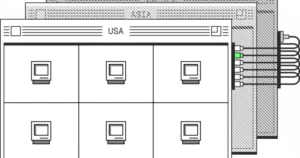
In this envisioned future, traditional stock exchanges may eventually be bypassed in favor of blockchain-based settlement layers. This transition would allow investors to hold direct ownership of assets rather than speculative derivatives. The appeal of networks like Solana in this context is rooted in their technical specifications—specifically high throughput and low latency—which are essential for the high-frequency requirements of modern financial markets. As Solana makes significant headway into Wall Street discussions, it is being positioned more as a technological utility than a mere tradable asset.
This shift in focus has profound implications for the ETF pipeline. While VanEck and 21Shares have already taken the first steps toward a Solana ETF, the path for other altcoins remains obscured by regulatory and economic hurdles. The Securities and Exchange Commission (SEC) continues to apply the Howey Test rigorously, and the lack of a regulated futures market for many altcoins—a prerequisite the SEC has historically demanded for spot ETF approval—remains a formidable obstacle for projects like Cardano and Shiba Inu.
Technical Underperformance and the Prolonged Altcoin Winter
Despite the headlines surrounding potential ETF filings, the underlying data for the altcoin market paints a somber picture. Currently, approximately 84% of altcoins listed on Binance, the world’s largest cryptocurrency exchange by volume, are trading below their 200-day moving average (DMA). This technical indicator is widely used by traders to determine long-term trend direction; assets trading below this level are generally considered to be in a structural bear market.
This period of underperformance has persisted for nearly eight months, marking the second-longest streak of its kind since 2020. The only period of greater bearishness was the grueling ten-month decline experienced during the height of the previous crypto winter. This persistent stagnation suggests that the "altcoin season" many expected to follow Bitcoin’s recent price appreciation has failed to materialize in a meaningful way.
Further corroborating this trend is the Altcoin Season Index provided by CoinMarketCap, which currently sits at a reading of 48 out of 100. A score below 75 indicates that the market is firmly in "Bitcoin Season," where the primary cryptocurrency outperforms the vast majority of the top 50 altcoins. Additionally, the Total 3 index—which tracks the total market capitalization of all cryptocurrencies excluding Bitcoin and Ethereum—continues to slide, indicating a steady drain of liquidity from the smaller-cap segments of the market.
Chronology of the ETF Movement and Regulatory Milestones
The journey toward a diversified crypto ETF landscape has been marked by several key milestones over the past year:
- January 2024: The SEC approves the first spot Bitcoin ETFs, including BlackRock’s iShares Bitcoin Trust (IBIT). This marked the formal entry of TradFi into the spot crypto market.
- May 2024: In a surprise move, the SEC approves 19b-4 filings for spot Ethereum ETFs, signaling a softening stance toward the second-largest digital asset.
- June 2024: VanEck becomes the first major issuer to file for a spot Solana ETF, citing the network’s decentralization and utility as key factors. 21Shares followed suit shortly thereafter.
- Present Day: Speculation intensifies regarding XRP, Cardano, and Shiba Inu. Ripple Labs CEO Brad Garlinghouse has frequently stated that an XRP ETF is "inevitable" following the legal clarity provided by Judge Analisa Torres’s ruling that XRP is not a security in itself.
However, the timeline for these approvals is likely measured in years rather than months. The SEC’s current leadership remains cautious, and the ongoing litigation between the commission and various crypto entities (including Binance and Coinbase) regarding the classification of altcoins as securities continues to cast a shadow over the industry.
Performance Analysis of Top-Tier Assets
The pressure on the altcoin market is evident even among the most established projects. Ethereum (ETH), despite its recent ETF approval, has struggled to maintain upward momentum. Recently, ETH dipped 2.54% to approximately $1,579.21, hampered by hawkish signals from central banks and a growing negative correlation with the S&P 500. As traditional equity markets face volatility, Ethereum is increasingly being treated as a "risk-on" asset, leading to sell-offs during periods of macroeconomic uncertainty.
Binance Coin (BNB) has also faced significant headwinds, declining 2.57% following a technical breakdown below critical support levels. The asset’s performance is closely tied to the regulatory health of the Binance exchange, which continues to navigate post-settlement monitoring and global compliance challenges.
XRP, the asset at the center of the ETF debate, has seen its price decline by 2.36%, currently trading around $1.04. Traders are now intensely focused on defending the $1.00 psychological support level. While the Ripple community remains optimistic about the prospects of an ETF, the asset’s price action reflects a market that is weary of waiting for a regulatory catalyst that may be delayed by further appeals or legislative gridlock.
Official Responses and Market Reactions
The divide between retail expectations and institutional reality is perhaps best illustrated by the statements from industry leaders. While crypto-native firms are pushing for rapid expansion, institutional players are moving with calculated precision.
BlackRock CEO Larry Fink has pivoted his public stance significantly over the last two years, moving from a crypto-skeptic to a proponent of "the tokenization of everything." However, Fink’s comments have consistently focused on the efficiency of the technology rather than the speculative value of individual altcoins. This suggests that while BlackRock may facilitate access to crypto via ETFs, it is unlikely to engage in the "bag-holding" behavior that retail investors hope will drive prices back to all-time highs.
Conversely, the SEC has maintained a "wait and see" approach. SEC Chair Gary Gensler has repeatedly emphasized that the vast majority of crypto tokens are securities and should fall under the commission’s jurisdiction. This stance remains the primary hurdle for Cardano (ADA) and Shiba Inu (SHIB). Unlike Bitcoin and Ethereum, which have been categorized as commodities by various U.S. regulators, the status of ADA and other altcoins remains a point of contention in ongoing court cases.
Broader Impact and Market Implications
The current state of the market suggests a "survival of the fittest" phase for digital assets. The prolonged stagnation is testing the conviction of even the most resilient investors. If the 200-day moving average trend continues, it is likely that many lower-utility altcoins will continue to bleed liquidity toward Bitcoin or stablecoins.
The potential arrival of XRP, Shiba Inu, and Cardano ETFs at the SEC’s table represents a significant psychological milestone, but it does not guarantee a market reversal. For an altcoin to thrive in the current environment, it must demonstrate more than just community hype; it must show a path toward integration with the global financial system or provide a technological solution that cannot be replicated by traditional means.
As Solana makes its headway into Wall Street, it sets a precedent for what the next generation of "institutional-grade" altcoins might look like. The focus is shifting from "when moon" to "what utility." For the broader market, this transition is painful, as it necessitates the flushing out of speculative excess. However, for the long-term health of the ecosystem, the move toward tokenized real-world assets and high-performance infrastructure may provide the stable foundation that the previous era of meme-driven speculation lacked.
In conclusion, while the prospect of new ETFs provides a glimmer of hope, the data suggests a market in transition. Investors are cautioned to look beyond the headlines and examine the structural shifts occurring in institutional strategy and technical market health. Without a meaningful catalyst—be it a regulatory breakthrough or a shift in macroeconomic policy—the altcoin market remains at a precarious crossroads, teetering on major support levels that will define its trajectory for the remainder of the year.