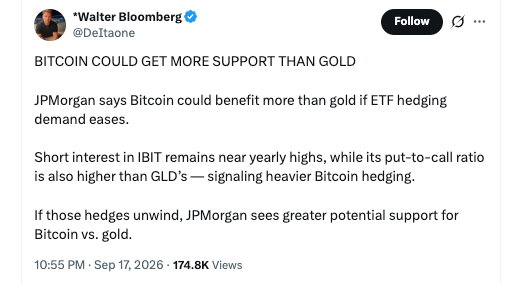
A recent analysis from JPMorgan strategists indicates that Bitcoin may be poised to benefit more significantly than gold from the escalating demand for hedging through exchange-traded products. This projection, reported by Walter Bloomberg, stems from an observed and growing divergence between the two asset classes, suggesting that the premier cryptocurrency could soon narrow the gap with the traditional safe-haven asset. The report, spearheaded by JPMorgan strategist Nikolaos Panigirtzoglou, delves into the dynamics of inflows into both Gold and Bitcoin Exchange-Traded Funds (ETFs), particularly in the wake of the U.S. Federal Reserve’s late July meeting.
The impetus behind these substantial inflows, according to the JPMorgan team, is a growing apprehension among investors regarding the potential devaluation of fiat currency due to aggressive quantitative easing policies. This "debasement" fear, as described in the analysis, has driven investors to seek alternative stores of value, with both gold and bitcoin ETFs experiencing considerable capital infusions.
The Shifting Landscape of Hedging Demand
Historically, gold has been the undisputed king of safe-haven assets, a role it has played for centuries. Investors have traditionally turned to the precious metal during times of economic uncertainty, inflation, or geopolitical instability. However, the emergence of digital assets, particularly Bitcoin, has introduced a new contender into the hedging arena. Bitcoin, often dubbed "digital gold," possesses characteristics such as scarcity (due to its capped supply of 21 million coins) and decentralization, which proponents argue make it an attractive alternative or complement to traditional hedges.
The JPMorgan report highlights a crucial distinction in the recovery patterns of gold and Bitcoin ETFs following recent market events. While gold ETFs have largely recouped outflows experienced earlier in the year, Bitcoin ETFs have only managed to recover approximately half of their own outflows. This disparity, rather than being viewed as a weakness, is interpreted by Panigirtzoglou and his team as a potential catalyst for Bitcoin’s ascent. The ongoing strength of inflows into Bitcoin ETFs, despite this partial recovery, suggests a sustained and growing investor interest in the digital asset as a hedging instrument.
Derivatives Data Reinforce Bitcoin’s Hedging Narrative
Further bolstering the argument for Bitcoin’s growing appeal as a hedging asset is the analysis of derivatives market data, specifically focusing on short interest in key ETFs. The report points to BlackRock’s iShares Bitcoin Trust (IBIT) as currently exhibiting the highest levels of short interest for 2024. In stark contrast, the premium gold-backed ETF, SPDR Gold Shares ETF (GLD), shows a short interest of around 3.5%, which is significantly below its historical average.
Short interest, in this context, represents the number of shares that have been sold short but not yet covered. A high short interest can indicate that a substantial number of investors are betting on a price decline. However, in the case of Bitcoin ETFs, a high short interest, coupled with persistent inflows, can also signal a narrative of increasing institutional adoption and a belief that the price will ultimately rise, leading to a "short squeeze" where short-sellers are forced to buy back shares at higher prices to cover their positions.
The derivatives market data extends beyond short interest to include the put-to-call open interest ratio. For IBIT, this ratio exceeds that of GLD, indicating that investors are allocating more capital towards downside protection for Bitcoin compared to gold. This suggests a heightened level of caution and a greater demand for hedging against potential price drops in Bitcoin.
The report elaborates on this observation: "This contrast suggests that bitcoin still faces an overall more skeptical positioning backdrop than gold, perhaps due to more elevated hedging demand, despite the recent inflows and build-up of futures positioning." This implies that while institutional investors are actively investing in Bitcoin ETFs, they are also hedging their positions more aggressively, reflecting a dynamic market environment and a cautious approach to this relatively newer asset class.
The Future Outlook for Bitcoin as a Hedge
The JPMorgan analysts are optimistic about the potential for Bitcoin’s current elevated hedging demand to transform into a source of strength. They posit that if Bitcoin’s price stabilizes and investor caution subsides over time, leading to a reduction in these protective measures, it could unlock further upside potential for the digital currency.
"From a positioning point of view, the more elevated short interest in the IBIT vs. GLD ETF could create more support for bitcoin vs. gold from here if hedging demand is reduced," the report concluded. This suggests that the very factors currently contributing to a more cautious investor stance could, in a scenario of market maturation and price stability, become drivers of increased demand and price appreciation.
A Paradigm Shift for Traditional Finance
The stance taken by JPMorgan, a financial behemoth with a historically complex relationship with cryptocurrencies, is particularly noteworthy. The bank, and its CEO Jamie Dimon in particular, have been vocal critics of Bitcoin in the past. Dimon famously referred to Bitcoin as a "fraud" back in 2017, reflecting a prevalent skepticism within traditional finance circles towards digital assets.
However, the landscape has significantly evolved since then. The approval of spot Bitcoin ETFs in the United States by the Securities and Exchange Commission (SEC) in January 2024 marked a watershed moment, granting institutional investors easier and more regulated access to the cryptocurrency. This regulatory clarity, coupled with the growing institutional interest and the increasing evidence of Bitcoin’s utility as a potential store of value and hedging instrument, appears to be prompting a re-evaluation within established financial institutions.
JPMorgan’s latest analysis signifies a potential "redemption arc" for the bank regarding its view on Bitcoin. While the report remains analytical and data-driven, its conclusion points towards a recognition of Bitcoin’s increasing role in the investment and hedging strategies of sophisticated investors. This shift in perspective from a major financial player can have a ripple effect across the industry, potentially encouraging other institutions to explore or increase their exposure to digital assets.
Supporting Data and Market Context
To further contextualize JPMorgan’s findings, it’s important to consider broader market trends. The period following the Fed’s late July meeting, as mentioned, was characterized by heightened market volatility and concerns about inflation. In such an environment, investors naturally gravitate towards assets perceived as hedges against economic uncertainty.
- Quantitative Easing (QE): The Fed’s use of QE, a monetary policy where a central bank purchases predetermined amounts of government bonds or other financial assets in order to inject money into economies, can lead to an increase in the money supply. This can, in turn, potentially devalue the currency and fuel inflation, prompting investors to seek assets that can preserve their purchasing power.
- ETF Inflows: The success of spot Bitcoin ETFs has been a major driver of institutional adoption. For instance, reports from early 2024 indicated that Bitcoin ETFs saw record-breaking inflows within their first few months of trading, demonstrating significant investor appetite. Comparing these inflows to those of gold ETFs provides a direct measure of shifting investor preferences.
- Historical Performance: Gold has a long-standing track record as a safe-haven asset, often performing well during economic downturns. Bitcoin, while younger, has shown its ability to experience significant price appreciation and has been increasingly tested during periods of market stress. Its performance relative to gold during these times is a key area of analysis for investors.
Broader Implications and Future Outlook
The JPMorgan analysis suggests that the narrative of Bitcoin as a digital gold and a viable hedging asset is gaining traction within the financial industry. If this trend continues, it could lead to several significant implications:
- Increased Institutional Adoption: As more financial institutions like JPMorgan recognize Bitcoin’s potential, it could encourage further product development and investment strategies centered around digital assets.
- Price Volatility and Stability: While current hedging demand indicates caution, a reduction in this demand, coupled with sustained inflows, could lead to a more stable price environment for Bitcoin, further solidifying its position as a reliable asset.
- Competition with Traditional Assets: Bitcoin’s growing role as a hedge could directly challenge the traditional dominance of gold and other safe-haven assets, leading to a more diversified landscape of investment options.
- Regulatory Evolution: Increased institutional involvement often prompts greater regulatory scrutiny and development. As Bitcoin becomes more integrated into the financial system, clear and comprehensive regulatory frameworks will become even more crucial.
The evolving stance of major financial institutions like JPMorgan on Bitcoin underscores the maturation of the cryptocurrency market. While skepticism may still exist, the data and market dynamics increasingly point towards Bitcoin’s potential to play a significant role in the global financial ecosystem, not just as a speculative investment, but as a credible hedging instrument. The coming months and years will likely reveal the extent to which this potential is realized, as investor sentiment and market conditions continue to shape the trajectory of this digital asset.