The landscape of American finance is undergoing a fundamental shift as the Federal Reserve asserts its dominance in the burgeoning race for payment modernization. Jeff Schmid, President of the Federal Reserve Bank of Kansas City, has emerged as a leading voice in this transition, articulating a vision where traditional banking infrastructure, augmented by real-time settlement capabilities, outpaces the decentralized promises of the blockchain. In a series of recent addresses, most notably at the Hoover Institution, Schmid argued that the future of U.S. payments lies not in private stablecoins or speculative digital assets, but in the robust, state-backed rails of the FedNow Service and the evolution of tokenized commercial bank deposits.
Schmid’s stance represents a significant moment in the ongoing debate between "TradFi" (traditional finance) and "DeFi" (decentralized finance). By framing the Fed’s instant payment system as a stable and scalable evolution of the existing monetary order, Schmid is signaling that the central bank intends to maintain its role as the primary architect of the nation’s financial plumbing. This perspective suggests that while blockchain technology may have sparked the current wave of innovation, the ultimate winners will be the regulated institutions that can marry modern speed with legacy trust.
The Shift to Real-Time as the Default Standard
At the core of Schmid’s argument is the belief that real-time settlement is rapidly transitioning from a premium service to the default expectation for all economic participants. For decades, the U.S. payment system relied on batch processing and multi-day settlement cycles, such as the Automated Clearing House (ACH) network. However, the launch of FedNow in July 2023 marked the beginning of a new era.
Schmid noted that the stakes for this transition are immense. Current projections suggest that daily U.S. payment flows will soon fall between $5 trillion and $10 trillion, with the vast majority settling in real time. This is not merely a technical upgrade; it is a systemic overhaul. When money moves instantly, the concept of "float"—the time between a payment being initiated and funds being cleared—evaporates. For consumers, this means instant access to wages and emergency funds. For the Federal Reserve, it means managing a high-velocity environment where liquidity must be available 24/7.
Schmid emphasized that the Federal Reserve’s role is to provide the "rails" upon which private sector innovation can occur. By providing a neutral, government-backed platform for instant credit-push transfers, the Fed allows banks of all sizes to compete on service and product offerings rather than on the underlying speed of their settlement technology.
Analyzing the Growth and Adoption of FedNow
The data surrounding the adoption of FedNow provides a clear picture of its trajectory. Since its inception in mid-2023, the service has seen a steady climb in institutional participation. As of October 2026, a total of 1,949 financial institutions have integrated with the service. These participants range from global systemic banks to small community credit unions, collectively covering approximately half of the nation’s demand deposit accounts (DDAs).
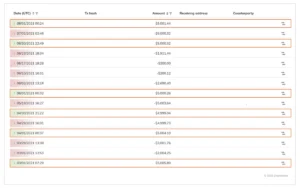
The volume of transactions processed through the system further validates Schmid’s optimism. During the third quarter of 2026, FedNow processed 6.38 million transactions with a total value of $370.9 billion. While these figures represent a fraction of the total U.S. payment volume, the growth rate is significant. By late 2026, record transaction volumes were being reported monthly, suggesting that the "network effect"—where the value of the system increases as more participants join—is taking hold.
Unlike private blockchain networks, which often require users to convert fiat currency into a digital token (such as a stablecoin) to achieve speed, FedNow settles in central bank funds. This ensures that the "one-to-one" parity of the U.S. dollar is maintained without the collateral risks or liquidity mismatches that have historically plagued some private stablecoin issuers.
The Strategic Role of Tokenized Deposits
Perhaps the most nuanced aspect of Schmid’s argument is his advocacy for tokenized deposits. While he remains skeptical of unbacked or private stablecoins as a primary payment tool, he views tokenized deposits as a powerful middle ground.
Tokenized deposits are digital representations of traditional bank deposits on a programmable ledger. Unlike stablecoins, which are typically liabilities of a non-bank issuer, tokenized deposits remain liabilities of a regulated commercial bank. This distinction is crucial for Schmid and other regulators because it keeps the money within the established regulatory perimeter, subject to capital requirements, stress testing, and Federal Deposit Insurance Corporation (FDIC) protections.
According to Schmid, tokenized deposits allow banks to "borrow" the best features of crypto—such as programmability and smart contract integration—without abandoning the safety of the banking system. This allows for complex financial transactions, such as "delivery-versus-payment" (DvP) in securities trading, to be automated and settled instantly. Schmid’s framing suggests that if banks can offer the same functionality as stablecoins through tokenized deposits, the demand for private-sector alternatives may diminish, effectively neutralizing the competitive threat posed by the crypto industry.
The Regulatory Backdrop: The GENIUS Act of 2025
The context of Schmid’s remarks is heavily influenced by the legislative landscape, specifically the GENIUS Act of 2025. This landmark legislation created the first comprehensive federal regulatory framework for payment stablecoins in the United States. The act was designed to provide a "clear legal footing" for dollar-pegged tokens, requiring issuers to hold 1:1 reserves in highly liquid assets and submit to regular audits.
While many in the crypto industry viewed the GENIUS Act as a green light for stablecoin expansion, Schmid’s comments suggest the Federal Reserve views it differently. From the Fed’s perspective, the act establishes the "floor" for private competition, but the FedNow infrastructure remains the "ceiling" for efficiency and safety. Schmid’s argument implies that even with a clear regulatory framework, stablecoins may struggle to compete with a fully modernized banking system that offers real-time settlement and the added security of being an integral part of the Fed’s monetary policy transmission mechanism.
Operational Challenges and the Liquidity Paradigm
For the banking sector, the transition to the real-time world described by Schmid is not without its challenges. The Kansas City Fed President was candid about the operational burdens this shift places on financial institutions. In a world of $10 trillion daily real-time flows, the traditional methods of liquidity and duration management are no longer sufficient.
Historically, banks relied on end-of-day netting—a process where they would calculate the net difference between incoming and outgoing payments and settle the balance. This allowed them to manage liquidity in predictable cycles. In a 24/7/365 real-time environment, netting is replaced by continuous settlement. Treasury teams at banks can no longer rely on weekend or holiday pauses to smooth out liquidity mismatches.
Schmid highlighted that liquidity management will become a central, high-stakes function of banking operations. Banks will need to employ sophisticated algorithmic tools to ensure they have enough central bank reserves to settle payments at any given second. This may lead to increased demand for intraday liquidity from the Federal Reserve, potentially reshaping how the Fed manages its own balance sheet and interest rate targets.
Broader Implications for the Crypto Industry and Banks
The implications of Schmid’s vision are far-reaching. For the cryptocurrency industry, his comments are a reminder that the "incumbents" are not standing still. The argument that blockchain is the only way to achieve instant, programmable payments is being directly challenged by the evolution of central bank rails and tokenized deposits. If the banking system can match the speed and utility of stablecoins while offering superior regulatory protections, the "use case" for stablecoins may be relegated to niche markets or cross-border transactions where traditional rails remain fragmented.
For banks, the message is one of both opportunity and urgency. The Fed is providing the tools (FedNow) and the conceptual framework (tokenized deposits), but the onus is on individual institutions to adopt them. Schmid’s data showing that only 50% of demand deposit accounts are currently covered indicates that there is still a significant "coverage gap" that needs to be closed.
Furthermore, Schmid’s position as a single voice within the Federal Reserve System is an important caveat. While he represents the Kansas City Fed, the ultimate direction of U.S. payment policy is a collective decision made by the Board of Governors in Washington and the various regional presidents. However, his views often reflect broader internal consensus regarding the need to defend the dollar’s role in a digital age.
Conclusion: The Road Ahead for US Payments
Jeff Schmid’s analysis paints a picture of a future where the U.S. payment system is faster, more integrated, and more resilient than ever before. By prioritizing FedNow and real-time bank rails over private stablecoins, the Fed is making a strategic bet on the enduring power of the regulated banking system.
The "death of the delay" in banking will likely be viewed as one of the most significant economic shifts of the decade. As transaction volumes continue to hit record highs and the number of participating institutions grows, the vision of a $10 trillion-a-day real-time economy moves closer to reality. While the competition between blockchain-based assets and traditional bank rails will continue, the Federal Reserve’s commitment to its own infrastructure suggests that the future of American money will remain firmly rooted in the institutions that have anchored it for over a century. The challenge for the coming years will be managing the immense liquidity demands of this new era while ensuring that the benefits of instant payments reach every corner of the American economy.