On April 1, 2026, the decentralized finance (DeFi) ecosystem on the Solana blockchain experienced a catastrophic security failure when Drift Protocol, the network’s largest perpetual swap and lending platform, was exploited for an estimated $285 million. The incident represents the largest cryptocurrency hack of 2026 to date and stands as the second-largest security breach in the history of the Solana network, trailing only the 2022 Wormhole bridge exploit. Beginning at approximately 16:05 UTC, an unidentified attacker leveraged compromised administrative permissions to systematically drain the protocol’s vaults, resulting in the loss of more than 50% of the platform’s Total Value Locked (TVL).
Initial forensic investigations conducted by Drift Protocol and third-party security firms indicate a high probability that the attack was orchestrated by threat actors associated with the Democratic People’s Republic of Korea (DPRK). While formal attribution is pending, the methodology—characterized by long-term social engineering, meticulous infrastructure staging, and sophisticated laundering techniques—aligns with the operational profile of the Lazarus Group and affiliated North Korean cyber-espionage units. If confirmed, this heist adds to a growing multi-billion-dollar portfolio of crypto assets extracted by the DPRK to circumvent international sanctions and fund state programs.
The Anatomy of a Long-Term Infiltration
Evidence recovered from on-chain data and internal communication logs reveals that the April 1 exploit was not a spontaneous discovery of a code bug, but rather the culmination of a highly coordinated operation lasting at least six months. The groundwork for the attack began as early as the autumn of 2025.
The attackers utilized a "deep cover" social engineering strategy, posing as representatives of a legitimate quantitative trading firm. Throughout late 2025 and early 2026, these individuals engaged with Drift contributors at major international blockchain conferences, establishing a facade of professional credibility. They maintained active communication via Telegram, participated in technical working sessions, and even onboarded a functional vault on the Drift platform with over $1 million in capital. By acting as high-value users and contributing to product strategy discussions, the threat actors successfully embedded themselves within the protocol’s inner circle of trust.
This level of proximity allowed the attackers to identify and exploit human vulnerabilities within the protocol’s governance structure, specifically targeting members of the Drift Security Council. The Security Council is a decentralized body of trusted individuals tasked with managing the protocol’s multi-signature (multi-sig) wallet, which holds the authority to alter risk parameters, add new assets, and manage administrative keys.
Chronology of the Exploit
The technical execution of the attack followed a precise timeline, beginning weeks before the actual drainage of funds:
March 10–11, 2026: The attackers initiated the "funding phase." On-chain records show that assets were withdrawn from the privacy protocol Tornado Cash to provide the necessary capital for the attack’s infrastructure, including the creation of tokens and the seeding of liquidity pools.
March 12, 2026: The attackers deployed a fraudulent asset dubbed the CarbonVote Token (CVT). They retained control of approximately 80% of the total supply, effectively granting them the power to manipulate its market metrics. To create the illusion of legitimacy, the attackers established a small liquidity pool on the Raydium decentralized exchange with roughly $500 in genuine capital. Through automated wash trading, they generated artificial volume and anchored the price of CVT at approximately $1.00.
March 23–30, 2026: The operation entered its most critical phase, involving the exploitation of Solana’s "durable nonce" system. In the Solana architecture, transactions typically require a recent "blockhash" to be valid, which ensures they expire quickly if not processed. However, durable nonces allow for the creation of transactions that can be signed in advance and stored for later execution, potentially days or weeks after the signature is obtained.
Under the guise of routine administrative maintenance or "emergency preparedness" drills, the attackers persuaded members of the Drift Security Council to sign a series of transactions. Due to the social trust established over the preceding months, the signers did not perceive the dormant transactions as malicious. In reality, these pre-signed instructions contained the commands necessary to transfer administrative control of the protocol to an attacker-controlled wallet.
April 1, 2026, 16:05:18 UTC: The first pre-signed transaction was broadcast to the network, proposing the transfer of admin keys to the address H7PiGqqUaanBovwKgEtreJbKmQe6dbq6VTrw6guy7ZgL.
April 1, 16:05:19 UTC: Exactly one second later, a second pre-signed transaction was executed, finalizing the transfer of power. With full administrative access, the attackers immediately disabled withdrawal limits and modified the protocol’s risk engine.
The Liquidation of Protocol Assets
With the administrative keys in their possession, the attackers reconfigured Drift to recognize the worthless CVT token as high-quality collateral. They set borrowing limits to near-infinite levels and manipulated the protocol’s internal price oracles to accept the $1.00 artificial price they had manufactured in March.
The attackers then deposited 500 million CVT tokens into the protocol. Because the system viewed this as $500 million in valid collateral, it permitted the withdrawal of real, liquid assets against the fraudulent deposit. Over the course of the next 150 minutes, the attackers systematically drained the following assets:
- USDC: $71.4 million
- JLP (Jupiter Liquidity Provider tokens): $159.3 million
- cbBTC (Coinbase Wrapped Bitcoin): $11.3 million
- USDT: $5.6 million
- USDS: $5.3 million
- WETH: $4.7 million
- dSOL: $4.5 million
- WBTC: $4.4 million
- FARTCOIN: $4.1 million
- JitoSOL: $3.6 million
- Miscellaneous Assets: Approximately $10.8 million
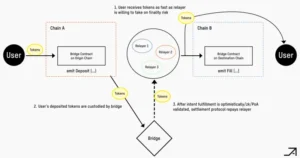
While the primary drainage concluded by 18:31 UTC, the attackers had already begun the laundering process. Funds were bridged across multiple chains and moved into various decentralized exchanges and mixers, complicating recovery efforts.
Systemic Contagion and Ecosystem Impact
The scale of the Drift Protocol exploit triggered a ripple effect across the Solana DeFi landscape. Because many other protocols utilize Drift’s liquidity vaults or incorporate Drift’s yield-bearing positions into their own strategies, the loss of $285 million created a "composable risk" event.
As of April 2, at least 20 secondary protocols have confirmed exposure to the hack. Platforms that relied on Drift for price discovery or as a primary venue for hedging were forced to suspend operations to prevent further losses. Several automated market makers (AMMs) experienced significant slippage and liquidity crunches as users attempted to withdraw funds in a panic.
In a statement, a spokesperson for one of the affected protocols noted, "The interconnectedness of Solana DeFi is its greatest strength, but in moments like this, it becomes a vector for contagion. When the foundation of a major liquidity hub like Drift is compromised, every protocol built on top of it feels the tremor."
Technical and Policy Implications
The Drift exploit highlights a significant shift in the DeFi threat landscape. While the industry has historically focused on auditing smart contracts for coding errors, the April 1 attack demonstrates that the "human element" and administrative workflows are now the primary targets for sophisticated state-sponsored actors.
Security analysts point out that the use of durable nonces to bypass real-time scrutiny is a particularly sophisticated tactic. It suggests that decentralized governance bodies must move beyond simple multi-sig requirements and implement "intent-based" security measures.
Security firm Hexagate, which monitored the event, suggested that real-time on-chain threat detection could have mitigated the damage. "The drainage lasted over two hours," a report from the firm stated. "An automated circuit breaker triggered by abnormal parameter changes—such as the sudden acceptance of a new, low-liquidity token as collateral—could have paused the vaults and saved hundreds of millions of dollars, even after the admin keys were lost."
The incident has also renewed calls for more robust oracle security. By controlling the price feed for the fake CVT token, the attackers were able to trick the protocol’s internal accounting. Future protocols may need to implement more rigorous "oracle sanity checks" that compare new assets against external liquidity depth before allowing them to be used as collateral.
Official Responses and Future Outlook
Drift Protocol has officially paused all smart contract interactions and is working with law enforcement and blockchain forensics teams to track the stolen funds. In a preliminary post-mortem, the Drift team acknowledged the severity of the social engineering campaign. "We are devastated by this breach of trust. The actors involved spent months building relationships with our team, showing a level of commitment and deceit that is unprecedented in our industry."
The Solana Foundation has also issued a statement, clarifying that the Solana network itself remains secure and that the exploit was limited to the application layer of Drift Protocol. However, the Foundation emphasized that it would support efforts to develop more secure standards for administrative nonces and multi-sig governance.
As the DeFi industry matures, the Drift Protocol hack serves as a stark reminder that security is not a static destination but a continuous process of defending against evolving threats. For institutional investors and retail users alike, the event underscores the importance of understanding the governance risks inherent in decentralized platforms. The recovery of the $285 million remains unlikely given the suspected involvement of the DPRK, leaving the Drift community and the broader Solana ecosystem to grapple with the long-term consequences of one of the most calculated heists in digital asset history.