In a decisive move that underscores the growing legislative appetite for digital asset integration, the Montana State Senate has passed Senate Bill 178, a comprehensive piece of legislation designed to protect the rights of cryptocurrency miners and establish a firm legal framework for digital assets within the state. The bill, which cleared the Senate floor with a significant 37-13 majority, represents a major victory for the blockchain industry and positions Montana as a primary destination for the burgeoning North American mining sector.
The legislation is multifaceted, addressing several long-standing concerns within the crypto community, including discriminatory utility rates, restrictive local zoning ordinances, and the classification of digital assets for taxation and property purposes. As the crypto industry continues to face varying degrees of scrutiny and support across the United States, Montana’s proactive approach signals a shift toward institutionalizing Bitcoin and other digital assets as permanent fixtures of the state’s economic landscape.
A Legislative Shield for Digital Asset Mining
At the core of Senate Bill 178 is the explicit "right to mine digital assets." This provision is designed to provide legal certainty to both industrial-scale operations and individual "at-home" miners. By enshrining the right to mine into state law, Montana aims to prevent future legislative or executive attempts to ban the practice, a concern that has lingered in the industry following high-profile crackdowns in other jurisdictions, most notably China’s 2021 ban on all mining activities.
The bill specifically targets several areas where miners have historically faced challenges:
- Protection Against Discriminatory Utility Rates: One of the most significant hurdles for crypto mining operations is the cost of energy. In many regions, utility companies have attempted to impose "surcharge" rates on miners that are higher than those charged to other industrial or commercial entities. SB 178 forbids such practices, ensuring that miners are charged the same rates as other users with similar energy consumption profiles.
- Limiting Local Zoning Power: The bill curtails the ability of local governments to use zoning laws to shut down existing mining operations or to prevent the establishment of new ones in industrial zones. This is a direct response to local conflicts where noise complaints or aesthetic concerns have been used as pretexts to force miners out of certain areas.
- Right to Home Mining: The legislation protects the rights of individuals to mine digital assets in their private residences, provided they adhere to local noise and safety ordinances. This ensures that the decentralized nature of the network is preserved at the grassroots level.
Overriding Local Restrictions and the Missoula Context
The passage of this bill is particularly relevant given the history of crypto mining in Montana. In 2020, Missoula County passed an ordinance that required cryptocurrency miners to purchase or build new renewable energy assets equivalent to their total energy consumption. While the intent was environmental sustainability, miners argued that such requirements were disproportionately burdensome and targeted only their industry while ignoring other high-energy users like data centers or manufacturing plants.

SB 178 appears to neutralize the more restrictive aspects of such local ordinances by standardizing mining rights at the state level. By providing a uniform set of rules, the state government is effectively reducing the "regulatory patchwork" that often discourages investment in the tech sector. Proponents of the bill argue that a state-level standard provides the stability necessary for long-term capital investment, which is essential for the high-overhead costs associated with large-scale ASIC (Application-Specific Integrated Circuit) mining fleets.
Classification of Digital Assets as Personal Property
Beyond the technicalities of mining, the bill introduces a critical shift in how Montana views digital assets. Under the new legislation, cryptocurrencies and non-fungible tokens (NFTs) are classified as "personal property." This classification aligns digital assets with traditional financial instruments such as stocks, bonds, and other securities.
The implications of this classification are profound:
- Taxation: By designating crypto as personal property, the bill effectively terminates any attempt to impose additional or "special" taxes on the use of cryptocurrency as a payment method. This encourages the use of Bitcoin and other assets for everyday commerce, as consumers will not face a discriminatory tax burden compared to using fiat currency.
- Legal Clarity: Establishing a clear legal status for digital assets simplifies inheritance laws, bankruptcy proceedings, and divorce settlements involving crypto holdings.
- Institutional Adoption: Clear property rights are a prerequisite for institutional investors and banks. By codifying these rights, Montana makes it easier for local financial institutions to offer custody or lending services backed by digital assets.
The Broader National and Global Context
Montana is not acting in a vacuum. The passage of SB 178 follows a similar move by the Mississippi Senate, which recently passed the "Mississippi Digital Asset Mining Act." These bills are often supported by advocacy groups such as the Satoshi Action Fund, which works with state legislators to draft "Right to Mine" laws.
The push for state-level protection in the U.S. comes at a time of global transition for the mining industry. Since the China ban, the United States has become the world leader in Bitcoin’s total hash rate. However, the regulatory environment remains a tale of two cities. While states like Montana, Mississippi, and Texas are actively courting miners with favorable legislation and grid-balancing incentives, others, like New York, have implemented moratoriums on certain types of mining due to environmental concerns.
Internationally, the sentiment is equally divided. In May 2022, the Norwegian parliament rejected a proposed ban on Bitcoin mining, with a majority of lawmakers arguing that the government should not pick and choose which industries are "worthy" of using electricity. This mirrors the sentiment found in the Montana bill—that as long as an industry pays for its energy and follows standard regulations, it should have the right to operate.

Economic Implications and Grid Stability
A common criticism of cryptocurrency mining is its significant energy consumption. However, enriched data from energy experts suggests that mining can actually contribute to grid stability through "demand response" programs. In states with high renewable energy penetration, miners act as "flexible loads." They can consume excess energy when production is high (such as during windy nights or sunny afternoons) and shut down instantly when demand peaks (such as during extreme heat or cold), freeing up power for households.
By protecting miners’ rights, Montana is essentially inviting an industry that can provide a consistent revenue stream for energy producers while acting as a buffer for the state’s power grid. This economic synergy is a primary driver behind the "Right to Mine" movement.
Timeline and Next Steps for SB 178
The journey of Senate Bill 178 is not yet complete, though its passage in the Senate is a major milestone. The chronology of the bill’s progression is as follows:
- Introduction: The bill was introduced to address the growing concerns of the Montana blockchain community regarding regulatory overreach.
- Senate Vote: On Thursday, the bill received 37 "yea" votes and 13 "nay" votes.
- House Review: The bill now moves to the Montana House of Representatives for further debate and a vote.
- Gubernatorial Approval: If passed by the House, the bill will land on the desk of Governor Greg Gianforte. Given the Governor’s history of supporting tech-friendly policies, industry analysts are optimistic about his signature.
Market Reaction and Future Outlook
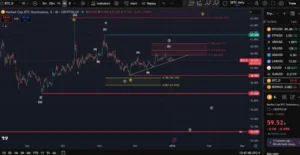
The news of Montana’s legislative progress comes during a period of relative stabilization for the cryptocurrency market. Bitcoin, which saw an all-time high of nearly $69,000 in late 2021 before a significant "crypto winter" in 2022, has shown signs of recovery. At the time of the bill’s passage, Bitcoin was trading in the $23,800 to $24,000 range, representing a modest but steady climb from its yearly lows.
The market has increasingly focused on "regulatory clarity" as the next major catalyst for growth. While federal regulation in the U.S. remains slow and often contentious, state-level initiatives like those in Montana provide a bottom-up framework that could eventually influence federal policy.
The Montana bill is more than just a local law; it is a statement of intent. It asserts that digital asset mining is a legitimate industrial activity and that digital assets are a valid form of personal property. For an industry that has long operated in a legal gray area, the protections offered by SB 178 represent a significant step toward maturity and mainstream integration. As other states watch Montana’s experiment, the "Right to Mine" could become a standard pillar of digital age legislation across the United States.