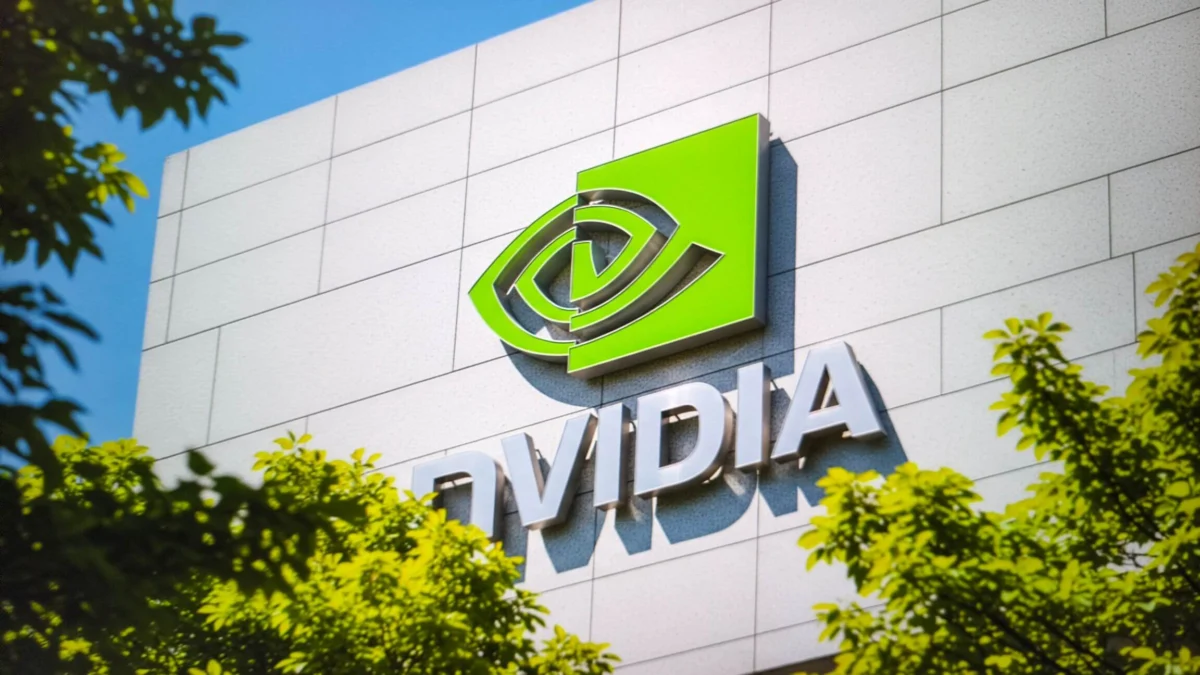
Nvidia Corporation, the world’s leading designer of graphics processing units (GPUs) and a dominant force in artificial intelligence computing, saw its stock surge Monday following the disclosure of America’s largest-ever stock repurchase authorization. The monumental announcement, which elevates the company’s aggregate buyback capacity to an unprecedented $235 billion, immediately sent shares climbing 1.2% in premarket trading, effectively reversing earlier declines and underscoring robust investor confidence. This strategic move cements Nvidia’s market valuation, which recently surpassed the $5.42 trillion mark, as it continues to ride the tidal wave of demand for AI and accelerated computing solutions.
The semiconductor giant’s board of directors authorized a substantial $150 billion expansion to its already existing share buyback initiative, catapulting the total authorized amount to a figure that redefines corporate capital allocation strategies in the United States. This staggering sum is earmarked for deployment by the conclusion of fiscal year 2028, which typically ends in January of that year. While the company’s management has prudently refrained from specifying a particular timeline or pace for the execution of these repurchases, the sheer scale of the authorization signals a profound and enduring conviction in Nvidia’s future prospects and its formidable cash generation capabilities.
CEO Jensen Huang’s Strategic Vision and Rationale
In a comprehensive statement released Monday morning, Jensen Huang, Nvidia’s charismatic and visionary CEO, articulated the strategic underpinning of this monumental decision. Huang emphasized that Nvidia’s relentless expansion and financial strength are fundamentally "fueled by a once-in-a-generation platform transformation toward AI and accelerated computing." This assertion positions the buyback not merely as a financial maneuver but as an integral component of a broader strategy to capitalize on and further drive the technological paradigm shift currently underway.
Huang further underscored the company’s exceptional financial flexibility, stating, "Our robust cash generation provides us the capability to invest in breakthrough technologies driving this evolution while simultaneously returning value to shareholders." This dual mandate highlights Nvidia’s balanced approach to capital management: aggressively investing in research and development to maintain its technological lead, particularly in nascent and rapidly evolving AI fields, while simultaneously rewarding its investor base through substantial capital returns. This strategy resonates with a philosophy of sustainable growth, where innovation and shareholder returns are mutually reinforcing pillars.
Surpassing Precedent: Apple’s Benchmark Eclipsed
Before this groundbreaking announcement, the technology titan Apple Inc. held the distinction for initiating the largest U.S. corporate buyback program. The iPhone maker had unveiled a significant $110 billion authorization earlier in 2024, a figure that itself was considered a landmark. Nvidia’s newly expanded $235 billion authorization, however, not only substantially exceeds Apple’s benchmark but, according to meticulous records compiled by Bloomberg, also stands as the most massive buyback program any American corporation has ever initiated.
This historical comparison is particularly salient given that Nvidia has, in recent years, increasingly adopted a capital allocation strategy reminiscent of Apple’s approach. Both technology leaders, characterized by their immense market capitalization and burgeoning cash reserves, have consistently utilized share repurchase programs as a primary mechanism to enhance shareholder value. This strategy typically involves reducing the number of outstanding shares, thereby increasing earnings per share (EPS) and potentially boosting the stock price, reflecting management’s confidence in the company’s intrinsic value. The decision to undertake such a colossal buyback signals that Nvidia’s management believes its stock is undervalued relative to its future earnings potential, or at least that buying back shares is a more efficient use of capital than other alternatives, such as increased dividends or further acquisitions.
Strong Cash Flow Underpins Ambitious Strategy
The foundation of Nvidia’s ability to embark on such an ambitious buyback program lies in its extraordinary and rapidly accelerating free cash flow generation. The company has publicly established a policy of distributing approximately 50% of its free cash flow back to shareholders, a commitment it fulfills through a strategic combination of dividend payments and share repurchases. This policy underscores a disciplined approach to capital returns, ensuring that a significant portion of its operational success directly benefits its owners.
According to conservative FactSet projections, Nvidia’s free cash flow for the current fiscal year is estimated to reach an astounding $183 billion. This substantial figure provides critical context for understanding the sheer magnitude and feasibility of the newly authorized buyback program. The chipmaker’s cash generation has surged in direct tandem with the escalating, almost insatiable, global demand for its cutting-edge artificial intelligence processors. Data center operations, which form the backbone of modern AI infrastructure, and accelerated computing applications across various industries have served as the primary, and increasingly powerful, catalysts for this unprecedented demand surge. Enterprises, cloud providers, and governments worldwide are scrambling to build out AI capabilities, with Nvidia’s H100 and upcoming Blackwell GPUs being the foundational technology powering this revolution.
In his statement, Huang characterized the buyback authorization not as a temporary measure or a response to short-term market fluctuations, but rather as unequivocal evidence of sustained optimism and long-term strategic conviction. "This authorization demonstrates our conviction in the substantial long-term opportunity that lies before us," he declared, reinforcing the company’s belief in the enduring growth trajectory of AI and its pivotal role within that ecosystem. This long-term perspective is crucial for investors evaluating the sustainability of Nvidia’s current valuation and future growth prospects.
Market Reaction and Broader Industry Implications
Prior to Monday’s trading session, Nvidia shares had already demonstrated remarkable performance, appreciating a staggering 21% year-to-date, building upon an even more spectacular run in the preceding years. The revelation of the colossal buyback program contributed additional upward momentum during early trading hours, with the stock maintaining its positive trajectory throughout the day. This immediate positive market reaction is a clear indicator of how investors interpret such a significant capital return strategy—as a strong vote of confidence from management and a commitment to enhancing shareholder value.
The positive market response, however, extended beyond Nvidia itself on Monday morning. Chip sector competitors such as Advanced Micro Devices (AMD) and Intel Corporation also experienced notable upward price movement following the disclosure. While neither AMD nor Intel issued specific commentary directly regarding Nvidia’s announcement, the upward trend in their stock prices reflected a broader positive sentiment across the semiconductor industry. This "halo effect" suggests that Nvidia’s success, particularly its ability to generate such massive cash flows from AI, is viewed by the market as a positive indicator for the entire sector, signaling robust demand for high-performance computing components and continued investment in AI infrastructure. Investors might infer that if the AI market is so lucrative for Nvidia, there will be opportunities for other players in the ecosystem as well.
The extended timeframe for Nvidia’s buyback authorization, remaining valid through fiscal 2028’s conclusion, provides the company with more than a year to strategically deploy the complete authorized amount. This flexibility allows Nvidia to execute repurchases opportunistically, potentially timing them with market dips or periods where management perceives the stock to be particularly undervalued. This measured approach contrasts with rapid, aggressive buybacks, suggesting a long-term, disciplined strategy rather than a short-term market manipulation tactic.
Background Context: Nvidia’s Ascent to AI Dominance
Nvidia’s journey to becoming a trillion-dollar company and a leader in AI is a story of strategic foresight and relentless innovation. Founded in 1993, the company initially made its mark in the gaming industry with its groundbreaking GPUs, which revolutionized computer graphics. However, a pivotal moment arrived in the mid-2000s when researchers began to realize that the parallel processing capabilities of GPUs, originally designed for rendering complex graphics, were exceptionally well-suited for accelerating demanding computational tasks, particularly in fields like scientific simulation and, crucially, artificial intelligence.
Under Jensen Huang’s leadership, Nvidia invested heavily in developing its CUDA computing platform, a parallel computing platform and programming model that allows developers to harness the power of GPUs for general-purpose computing. This ecosystem proved to be a game-changer for AI, providing the computational horsepower necessary to train complex neural networks and drive the deep learning revolution. As AI adoption accelerated, especially in data centers for tasks like natural language processing, computer vision, and recommendation engines, Nvidia’s GPUs became indispensable. The company’s data center revenue segment has exploded in recent years, becoming its largest and fastest-growing division, largely driven by the insatiable demand for its AI accelerators like the H100 and the recently announced Blackwell platform. This strategic pivot and dominance in the AI hardware and software stack are the fundamental drivers behind its current financial might and the confidence reflected in the colossal buyback program.
Analysis of Implications and Future Outlook
The implications of Nvidia’s $235 billion buyback authorization are multi-faceted. Firstly, for existing shareholders, it signals a strong commitment to enhancing shareholder returns and can lead to an increase in earnings per share (EPS) as the number of outstanding shares decreases. This often translates to a higher stock price, assuming all other factors remain constant. Secondly, it sends a powerful message to the market about management’s profound confidence in the company’s future earnings power and its belief that the stock remains an attractive investment, even after its meteoric rise.
Furthermore, this move underscores the massive capital generation capabilities within the AI sector, particularly for companies that hold foundational technological advantages. While some critics might argue that such large sums could be better utilized for increased R&D, strategic acquisitions, or higher dividends, Nvidia’s dual approach of aggressive investment and significant buybacks suggests a balanced capital allocation strategy designed to sustain long-term growth while rewarding investors. The extended timeline to fiscal 2028 also provides flexibility, allowing the company to adapt its repurchase pace to market conditions and other strategic priorities that may emerge.
However, the sheer size of the buyback also places a significant spotlight on Nvidia’s ability to maintain its exceptional growth trajectory and cash flow generation over the coming years. While demand for AI chips is currently soaring, the semiconductor industry is cyclical, and competition is intensifying, with tech giants like Google, Amazon, and Microsoft developing their own custom AI chips. Nvidia’s continued dominance will depend on its ability to innovate faster, maintain its software ecosystem’s lock-in effect, and effectively manage supply chains. The $235 billion authorization is a bold declaration of confidence, but it also sets a high bar for future performance expectations. It serves as a testament to the transformative power of AI and Nvidia’s central role in shaping its future, but also as a commitment that the company must continually justify through sustained innovation and financial performance.