


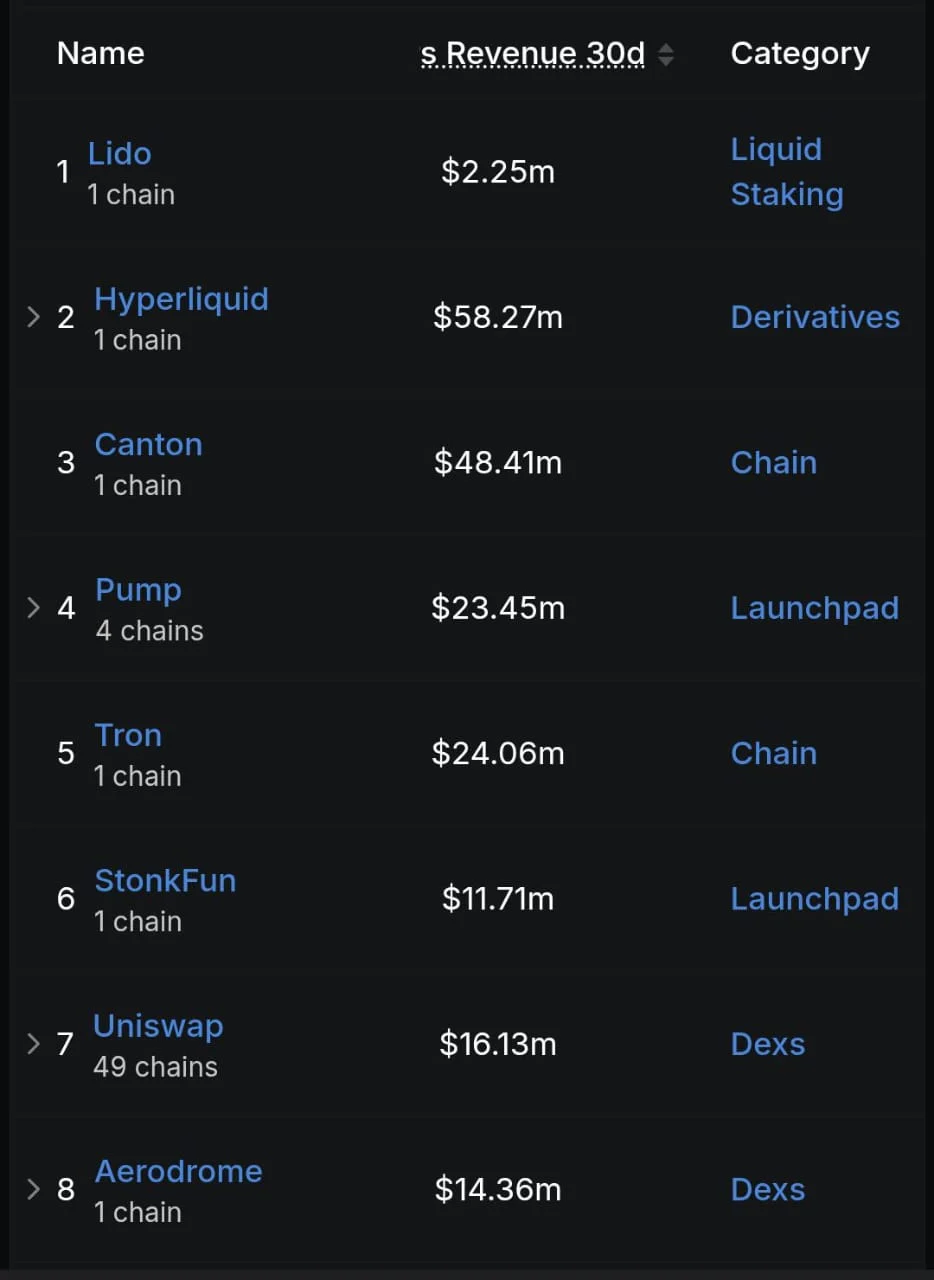
The prevailing narrative in the cryptocurrency market regarding the most significant "buyback" initiatives often points towards high-profile decentralized finance (DeFi) protocols actively repurchasing their governance tokens. However, a recent analysis of DefiLlama’s live Holders Revenue rankings reveals a starkly different landscape, challenging popular perception and underscoring the diverse mechanisms through which value is returned to token and network participants. While Hyperliquid maintains a commanding lead, the surprising emergence of entire blockchains burning transaction fees in the top echelons indicates a crucial, yet often overlooked, trend in the crypto economy.
Defining "Holder Revenue": A Deeper Dive into DefiLlama’s Methodology
To understand the nuanced findings, it is essential to first grasp DefiLlama’s definition of "Holders Revenue." Unlike self-reported metrics or simple treasury movements, DefiLlama’s rankings meticulously track actual U.S. dollar value flowing to token or network holders. This value accrual is measured on-chain and encompasses several distinct mechanisms: buyback-and-burn programs, direct fee-burning protocols, and direct staker distributions. Crucially, this definition extends beyond traditional DeFi protocols buying back a specific governance token to include entire blockchain networks that automatically burn a portion of their transaction fees. Economically, such network-level burns function similarly to a buyback by reducing the total supply of the native asset, thereby enhancing its scarcity and value for existing holders, albeit without a centralized treasury actively executing market purchases. This comprehensive approach is precisely what reconfigures the typical "biggest buybacks" leaderboard.
Hyperliquid: The Undisputed Leader in Discretionary Buybacks
According to DefiLlama’s data, Hyperliquid, a decentralized perpetual exchange, stands unchallenged at the summit, recording an impressive $58.27 million in holder revenue over the past 30 days. This figure significantly outstrips its closest competitors, generating more revenue in a single month than the combined total of the next two entries on the list. Hyperliquid’s mechanism is engineered for aggressive value accrual: a staggering 99% of all perpetual trading fees and up to 99% of spot trading fees are funneled directly into its Assistance Fund. This fund then systematically utilizes the accrued revenue to purchase the native HYPE token from the open market, effectively reducing its circulating supply and distributing value back to its ecosystem participants. This direct, high-percentage fee capture and subsequent market buying position Hyperliquid as a prime example of a DeFi protocol leveraging its operational success to directly benefit its token holders through a highly visible and active buyback program.
Canton: The Institutional Blockchain’s Quiet Ascent
In a surprising turn, Canton, an institutional-grade, privacy-focused blockchain, secures the second position with $48.41 million in 30-day holder revenue, surpassing numerous established DeFi protocols. What makes Canton’s achievement particularly noteworthy is that its mechanism for value accrual is fundamentally different from Hyperliquid’s. Canton does not employ a team executing discretionary market purchases of a governance token. Instead, its value return is structural, deeply embedded into the very architecture of the chain. Every fee generated on the network – including traffic purchases, preapproval burns, preapproval renewal burns, setup burns, dust expiry, holding fees, and sender-change fees – is automatically burned outright. This intrinsic burning mechanism is a core component of how the chain prices and manages its usage. There is no daily "buyback decision" made; the burning occurs autonomously with every instance of network activity. While this might not fit the conventional definition of a "buyback," DefiLlama’s broader framework recognizes that the continuous reduction in the native asset’s supply through fee destruction directly returns value to holders by increasing the scarcity and potential value of their remaining tokens. Canton’s success highlights how robust network utility, even in a less publicized institutional context, can translate into substantial on-chain value accrual.
Tron: A Veteran Chain’s Steady Contribution

Rounding out the top three, Tron emerges with $24.06 million in 30-day holder revenue, narrowly edging out Pump, another prominent DeFi protocol. Tron’s mechanism for value accrual mirrors Canton’s in its structural nature. A designated share of transaction fees generated across the vast Tron network is automatically burned as an integral part of its standard operational activity. This automatic burning mechanism, deeply integrated into the chain’s tokenomics, means that no active purchasing decisions are made by a specific team. Tron’s extensive ecosystem, which supports a wide array of decentralized applications, stablecoins like USDT and USDD, and a thriving user base, generates significant transaction volume. This continuous network activity fuels the steady burn of its native TRX token, consistently returning value to its holders through supply reduction. The fact that two of the top three positions are occupied by base-layer blockchain fee burns, rather than the more frequently discussed governance-token buybacks, underscores a significant disconnect between popular market narratives and the actual on-chain dynamics of value distribution. These chain-level burns, while less prone to generating social media buzz or explicit "buyback announcements," are demonstrably powerful in their economic impact.
The Familiar Names: Where DeFi Protocols Stand
Below the top three, the landscape features several well-known DeFi protocols, each employing its own buyback or value accrual strategy:
- Pump: Following closely behind Tron, Pump registers $23.45 million in holder revenue, making it the highest-ranked traditional governance token buyback program on the list, after Hyperliquid. Pump’s mechanism aggregates token buybacks derived from on-chain burns across its innovative bonding-curve trading system, PumpSwap, and its trading terminal. Its strong showing reflects the direct link between platform activity and token value accrual.
- Uniswap: The decentralized exchange giant, Uniswap, recorded $16.13 million, a figure largely attributable to the recent activation of its "fee switch." This long-debated governance mechanism allows for a portion of trading fees to be directed to UNI token holders or used for buybacks, marking a significant evolution in Uniswap’s tokenomics and its approach to value distribution. The activation of the fee switch was a landmark event, signaling a maturation in DeFi governance and a direct alignment of the protocol’s financial success with its token holders.
- Pons: Positioned closely, Pons generated $15.83 million in holder revenue, indicating its effective value accrual strategies within its specific niche.
- Aerodrome: Despite its reputation as one of the most frequently cited buyback tokens in DeFi, Aerodrome currently ranks sixth on this list, with $14.36 million in holder revenue. This highlights the gap between market perception and the raw data, suggesting that while Aerodrome’s buyback program is substantial, others are achieving even greater on-chain value return.
- StonkFun: This protocol followed with $11.1 million, consistent with its publicly stated policy of allocating 60% of its revenue towards buybacks, demonstrating a clear and transparent value return strategy.
- Other Contenders: Protocols such as Sky, Aster, and Raydium each registered in the $4-5 million range for the same 30-day period, contributing to the broader spectrum of value accrual mechanisms within the DeFi space.
Discretionary Buybacks vs. Structural Fee Burns: A Fundamental Distinction
The DefiLlama rankings illuminate a critical distinction in how value is returned to crypto holders: discretionary token buybacks versus structural network-level fee burns.
Discretionary Token Buybacks:
- Mechanism: Typically involve a protocol’s treasury or a designated fund actively purchasing the native governance token from the open market. These purchases are often executed based on a team’s decision, governance proposals, or predefined rules tied to protocol revenue.
- Pros: Offers flexibility in market timing, allows for direct signaling of confidence in the token, can be used to manage market volatility, and generates clear "announcements" for community engagement.
- Cons: Can be perceived as centralized, subject to the discretion and competence of the executing team, and may not always be fully transparent. The impact can also be less consistent if revenue streams are volatile.
Structural Network-Level Fee Burns:
- Mechanism: Involves a portion of every transaction fee on a blockchain being automatically destroyed (burned) as a fundamental part of the network’s operation. This process is hard-coded into the blockchain protocol.
- Pros: Automated, transparent, immutable, and decentralized, as the burning mechanism is baked into the chain itself. It creates consistent deflationary pressure directly tied to network utility and adoption. Provides a predictable long-term value accrual mechanism.
- Cons: Lacks the "announcement" fanfare of discretionary buybacks, which can lead to less social media attention and potentially undervalued market perception. The impact is purely supply-side driven, without direct market demand generation from protocol buying.
Economically, both mechanisms aim to increase the scarcity of the native asset, theoretically leading to an increase in its value per unit for existing holders. However, the consistent, automated nature of structural fee burns, directly linked to the fundamental activity and utility of a blockchain, presents a compelling case for sustainable, long-term value accrual that is less susceptible to discretionary decisions or market timing.
Bridging the Perception Gap: Why On-Chain Reality Differs from Narrative

The significant discrepancy between popular perception and DefiLlama’s on-chain data raises an important question: why are these chain-level fee burns, despite their substantial impact, often overlooked in the "biggest buybacks" conversation?
Several factors contribute to this perception gap:
- Lack of "Announcements": Discretionary buyback programs are frequently accompanied by official announcements, quarterly reports, and social media campaigns, generating buzz and drawing attention to the team’s efforts to support their token’s price. Structural fee burns, being automated, lack this promotional aspect.
- Focus on Governance Tokens: Much of the DeFi discourse centers around governance tokens and the active participation of communities in protocol decisions, including treasury management and buyback policies. Base-layer chain tokens, while foundational, often receive less direct attention in the context of "active" value management.
- Simplicity of Narrative: It is often simpler and more compelling to discuss a team "defending its token’s price" through active purchases than to delve into the complex mechanics of network-level fee destruction.
- Marketing and Community Engagement: Protocols with active marketing and engaged communities are more adept at shaping narratives around their tokenomics, even if the quantitative impact of their buybacks might be less than less-publicized structural burns.
This highlights a crucial challenge for investors and analysts: to look beyond the headlines and marketing efforts and conduct thorough due diligence based on verifiable on-chain data. The "reputation" of a token as a top buyback contender may not always align with its actual performance in returning value to holders.
Implications for Investors and Protocol Designers
The DefiLlama rankings offer significant implications for both cryptocurrency investors and those involved in designing future blockchain protocols and tokenomics.
For Investors:
The primary lesson is the critical need for sophisticated, data-driven due diligence. Relying solely on popular narratives or social media buzz can lead to misinformed investment decisions. Investors should delve into the underlying mechanisms of value accrual for any asset they consider. Understanding whether value is returned through discretionary treasury management or through an inherent, structural mechanism tied to network utility is paramount. Structural fee burns, by their automated and transparent nature, can offer a more predictable and resilient form of value accrual, directly reflecting the adoption and economic activity of the underlying chain. This necessitates a shift from merely tracking "buyback announcements" to analyzing raw on-chain data on token supply reduction and value flow.
For Protocol Designers:
The success of Canton and Tron in generating substantial holder revenue through fee burns provides a compelling case study for robust tokenomics design. It suggests that embedding value accrual directly into the core functionality and fee structure of a blockchain or protocol can create a powerful and sustainable economic model. This approach minimizes the need for centralized intervention, reduces potential for governance disputes over treasury management, and ensures that the token’s value is directly correlated with the network’s utility and adoption. As the industry matures, there may be an increased focus on designing tokenomics that feature these transparent, automated, and structurally sound value-accrual mechanisms, moving away from more discretionary models that might be perceived as less reliable or more centralized.
Conclusion: A Paradigm Shift in Value Accrual
The recent DefiLlama Holders Revenue rankings serve as a critical wake-up call, underscoring a significant paradigm shift in how value is effectively returned to participants within the crypto ecosystem. While Hyperliquid continues to demonstrate the power of aggressive, discretionary buybacks within the DeFi space, the quiet yet formidable rise of blockchains like Canton and Tron, which leverage automated, structural fee burns, demands greater attention. These chain-level mechanisms, intrinsically linked to network activity and devoid of centralized decision-making, are consistently outperforming many of the more publicized DeFi buyback programs. This disparity between popular perception and on-chain reality highlights the evolving sophistication of crypto tokenomics and the urgent need for stakeholders to prioritize data-driven analysis over anecdotal evidence or marketing narratives. As the industry matures, the distinction between discretionary token purchases and inherent, network-level value accrual will become increasingly vital for understanding true economic performance and making informed decisions in the dynamic world of decentralized finance.














