The Open Intents Framework (OIF), a groundbreaking initiative launched in February 2025 by the Ethereum Foundation in collaboration with Hyperlane and Bootnode, is rapidly solidifying its position as the foundational infrastructure for building and executing cross-chain intents. Garnering significant backing from over 30 prominent teams, including industry titans such as Arbitrum, Optimism, Polygon, ZKsync, and Starknet, the OIF is deliberately charting a course as a neutral, open-standard protocol rather than a proprietary solution. This strategic positioning is critical in fostering widespread adoption and ensuring interoperability across the increasingly fragmented blockchain ecosystem.
The Core Functionality of the Open Intents Framework
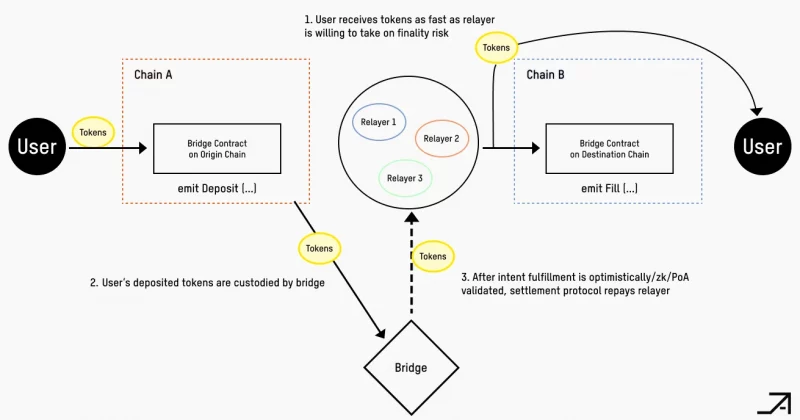
At its heart, the Open Intents Framework provides a comprehensive toolkit that empowers developers to facilitate cross-chain intents seamlessly across a multitude of blockchain networks. This sophisticated ecosystem comprises a suite of smart contracts, open-source solvers, intelligent aggregators, and a developer-friendly Software Development Kit (SDK). Crucially, developers can integrate these components into their applications without the need for explicit permission from any central authority. The OIF’s architectural robustness is built upon three fundamental contract types: InputSettler, OutputSettler, and Oracle contracts. These core components are elegantly interconnected by an interoperability SDK, creating a cohesive and functional framework.
The framework’s design is deeply rooted in the principles of the ERC-7683 standard, a burgeoning standard that meticulously defines the structure and requirements for cross-chain intents. When a user expresses an intent – for instance, a desire to execute a token swap across two different blockchains – the OIF’s architecture triggers a competitive landscape. A network of decentralized "solvers" then engages in a race to fulfill this request with optimal efficiency and speed. This competitive dynamic is a cornerstone of the OIF’s operational model, ensuring that users benefit from the most advantageous execution of their cross-chain transactions.
Early deployments of the OIF are already live and operational on several prominent testnets, including Ethereum Sepolia and Optimism Sepolia. Under favorable network conditions, the framework has demonstrated the capability to complete solver-fulfilled orders within an impressive timeframe of 10 to 60 seconds. This rapid execution speed is a critical factor in enhancing the user experience for cross-chain operations, a previously cumbersome and time-consuming process.
Coinbase Payments Embraces the Framework
A significant milestone in the OIF’s journey occurred in September 2025 when Coinbase Payments, the dedicated payments arm of the globally recognized cryptocurrency exchange Coinbase, officially became a core contributor to the project. This endorsement from a major institutional player signifies a strong belief in the OIF’s potential to revolutionize cross-chain asset transfers. Coinbase Payments is actively collaborating to help standardize and streamline these transfers through the OIF, leveraging their extensive experience and infrastructure in the digital asset space.
The inherent modularity and permissionless nature of the OIF’s design are central to its appeal. This means that any development team, regardless of size or affiliation, can deploy, extend, and innovate upon the framework’s contracts without seeking approval from a governing body. This open approach actively combats the risk of vendor lock-in and fosters a truly decentralized ecosystem. Furthermore, the OIF deliberately eschews a governance token, thereby sidestepping the complexities and potential conflicts associated with tokenomics, staking requirements, and fee structures that are often subject to the volatile dynamics of token holder governance. The framework’s operational model relies on the competitive incentives of solvers who are motivated to provide efficient fulfillment services to earn rewards.
The Strategic Advantage of a Tokenless Design
The absence of a dedicated token or cryptocurrency asset associated with the Open Intents Framework is a deliberate and strategic design choice. This tokenless approach is fundamental to positioning the OIF as a neutral and impartial piece of infrastructure, akin to the foundational layers of the internet. For developers and users alike, this eliminates the need to navigate the often-intricate landscape of tokenomics, including understanding staking mechanisms, fluctuating fee structures, and the potential for governance disputes that can arise with token-based protocols.
While the absence of a token means there isn’t a direct financial incentive mechanism to bootstrap the network of solvers and participants in the traditional sense, the OIF leverages the inherent competitive dynamics of the market. Solvers are incentivized by the prospect of earning fees derived from the efficient and successful fulfillment of user intents. This decentralized competition is expected to drive innovation and optimization within the solver ecosystem, ultimately benefiting the end-users by ensuring the most cost-effective and rapid cross-chain transactions.
Background and Chronology of the Open Intents Framework
The genesis of the Open Intents Framework can be traced back to the growing need for standardized and secure cross-chain communication in the burgeoning multi-chain cryptocurrency landscape. As the number of independent blockchain networks proliferated, the challenges of transferring assets and executing actions across these disparate systems became increasingly apparent. Early attempts at cross-chain solutions often relied on centralized bridges or proprietary interoperability protocols, which introduced single points of failure and limited flexibility.
February 2025: The Ethereum Foundation, in partnership with Hyperlane and Bootnode, officially launches the Open Intents Framework. This marks the initial public release of the framework’s core components and SDK, inviting developers to begin building on the nascent infrastructure. The announcement is met with considerable interest from the developer community, signaling a strong demand for such a standardized solution.
Early 2025 onwards: The framework begins to gain significant traction. Over 30 blockchain development teams, including major Layer 2 scaling solutions and prominent Layer 1 networks, announce their intention to integrate with or build upon the OIF. This broad-based support underscores the perceived value of a neutral, open-standard approach to cross-chain interoperability.
June 2025: Initial deployments of the OIF’s smart contracts and SDK are successfully launched on prominent testnets, including Ethereum Sepolia and Optimism Sepolia. This allows developers to rigorously test and refine their integrations in a live, albeit pre-production, environment. Performance metrics begin to emerge, showcasing promising transaction speeds for solver-fulfilled intents.
September 2025: Coinbase Payments joins the OIF initiative as a core contributor. This strategic partnership brings significant industry weight and expertise to the project, with a focus on standardizing cross-chain asset transfers. The involvement of a major exchange like Coinbase is seen as a crucial step in driving mainstream adoption of OIF-based solutions.
Late 2025 (Projected): Further development is anticipated, with a focus on ongoing security audits of the production contracts deployed across various testnets and mainnets. Additionally, the development of new and enhanced solver algorithms is a key priority, aimed at further optimizing the efficiency and reliability of cross-chain intent fulfillment.
Supporting Data and Industry Context
The rapid expansion of the blockchain ecosystem has led to a fragmented landscape where interoperability remains a significant hurdle. According to industry reports from early 2025, the total value locked (TVL) across all decentralized finance (DeFi) protocols had surpassed $500 billion, with a substantial portion of this value residing on various Layer 1 and Layer 2 networks. The inability to seamlessly move assets and execute complex DeFi strategies across these chains represented a significant bottleneck to further growth and user adoption.
Cross-chain bridges, while providing a solution, have historically been vulnerable to exploits. The aggregate losses from bridge hacks and exploits in 2023 and 2024 exceeded $1.5 billion, highlighting the critical need for more robust and secure interoperability solutions. The OIF, by establishing a standardized and decentralized approach to intent execution, aims to mitigate many of these inherent risks by moving away from single points of failure.
The involvement of leading blockchain ecosystems like Arbitrum, Optimism, Polygon, ZKsync, and Starknet is particularly noteworthy. These networks collectively represent a significant portion of the Ethereum ecosystem’s scaling solutions, processing a vast amount of transactions and hosting a multitude of dApps. Their commitment to the OIF signals a unified effort to create a more cohesive and interconnected multi-chain future. The Ethereum Foundation’s backing further lends credibility and reinforces the OIF’s commitment to open-source development and public good infrastructure.
Analysis of Implications and Broader Impact
The Open Intents Framework represents a significant paradigm shift in how cross-chain interactions are conceptualized and executed. By establishing a neutral, open-standard infrastructure, the OIF is poised to democratize cross-chain functionality, making it more accessible and efficient for developers and users alike.
Enhanced Interoperability: The most immediate implication is a significant enhancement in the interoperability of blockchain networks. This will unlock new possibilities for dApp development, allowing for more complex and seamless user experiences that span multiple chains. Imagine a user effortlessly interacting with a DeFi protocol on Arbitrum, then seamlessly executing a trade on a decentralized exchange on Polygon, all without manual bridging or complex transaction sequences.
Reduced Friction for Developers: The permissionless and modular nature of the OIF significantly lowers the barrier to entry for developers looking to implement cross-chain features. Instead of building bespoke solutions or relying on proprietary APIs, developers can leverage the OIF’s standardized components, accelerating development cycles and fostering innovation.
Increased Security and Resilience: By promoting a decentralized network of solvers and adhering to established standards, the OIF aims to improve the security and resilience of cross-chain transactions. The competitive nature of solvers incentivizes efficient and secure execution, while the open-source nature allows for continuous community scrutiny and improvement.
Democratization of Cross-Chain Access: The tokenless design and open-source ethos ensure that the OIF remains accessible to all participants, free from the potential influence of a single entity or token-holding group. This fosters a more equitable and decentralized ecosystem, where innovation can flourish based on technical merit rather than economic speculation.
Catalyst for a Unified Web3: Ultimately, the OIF has the potential to act as a crucial catalyst in moving towards a more unified and cohesive Web3 experience. By bridging the gaps between disparate blockchain networks, it can facilitate the seamless flow of value and information, paving the way for the widespread adoption of decentralized technologies. The framework’s success will be a testament to the power of collaboration and open standards in building the future of the internet. The ongoing development and adoption of the OIF will be closely watched by the entire blockchain industry as it seeks to navigate the complexities of an increasingly interconnected digital world.