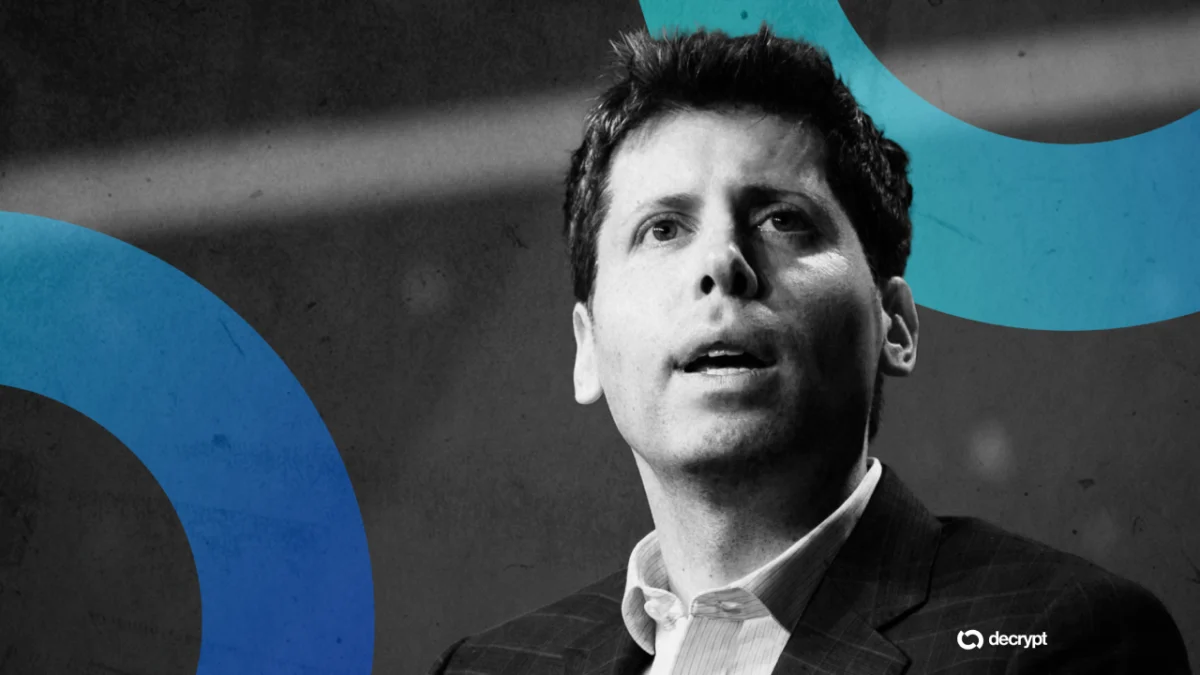
OpenAI CEO Sam Altman has robustly defended his controversial comments regarding computer memory, asserting that his remarks were taken out of context and emphasizing his long-standing advocacy for increased global memory production. The tech executive faced significant backlash following an interview where he appeared to suggest that individual users hoarding Random Access Memory (RAM) in their personal computers contributed to a global supply crunch, prompting a swift clarification via social media.
"I actually do want the world to have tons of memory and people to put as much as they want in their computers, and it is fucking annoying that this was taken out of context," Altman declared in a tweet early Wednesday. He further underscored his position, stating, "I have been arguing for the world to ramp up memory production for a long time." This direct response aimed to quell the burgeoning criticism that had erupted across tech communities and social media platforms.
The Genesis of the Controversy: Cloud Optimization vs. Personal Ownership
The initial comments that sparked the controversy were made during an interview with the YouTube channel "Cheeky Pint." In the discussion, Altman addressed the critical shortages of memory and other essential components, a direct consequence of the escalating demand fueled by the artificial intelligence (AI) boom. His statement, "From like a global allocation perspective, actually, it’s quite terrible to have everybody have a bunch of the world’s limited supply of DRAM sitting in their own computer and being used 5% of the time," ignited a fierce debate. He elaborated, suggesting that "You want maximum utilization in a cloud if you’re trying to deal with this very supply-constrained environment."
These remarks were interpreted by many as a critique of personal computer ownership and an endorsement of cloud-centric computing, particularly in the context of memory allocation. The underlying sentiment seemed to advocate for a more efficient, centralized distribution of scarce resources, which struck a nerve with enthusiasts who value the autonomy and performance of local hardware. In the same interview, Altman also voiced frustration with memory manufacturers, whom he blamed for their slow pace in expanding production capabilities, expressing his hope that prices for chips and other components would eventually decline.
Altman’s Social Media Engagement and Playful Retraction
As the backlash intensified, Altman engaged directly with his critics on social media platform X (formerly Twitter). Demonstrating a willingness to lean into the controversy, he responded to various users who were humorously dissecting his remarks. He notably "lol’d" at one meme that satirized his comments. In a more public display of acknowledging the sentiment, when a user jokingly suggested he rename his X account to "Ram Altman," he replied "ok yeah." For a brief period, his display name was indeed changed, before he reverted it and added a clarification that the temporary change was precisely because he desired abundant memory for everyone. This lighthearted approach served to humanize his response while simultaneously reinforcing his underlying message.
High-Profile Criticism and Industry Reactions
Among the most prominent voices to criticize Altman’s initial statements was fellow tech titan Elon Musk. On Sunday, Musk publicly mocked Altman, sharing a meme featuring the Inglourious Basterds character Hans Landa, with the caption, "You are withholding DRAM from the cloud, are you not?" Musk further declared, "The people deserve to have their RAM too!" This high-profile jab from the CEO of Tesla and X amplified the debate, framing it as a conflict between corporate cloud interests and individual user rights to hardware.
Beyond Musk, numerous tech enthusiasts, independent developers, and PC builders voiced their disapproval. Many argued that Altman’s comments overlooked the diverse needs of users who rely on local processing power for gaming, content creation, scientific simulations, and privacy considerations. The sentiment was that not all computing tasks are best suited for the cloud, and decentralization of computing resources, including memory, remains crucial for innovation and accessibility. The discussion highlighted a fundamental tension between the perceived efficiencies of centralized cloud infrastructure and the principles of personal ownership and localized control over computing resources.
The Global RAM Shortage: A Deep Dive into Market Dynamics
The public spat surrounding Altman’s comments unfolds against the backdrop of a severe and persistent global memory shortage, a crisis primarily driven by the insatiable demand from AI data centers. This shortage is not a new phenomenon in the semiconductor industry, which has historically experienced cyclical booms and busts. However, the current situation is exacerbated by unprecedented demand from artificial intelligence, which requires vast quantities of high-bandwidth memory (HBM) and conventional DRAM.
SK Hynix, a South Korean semiconductor supplier and one of the world’s largest memory manufacturers, issued a stark warning last week. The company projected that the demand for memory would continue to outstrip supply through at least 2030, indicating a prolonged period of scarcity and elevated prices. This forecast underscores the structural challenges facing the industry, which is struggling to scale up production to meet the accelerating pace of technological advancement, particularly in AI.
Economic Impact: Soaring Prices and Market Volatility
The supply-demand imbalance has had a dramatic impact on memory prices. According to data tracked by Tom’s Hardware, contract prices for 16GB DDR5 memory chips experienced an astonishing surge. They rose from approximately $8.70 in October 2025 to $48 in September 2026, representing an increase of over 550% in less than a year. This meteoric rise highlights the intense pressure on the memory market and the direct financial consequences for hardware manufacturers and consumers alike.
Further emphasizing the gravity of the situation, Chen Ching-wen, CEO of memory maker Team Group, conveyed a grim outlook during an earnings call this week. He stated unequivocally that there was "no downward price trend whatsoever" in sight for memory components. His warning was even more dire, suggesting that some buyers could soon face a scenario where "even money can’t buy goods," indicating that supply might become so constrained that even willingness to pay premium prices would not guarantee access to necessary components. Such a situation would have profound implications for the entire technology ecosystem, from server farms to consumer electronics.
The global DRAM market, valued at approximately $80-100 billion annually, is highly sensitive to supply and demand fluctuations. While memory manufacturers often benefit from price increases, the current situation presents a unique challenge: the inability to scale production quickly enough risks stifling the very growth drivers, like AI, that are fueling demand. The construction of new semiconductor fabrication plants (fabs) is an incredibly capital-intensive and time-consuming endeavor, often taking several years from groundbreaking to full production capacity. This inherent lead time means that current investment decisions will only impact supply years down the line, making rapid responses to sudden demand spikes extremely difficult.
Drivers of Demand: The AI Revolution’s Insatiable Appetite
The primary catalyst for the current memory crunch is the explosive growth of artificial intelligence. Training and deploying large language models (LLMs) and other complex AI models require immense computational power and, critically, vast amounts of high-speed memory. Each advanced AI accelerator (like GPUs designed for AI workloads) can incorporate tens or even hundreds of gigabytes of HBM, a specialized type of RAM that offers significantly higher bandwidth than traditional DDR memory. Data centers dedicated to AI development and inference are deploying these accelerators in unprecedented numbers, creating a demand curve that memory manufacturers are struggling to match.
Beyond HBM, general-purpose DDR5 DRAM is also heavily impacted. Servers in AI data centers often require significantly more RAM than traditional enterprise servers to handle the vast datasets and complex algorithms involved in AI operations. This dual demand for both specialized and standard memory types places immense pressure across the entire memory production landscape. The rapid pace of innovation in AI, with new models and applications emerging constantly, ensures that this demand will only continue to accelerate in the foreseeable future.
Supply-Side Constraints: Manufacturing Challenges and Investment Cycles
The supply-side challenges are multifaceted. Building and expanding semiconductor fabs involves billions of dollars in investment and takes years to complete. Furthermore, the manufacturing process for advanced memory chips is incredibly complex, requiring highly specialized equipment, materials, and skilled labor. Geopolitical tensions and the push for greater domestic semiconductor production in various regions further complicate global supply chains and capital allocation decisions.
Historically, the memory market has been notoriously cyclical, characterized by periods of oversupply and undersupply. Manufacturers are often cautious about over-investing in new capacity during boom times, fearing a subsequent crash that could leave them with idle fabs and depreciating assets. This inherent conservatism, while financially prudent in the long run, can exacerbate shortages when unexpected demand spikes occur, as is currently seen with the AI boom. Moreover, the shift towards more advanced memory technologies like HBM requires even greater R&D and manufacturing precision, adding another layer of complexity and cost to scaling production.
Ripple Effects on Consumer Electronics
The memory shortage and subsequent price hikes are not confined to the enterprise and AI sectors; they are increasingly impacting consumer devices. Manufacturers of popular electronics are facing higher component costs, which are inevitably passed on to consumers.
In April, Meta, for example, increased the price of its Quest 3 and Quest 3S virtual reality headsets by $50 to $100. This move came just weeks after Sony adjusted the prices for its PlayStation 5 consoles, the PlayStation 5 Pro, and the PlayStation Portal remote player in March 2026. These price adjustments are direct consequences of the rising cost of components, particularly DRAM, which is a critical element in modern gaming consoles and VR devices. Consumers are thus bearing the brunt of the global memory crunch, seeing prices for their desired tech gadgets climb significantly.
Future Outlook and Strategic Imperatives
The current memory crisis is expected to persist for several years, with expert projections extending well into the latter half of the decade. The long-term implications are significant for the entire technology industry. For AI development, sustained high memory prices and limited availability could slow innovation, making cutting-edge research and deployment more expensive and accessible only to larger corporations. For cloud providers, managing memory allocation efficiently will become even more critical, reinforcing Altman’s original point about utilization.
For consumers, the trend of increasing prices for electronics is likely to continue, potentially impacting upgrade cycles and affordability. The industry faces strategic imperatives to address these challenges. This includes massive investments in new fabrication plants, fostering international cooperation to stabilize supply chains, and exploring innovative memory technologies that offer greater efficiency or alternative architectures. The debate initiated by Sam Altman, while initially contentious, has effectively highlighted a critical vulnerability in the global tech infrastructure and underscored the urgent need for comprehensive solutions to ensure the continued progress of digital innovation. The tension between centralized efficiency and individual access to powerful computing resources will likely remain a key theme as the world grapples with the demands of an increasingly AI-driven future.