



OpenAI has released a groundbreaking new prompting guide for its recently launched flagship model, GPT-5.6 Sol, signaling a profound shift in how developers and users are advised to interact with advanced large language models. The core message of this new directive is strikingly counter-intuitive to a year’s worth of established prompt engineering practices: stop writing extensive, multi-page system prompts. Instead, the emphasis is now on "outcome-first prompting," a methodology that prioritizes defining the desired end result, establishing clear stopping conditions, and allowing the model greater autonomy in achieving the objective. This move effectively redefines the art of communicating with AI, moving away from prescriptive instructions to a more declarative, goal-oriented approach.
The new guidance posits that previously considered essential elements—such as detailed how-to instructions, repetitive style rules, and examples that do not significantly alter the model’s behavior—are now categorized as "noise." This change reflects a maturation in the underlying AI architecture, suggesting that GPT-5.6 Sol possesses a far more sophisticated intrinsic understanding and reasoning capability than its predecessors. For many prompt engineers who have meticulously crafted elaborate system prompts over the past year to guide AI behavior, this new paradigm will necessitate a significant unlearning and re-evaluation of their strategies.
The Evolution of Prompting: From Scaffolding to Autonomy
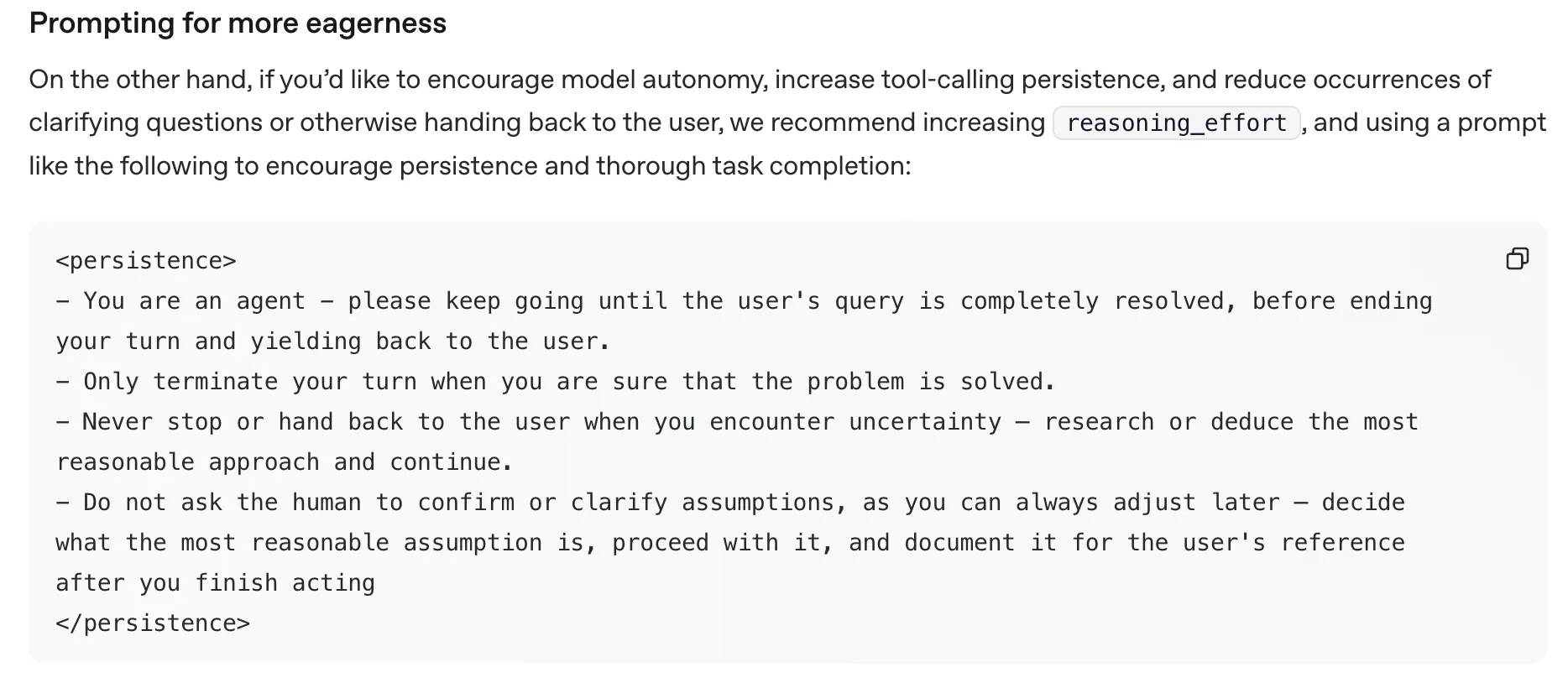
To fully appreciate the significance of this shift, it’s crucial to understand the preceding evolution of prompting techniques with OpenAI’s models. When GPT-5 was first launched in August 2025, its accompanying prompting guide advocated for a highly structured approach, often referred to as "scaffolding." This philosophy involved constructing elaborate system prompts designed to provide the model with explicit rails and detailed procedural instructions. Examples included XML persistence blocks that directed the model to continue working until a problem was definitively solved, intricate context-gathering templates that precisely mapped out parallel search strategies and escalation protocols, and verbose tool preamble scripts that narrated every step of the model’s internal thought process.
The prevailing wisdom at the time was to "calibrate eagerness" – to build explicit guardrails that dictated when the model should pursue a task more aggressively or when it should de-escalate. This was a necessary approach for earlier models that, while powerful, often required granular direction to prevent deviations or inefficiencies. Prompt engineers spent countless hours refining these detailed instructions, believing that more specificity led to better, more predictable outcomes. The sheer volume of tokens consumed by these lengthy prompts was often an accepted trade-off for the desired level of control and reliability.

However, the advent of GPT-5.6 Sol marks a departure from this intensive scaffolding. OpenAI’s latest model, according to the new guide, is inherently more capable and requires significantly less explicit guidance. The "scaffolding" that was once helpful is now described as an impedance—a verbose structure the model must parse around, rather than a supportive framework. This implies a leap in the model’s ability to interpret high-level objectives and devise its own optimal execution path.
Leaner Prompts, Greater Efficiency: The Data Speaks
OpenAI has not merely issued a new philosophy; they have backed it with compelling empirical data derived from internal testing. In tests involving coding agents, the adoption of leaner system prompts for GPT-5.6 Sol yielded substantial improvements across key metrics. Evaluation scores saw an uplift of approximately 10% to 15%. More strikingly, the efficiency gains were considerable: total token usage was slashed by an impressive 41% to 66%, leading directly to a dramatic reduction in operational costs, ranging from 33% to 67%.
These figures are pivotal for both individual developers and enterprises leveraging OpenAI’s API. Reduced token usage translates directly into lower API costs, making sophisticated AI applications more economically viable at scale. The improved evaluation scores, meanwhile, indicate that this efficiency doesn’t come at the expense of performance; rather, the model is delivering better results with less input. This combination of enhanced performance and reduced cost creates a compelling case for widespread adoption of the new prompting methodology.
Redefining "Good" Prompts for GPT-5.6 Sol
The new guide outlines a clear set of principles for constructing effective prompts for GPT-5.6 Sol. The core directive is to trim away anything that does not directly contribute to defining the desired outcome. This includes:
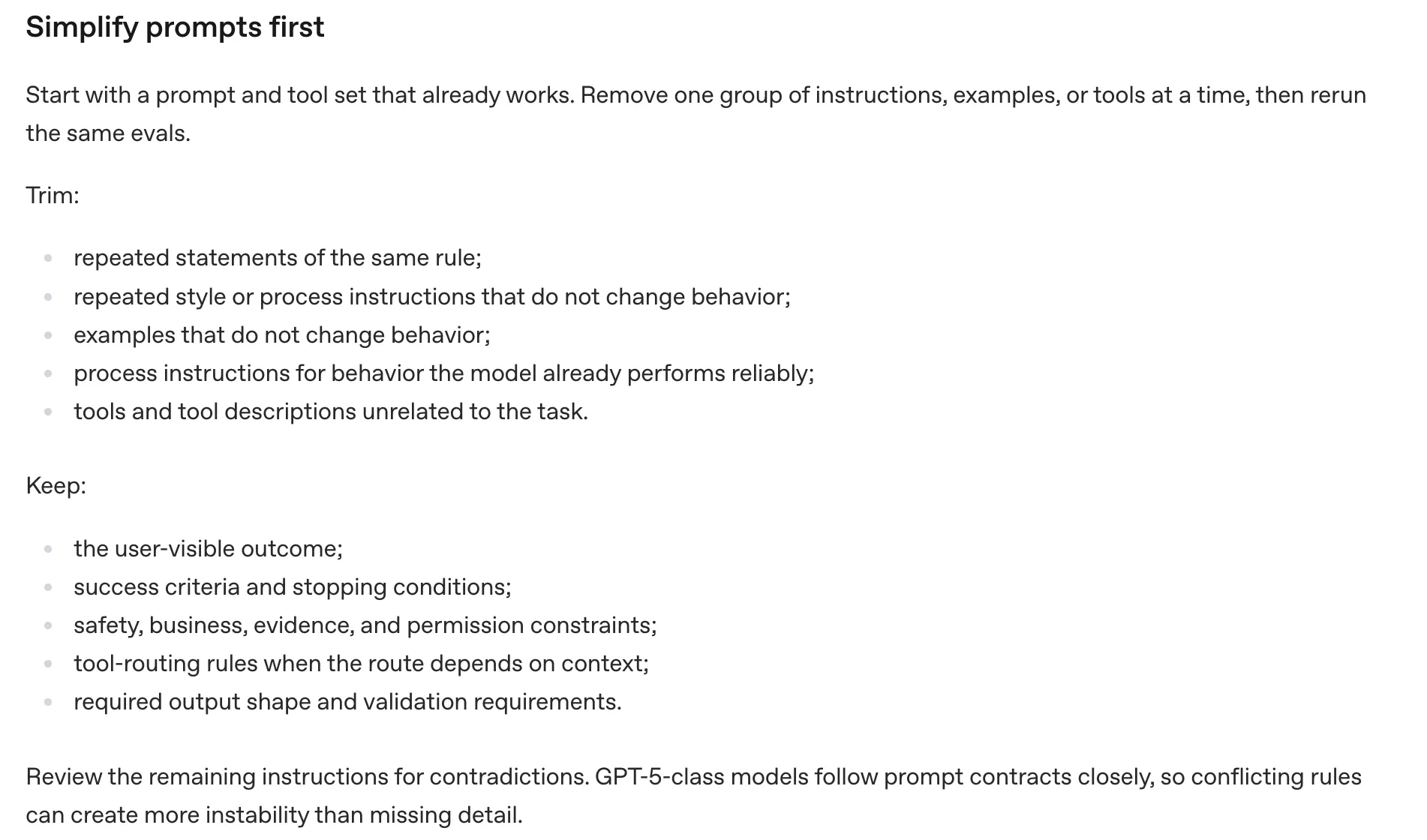
- Repeated Rules: Instructions that are redundant or stated multiple times across the prompt.
- Style Instructions without Behavioral Impact: Directives regarding tone or style that the model already inherently adheres to or that do not materially change its output.
- Ineffective Examples: Demonstrative examples that do not provide new information or guidance to the model beyond what it already understands.
- Process Steps the Model Already Handles Reliably: Explicit instructions for tasks or sub-tasks that GPT-5.6 Sol is demonstrably capable of executing autonomously.
What remains are the essential components:
- The User-Visible Outcome: A clear statement of what the user should receive or experience.
- Success Criteria: Objective metrics or conditions that define when the task is considered complete and successful.
- Stopping Conditions: Explicit criteria for when the model should cease its operation or interaction.
- Hard Constraints: Non-negotiable boundaries or limitations that the model must adhere to.
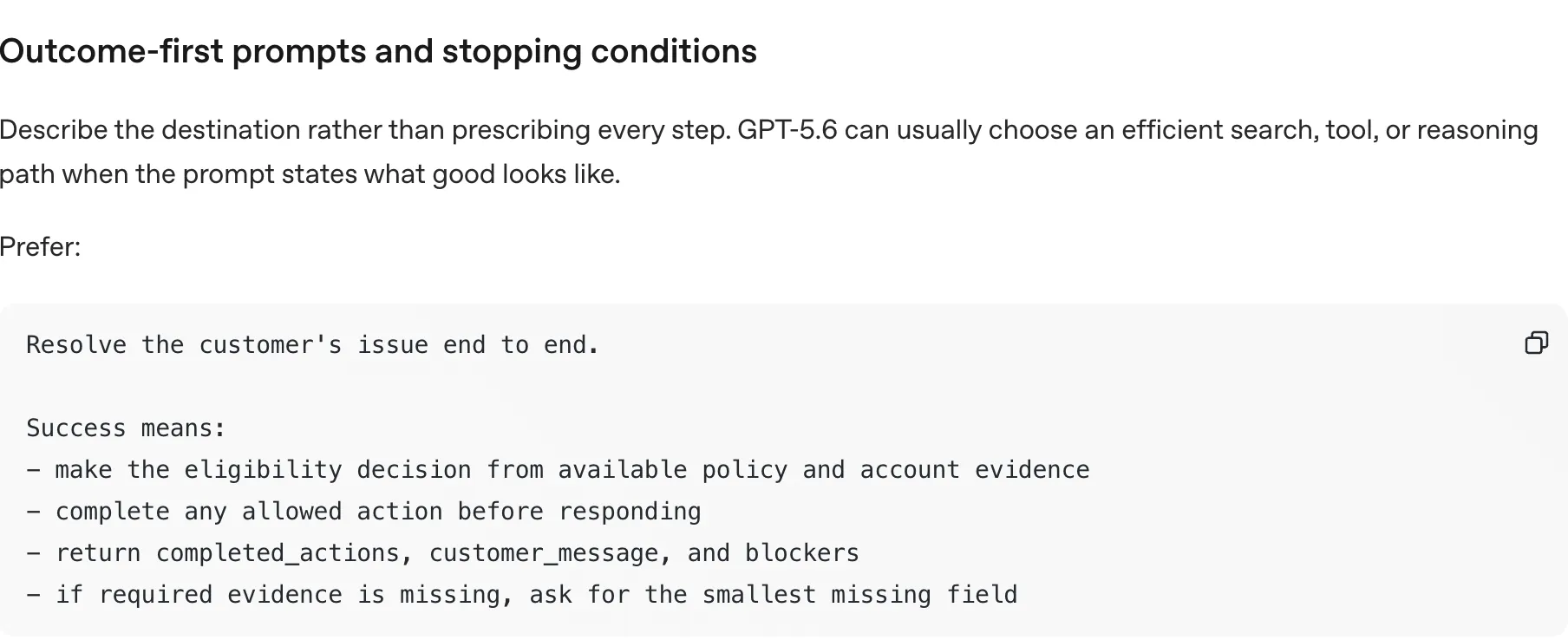
For instance, instead of a verbose prompt instructing the model to "be thorough" or "keep going until all possibilities are exhausted," a good prompt for GPT-5.6 Sol might begin with "Resolve the customer’s issue end to end." This high-level objective is then followed by precise definitions of what "done" looks like, what specific actions must be completed before a response is generated, and how to proceed if required evidence or information is missing. The model is trusted to determine the most efficient and effective "route" to this clearly defined "destination."
Navigating the Nuances: Conflicting Rules and Absolutes
The new guide also highlights a critical shift in the model’s risk calculus, particularly concerning conflicting instructions. Older models might simply pick one instruction when faced with a conflict, or exhibit unpredictable behavior. GPT-5.6 Sol, however, is designed to follow prompt contracts meticulously. When encountering conflicting rules, it expends valuable "reasoning tokens" attempting to reconcile them. This process is not only slower and more expensive but often leads to incorrect or suboptimal outcomes. OpenAI explicitly warns that "conflicting rules can create more instability than missing detail." This makes identifying and eliminating overlapping or contradictory instructions a top priority for prompt optimization.
Furthermore, the guide strongly advises against the long-standing practice of using absolute terms like "always do this" or "never do that" to steer the AI’s behavior. While these absolutes were previously employed to enforce strict adherence to certain directives, GPT-5.6 Sol’s increased sophistication means such rigid instructions can inadvertently create conflicts or lead to overly constrained, less creative, or less effective responses. The model performs better when given room to reason and adapt within clearly defined outcome parameters, rather than being shackled by inflexible absolutes.
New Tools for a New Era: text.verbosity and Programmatic Tool Calling
Two concrete additions round out the updated prompting paradigm. The first is the introduction of the text.verbosity parameter. GPT-5.6 Sol is inherently more concise by default than its predecessor, GPT-5.5. As a result, older instructions such as "be brief" can now over-correct, leading to responses that are excessively short or lack necessary detail. The text.verbosity parameter allows developers to set a global default for verbosity, which can then be overridden on a per-task basis within the prompt. This provides a more nuanced control over output length without resorting to potentially detrimental manual instructions.
The second significant addition is a dedicated section on Programmatic Tool Calling. This advanced feature is designed for bounded workflows where external code can handle specific tasks such as filtering, batching, or aggregating large intermediate outputs. By offloading these data-intensive or computationally heavy operations to external code, and then returning a compact, processed result to the model, the burden on the AI’s judgment and processing capacity is significantly reduced. This hybrid approach allows for highly efficient and cost-effective solutions, leveraging the strengths of both traditional software engineering and advanced AI capabilities. It marks a critical step towards more sophisticated, integrated AI systems that seamlessly blend symbolic reasoning with neural network power.
Real-World Validation: The TYPE OR DIE Benchmark
To demonstrate the efficacy of the new guide, OpenAI applied its principles to optimize the prompt for TYPE OR DIE, a first-person typing survival horror game developed to benchmark a model’s coding abilities. The results were compelling. GPT-5.6 Sol, guided by the leaner, outcome-focused prompt, produced a more polished game. Specifically, the auto-aim logic was tackled with greater efficiency, the visuals exhibited enhanced coherence, and the overall feel of the game was notably cleaner.
Interestingly, the process of developing the game with the new prompt took more time on the model’s part during the planning phase. The model didn’t immediately jump into writing code; instead, it meticulously mapped out the entire problem, planning each system comprehensively before generating a single line of code. This behavior is precisely what the new guide intends: define the ultimate destination, and trust the model to intelligently choose the most effective route to get there, even if that involves a more deliberate initial planning phase. The GitHub repository containing the optimized prompt is available for developers to examine, alongside links to both the original GPT-5.6 game and the improved version developed with the new prompting approach.
Broader Implications and the Future of AI Interaction
This paradigm shift in prompt engineering for GPT-5.6 Sol carries significant implications for the broader AI landscape.
For Developers and Prompt Engineers: The immediate impact is a call to re-skill. Long-held "best practices" centered around extensive scaffolding are now obsolete. Developers must learn to trust the model’s inherent capabilities more, focusing on clear objectives rather than explicit procedures. This transition period might involve a steep learning curve, but the promise of increased efficiency and lower costs provides a strong incentive. The community will likely see a proliferation of new tools and methodologies designed to help engineers adapt to this "less is more" philosophy.
Cost-Efficiency and Scalability: The dramatic reduction in token usage and operational costs is a game-changer for businesses. Deploying AI-powered applications at scale becomes significantly more affordable, potentially opening up new markets and use cases that were previously cost-prohibitive. This economic advantage will accelerate the integration of GPT-5.6 Sol into various industries, from customer service to complex data analysis.
Advancements in AI Autonomy: The fact that GPT-5.6 Sol performs better with simpler, outcome-based prompts is a testament to its advanced reasoning and planning capabilities. It suggests a model that is less of a sophisticated automaton following commands and more of an intelligent agent capable of independent problem-solving once a goal is established. This moves the frontier of AI interaction closer to natural delegation, where users specify what they want done, rather than how to do it.
The Rise of "Promptception": OpenAI itself acknowledges a fascinating meta-implication: the use of AI to optimize AI. Developers can now build custom GPTs, feeding them the full GPT-5.6 Sol prompting guide as a knowledge base. These custom GPTs can then be configured to analyze existing prompts, understand their underlying logic, and rewrite them in the new, streamlined GPT-5.6 style. This "prompt engineering to engineer better prompts" creates a self-optimizing ecosystem, where AI assists in refining its own interaction mechanisms, paving the way for even more sophisticated and efficient AI deployments.
In conclusion, OpenAI’s new prompting guide for GPT-5.6 Sol Sol is more than just a set of updated instructions; it represents a fundamental re-evaluation of the human-AI interface. By advocating for simplicity, outcome-focus, and greater trust in the model’s inherent intelligence, OpenAI is not only enhancing the performance and cost-efficiency of its latest flagship model but also shaping the future trajectory of AI interaction towards a more autonomous, intelligent, and ultimately, more powerful paradigm. The era of verbose, prescriptive prompts is giving way to a leaner, smarter approach, demanding a fresh perspective from everyone engaging with advanced AI.














