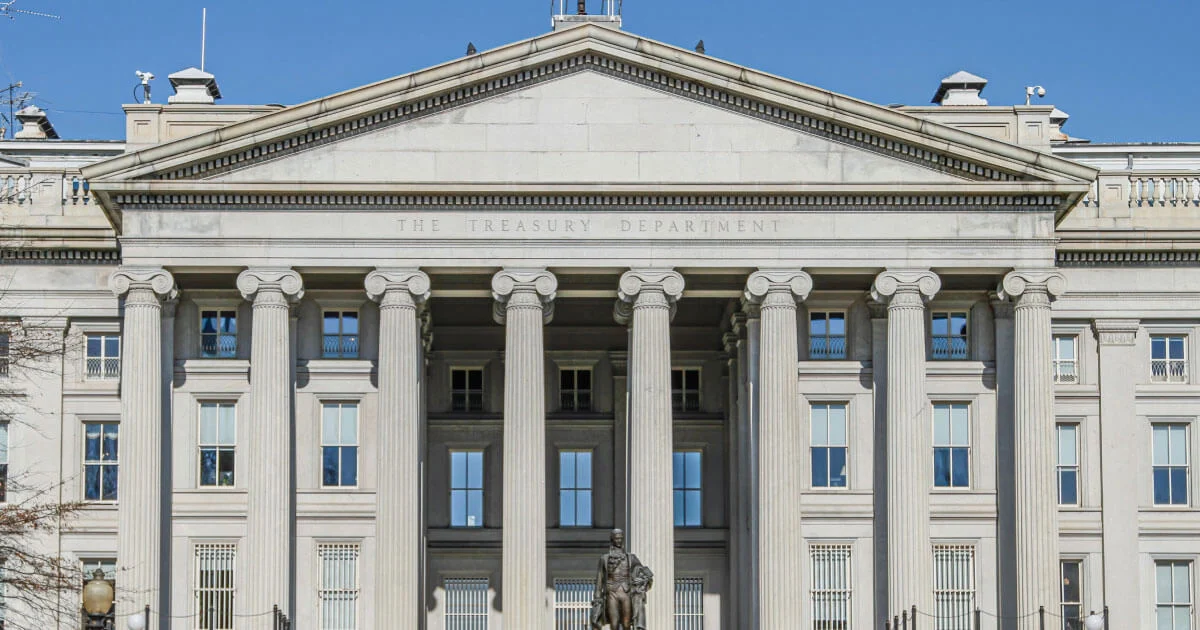
The United States Department of the Treasury, in a coordinated effort with the Department of Justice and the Federal Bureau of Investigation, officially launched Operation Economic Outcast on August 24, 2026. This comprehensive economic offensive represents one of the most aggressive maneuvers in the history of U.S. sanctions, specifically designed to cripple the financial lifelines of the Islamic Republic of Iran and its paramilitary arm, the Islamic Revolutionary Guard Corps (IRGC). Treasury Secretary Scott Bessent, characterizing the initiative as an "economic D-Day," signaled a decisive shift in strategy, moving from targeted individual designations to a broad-spectrum assault on the digital asset infrastructure that has increasingly allowed the Iranian regime to bypass traditional international banking restrictions.
The core of this operation lies in the systematic severance of Iranian access to global liquidity, with a particular focus on the cryptocurrency payment rails that have become a cornerstone of the regime’s sanctions-evasion toolkit. By targeting the intersection of illicit oil trade, state-sponsored cybercrime, and digital finance, the U.S. government aims to render the Iranian economy an "outcast" on the global stage, forcing a choice upon international financial institutions and virtual asset service providers: maintain access to the U.S. dollar-based system or continue facilitating Iranian transactions.
A New Frontier in Sanctions: The Digital Asset Sectoral Determination
The most significant policy development within Operation Economic Outcast is a first-of-its-kind sectoral determination issued under Executive Order 13902. This authority allows the Office of Foreign Assets Control (OFAC) to sanction any foreign person or entity determined to operate in or provide material support to the digital assets sector of the Iranian economy. Unlike previous sanctions that required federal investigators to establish a direct nexus to terrorism, weapons of mass destruction proliferation, or a specific sanctioned individual, this new determination treats the entire Iranian crypto industry as a prohibited zone.
The practical implications for the global financial ecosystem are profound. This "sectoral" approach effectively creates a blanket of secondary sanctions risk. Any foreign cryptocurrency exchange, over-the-counter (OTC) trading desk, blockchain infrastructure provider, or payment processor that knowingly facilitates transactions within Iran’s digital asset sector now risks being cut off from the U.S. financial system. This move is designed to create a "chilling effect," discouraging third-party nations and private enterprises from providing the technological bridge Iran needs to convert its digital holdings into hard currency.
Historically, OFAC has targeted specific Iranian exchanges or individual wallets. However, the 2026 determination acknowledges that the IRGC and the Ministry of Intelligence and Security (MOIS) have deeply integrated digital assets into the national economy. By designating the sector itself, the U.S. Treasury has significantly lowered the evidentiary bar required to freeze assets and penalize enablers, effectively putting the global crypto industry on notice.
The Cyber-Financial Nexus: MOIS Hackers and State-Sponsored Theft
Operation Economic Outcast also shines a spotlight on the blurred lines between state-sponsored espionage and financial crime. OFAC has targeted a specific cell within Iran’s Ministry of Intelligence and Security (MOIS) responsible for a dual-purpose campaign of cyber sabotage and personal enrichment. This group, led by Behzad Mesri and supported by key members Keyvan Fayyaz Ghareh Blagh and Arman Kahzadian, has been linked to extensive attacks on U.S. critical infrastructure, government offices, and private corporations.

The Treasury’s investigation revealed that these actors utilized Bitcoin, Ethereum, and TRON wallets to move stolen funds and pay for the infrastructure used in their attacks. The activities of this cell demonstrate a "hacking-for-hire" model where state actors are permitted—or perhaps encouraged—to engage in private criminal activity to fund their operations. For instance, Arman Kahzadian is accused of stealing cryptocurrency for personal gain, while Keyvan Fayyaz Ghareh Blagh was identified receiving payments from Russian-speaking Initial Access Brokers. This suggests a burgeoning partnership between Iranian state actors and the broader underground cybercriminal ecosystem.
Furthermore, the Treasury identified deposits made by Blagh to "Bulletproof Hosting Providers"—services that turn a blind eye to the nature of the content or activities hosted on their servers. By sanctioning the specific crypto addresses used to pay for these services, the U.S. is attempting to dismantle the very foundation of Iran’s cyber-offensive capabilities. The group’s history is extensive; Behzad Mesri was previously linked to the 2017 hack of the television network HBO, where he allegedly attempted to extort $6 million in Bitcoin by threatening to release unreleased episodes of popular programming.
Dismantling the Shadow Fleet: The $100 Million Crypto-Oil Connection
Beyond cybercrime, Operation Economic Outcast targets the primary revenue driver for the Iranian regime: the illicit sale of petroleum. Iran has long relied on a "shadow fleet" of aging tankers, often operating under flags of convenience and with disabled transponders, to move oil to international markets. To facilitate these sales and bypass the SWIFT banking network, the IRGC-Qods Force (IRGC-QF) has increasingly turned to cryptocurrency.
A central figure in this network, according to the Treasury, is Ivan Obukhov, a UAE-based Ukrainian national. Obukhov allegedly acted as a critical broker for the shadow fleet, processing more than $100 million in cryptocurrency payments since 2023 to facilitate oil shipments on behalf of the IRGC-QF. His operations were conducted in coordination with Mohammad Ahmed Suhil Fattouh, a Syrian national known as "Captain Hamzah," who specialized in the procurement of the vessels themselves.
The scale of this operation is corroborated by blockchain analytics data, which indicates that IRGC-associated addresses accounted for more than 50% of the total value received by the Iranian crypto economy in the final quarter of 2025. With total volumes surpassing $3 billion in 2025 alone, the IRGC has effectively transformed into a dominant force within the domestic digital asset market, using the technology to fund proxy groups across the Middle East and sustain the regime’s internal security apparatus.
Chronology of Escalation: The Road to Operation Economic Outcast
The launch of Operation Economic Outcast is the culmination of nearly a decade of escalating tension in the digital financial sphere:
- 2017: Behzad Mesri and the Mabna Institute conduct high-profile hacks against U.S. entities, including the extortion attempt against HBO.
- 2020-2023: Iran formalizes regulations for crypto mining, attempting to harness the country’s energy reserves to generate digital currency as a state-sanctioned alternative to the rial.
- 2024-2025: IRGC-QF significantly expands its use of stablecoins and Bitcoin to settle international oil trades, with UAE and East Asian hubs serving as primary liquidation points.
- August 18, 2026: The Department of Justice unseals a superseding indictment charging 17 Iranian nationals with massive cyber-theft campaigns.
- August 24, 2026: The Treasury Department officially initiates Operation Economic Outcast, deploying the sectoral determination for digital assets and sanctioning nearly 60 entities, individuals, and vessels.
Broader Impact and Implications for Global Compliance
The implications of Operation Economic Outcast extend far beyond the borders of Iran. For compliance officers at global financial institutions and cryptocurrency exchanges, the "sectoral determination" creates a new layer of due diligence requirements. The risk of "guilt by association" is now a tangible legal reality. If a platform facilitates a trade for an OTC broker who is later found to be supporting the Iranian digital asset sector, that platform could face catastrophic enforcement actions.

Industry analysts suggest that this operation will likely drive Iranian illicit activity further into the shadows, potentially toward decentralized finance (DeFi) protocols or non-compliant jurisdictions. However, by targeting the "on-ramps" and "off-ramps"—the points where crypto is converted to fiat currency—the U.S. Treasury is betting that the friction and cost of evasion will eventually become unsustainable for the regime.
Furthermore, the coordination between the FBI and OFAC signals a "whole-of-government" approach that pairs criminal prosecution with economic strangulation. The message to the international community is clear: the digital asset space is no longer a safe haven for sanctions evasion.
Official Responses and Geopolitical Outlook
While the Iranian government has historically responded to such measures with rhetoric of "economic resistance" and continued defiance, the sheer scale of the 2026 operation presents a unique challenge. The IRGC’s heavy reliance on these digital channels means that a successful disruption could lead to significant domestic budget shortfalls and a reduced ability to fund regional proxies.
U.S. officials have emphasized that Operation Economic Outcast is not a static event but the beginning of a sustained enforcement campaign. "We are watching the blockchain in real-time," a Treasury spokesperson noted. "As the regime moves its wallets, we will move our designations."
As the global financial community digests the ramifications of these new rules, the focus shifts to jurisdictions like the UAE and Turkey, which have served as traditional hubs for Iranian trade. The success of Operation Economic Outcast will ultimately depend on the degree to which these nations cooperate with the U.S. mandate or risk the "economic D-Day" arriving at their own doorsteps. For now, the Iranian digital economy faces an unprecedented period of isolation, as the U.S. seeks to prove that in the age of the blockchain, there is no such thing as an untraceable transaction.